The WordPress theme development ecosystem is undergoing a quiet yet profound renaissance. While the rise of full-site editing (FSE) and no-code block builders have democratized site creation through intuitive user interfaces, a dedicated faction of developers continues to champion the power of raw code, open-web standards, and streamlined local toolchains.
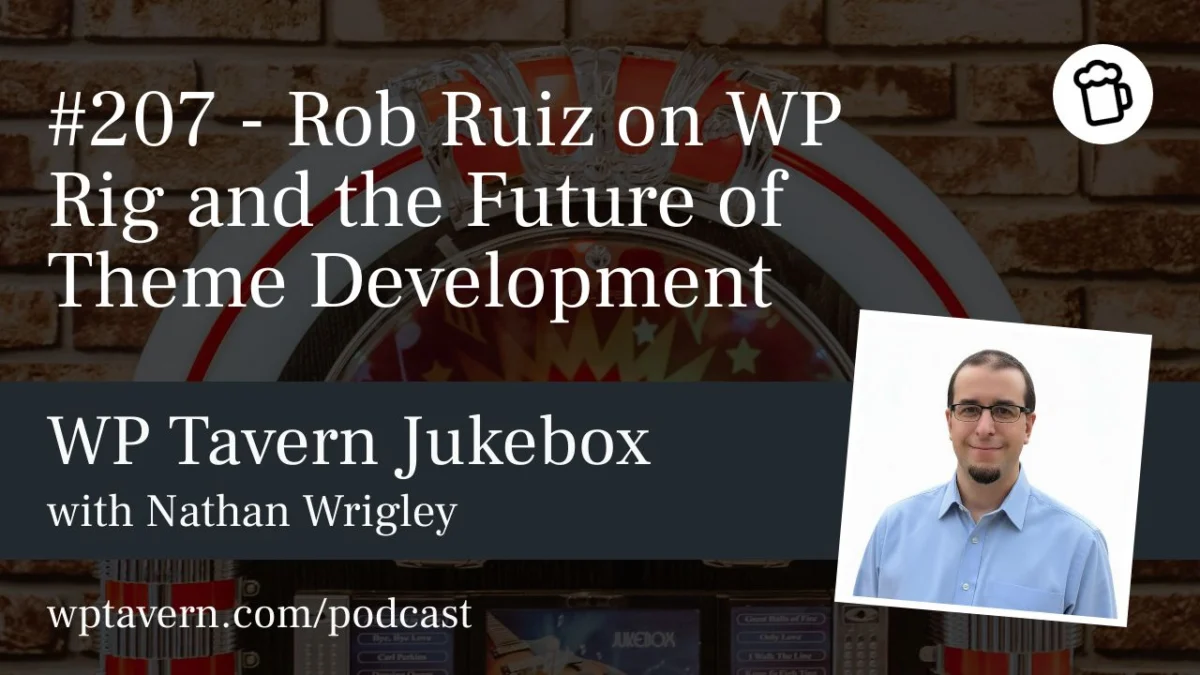
At the center of this movement is WP Rig (wprig.io), a free, open-source theme development framework and starter toolkit. Recently featured on the WP Tavern Jukebox Podcast, current project custodian Rob Ruiz sat down with host Nathan Wrigley to discuss the platform’s recent evolution, its role in modern workflows, and why understanding the nuts and bolts of theme architecture remains vital for the future of the WordPress project.
Main Facts: What is WP Rig?
WP Rig is not merely a traditional starter theme like Underscores; it is an advanced, best-practice-driven toolkit designed to bridge the gap between legacy WordPress theme development and modern frontend engineering.
- Dual Functionality: It operates as both a minimal starter framework and a robust asset-compilation toolchain.
- Modern Tooling: WP Rig integrates modern development dependencies—such as Node.js, Composer, esbuild, and Lightning CSS—directly into the theme-building process.
- Complete Independence: Once a developer finishes building and compiling a custom theme via WP Rig, a built-in bundling process scrubs all references to the framework. The resulting theme stands entirely on its own, untraceable back to WP Rig.
- Cost-Free and Open Source: Available completely free of charge via GitHub and wprig.io, the project is maintained primarily by Ruiz with support from community contributors.
Chronology: From Designer to Project Custodian
Rob Ruiz’s journey into the WordPress ecosystem mirrors the platform’s own growth over the last decade and a half.
Early Beginnings and the Path to Architecture
Ruiz began his career in the early 2000s primarily as a visual designer. As the web evolved, WordPress served as his primary vehicle for transitioning from aesthetic design to software development. Over years of hands-on experimentation, Ruiz evolved from a basic WordPress user into a professional software engineer, and ultimately, a software architect working full-time at a digital agency while maintaining independent side projects.
Discovering WP Rig
While searching for a reliable, unbloated theme development framework that respected WordPress coding standards, Ruiz stumbled upon WP Rig. Drawn to its minimal core and its philosophy of automatic best-practice enforcement, he quickly adopted it for his professional workflows.
The Handover
By sheer coincidence, shortly after falling in love with the framework, Ruiz read an article on WP Tavern announcing that WP Rig’s previous maintainers were stepping down and hosting an open Zoom call for prospective successors. Ruiz attended the call, initiated ongoing dialogues with the former maintainer, and ultimately took over sole stewardship of the open-source project.
Supporting Data and Technical Architecture
WP Rig’s recent release of Version 3 represents a massive architectural overhaul designed to keep pace with lightning-fast frontend tooling and the changing demands of the WordPress ecosystem.
Cutting-Edge CSS and Performance
Historically reliant on tools like Gulp and PostCSS, WP Rig has transitioned to modern, ultra-fast bundlers like esbuild and Lightning CSS. This allows developers to write bleeding-edge, future-facing CSS features—such as native CSS nesting—long before universal browser adoption. During the compilation process, WP Rig translates these modern rules into standard CSS, ensuring seamless cross-browser compatibility while future-proofing codebases.
Enforcing WordPress Standards
One of WP Rig’s most valuable assets is its integration of automated guardrails. The framework bakes in WPCS (WordPress Coding Standards), an extension of the widely used PHPCS (PHP Coding Standards) tool created by Automattic. Before a developer ever submits a theme for code review or deploys it to a production environment, WP Rig automatically scans the code to ensure strict adherence to official WordPress guidelines, drastically reducing friction for developers aiming to contribute to the official repository.
Flexible Paradigms: Classic, Hybrid, and Block-Based
Rather than forcing developers into a single architectural box, WP Rig supports multiple paradigms through simple command-line interface (CLI) commands:
- Classic Themes: The traditional PHP-driven template structure.
- Block-Based Themes: Fully leveraging full-site editing paradigms.
- Hybrid Themes: Bridging the gap by combining classic PHP templates with block capabilities.
- Theme-Level Block Authoring: Allowing developers to build custom theme-level blocks (such as bespoke navigation systems) directly within their toolkit.
Official Perspectives: The Philosophy of Control vs. Convenience
During their extensive conversation, Ruiz and Wrigley tackled the philosophical divide between visual page builders and custom-coded frameworks.
The Illusion of Ultimate Control in UI Builders
While visual page builders and full-site editors offer incredible speed and convenience, Ruiz points out that they inherently rely on database-driven configurations. When a user modifies elements through a graphical interface, those changes are stored directly in the database. Implementing a global structural change—such as adding a standardized border across all site blocks—requires manual adjustments across every individual element.
The Superpowers of Code
Conversely, building with code through a framework like WP Rig grants developers absolute, unconstrained control. Global modifications require altering a single line of CSS or PHP, cascading instantly across the entire platform.
"When you’re doing things with code, you have kind of superpowers," Ruiz noted during the podcast. "If you want ultimate control over your site… code will always be the best way to exercise that control."
Education as a Core Mission
Beyond serving commercial agency needs, WP Rig is explicitly designed as an educational springboard. The official website features extensive documentation and a dedicated "Learn" portal aimed at pulling curious tinkerers out of passive administration panels and into the world of open-source development.
Implications for the WordPress Ecosystem
Ruiz raised critical questions regarding the long-term health of WordPress as a decentralized, open-source platform.
The Threat of Contributor Decline
WordPress relies entirely on the energy and dedication of its global community of contributors. As proprietary competitors and heavily commercialized site-building solutions saturate the market, there is a risk that the pipeline of grassroots developers and "tinkerers" could dry up.
If users remain permanently confined to point-and-click administrative panels without ever learning the foundational web standards underneath (HTML, CSS, and JavaScript), the pool of active, contributing software engineers naturally shrinks. This leaves the core software increasingly dependent on corporate funding rather than community-driven passion.
Fostering the Next Generation of Tinkerers
Tools like WP Rig serve a vital prophylactic role against this stagnation. By lowering the barrier to entry for local development, providing automated guardrails, and encouraging deep technical curiosity, frameworks like WP Rig ensure that a new generation of developers can graduate from basic site building to advanced software architecture.
Getting Involved
For developers, designers, and curious tinkerers looking to break out of proprietary ecosystems and master modern WordPress theme architecture, WP Rig provides a complete, modernly optimized pathway.
To explore the documentation, download the toolkit, or join the community Discord server, visit the official project hub at wprig.io.