By Global Media Insight Desk
Published: October 2026
Main Facts
As artificial intelligence permeates every facet of digital marketing, professional networking giant LinkedIn is aggressively targeting automated "AI slop" to preserve platform authenticity. According to industry experts—including B2Linked founder and CEO AJ Wilcox, speaking alongside marketing strategists Michael Stelzner and Jerry Potter—LinkedIn has quietly blocked billions of automated posting attempts and hundreds of thousands of comment bots daily over recent months.
Far from a mere cosmetic update, this crackdown represents a fundamental shift in how the platform treats machine-generated content. Users can now report suspected AI-generated posts, and LinkedIn’s analytics dashboard actively displays audience reception metrics, indicating whether followers perceive a post as heavily artificial.
To help creators adapt, experts recommend moving away from total AI automation and instead adopting a hybrid strategy: leveraging AI strictly for ideation and final polish, while anchoring the core of the content in genuine human expertise. Furthermore, LinkedIn has overhauled its feature set—swapping out generic AI text-rewriting tools for proofreading-only assistants, introducing comment impression metrics, and deploying automated video-clip generation for live streams—fundamentally altering the playbook for marketers and thought leaders alike.
Chronology: The Evolution of LinkedIn’s AI Ecosystem
The tension between AI adoption and platform integrity on LinkedIn has escalated rapidly over a multi-stage timeline:
- Early AI Integration: LinkedIn initially introduced features such as the "enhance your post" tool, which frequently rewrote text in a homogenized, easily identifiable AI voice. This era sparked a gold rush of automated posting, flooding feeds with predictable, em-dash-heavy copy and uniform formatting.
- The Backlash and Reporting Rollout: As feeds filled with repetitive, low-value content, user fatigue set in. LinkedIn responded by introducing community-driven reporting mechanisms, allowing members to flag content perceived as unauthentic AI slop.
- Algorithmic and Feature Shifts: Over the past year, LinkedIn rolled out comment impression tracking and updated its native AI tools. The platform sunsetted its aggressive generative rewriting tool, replacing it with a localized proofreading utility designed strictly to correct grammar while preserving the author’s voice. Concurrently, LinkedIn expanded AI-driven clipping tools for live streams, allowing page administrators to automatically extract short-form highlights from long-form video.
- The Current Landscape: Today, creators operate under a dual reality: AI is deeply embedded in the platform’s infrastructure, but low-substance, unedited machine output is actively penalized by audience disengagement and tightening platform protocols.
Supporting Data and Platform Metrics
Understanding LinkedIn’s shifting ecosystem requires analyzing the data governing user behavior, algorithmic priorities, and advertising mechanics:
- Platform Enforcement Volume: LinkedIn has successfully intercepted billions of automated posting attempts and hundreds of thousands of automated comment bots daily, demonstrating the sheer scale of the platform’s automated filtering systems.
- Engagement Shifts in Comments: Time spent engaging within LinkedIn comment sections has surged by 18% year-over-year. This growth coincides with the rollout of visible comment impressions, which allow users—particularly those without large followings—to measure their reach through thoughtful commenting rather than publishing standalone posts.
- The Frequency Trap in Ads: LinkedIn historically recommended running five or more ad creative variations per campaign to achieve a purported 20% increase in click-through rates. However, industry practitioners like AJ Wilcox warn that exceeding two to four variations breaks the platform’s frequency cap. This misstep forces the system to treat each variation as a distinct ad, repeatedly targeting the same users and unnecessarily driving up acquisition costs.
- Optimal Scheduling: Data-driven posting cadences suggest publishing one to two times per week. Tuesdays and Thursdays serve as the strongest days for bi-weekly schedules, while Wednesday stands out for single-post strategies. Conversely, Mondays and Fridays suffer from depressed engagement as professionals reacclimate to the workweek or mentally check out.
Official Responses and Platform Signals
LinkedIn’s product decisions paint a clear picture of corporate intent: the platform wants AI to function as an assistant, not a replacement for human thought.
By replacing the generic "enhance your post" feature with a minimalist proofreading assistant, LinkedIn leadership has signaled that authentic authorial voice is paramount. Company leadership has also emphasized the importance of "comment density"—the depth, intellectual substance, and conversational richness of a thread—over superficial metrics like raw post length or simplistic engagement phrases like "great post."
According to industry analysts, features like the AI slop reporting tool are currently operating primarily as training mechanisms for LinkedIn’s underlying detection models. While these reports may not yet result in immediate algorithmic suppression, content flagged as inauthentic consistently underperforms in organic reach. Because low-quality AI comments naturally garner fewer likes and replies, algorithmic sorting relegates them to the bottom of the thread without requiring heavy-handed manual intervention from moderators.
Implications for Marketers, Creators, and B2B Brands
The convergence of strict AI policing and new feature rollouts has profound implications for digital strategists, executive brands, and advertising professionals.

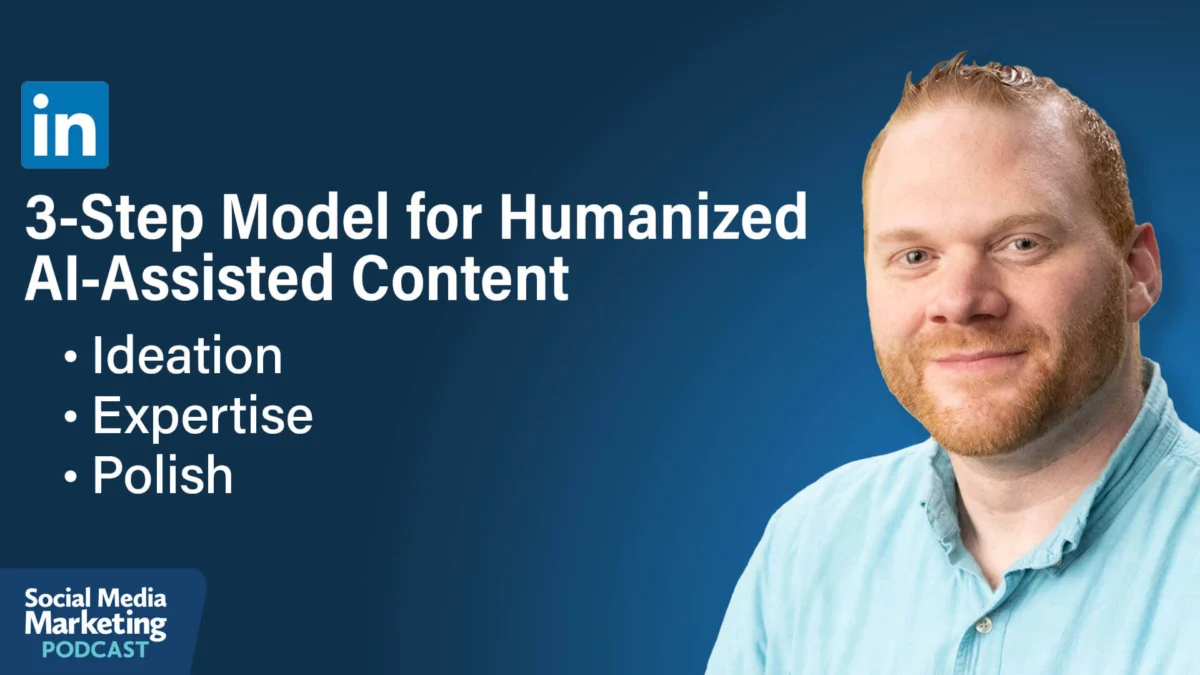
1. The Ideation-Expertise-Polish Model
Creators must abandon the practice of feeding a prompt into an LLM and publishing the output verbatim. Instead, experts advocate for a three-tiered "sandwich" model:
- Ideation (AI): Utilize AI tools to brainstorm angles, frameworks, and structural outlines to overcome the blank-page syndrome.
- Human Expertise (Human): Inject proprietary data, unique industry perspectives, and lived experiences into the middle of the post. This layer cannot be automated.
- Polish (AI): Employ AI strictly for copyediting, tightening syntax, and improving readability without altering the underlying voice or introducing telltale AI markers (such as excessive em dashes or cliché dramatic phrasing like "this is silently killing you").
2. Pivoting to a Comment-First Growth Strategy
For brands and individuals struggling to build an audience from scratch, standalone content creation is no longer the sole path forward. With comment impressions now visible and comment placement prioritized in the feed, marketers can build robust authority by curating their feeds around specific industry hashtags and leaving substantive, high-value comments on established accounts within the first one to two hours of publication.
3. Democratizing Executive Video via Live Streams
Executive thought leadership often stalls due to production bottlenecks. By utilizing LinkedIn’s AI-powered live stream clipping tools—which automatically isolate standout 30- to 60-second moments and generate time-stamped chapters—companies can lower the barrier to entry for CEOs. Recording a simple, high-definition interview format and letting LinkedIn’s AI handle the post-production clipping transforms unmanageable video workflows into a steady stream of discoverable, short-form content that remains viable in the feed for up to six months.
4. Calibrating B2B Advertising Strategies
Marketers must resist the urge to blindly apply Meta advertising best practices to LinkedIn. Flooding a LinkedIn ad campaign with five or more creative variations disrupts frequency capping and wastes ad spend. Advertisers achieve optimal performance by restricting ad sets to two to four carefully vetted variations (such as one visual paired with two distinct hooks), ensuring controlled delivery and sustainable cost efficiency.
Ultimately, LinkedIn’s message to the professional community is unequivocal: in an age where anyone can generate infinite text with a keystroke, authentic human insight is the ultimate competitive advantage.