NEW YORK — In a strategic pivot that signals a profound evolution in how major philanthropic institutions capture public attention, Global Citizen—the international anti-poverty advocacy organization renowned for its glittering, star-studded festivals in New York’s Central Park—is looking beyond traditional A-list celebrities. To engage younger, highly fragmented audiences that traditional pop stars can no longer reliably mobilize, the organization is turning directly to the digital economy’s most powerful native ambassadors: social media content creators.
In a landmark announcement, Global Citizen named Influential, the Publicis-owned influencer marketing behemoth, as its official global creator partner. The partnership marks a definitive step away from legacy Hollywood star power and toward the hyper-engaged, niche-driven ecosystems of digital creators, reshaping the blueprint for modern activism and global advocacy fundraising.
Main Facts
The partnership bridges one of the world’s most visible advocacy groups with the largest data-driven influencer marketing agency in the world.
- The Core Partnership: Global Citizen has officially tapped Influential to serve as its global creator partner, integrating digital content creators into the core of its advocacy, awareness, and fundraising campaigns.
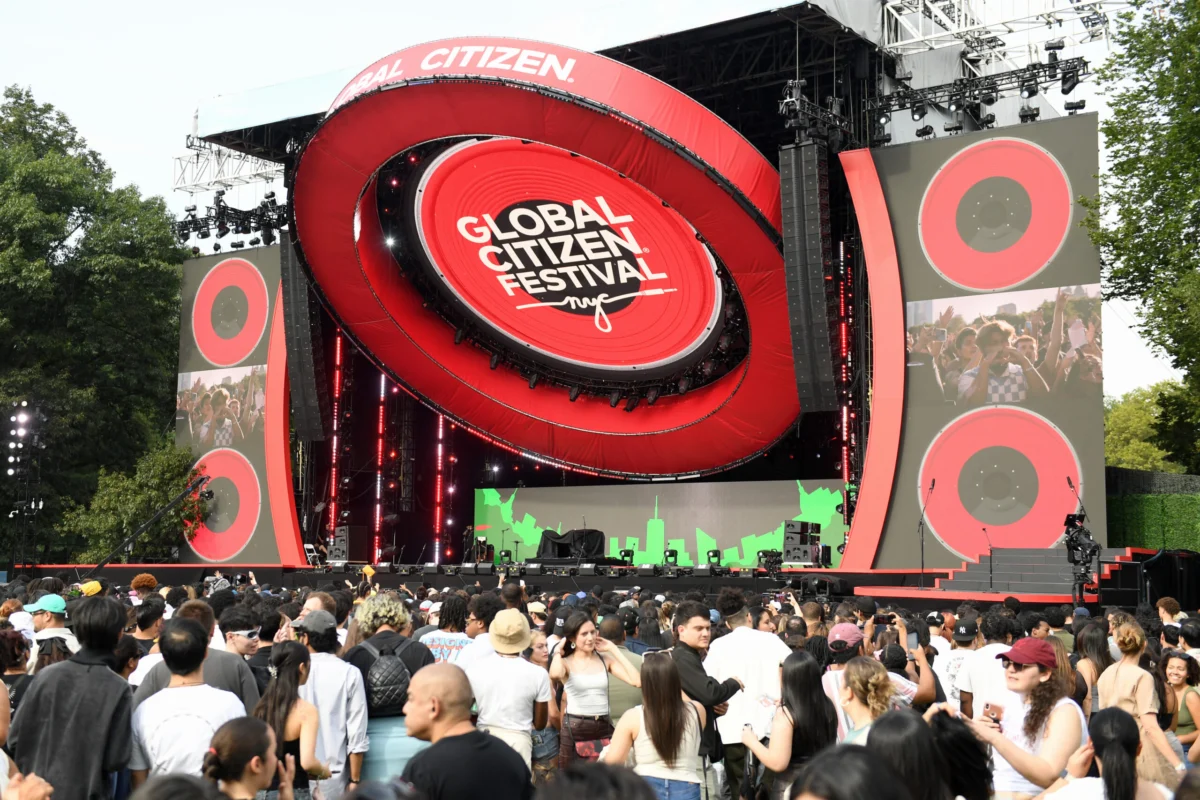
- The Debut Activation: The collaboration kicked off at the annual Global Citizen Festival in Central Park. Approximately 20 prominent digital creators—including popular lifestyle and digital personalities Ling and Lam—were deployed across the festival grounds to capture live content, interview artists and activists, and broadcast the event directly to millions of followers in real-time.
- The Scale of Influential: Founded in 2013 and acquired by advertising holding company Publicis Groupe in 2024, Influential boasts an opt-in creator network that has exploded from roughly 5 million creators at the time of the acquisition to an astonishing 18 million creators today.
- The Strategic Motive: Facing a shifting media landscape where traditional broadcast viewership is declining and younger demographics (Gen Z and Gen Alpha) display a preference for authentic peer-to-peer recommendations over traditional celebrity endorsements, Global Citizen is restructuring its outreach to meet audiences where they spend the majority of their time: on short-form video platforms and social feeds.
Chronology: The Evolution of Global Citizen’s Outreach
To understand the weight of this new partnership, it is necessary to examine how Global Citizen has historically built its brand and how the economics of attention have forced its hand.
2008–2015: The Rise of the Live Concert Model
Founded as the Global Poverty Project, Global Citizen quickly gained traction by leveraging the timeless appeal of live music. The formula was simple yet effective: secure massive pop icons (such as Beyoncé, Coldplay, Rihanna, and Pearl Jam), require fans to take civic action (like signing petitions or emailing politicians) to earn free tickets, and broadcast the spectacle to millions worldwide. For nearly a decade, this formula generated billions of dollars in policy commitments and billions more in poverty alleviation funding.
2016–2022: Scaling Up and Digital Adaptation
As social media platforms like Instagram and YouTube matured, Global Citizen expanded its footprint internationally, staging events in Johannesburg, Paris, and Rio de Janeiro. During the COVID-19 pandemic, the organization successfully orchestrated One World: Together at Home, a massive virtual concert that proved digital-first distribution could work on a global scale. However, even as digital viewership grew, the core marketing engine remained tethered to traditional celebrity booking agents, publicists, and television networks.
2023–2024: The Disconnect with Younger Demographics
By the early 2020s, marketing analysts and nonprofit strategists noticed a growing fatigue around traditional celebrity activism. Audiences—particularly younger demographics—began demanding higher levels of authenticity, transparency, and direct participation. Traditional celebrities, often shielded by management teams and seen as distant from everyday economic struggles, began losing their edge as reliable catalysts for sustained civic engagement. Concurrently, the creator economy matured into a multi-billion-dollar infrastructure with professionalized networks, advanced analytics, and unmatched audience retention rates.
2024: The Publicis Acquisition of Influential
A pivotal moment in the background of this story occurred when Publicis Groupe acquired Influential in 2024. This acquisition integrated massive data-driven matching capabilities, AI-powered audience targeting, and brand safety tools directly into one of the world’s largest advertising conglomerates. This corporate backing provided Influential with the infrastructure needed to manage complex, multi-market global campaigns.
September 2024–Present: The Creator-Led Era
Recognizing the structural shift in media consumption, Global Citizen entered negotiations with Publicis and Influential throughout late 2024. The resulting partnership formalizes a transition that has been whispered about in nonprofit boardrooms for years: the democratization of advocacy marketing through micro- and macro-influencers. The debut at the Central Park festival serves as the proof-of-concept for a multi-year strategy that will stretch far beyond New York City.
Supporting Data: The Numbers Behind the Shift
The pivot from traditional celebrity to creator-led marketing is backed by sweeping shifts in media consumption, advertising expenditure, and audience behavior.
The Growth of Influential
- Network Expansion: At the time of its acquisition by Publicis in 2024, Influential’s opt-in creator network stood at approximately 5 million creators.
- Current Scale: Today, that figure has surged to 18 million creators, representing one of the largest vetted networks of digital talent available to global brands and organizations.
- Global Reach: Influential’s platform utilizes advanced AI and demographic data matching to ensure that campaigns target specific geographic regions, age brackets, and interest groups without relying on broad, untargeted broadcast blasts.
Shifts in Media Consumption
- Decline of Traditional TV: According to recent Nielsen data, traditional television viewing among consumers aged 18–34 has plummeted by over 40% over the past decade, replaced by streaming services and social media feeds.
- The Creator Economy Valuation: Industry estimates place the global creator economy at over $250 billion, with brands increasingly reallocating budgets away from traditional banner ads and television spots toward creator partnerships.
- Trust Metrics: Market research consistently demonstrates that consumers—particularly Gen Z—place significantly higher trust in digital creators they follow daily than in traditional Hollywood celebrities who appear in episodic public service announcements.
Official Responses and Industry Perspectives
Executives from both organizations emphasize that this partnership is not merely a tactical marketing adjustment, but a fundamental reimagining of how social causes can mobilize the public in the digital age.
Chris Detert, Chief Communications Officer at Influential, detailed the operational mechanics behind the partnership during the rollout. Speaking about the presence of creators on the ground at the Central Park festival, Detert noted:
"The first major activation centers on this year’s Global Citizen Festival on Saturday, where roughly 20 creators, including Ling and Lam, will post from the grounds… Creators don’t just broadcast a message; they converse with their audiences in real-time. They bring their communities inside the experience, turning passive viewers into active participants."
Industry analysts point out that while traditional celebrities bring prestige, creators bring interactivity. When a major pop star posts a promotional clip on Instagram, comments are often turned off or filtered, and the relationship remains one-directional. Conversely, creators build their entire brand equity on two-way communication, comment-section engagement, and relatable storytelling.
A spokesperson for Global Citizen noted that the organization’s core mission—mobilizing citizens to eradicate extreme poverty, address climate change, and demand equity—requires meeting people where their attention is most concentrated.
"Our mission is urgent, and the channels through which the world communicates are evolving at a breakneck speed," a Global Citizen representative shared. "By partnering with Influential, we are unlocking access to thousands of trusted voices who can translate complex global challenges into digestible, actionable content for millions of young people who care deeply about the future of our planet."
Implications: What This Means for the Future of Advocacy and Marketing
The partnership between Global Citizen and Influential carries profound implications not only for the nonprofit sector, but for the broader advertising and entertainment industries.
1. The Democratization of Cause Marketing
For decades, major global campaigns were gatekept by a small elite of Hollywood agents, network executives, and mega-publicists. Only artists with massive tour budgets or hit singles could command the main stage at a charity concert.
By integrating 18 million creators into its ecosystem, Global Citizen is effectively decentralizing advocacy. Micro-influencers and regional content creators who specialize in sustainability, financial literacy, social justice, or mental health can now become official conduits for global change. This allows campaigns to be hyper-localized and culturally resonant in ways that a single global pop star could never achieve.
2. Redefining "Impact" Metrics
In the past, the success of a philanthropic festival was measured in crude, top-line metrics: stadium seat counts, television ratings, and total dollars pledged by world leaders.
With the shift toward digital creators, impact will increasingly be measured through engagement loops: shares, comments, digital petition signatures, localized app downloads, and direct peer-to-peer mobilization. Influential’s data-driven infrastructure allows for precise tracking of how a creator’s specific post translates into real-world civic actions, providing nonprofits with unprecedented accountability and ROI on their advocacy campaigns.
3. The Pressure on Traditional Celebrity Activism
This partnership does not spell the immediate end of the celebrity concert—headliners like Post Malone, Doja Cat, and Coldplay still draw massive crowds to Central Park. However, it signals that traditional star power is no longer sufficient on its own.
Celebrities will increasingly have to share the spotlight with digital creators who hold more authentic, direct sway over digital-native generations. For Hollywood publicists and talent agencies, this means adapting to a collaborative model where digital creators are treated as equal, if not superior, partners in cultural influence.
4. Publicis and the Expansion of Purpose-Driven Advertising
For Publicis Groupe, acquiring Influential and subsequently securing high-profile philanthropic accounts like Global Citizen demonstrates the growing convergence of commercial marketing and corporate social responsibility (CSR). Brands increasingly want to associate with organizations that drive positive social impact, but they demand the same precision, measurement, and scale that they expect from commercial product launches. By anchoring Global Citizen’s digital strategy within the Publicis ecosystem, Influential is proving that influencer marketing can move mountains—not just sell consumer goods.
Conclusion
As the digital landscape continues to fracture and evolve, legacy institutions must adapt or risk fading into irrelevance. By joining forces with Influential, Global Citizen has made a bold, calculated bet that the future of activism belongs not to the untouchable icon on a towering stage, but to the trusted creator speaking directly from a smartphone screen.
As millions of digital impressions ripple across social feeds from Central Park and beyond, this partnership may well be remembered as the moment global philanthropy successfully crossed the digital divide, turning the endless scroll into an engine for global change.