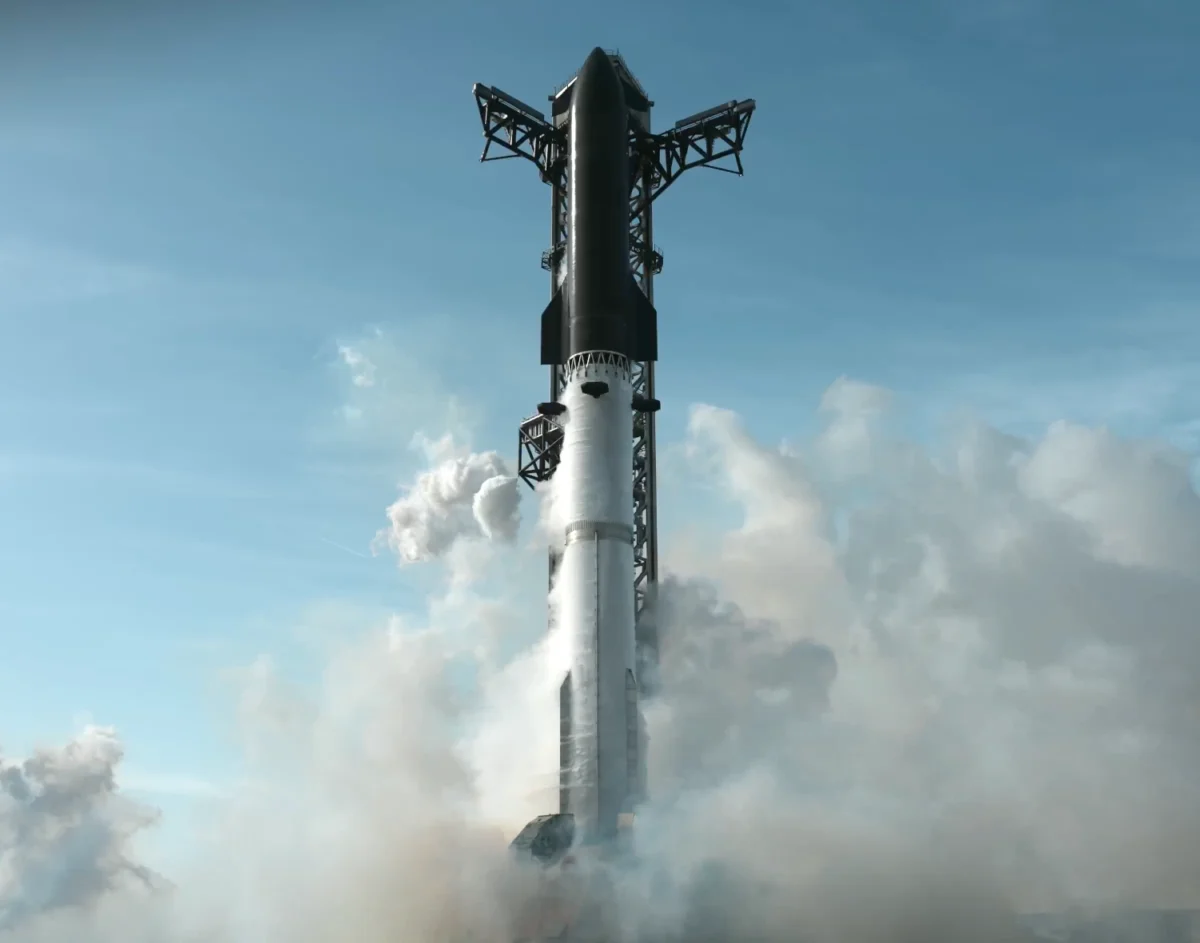
In a moment of tense silence at the Starbase facility in South Texas, SpaceX was forced to abruptly scrub the highly anticipated second launch attempt of its upgraded Starship V3 rocket system on Thursday. The abort occurred mere seconds after the massive Super Heavy booster’s engines ignited, triggering an automatic shutdown sequence that halted the mission before the vehicle could clear the launchpad.
This latest developmental hurdle arrives at a precarious time for SpaceX, which is currently navigating the volatile waters of the public markets following its record-breaking initial public offering (IPO) on June 12. As the company works to prove the reliability of its next-generation launch architecture, the aborted flight serves as a stark reminder of the immense engineering complexity inherent in the pursuit of routine orbital access.
Chronology of the Abort
The countdown began with an air of cautious optimism. Following a brief, routine hold at T-minus one minute—which was quickly cleared—the terminal count resumed. As the clock hit zero, the launchpad’s sophisticated water deluge system, designed to suppress the immense acoustic energy of the Raptor engines, roared to life.
The Super Heavy booster ignited, but the expected lift-off did not materialize. Instead, the sequence cut out instantaneously. Live telemetry and broadcast graphics indicated that at least four of the 33 Raptor engines failed to initiate their startup sequence. The automatic flight safety systems, programmed to protect the vehicle and the pad in the event of an engine startup anomaly, intervened immediately.
Following the abort, the engineering team began the lengthy, high-risk process of de-tanking the vehicle, removing vast quantities of cryogenic propellant from both the Super Heavy booster and the Starship upper stage. This procedure is standard but delicate, requiring precise environmental controls to ensure the safety of the ground crew and the integrity of the hardware.
The Technical Challenge: Engines and Orbital Ambitions
The Starship V3 represents a massive leap in engineering over its predecessors. SpaceX had hoped this flight would successfully deliver its first third-generation Starlink satellites into a sub-orbital trajectory. These satellites were intended to serve as a high-tech testbed, though they were programmed to de-orbit and burn up in the atmosphere approximately 20 minutes after deployment, as the current mission profile does not yet seek to achieve a stable Earth orbit.
The primary technical culprit, according to CEO Elon Musk, was a failure in the ignition sequence. Musk confirmed via the social media platform X (formerly Twitter) that the company intends to replace at least two of the problematic engines. The complexity of the Raptor engine—a full-flow staged combustion engine—makes it one of the most powerful and sophisticated engines ever produced, but also one of the most temperamental during the critical ignition phase.
Official Responses and Immediate Adjustments
Elon Musk’s communication following the incident was characteristically direct. By acknowledging the specific engine failure and providing a timeline—noting that the next launch attempt would be delayed until at least next week—Musk sought to reassure investors and the public that the abort was a feature of the rocket’s safety system, not a catastrophic failure.
The Federal Aviation Administration (FAA), which recently granted SpaceX approval to resume flights after a rigorous review of the previous mission’s booster failure, will likely monitor the upcoming engine replacements closely. The May mission, while successful in deploying simulators, resulted in an FAA-ordered safety review after the booster failed to execute its landing burn in the Gulf of Mexico. The fact that the company has already addressed those previous concerns adds a layer of pressure to get the V3 system right on the next attempt.
Financial Implications and Market Volatility
The abort has cast a shadow over SpaceX’s financial performance. Since its historic June 12 IPO, which saw the company raise a staggering $85 billion, the stock has struggled to maintain its initial momentum. While the company’s valuation briefly rivaled tech giants like Amazon and Microsoft, investor sentiment has cooled significantly over the last month.
On Thursday, SpaceX shares closed below their $135 IPO price, and the news of the aborted launch sent the stock down an additional 4% in after-hours trading. The market’s reaction highlights the disconnect between the long-term, high-risk goals of space exploration and the short-term expectations of public market investors. For a company that relies on the Starlink constellation as its primary revenue driver and sole profitable business unit, the inability to launch these satellites on schedule has tangible financial consequences.
The Strategic Importance of Starlink and Orbital Data Centers
The broader context of this mission goes far beyond a single test flight. SpaceX’s roadmap is predicated on the realization of "orbital data centers"—a concept where Starship would place massive, highly capable satellites into orbit to provide high-speed, low-latency internet connectivity on a global scale.
Starlink is the engine that funds the company’s dreams of Martian colonization and deep space exploration. By upgrading to the V3 architecture, SpaceX aims to lower the cost-per-kilogram of payload to orbit significantly, making the economic model of these orbital data centers viable. If the V3 cannot reach orbit reliably, the expansion of the Starlink network stalls, potentially threatening the company’s most important revenue stream.
Looking Ahead: The Path to Flight
The next few days will be critical for the engineering teams at Starbase. Replacing the Raptor engines is not a trivial task; it requires a modular approach that allows for the removal and installation of components in a dense, high-pressure environment.
The successful May flight of Starship V3 was a "mixed bag"—an achievement in getting off the pad, but a failure in the booster recovery. The current mission is meant to be the redemption arc. The engineering team must now demonstrate that they can identify the specific, transient faults that prevented ignition and rectify them without introducing new variables into the complex propellant and ignition systems.
For the aerospace industry, SpaceX remains the gold standard for rapid iteration. However, the recurring nature of these delays suggests that as the vehicle grows more complex, the window for error narrows. The company’s ability to "fail fast" has been its greatest strength, but as a publicly traded entity, the patience of shareholders will be tested if these technical hurdles continue to manifest as financial volatility.
As the team prepares for next week’s window, all eyes will be on the South Texas launchpad. The success of the next attempt will be more than just a test of a rocket; it will be a test of the company’s ability to execute on the grand promises that fueled the largest IPO in history.
About the Reporter: Sean O’Kane is a seasoned journalist with over a decade of experience covering the transportation, technology, and space sectors. His reporting has tracked the evolution of the electric vehicle industry, the rise of the space economy, and the complex business models of Silicon Valley’s most ambitious startups. He previously reported for Bloomberg News and The Verge.