In the evolving landscape of open-source software, WordPress stands at a pivotal crossroads. As the platform approaches its third decade of existence, the strategies surrounding its release cycles, community maintenance, and user onboarding are undergoing a significant transformation. At the heart of this shift is a strategic effort to move away from the "invisible" nature of software updates, aiming instead to foster a culture of anticipation, shared celebration, and renewed community investment.
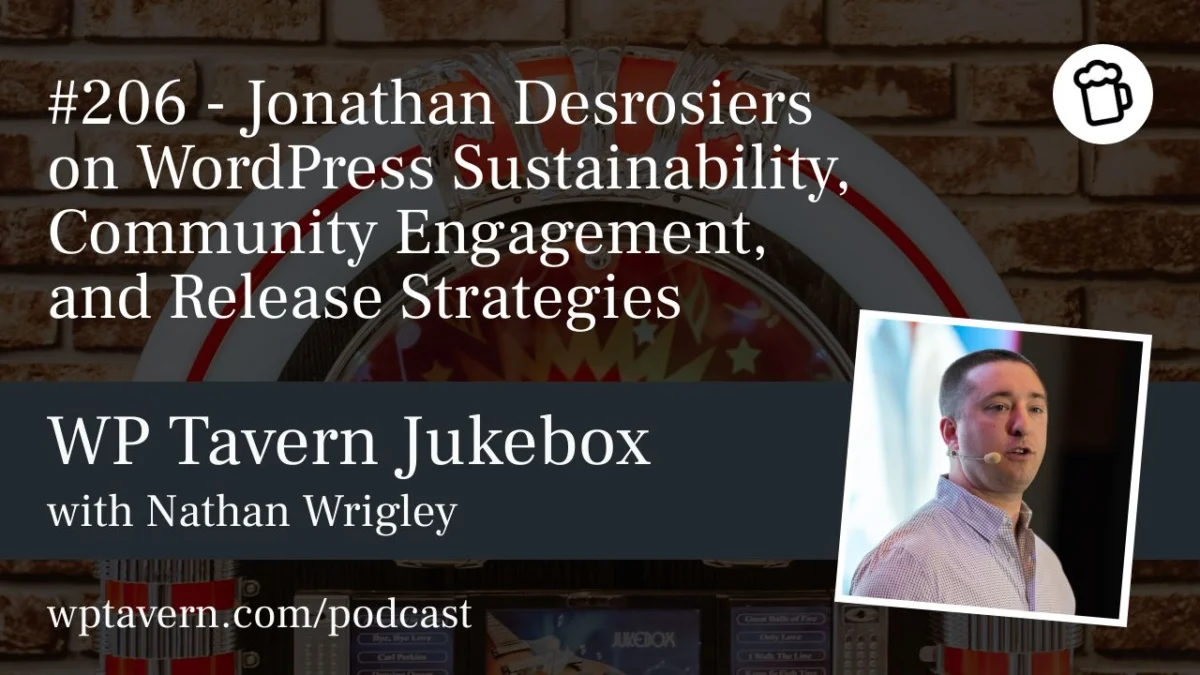
Jonathan Desrosiers, a principal software engineer at Bluehost and a longtime WordPress Core committer, recently joined the Jukebox podcast to discuss these tectonic shifts. With nearly two decades of experience in the ecosystem, Desrosiers provides a unique vantage point on the intersection of technical logistics and human connection, offering insights into why WordPress is increasingly looking to synchronize its technical milestones with its most prominent community gatherings.
The Evolution of the Release Strategy
For years, the release of a new WordPress version was a largely functional event—a necessary update that often happened in the background, unnoticed by the average site owner. However, the success of a recent experiment surrounding the WordPress 6.9 release, which coincided with the annual State of the Word address in San Francisco, has prompted a rethink.
The event featured a live, theatrical demonstration where the community watched as the "big red button" was pushed, signaling the public release of the software. This moment, which felt less like a dry software deployment and more like a cultural event, underscored a growing realization: code is only half of the open-source equation. The other half is the community that builds, supports, and champions it.
"The more I’m involved in open source, the more I realize that the code and the license are important, but the most important thing is the community that’s involved," Desrosiers notes. By linking releases to major flagship events—such as WordCamp Asia, WordCamp Europe, and WordCamp US—the project aims to transform the act of updating software into a celebratory, shared experience that builds anticipation.
Chronology of a Global Synchronized Effort
The proposal for 2026 is ambitious: align the three major WordPress releases of the year with the project’s premier regional WordCamps. However, as Desrosiers explains, this is far from a simple administrative task. The logistics of global open-source software development are dictated by a complex array of factors, including regional holidays, varying academic calendars, and the logistical constraints of event organizers.
The Balancing Act
The planning process is a delicate dance between technical readiness and human availability. For instance, the release team must navigate:
- Regional Holidays: Significant religious and national holidays across the globe can effectively "wash out" weeks of potential development time.
- The December Downtime: With much of the global community taking time off during the end-of-year holiday season, planning a release that relies on heavy testing during that period is often unfeasible.
- Event Scheduling: WordCamp organizers plan their events based on venue availability, budget, and weather, not the software development lifecycle.
The 2026 roadmap is currently a pilot. The team is observing the timing of WordCamp Asia, which has shifted from its traditional February slot to April, and the subsequent proximity to WordCamp Europe in June. These shifts necessitate a creative approach to release scheduling that ensures the project maintains momentum without burning out the volunteers who sustain it.
Supporting Data: Adoption and Stability
One of the most compelling arguments for the current direction of WordPress is the accelerating rate of adoption for new versions. Desrosiers analyzed the data following the release of WordPress 6.9, and the findings suggest that users are increasingly confident in the platform’s stability.
The data reveals a consistent trend:
- Speed of Adoption: For the last six to eight releases, the platform has surpassed the 35% adoption threshold among all WordPress sites within just two days.
- Acceleration: WordPress 6.9 reached the 50% threshold in only 10 days—four days faster than its predecessor, 6.8.
- User Trust: The rapid uptake of major versions indicates that automated updates are functioning as intended, and users feel confident that the software will not break their environments upon deployment.
This data provides the technical justification for a more "fanfare-driven" release. If users are already adopting the software at record speeds, the project can afford to lean into the excitement, treating each major release with the marketing weight of a new season of a popular television series.
Official Perspectives on Community Health
Beyond the technical roadmap, there is a sober conversation occurring regarding the state of the WordPress community. The COVID-19 pandemic caused a disruption in the natural pipeline of leadership and mentorship that previously sustained local Meetups and regional WordCamps.
"There was a break in that pipeline of leaders learning under others," Desrosiers observes. While some regions—notably APAC—have shown immense growth and a strong appetite for community involvement, other areas, particularly in the United States, are in a phase of revitalization.
The Role of Education and Mentorship
To address this, leadership has prioritized several initiatives designed to lower the barrier to entry:
- Contributor Mentorship Programs: These cohorts have proven successful in turning newcomers into team leads and release squad members.
- Educational Initiatives: Programs like WP Campus Connect are targeting the next generation, aiming to bring in talent at the university level.
- AI as an Empowerment Tool: Perhaps the most radical shift is the embrace of AI to lower the barrier to building. By allowing users to generate functional site components with minimal coding knowledge, WordPress is tapping into a new desire for personal empowerment and self-reliance.
Implications for the Future
The implications of this strategy are twofold. First, it acknowledges that the "walled gardens" of social media and closed platforms are increasingly viewed with skepticism by younger users. There is a palpable, burgeoning interest in the "open web"—a desire to reclaim personal agency through blogs, RSS feeds, and self-hosted sites. WordPress is positioning itself as the primary vehicle for this resurgence.
Second, the integration of AI within the WordPress workflow is not merely a feature—it is a community-building tool. As Desrosiers points out, AI allows individuals to distill complex technical information into manageable, actionable steps. This empowerment leads to a higher likelihood of participation. If a new user can successfully build a site with AI-assisted guidance, they are significantly more likely to stay engaged, join a local Meetup, and eventually contribute back to the project.
Conclusion: A Collaborative Road Ahead
The vision for the next decade of WordPress is one of intentional, high-energy collaboration. By tying the software’s lifecycle to the vibrancy of in-person events, the project is attempting to solve two problems at once: it is making software releases more visible and exciting, and it is providing a reason for community members to return to the physical and digital spaces where WordPress is discussed and improved.
While the logistical challenges are significant, the trend toward faster adoption and the influx of new, AI-enabled contributors provide a promising outlook. As Jonathan Desrosiers suggests, the goal is not just to maintain the status quo, but to build a future where WordPress remains as vital and exciting to the next generation of builders as it was to the pioneers of two decades ago.
Whether through a more dramatic, event-focused release schedule or through the patient, human-centered work of mentorship, WordPress is betting that the human element will remain its most significant competitive advantage. As the 2026 calendar unfolds, the global WordPress community will be watching—and likely participating—to see if this synchronized approach to innovation can reinvigorate the spirit of open source.