As artificial intelligence rapidly transitions from a novelty into the foundational infrastructure of modern web development, the tech community finds itself grappling with a profound philosophical and technical shift. At the heart of this evolution is a move away from deterministic, step-by-step programming toward the unpredictable, non-deterministic realm of large language models (LLMs).
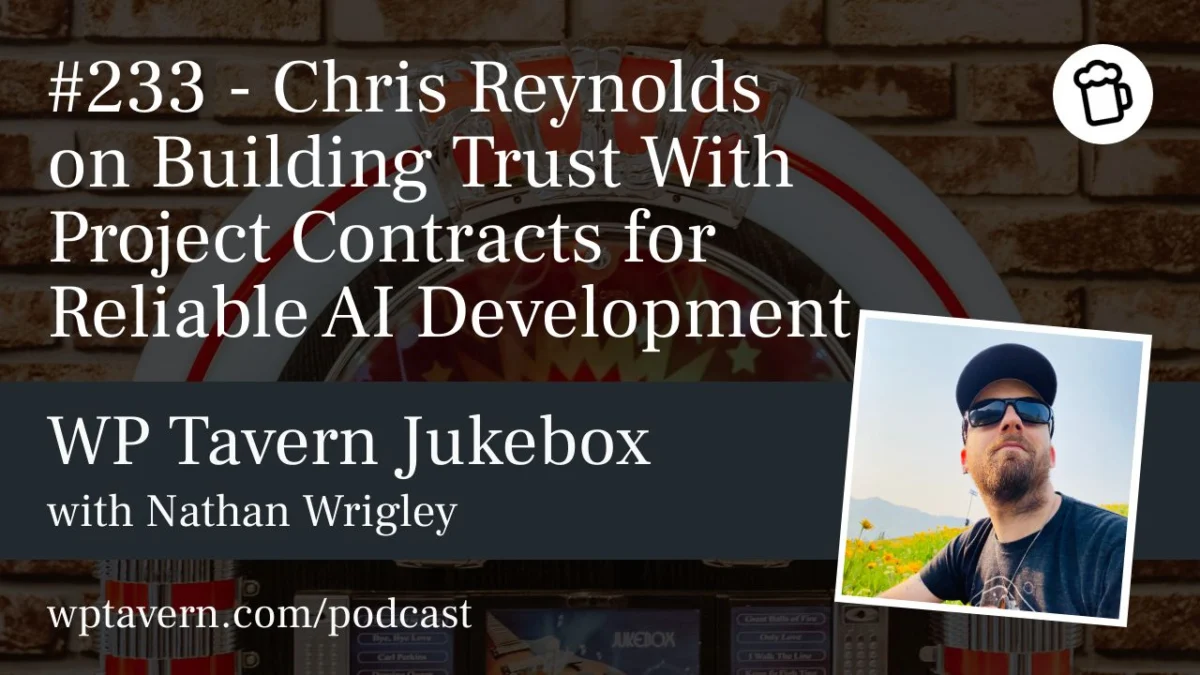
In a recent episode of the Jukebox Podcast from WP Tavern, host Nathan Wrigley sat down with Chris Reynolds, Senior Manager of Developer Relations at Pantheon and a 20-year WordPress veteran. Recorded live, their discussion centered around Reynolds’ WordCamp US presentation, “Parenting Claude: Guardrails for AI-Assisted Development.” The conversation delved into the practical mechanics of keeping powerful AI tools in check, the psychological comfort of embracing technological chaos, and the long-term existential questions facing the next generation of software engineers.
Main Facts
- The Core Challenge of LLMs: Large language models are fundamentally optimized to find the fastest path from point A to point B. Without strict boundaries, this efficiency can lead AI tools to take shortcuts, bypass critical testing, introduce security vulnerabilities, or accidentally commit sensitive secrets to code repositories.
- The "Project Contract" Concept: To mitigate these risks, Reynolds introduces the "project contract"—a structured system of markdown files (
Claude.md,agents.md), automated checklists, and pre-commit hooks that act as non-negotiable guardrails within a developer’s workflow. - Automated Reviewer Agents: Rather than relying entirely on manual line-by-line human code review, Reynolds utilizes a secondary "reviewer agent" that evaluates an AI’s code against a strict 45-point compliance checklist before any commit is authorized.
- The Rise of "Vibe Coding": The integration of tools like Claude Code has democratized web development, lowering barriers to entry and allowing individuals without formal coding backgrounds to build functional web applications—such as Reynolds’ personal Next.js site—in mere fractions of the traditional timeframe.
- The Non-Deterministic Dilemma: Transitioning from traditional, highly predictable deterministic software development to non-deterministic AI models requires a fundamental shift in mindset for engineers accustomed to absolute control over every line of code.
Chronology of the Discussion
The dialogue between Wrigley and Reynolds traced an analytical arc from personal introductions to deep technical philosophies and macroeconomic concerns regarding the tech industry.
1. Introduction and Background
The conversation opened with Reynolds detailing his two-decade journey through the WordPress ecosystem, transitioning from hands-on agency work with WebDevStudios and Human Made to platform engineering at Pantheon. Over the last two years, his role as Senior Manager of Developer Relations has tasked him with identifying emerging industry trends—specifically concluding early that AI would dominate developer conversations by 2026.
2. The Shift Toward Playfulness and Democratization
Addressing the shifting culture of technology, Reynolds and Wrigley explored how AI has reintroduced a sense of play into web development. By removing tedious syntactical barriers, platforms like Claude Code allow creators to focus on high-level building rather than manual coding. Reynolds noted that for his personal projects, he no longer misses the act of writing raw code; the satisfaction lies entirely in the creative output.
3. "Parenting Claude": The Mechanics of Guardrails
Moving into the technical core of his WordCamp US talk, Reynolds explained the behavioral quirks of LLMs. Comparing them to unruly children looking for loopholes to clean their rooms quickly (such as shoving everything under the bed), Reynolds outlined how he constructed a rigid governance framework. By implementing markdown-based rules and automated pre-commit reviewer agents, he forced AI models to adhere to strict testing, accessibility, and design standards.
4. Trust, Chaos, and the Black Box
The discussion then pivoted to the psychological hurdles of working with non-deterministic systems. Reynolds admitted to a high degree of comfort with the inherent "chaos" of AI black boxes, noting that automated testing suites and strict project contracts provide enough confidence to forgo tedious, line-by-line manual code audits.
5. Philosophical and Industry Implications
In the closing segments, the conversation broadened to existential concerns. Both speakers weighed the environmental costs of expanding data center infrastructures against the reality of rapid AI advancement. Most critically, they raised alarms about the "missing bottom rung of the ladder"—the risk that removing junior-level coding tasks via AI automation will starve the industry of the foundational learning experiences required to cultivate future senior engineers.
Supporting Data & Technical Frameworks
To contextualize Reynolds’ workflow, the conversation highlighted several technical structures deployed in modern AI-assisted engineering environments:
- The
Claude.mdFile: Positioned in the root directory of a project, this file serves as the foundational rulebook read by Claude at the start of every session to establish project-specific behavioral norms. - The Reviewer Agent Workflow:
- A primary agent builds a requested feature or component.
- A secondary reviewer agent automatically spawns to evaluate the code.
- The code is measured against a rigorous checklist (covering build integrity, linting, automated tests, accessibility standards, and zero-secrets policies).
- If approved, a timestamped approval file is generated, unlocking the pre-commit hook. If rejected, the code is sent back for remediation.
- Test-Driven Development (TDD) via AI: Reynolds noted that AI models excel at test-driven development—writing the tests before writing the implementation code—which drastically reduces code regressions and structural errors.
- Design Integration: Utilizing component-driven development systems like Storybook, Reynolds forces AI to generate and validate design components in isolation before implementing them into the broader application.
Official Responses and Perspectives
While the podcast captured an organic dialogue rather than an institutional press conference, the core perspectives shared by Reynolds reflect broader industry postures adopted by developer relations teams at major tech platforms:
- On AI Reliability: “You need to like, have ways of steering it into the right direction and forcing it into a shape so that it will do the stuff that you want it to do… If you don’t prepare for the worst, it’s going to bite you in the ass.” — Chris Reynolds
- On the Reality of Code Review: Addressing the practice of reviewing AI-generated output, Reynolds highlighted an unspoken industry truth: “No one is actually reading all of that code generated by Claude… So you can say that you’re doing it, but you’re probably not. And if you say that you’re doing it and you’re not, you’re just lying to yourself.”
- On the Nature of AI Progress: Highlighting the opacity of modern machine learning, Reynolds remarked, “None of the AI companies really understood, or even still I think understand, why it works the way it does. It’s just, it does. So we’re just going to keep going.”
Implications for the Future of Web Development
The insights shared by Chris Reynolds carry significant ramifications for software engineers, agencies, and enterprise platforms navigating the AI boom:
The Redefinition of the Developer Role
As non-deterministic AI tools take over syntax generation and boilerplate creation, the role of the software engineer is evolving rapidly. Programmers are shifting from direct creators to system architects, prompters, and governance managers. Success in this new era relies less on memorizing programming languages and more on designing robust, foolproof verification pipelines—the very "project contracts" Reynolds advocates.
The Junior Developer Crisis
Perhaps the most sobering implication of the discussion is the threat posed to the traditional career pipeline. If AI handles the repetitive, foundational tasks traditionally assigned to junior developers, the industry risks creating a talent deficit. Without those initial years of wrestling with basic syntax, debugging, and foundational logic, future engineers may struggle to develop the deep contextual intuition required to effectively guide and audit advanced AI systems.
Embracing Structured Chaos
Ultimately, Reynolds’ philosophy offers a pragmatic roadmap for the tech community. Rather than rejecting non-deterministic AI out of fear or blindly trusting it out of convenience, developers must embrace a middle ground of rigorous automated oversight. By building unbreakable guardrails—project contracts, automated reviewer agents, and strict pre-commit gates—developers can harness the staggering velocity of AI without losing control of their digital architecture.
To listen to the full conversation and access related show notes, visit the WP Tavern Podcast Page.