
For years, the promise of AI in the business world was tethered to reactive chatbots and static document generation. Business owners and marketers were told that "automation" was the key to efficiency, yet they found themselves trapped in a complex web of third-party integration tools like Zapier, Make, and n8n. That era is coming to a rapid close.
With the emergence of OpenAI’s Codex, the paradigm has shifted from "AI as a tool" to "AI as an autonomous employee." By transforming natural language into multi-step, cross-platform workflows, Codex is allowing non-technical professionals to build sophisticated digital architectures that operate independently.
The Evolution of the AI Workspace
The primary misconception surrounding Codex is that it is a tool strictly for software engineers. According to automation expert Karl Yeh, this belief is the single largest hurdle preventing businesses from achieving true operational scale.

To understand Codex, one must rethink the relationship between AI models and interfaces. Think of models like ChatGPT (such as the 5.5, Instant, or Thinking variants) as the "brains." The Codex desktop application acts as the "robot" or "harness." Unlike the web-based version of ChatGPT, which is a confined sandbox, the Codex desktop app is designed to interact directly with your operating system, local files, and browser environment.
This shift changes the nature of the AI’s output. While standard ChatGPT might draft a summary of a spreadsheet, Codex can open the file, perform complex calculations, cross-reference it against an Outlook calendar, and email the results to a client—all without the user ever writing a single line of code.
Getting Started: Deployment and Security
The journey toward a fully automated business begins with proper deployment. Unlike the lightweight browser-based version of ChatGPT, the dedicated Codex desktop app—available for both PC and Mac—is the required gateway to your tech stack.
Establishing the Digital Foundation
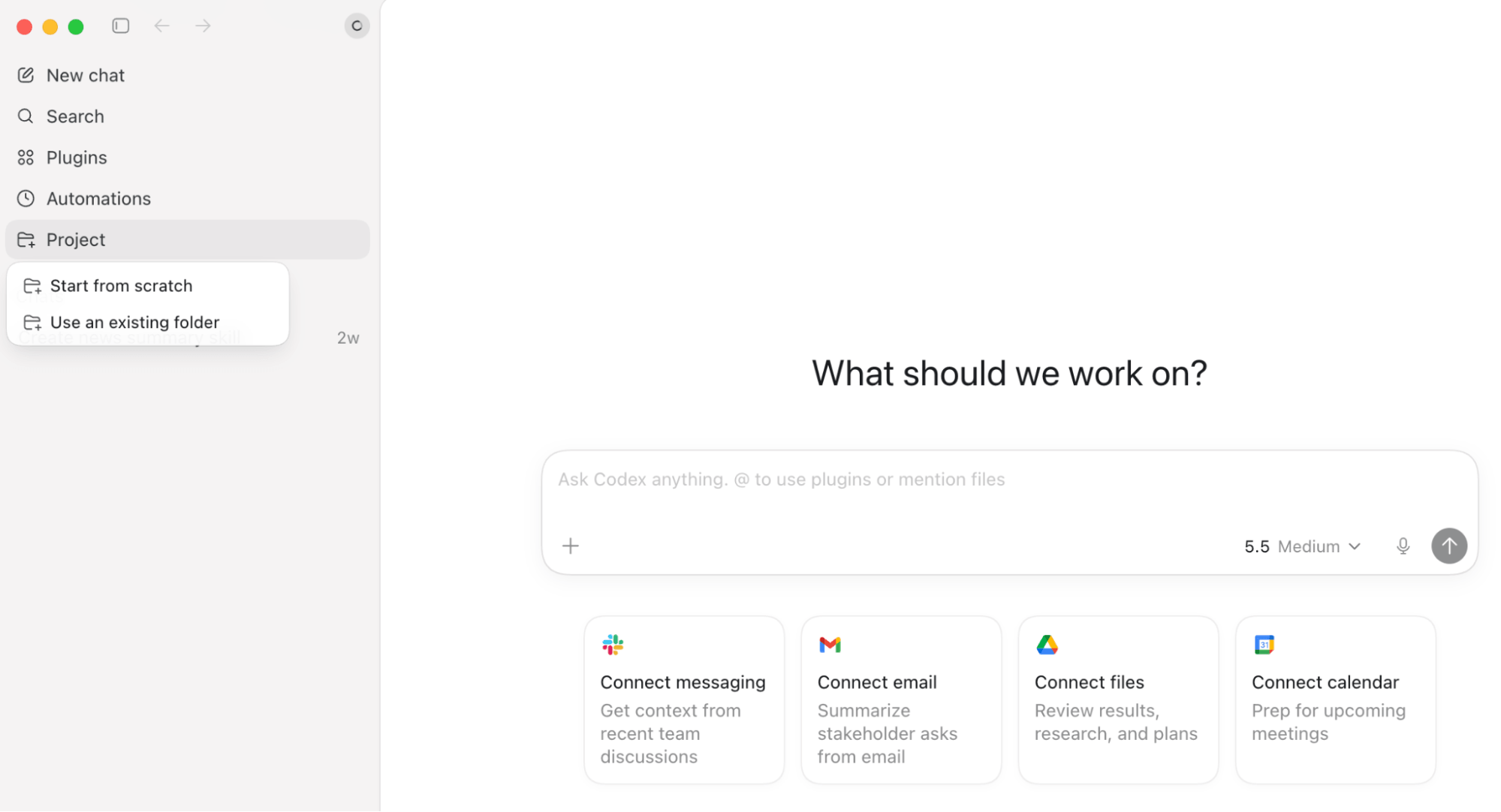
Upon installation, the interface will feel familiar to existing ChatGPT users, featuring a sidebar for chat threads and dedicated panels for Plugins and Automations. However, the true value lies in the "File Connection" feature. By pointing Codex to a specific directory on your local machine or network, you grant it the authority to read, edit, and reorganize files within those folders.
The Security-First Approach
Granting AI access to your business files requires a disciplined approach to cybersecurity. Karl Yeh emphasizes three critical rules for new users:
- Scoped Folders: Never connect Codex to your root drive or primary desktop. Always create a dedicated "Codex-Sandbox" folder. This limits the AI’s blast radius, ensuring that even if an error occurs, it remains contained within a specific, non-critical directory.
- Permission Tiers: Codex offers varying levels of access. Start with default, restricted permissions. Only elevate these to "Full" when you have verified the agent’s behavior and the necessity of its reach.
- The Prompt Injection Threat: As agents become more capable of browsing the web, they become vulnerable to "Prompt Injection"—a technique where malicious websites embed hidden instructions designed to override your agent’s original goals. Yeh recommends a segmented architecture: use one agent to gather raw data, a second to verify its integrity, and a third to execute the final workflow. Never let the agent that browses the open web be the same agent that has write-access to your internal databases.
Executing Recurring Processes: Skills and Plugins
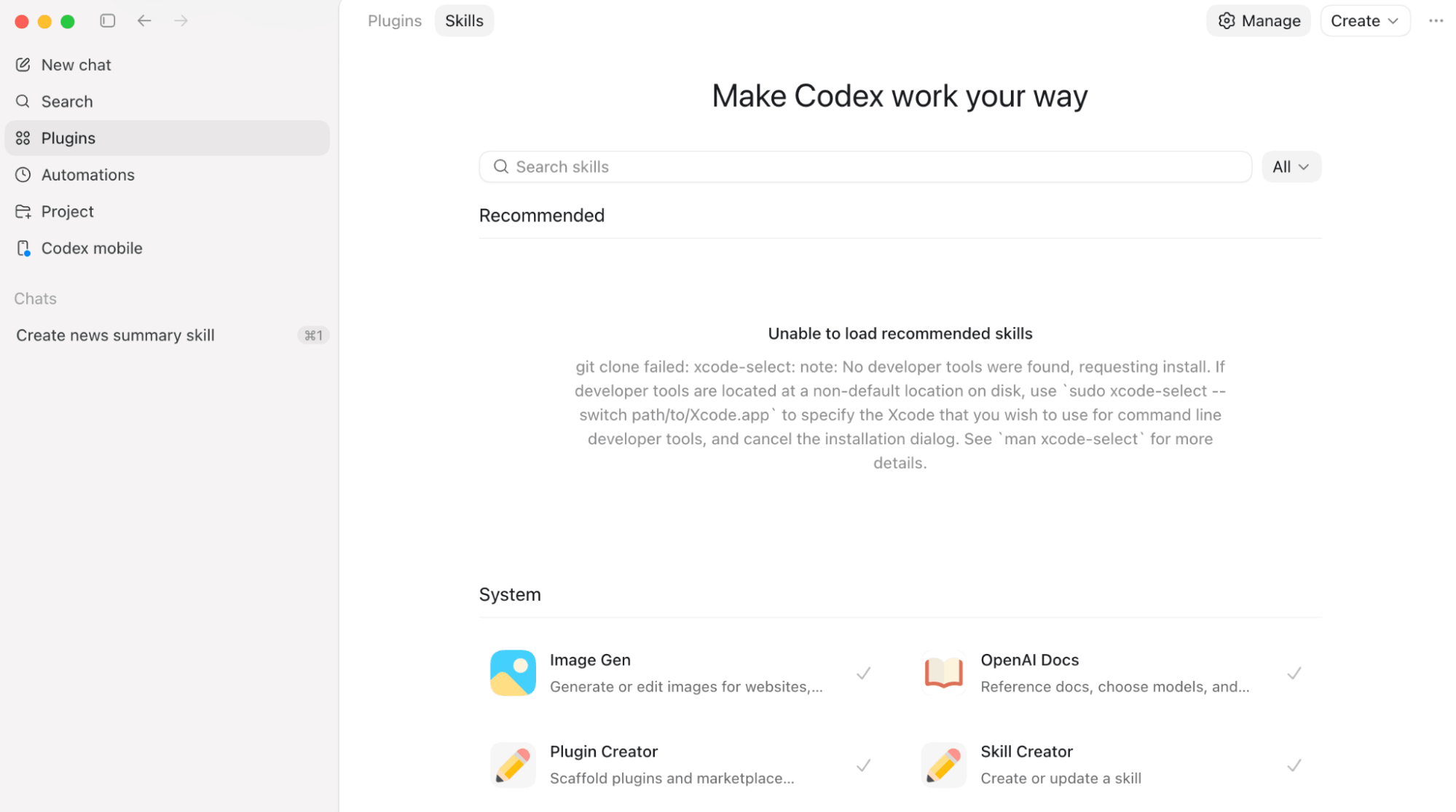
The power of Codex is magnified through two mechanisms: Skills and Plugins. A "Skill" is a learned behavior or specific instruction set, while a "Plugin" acts as the bridge to external software.

Standardizing Operations with Skills
Business owners often struggle with inconsistency. By converting your company’s internal brand voice, formatting requirements, or standard operating procedures (SOPs) into a persistent "Skill," you ensure that every document generated by AI reflects your corporate standards. Instead of prompting the AI repeatedly, you simply "apply the skill," turning a one-off request into a repeatable, high-quality process.
Bridging the Gap with Plugins
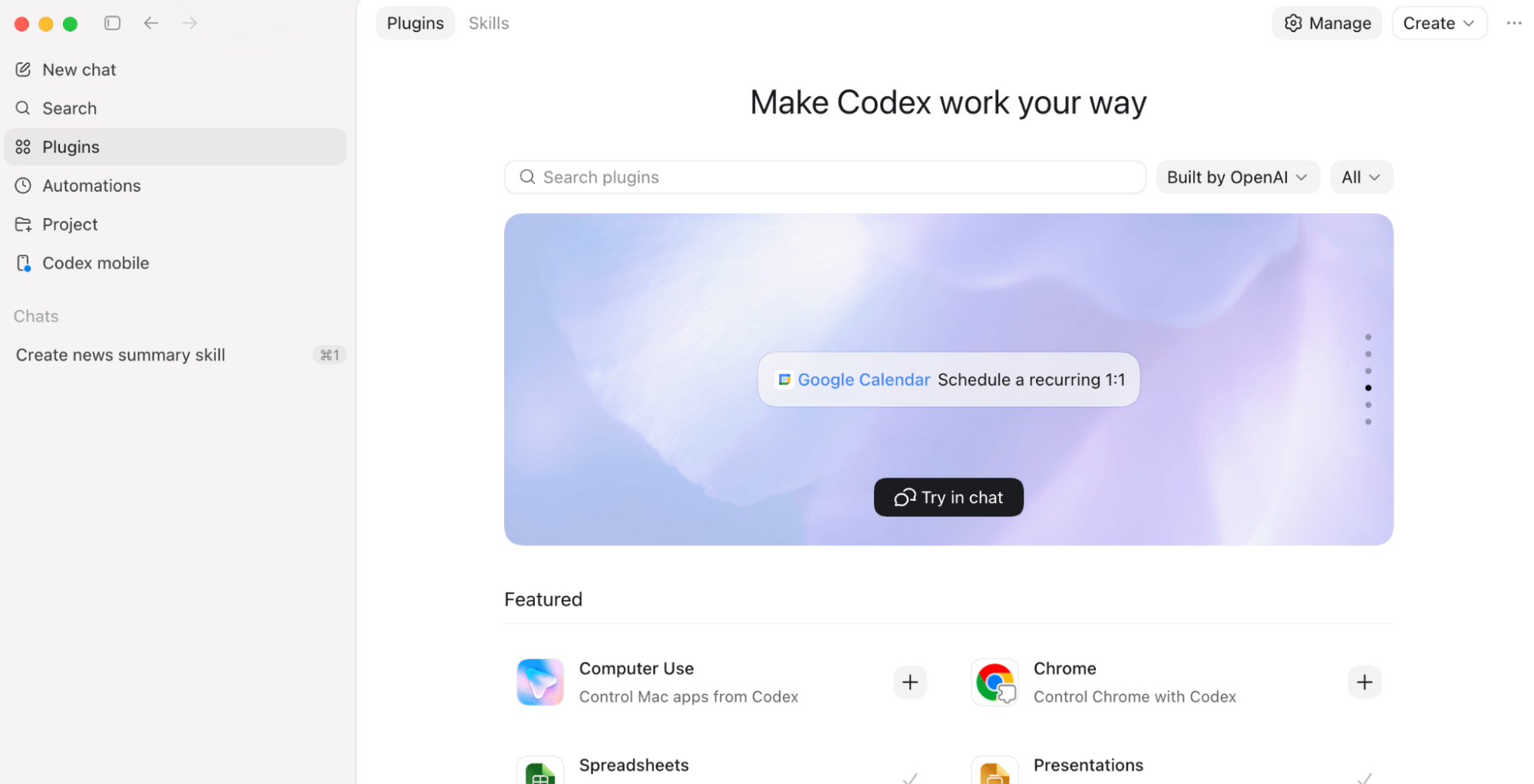
The integration capabilities of Codex are vast, but two plugins currently stand out:
- The Chrome Plugin: This extension allows Codex to interact with the web just like a human. It can navigate to legacy enterprise portals that lack APIs, click buttons, fill out forms, and extract data. It essentially breathes new life into outdated software that would otherwise require manual entry.
- Computer Use Plugin: Designed for the local environment, this plugin allows Codex to manipulate desktop applications. Whether it’s managing Notion pages, checking system logs, or organizing project management tools, the AI can perform routine maintenance while the user focuses on strategy.
The Architecture of Automation: Goals, Heartbeats, and Scheduling
One of the most revolutionary features in the Codex arsenal is the /goal command. This represents a departure from traditional "conversational" AI. When you assign a goal, you are no longer asking for a response; you are assigning a mission.
Thread-Based vs. Heartbeat Workflows
Codex offers two distinct ways to handle recurring tasks:
- Thread-Based Automation: Ideal for tasks that require a clean slate, such as daily report generation or expense reconciliations. Each time the task runs, it starts a fresh context, ensuring that errors from a previous run don’t pollute the next.
- Heartbeat Automations: These are for ongoing, iterative tasks. A "Heartbeat" allows the agent to maintain context over time, "waking up" at set intervals to check for updates in Slack, email, or project management boards. This is perfect for long-running research or monitoring projects where the AI needs to remember what it learned yesterday to make better decisions today.
Real-World Impact: The Construction Industry Case Study
To visualize the implications of this technology, consider a construction firm that previously spent two to three full days every month manually reconciling vendor invoices.
The Old Workflow: Staff manually downloaded invoices, opened Excel, cross-referenced discrepancies, and manually updated the master ledger. Even with basic AI assistance, the manual file-swapping remained a bottleneck.

The Codex Solution: By creating a folder structure organized by vendor, the team deployed an automated workflow. Every Sunday night, Codex triggers five sub-agents—one for each vendor—to analyze the invoices, check them against the master spreadsheet, and produce a final report. The task, which previously consumed nearly 20 hours of labor, now completes in 15 to 30 minutes, fully unattended.
Furthermore, by utilizing a Chrome Plugin workflow, the firm automated its daily field logs. The AI navigates the company’s legacy project management system, extracts the necessary data, performs the required formulas, and updates the reference file. The result is a 90% reduction in time spent on administrative grunt work.
Implications for the Future of Work
The rise of Codex and agentic AI signals a fundamental shift in business economics. We are moving away from the era where "automation" meant hiring a consultant to bridge two APIs. We are entering an era where the business owner is the architect, and the AI is the workforce.
The implications are clear:
- Lower Barrier to Entry: Sophisticated automation is no longer the domain of those who understand JSON, Python, or Webhooks. It is the domain of those who understand their own business processes.
- Increased Focus on Logic: The value of an employee will shift from "doing the task" to "designing the goal." As agents take over the execution, the ability to clearly define, document, and oversee business logic becomes the primary competitive advantage.
- Systemic Efficiency: When agents can work in parallel—spawning sub-agents to handle specialized tasks—the speed at which a business can process information increases by orders of magnitude.
As we look toward the future, the question for business leaders is not whether they will adopt agentic AI, but how quickly they can refine their internal processes to be "agent-ready." The technology is here, the connections are seamless, and the potential to reclaim thousands of hours of productivity is limited only by one’s own ability to articulate the goal.