The annual Google Marketing Live event has long served as the North Star for the digital advertising industry. However, the 2026 summit, held on May 20th, signaled something more profound than a mere product roadmap. It marked the transition of Artificial Intelligence from a speculative tool to the foundational architecture of the global commerce ecosystem.
As advertisers and stakeholders gathered—both physically in the United States and virtually via global livestreams—the message from Mountain View was clear: the era of manual keyword bidding and static creative is effectively over. In its place is a highly fluid, AI-driven environment where the "answer" is the ultimate commodity.
1. Main Facts: A New Paradigm for Search and Conversion
Google Marketing Live (GML) 2026 focused on three pillars: Generative AI Integration, Creative Excellence, and First-Party Data Foundations. Unlike previous years, where AI was presented as an optional enhancement, the 2026 announcements positioned AI as the primary interface through which consumers interact with the web.
The Rise of "AI Mode"
Philipp Schindler, Google’s Senior Vice President and Chief Business Officer, revealed a staggering statistic during his keynote: the number of searches conducted in "AI Mode" (Google’s immersive, generative search interface) has doubled every quarter since its inception. This shift represents a fundamental change in consumer behavior, moving away from a list of blue links toward a conversational, synthesis-based experience.

Key Product Announcements
The event served as a progress report for several initiatives launched in 2025 while introducing new capabilities:
- AI Max for Search: The full integration of Performance Max logic into the traditional search environment.
- Enhanced Asset Studio: A generative suite that allows for the real-time creation of video and image assets based on performance data.
- Google Tag Gateway: A streamlined measurement solution designed to bypass the limitations of a cookieless browsing environment.
2. Chronology: The Road to 2026
To understand the weight of the 2026 announcements, one must look at the trajectory of the past 24 months. The PPC industry has undergone a compressed evolution that would have previously taken a decade.
2024–2025: The Infrastructure Phase
In late 2024 and throughout 2025, Google focused on building the "pipes." This period saw the introduction of AI Max for Search and the initial rollout of the Asset Studio. Advertisers were encouraged to move away from "exact match" obsession and toward "broad match" powered by Smart Bidding.
Early 2026: The Adoption Phase
By the first quarter of 2026, AI-generated search summaries became the default for over 70% of informational queries. Advertisers who failed to adapt their tracking—specifically those who ignored the Google Tag Gateway—began to see significant attribution decay.

May 20, 2026: The Integration Phase
The current GML event represents the "Integration Phase." Google is no longer asking advertisers to test AI; they are showing how AI is "framing products as the answer." The focus has shifted from how the AI works to how advertisers can provide the high-quality data and creative inputs the AI needs to succeed.
3. Supporting Data: The Value of Creative and Measurement
The 2026 summit was heavily grounded in data, aiming to prove that while AI handles the "heavy lifting" of optimization, the human elements of marketing—creative and data strategy—have never been more valuable.
The "49% Incrementality" Rule
One of the most cited figures of the event came from a comprehensive Google study regarding creative impact. The data revealed that high-quality, varied creative assets drive 49% of incremental sales. This debunked the myth that AI-driven campaigns (like Performance Max or Demand Gen) make creative less important. On the contrary, because the AI can test thousands of variations, the "quality floor" for those assets must be significantly higher to achieve a positive return on ad spend (ROAS).
YouTube’s Dual-Purpose Growth
John Nicoletti and Nicky Rettke presented data showing that YouTube is no longer a "top-of-funnel only" platform. By utilizing "Demand Gen" campaigns, advertisers in 2025 saw a 30% increase in conversion efficiency compared to traditional social display ads. The 2026 updates to YouTube focus on turning "passive scrollers into actively engaged users" through interactive, AI-optimized "Shorts" ads that adapt their call-to-action based on the viewer’s past purchase history.

4. Official Responses and Leadership Vision
The executive leadership at Google used the GML stage to address the anxieties of an industry worried about losing control to automation.
Vidhya Srinivasan on "Framing the Answer"
Vidhya Srinivasan, VP and GM of Ads, delivered perhaps the most impactful quote of the summit:
“We’re not just showing your ads. We’re framing your product as the answer.”
This statement signifies a shift in Google’s philosophy. In the past, Google was a matchmaker. In 2026, Google aims to be a consultant. For advertisers, this means the goal is no longer to "rank #1," but to be the "featured solution" within an AI-generated response.

Gaurav Bhaya on Measurement Foundations
Gaurav Bhaya, VP of Measurement, took a more pragmatic tone, reminding the audience that AI is only as good as the data it consumes.
“None of the incredible AI innovations which you’ve seen here today matters if your measurement foundations aren’t there to capture it.”
Bhaya’s presentation focused on the necessity of server-side tracking and the "Google Tag Gateway." He emphasized that in a privacy-first world, "modeled conversions" are the only way to maintain a full picture of the customer journey, and those models require clean, first-party data to function.
5. Implications for the PPC Industry
The takeaways from GML 2026 suggest a radical restructuring of the typical PPC manager’s daily workflow and the broader strategy for brands.

The Death of the "Tinkerer," the Birth of the "Strategist"
The days of spending hours adjusting bids by 5% or granularly managing negative keyword lists are largely over. The AI now handles these micro-adjustments in real-time. The modern PPC professional must now evolve into a Creative Strategist and Data Architect. Their value lies in:
- Feeding the Machine: Providing the AI with high-quality first-party data (CRM uploads, offline conversions).
- Creative Direction: Using tools like Asset Studio not just to "generate images," but to craft a brand narrative that the AI can then fragment and distribute.
- Holistic Management: Moving beyond Google Ads to understand how Demand Gen and YouTube interact with the total marketing mix.
The Privacy Imperative
With the emphasis on the Google Tag Gateway, it is clear that privacy is no longer a "compliance issue"—it is a performance issue. Advertisers who do not adopt server-side tracking and advanced consent modes will find themselves at a massive disadvantage, as their AI models will be "starved" of the data needed to optimize effectively.
Demand Gen as the New Standard
The heavy focus on Demand Gen announcements suggests that Google is aggressively positioning itself against platforms like Meta and TikTok. By combining the intent data of Search with the visual reach of YouTube and Discover, Google is attempting to capture the entire "messy middle" of the consumer journey. For brands, this means a "Search-only" strategy is likely to become obsolete by 2027.
Conclusion: An Interesting Year Ahead
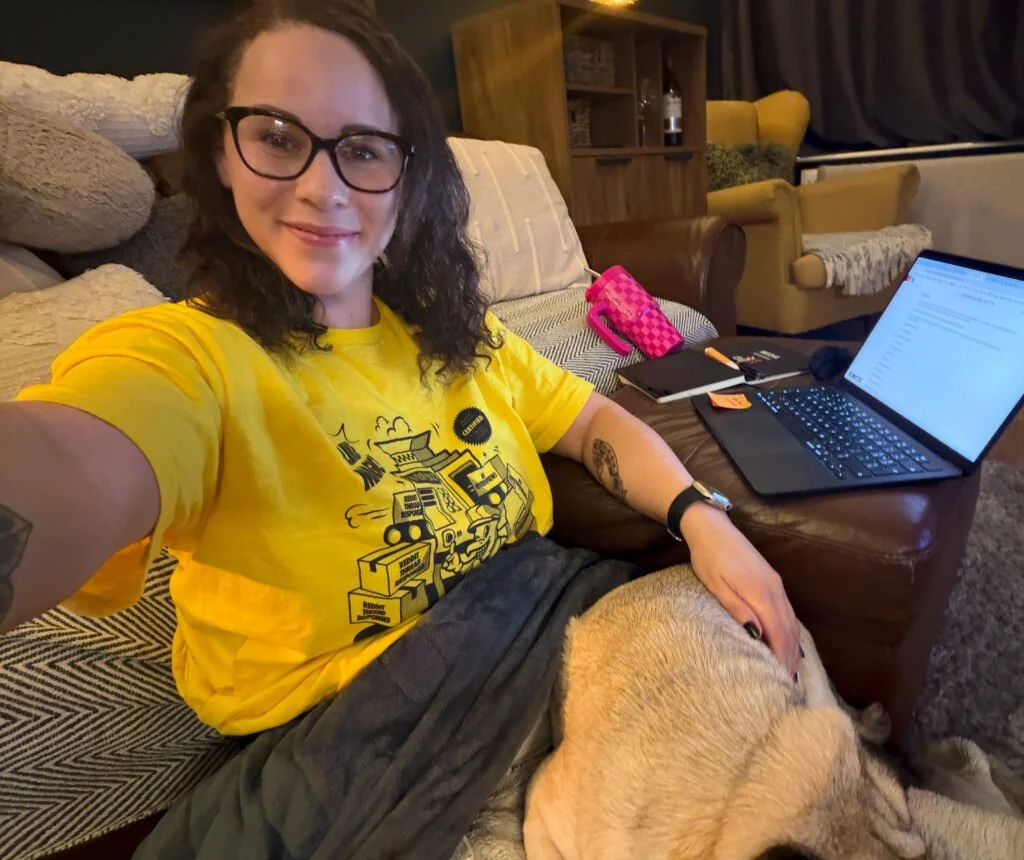
As Sophie Logan and her dog Dexter (the unofficial mascots of this year’s recap) observed, the sheer volume of news from GML 2026 is overwhelming. However, the underlying theme is simple: Embrace the AI, but master the inputs.

The advertising landscape is no longer about "buying keywords." It is about participating in a sophisticated, AI-moderated dialogue between brands and consumers. As we look toward the remainder of 2026 and into 2027, the winners will not be those who have the biggest budgets, but those who have the best data, the most compelling creative, and the willingness to let AI take the wheel while they navigate the map.
The road ahead is automated, immersive, and increasingly conversational. For the PPC industry, the challenge is no longer technical—it is visionary.