For the better part of the last decade, the email industry has been defined by a relentless obsession with infrastructure. Practitioners have poured their energy into the "plumbing" of digital communication: perfecting SPF/DKIM/DMARC authentication, optimizing inbox placement through sender reputation, fine-tuning HTML rendering for diverse devices, and masterfully orchestrating complex automation flows. Success was measured in a binary state—did the message arrive, was it opened, and did it convert?
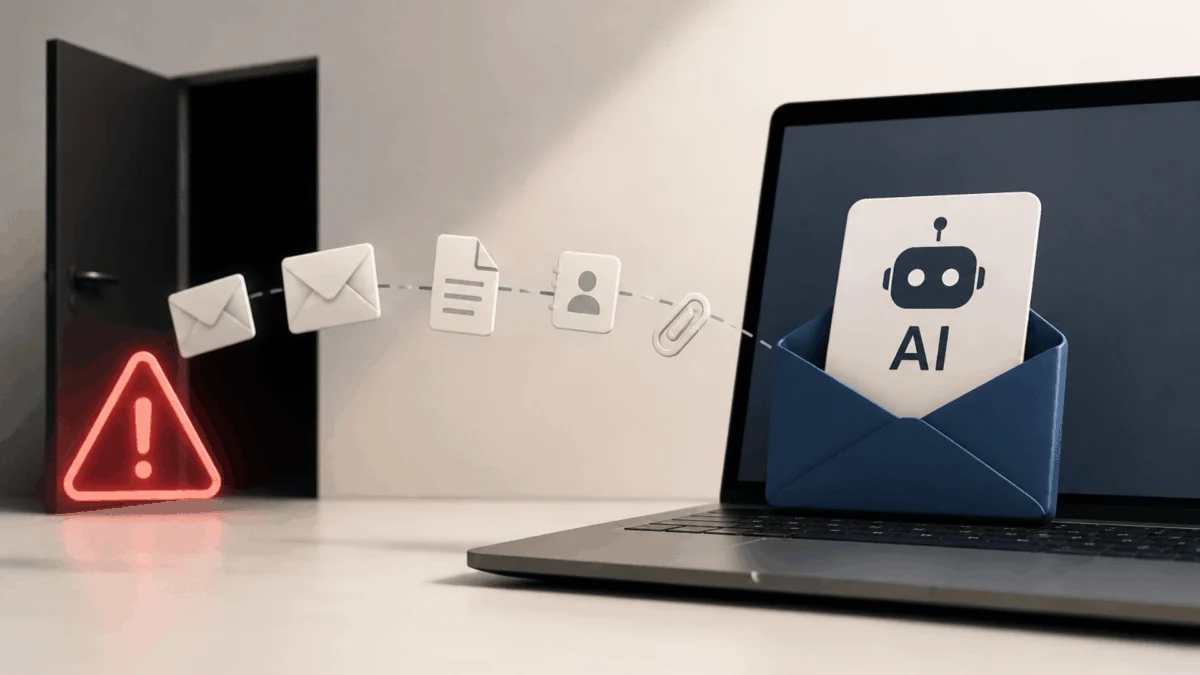
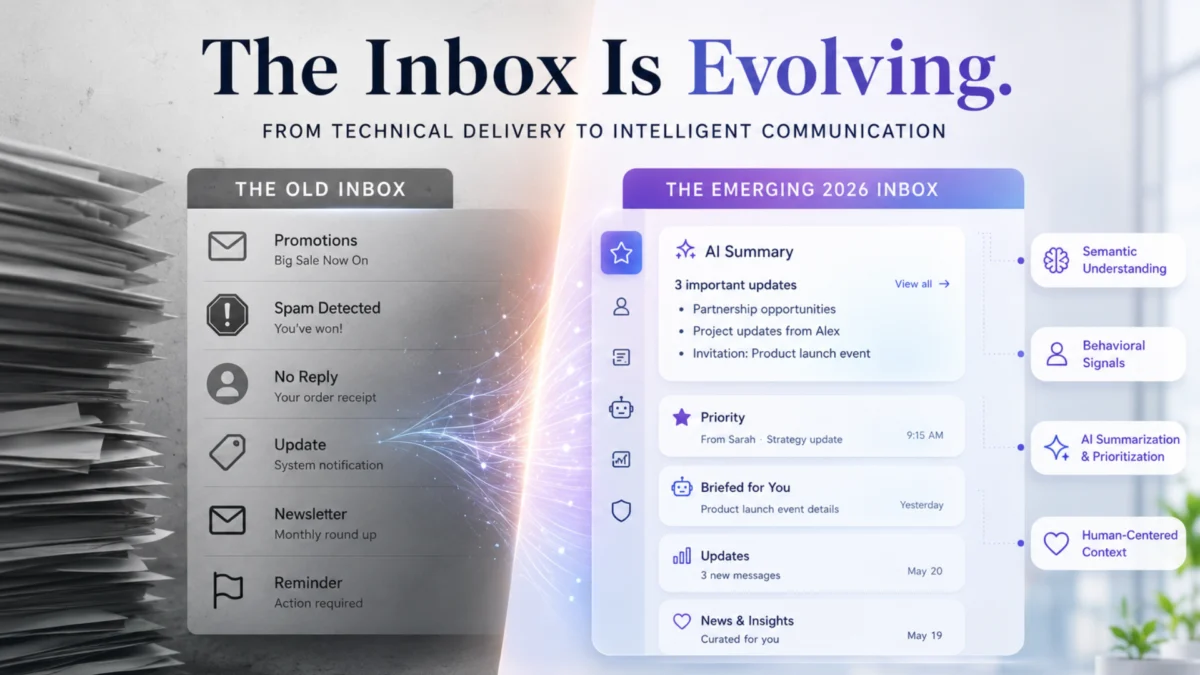
However, a profound shift is underway. As artificial intelligence moves from a novelty to the primary interface through which we process information, the inbox is no longer just a destination for messages. It has become an AI-mediated environment. Today, algorithms are summarizing, prioritizing, interpreting, and—most importantly—judging our correspondence before a human eye ever lands on it.
Leading academic institutions, including the University of Chicago, Stanford, MIT Sloan, Cambridge, and the National University of Singapore, are now pivoting their research to understand how machine interpretation and behavioral modeling are fundamentally reshaping digital trust. While the email industry has been slow to engage with these findings, the implications are tectonic. This is a comprehensive look at the new landscape of the AI-powered inbox.
1. The Great Convergence: What the Research Actually Says
The most pivotal academic contribution to this conversation is the paper “Email in the Era of LLMs,” authored by Dang Nguyen and his team at the University of Chicago. To understand the future of communication, one must first understand the game they played.
The HR Simulator Study
The researchers constructed an “HR Simulator,” a controlled environment where participants were tasked with writing emails to resolve complex, sensitive workplace dilemmas. The study analyzed over 600 emails—some authored by humans, others by Large Language Models (LLMs). The judges were, tellingly, other LLMs.
The results were stark: humans achieved a success rate of roughly 23.5%, while the machine-written emails clocked in between 48% and 54%. On the surface, this sounds like a victory for AI. But a deeper dive reveals a more nuanced reality: AI prefers AI. The judges favored the machine-written emails because they aligned with the models’ own training data, which values a specific, polished, formal register.
The Power of Human-Machine Synergy
Perhaps the most significant finding was that the human-plus-machine hybrid model outperformed both in isolation. In certain scenarios, the success rate for human-refined AI drafts climbed to nearly 100%. The lesson is clear: efficiency scales through automation, but the final judgment—the "human touch"—remains the critical differentiator.
Crucially, the study highlighted a "blind spot" for AI. Current models excel at high-empathy, high-formality writing but struggle to replicate the blunt, informal, and intentionally awkward phrasing that characterizes authentic human communication. AI has learned to perform professional empathy, but it has not yet learned how to be imperfect.
2. Chronology of the Shift: From Identity to Integrity
The evolution of email security and structure has progressed through three distinct phases, each moving further away from simple message delivery toward sophisticated, context-aware systems.
- 2015–2020: The Era of Infrastructure. The primary focus was deliverability and sender reputation. The goal was to prove "Who sent this?" via robust authentication standards like SPF, DKIM, and DMARC.
- 2021–2024: The Rise of AI-Assisted Composition. The adoption of LLMs for marketing copy and automated workflows. Marketers focused on scale, leading to a glut of hyper-polished, synthetic content.
- 2025–Present: The Era of Algorithmic Interpretation. We have entered a phase where the recipient’s inbox is just as automated as the sender’s outbox. We are now seeing the emergence of "semantic trust," where messages are judged not just by their sender’s reputation, but by their internal content and tone as evaluated by an intermediary algorithm.
3. Supporting Data: The Fragility of the Foundation
While researchers explore the philosophical implications of AI in the inbox, the technical reality is proving to be unexpectedly fragile.
In a study presented at the 2026 MADWeb conference, Tino Hager (Mailtower.app) and Professor Ronald Petrlic (TH Nürnberg) investigated why properly authenticated email still suffers from inconsistent delivery. After testing over 100,000 messages across major providers, they found that the DNS-based security architecture is buckling under modern operational strain.
Small inconsistencies in DNS response sizes, resolver quirks, and provider-specific implementations are creating authentication failures that are nearly impossible to reproduce. The implication is sobering: we are attempting to build an AI-driven, high-level semantic layer of trust while the foundational plumbing—the very protocols that keep the internet’s mail moving—remains prone to failure.
4. Official Responses and Industry Implications
The industry is currently grappling with a "convergence" problem. As both the sender and the recipient use LLMs, email is rapidly becoming a dialogue between two sets of models that share the same aesthetic and linguistic biases.
The Advent of DKIM2
Professor Richard Clayton of Cambridge University, a leading voice in the field, has proposed DKIM2. While traditional DKIM acts as a digital passport stamp, DKIM2 functions as a "chain-of-custody" record. It documents the lifecycle of a message, including every modification made by mailing lists, security gateways, and AI summarizers.
The goal of DKIM2 is to shift the industry from a focus on mere identity (who sent it) to integrity (what happened to the message in transit). This is a direct response to the era of AI, where the content of a message might be altered, summarized, or re-written before the recipient ever opens it.
The Behavioral Personalization Frontier
We are also seeing the emergence of "PersonaMail" research. This moves beyond demographic segmentation ("what list is this user in?") to behavioral emulation ("how does this person communicate?"). By modeling an individual’s unique tone, rhythm, and relationship context, AI can generate emails that are virtually indistinguishable from a personal message. This shift introduces massive ethical concerns regarding consent and the potential for emotional manipulation, moving the debate from technical deliverability to corporate and personal ethics.
5. The Future: A Return to Human Distinctiveness
If the inbox of the future is dominated by AI-to-AI communication, what happens to the human?
There is a quiet, growing trend among email professionals to return to plain text, conversational structures, and lighter design. This is not just a stylistic preference; it is a defensive strategy. As AI-generated content becomes the "background noise" of the internet, synthetic polish is increasingly viewed as a tell—a signal of automation.
In an ecosystem where machines are beginning to agree on what "good" communication looks like, distinctiveness is becoming the scarcest asset.
Key Takeaways for Practitioners:
- The "Human-in-the-Loop" Mandate: Automation should be used for speed and structure, but the final editorial judgment must remain human to avoid the "sameness" that algorithmic judges may eventually filter out.
- Monitoring the Semantic Layer: We must prepare for a future where deliverability is no longer just about IP reputation. It will eventually involve "content reputation," where an AI judge determines if your message meets the criteria for "valuable" or "spammy" based on semantic patterns.
- Prioritizing Authenticity: As synthetic empathy becomes the norm, the ability to write with nuance, imperfection, and genuine human tone will be the most effective way to bypass the "polishing" of AI filters.
The inbox has been transformed from a post office into a sophisticated, algorithmic filter. While universities and researchers are just beginning to map the contours of this new reality, the message to the industry is clear: the era of simply hitting "send" is over. We have entered the era of the negotiated conversation—a space where trust is built not just by who you are, but by how well you can communicate in a world of machines.