As the rapid pace of artificial intelligence continues to reshape the digital marketing and enterprise landscapes, professionals are constantly forced to adapt to emerging tools, platform updates, and shifting workflows. This week’s intelligence update covers a diverse array of practical applications—from utilizing ChatGPT and Canva for print layouts to producing professional-grade AI video with Google’s Gemini Omni. Additionally, major developments from industry leaders like Anthropic, Google, and OpenAI underscore a broader industry pivot toward faster models, persistent agent ecosystems, and multimodal integration.
Main Facts: The Intersection of Practical AI and Enterprise Ecosystems
The modern marketer or business owner is expected to wear a myriad of hats, balancing strategy, content creation, data analytics, and customer engagement. Recent developments in generative AI seek to alleviate these demands by bridging the gap between specialized tasks and accessible execution.
1. Streamlining Print Design with ChatGPT and Canva
Graphic design often presents a bottleneck for non-designers. However, workflows combining ChatGPT and Canva have transformed how print materials are conceptualized and produced. By briefing ChatGPT as if it were a human client—supplying content, print specifications, and brand guidelines—users can generate surprisingly accurate foundational designs. Through iterative art-direction tools, users can modify backgrounds, remove elements, and visually mark-up drafts. Exporting these drafts into Canva and leveraging features like Magic Layers breaks the design down into individually editable elements, allowing for rapid font alignment, spacing adjustments, and final export-readiness.
2. Democratizing Professional Video Production
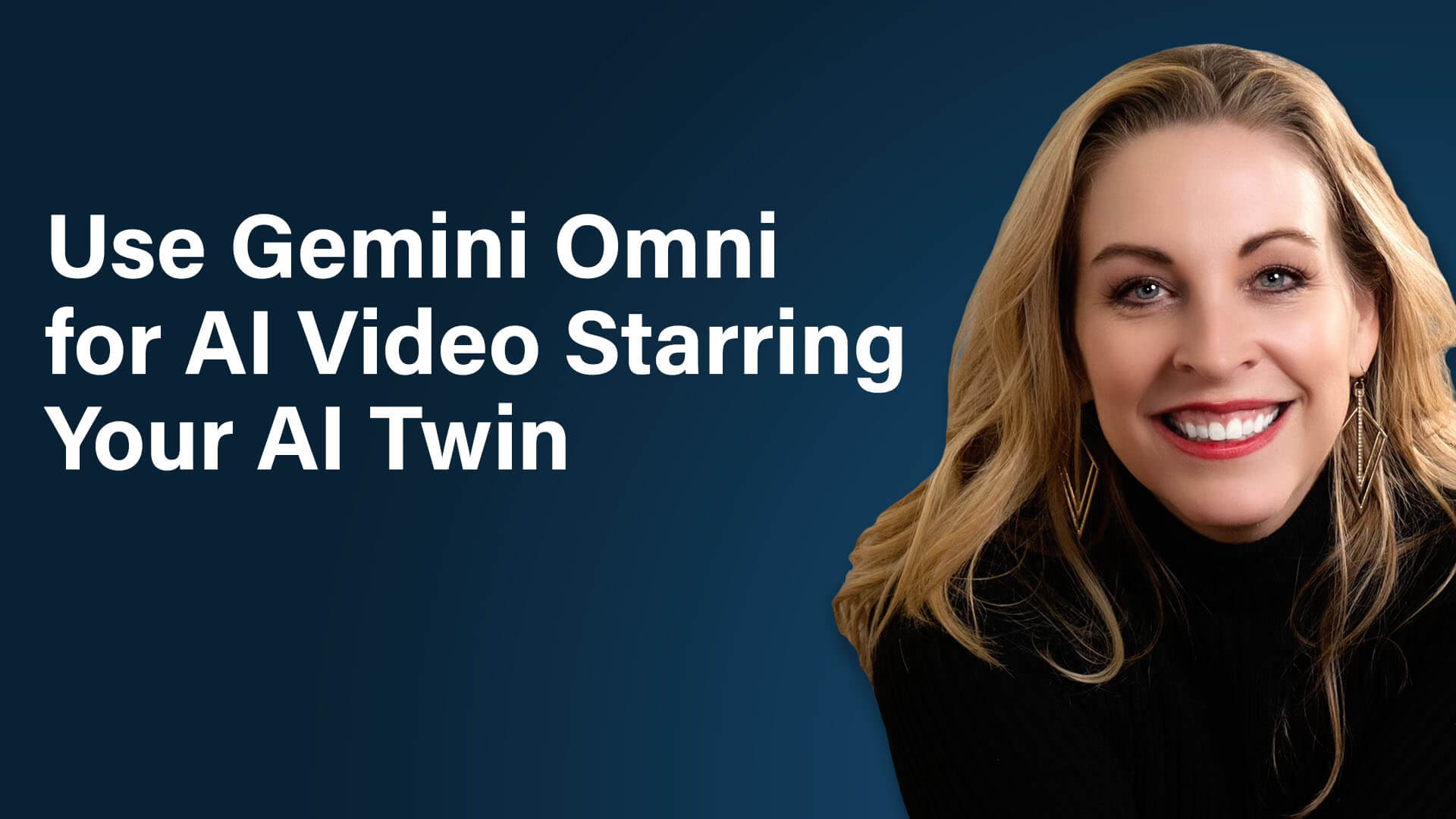
The barrier to entry for creating high-end video content continues to plummet. Using advanced systems like Google’s Gemini Omni, creators can generate scroll-stopping video hooks, establish realistic AI twins, and edit pre-recorded footage without the need for a traditional film crew or advanced technical prompting skills. Strategies popularized by industry experts emphasize treating prompts like a television director—focusing on camera placement, precise natural-language instructions, and pre-production planning to string together cohesive, longer-form narratives.
3. The Move Toward Portable AI Systems
Tool fragmentation remains a constant challenge for digital professionals. Whether dealing with sudden platform outages or migrating between ecosystems, relying on a single vendor can paralyze productivity. Experts advocate for "portable AI workflows"—frameworks designed to function across multiple Large Language Models (LLMs). As demonstrated when platforms experience downtime, an adaptable prompt system allows users to seamlessly transition workflows from one model (such as Claude) to another (such as ChatGPT) without losing momentum.
Chronology: A Week of Major Industry Releases
The artificial intelligence sector experienced a wave of high-profile product announcements and model deployments, fundamentally expanding the capabilities available to developers, enterprises, and everyday creators.
- Anthropic’s Model Optimization: Anthropic launched Claude Sonnet 5.5, targeted at coding, professional workflows, and high-efficiency content creation. Positioning the model between the high-volume Haiku 5.5 and the advanced Opus 5.5, Anthropic delivered response speeds over 30% faster while reducing token consumption per task.
- Google’s Multimodal Expansion: Google introduced Gemini 3.8 Live with Live Avatar, integrating animated visual personas capable of expressive, real-time conversation alongside background tool execution across 97 languages.
- Ecosystem Integration: Google rolled out extensive third-party application connections for Gemini, incorporating tools such as Airtable, Linear, Monday.com, Adobe, Squarespace, and Webflow into its productivity suite.
- Advanced Audio Capabilities: Google launched Gemini 3.8 Flash TTS and Flash-Lite TTS, bringing customizable voice generation, multi-speaker dialogue staging, and detailed performance direction to content creators and developers.
- OpenAI DevDay 2026 Breakthroughs: OpenAI unveiled over 20 major announcements, shifting ChatGPT from a conversational chatbot into an expansive platform for persistent agents, collaborative team spaces, and software development.
- Cost Reductions and Model Scaling: OpenAI introduced GPT-6 Sol and GPT-6 Luna, extending the architectural advances of GPT-6 Astra into more affordable, high-efficiency models that cut API prices in half while upgrading prompt caching protocols.
Supporting Data: Performance Metrics and Platform Scaling
The latest generation of AI models reflects a concerted industry push toward computational efficiency, affordability, and massive user scaling:
- Speed and Efficiency Gains: Anthropic’s Claude Sonnet 5.5 achieves response generation speeds more than 30% faster than its predecessor while utilizing fewer tokens per operational task.
- Global Accessibility: Google’s Gemini 3.8 Live Avatar rollout supports 97 distinct languages, enabling global enterprise deployment with localized, brand-specific visual representations.
- Developer and Ecosystem Reach: OpenAI’s expanding ecosystem is designed to interface with an estimated 1.2 billion weekly users, connecting a vast consumer base with third-party developers through new APIs, marketplace extensions, and the Sign in with ChatGPT framework.
- Cost Mitigation: OpenAI’s introduction of the GPT-6 Sol and Luna models features a direct 50% reduction in API pricing compared to previous iterations, significantly lowering the financial barrier for deploying autonomous agents and long-running conversational threads.
Official Responses and Strategic Positioning
Major technology companies are deliberately framing these releases to capture specific market segments, ranging from enterprise automation to individual creator empowerment.
Anthropic’s Focus on Professional Efficiency
Anthropic’s release of Claude Sonnet 5.5 highlights a strategic commitment to enterprise workflows where speed and cost-efficiency dictate operational success. By balancing high-level reasoning capabilities with reduced token overhead, Anthropic aims to capture market share among software developers and corporate content teams looking to minimize operational expenditures without sacrificing output quality.
Google’s Multimodal and Enterprise Strategy
Google’s rapid iteration of the Gemini ecosystem—spanning live visual avatars, native text-to-speech customization, and deep third-party app integration—illustrates an ambition to make Gemini the central operating hub for digital productivity. By connecting tools like Adobe, Squarespace, and Airtable directly into the chat interface, Google is positioning its AI not merely as a generative assistant, but as an active participant in cross-platform workflows.

OpenAI’s Evolution Into an Agent Platform
OpenAI’s DevDay 2026 announcements signal a definitive transition from prompt-response interfaces to persistent, autonomous agent ecosystems. By introducing always-on agents like "Dots," collaborative spaces for teams, and cloud-based Codex workflows, OpenAI is actively building an operating layer for software development and organizational collaboration, positioning ChatGPT as an infrastructure platform rather than a standalone application.
Implications: What This Means for Marketers and Business Leaders
The convergence of accessible generative design, sophisticated video tools, and robust enterprise agent platforms carries profound implications for professionals across all industries.

1. The Death of the Single-Tool Dependency
As demonstrated by workflow portability—where users can pivot instantaneously between Claude and ChatGPT during outages—professionals must build platform-agnostic systems. Relying too heavily on the proprietary quirks of a single AI model creates vulnerabilities. Establishing standardized prompt engineering frameworks and system checklists ensures that operational momentum remains uninterrupted regardless of vendor updates or service interruptions.
2. Compression of Production Timelines
Tasks that previously required specialized agency support—such as graphic design print layouts, multi-speaker audio production, and AI avatar video generation—can now be executed in-house within minutes. Marketers are shifting from being direct creators of tactical assets to directors and curators of AI-generated outputs. Knowing how to effectively prompt, iterate, and stitch together modular AI components is becoming a core competency for modern marketing teams.

3. The Rise of Autonomous Collaboration
With the introduction of persistent agents and deeper workspace integrations, the nature of human-AI collaboration is changing. AI is no longer a tool consulted occasionally for brainstorming; it is becoming an active team member capable of managing long-running tasks, executing background workflows, and maintaining contextual awareness across corporate ecosystems. Businesses that learn to integrate these persistent systems into their daily operations will unlock unprecedented levels of scalability and efficiency.