By Tech & Enterprise News Desk
Published: October 2026
Main Facts: The Shift to Agent-Led Growth
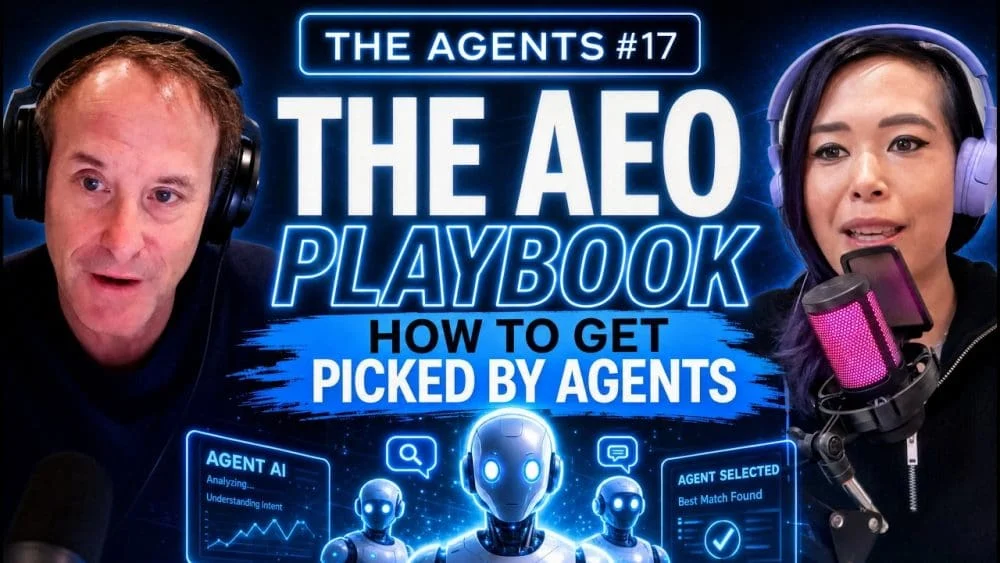
The boundary between human operations and artificial intelligence in B2B software is dissolving. In a recent live edition of The Agents, SaaStr leadership—including Jason Lemkin and Amelia—unveiled the current state of their internal go-to-market (GTM) engine. Operating with a lean team of just three humans paired with 21 autonomous AI agents, SaaStr has redefined what it means to scale sales, marketing, and customer support.
At the center of this transformation is "10K," a custom-built AI agent engineered on Replit. Over the span of 16 months, 10K has evolved from a basic Notion helper into an enterprise-grade virtual VP of Revenue wired into more than 30 core GTM tools. By shifting from the traditional mantra of "ask your developer" to "ask your agent," SaaStr has managed to automate the vast majority of its inbound qualification, outbound follow-ups, renewal tracking, and competitive intelligence—all while maintaining strict human-in-the-loop guardrails.
The core thesis of SaaStr’s agent-led growth strategy rests on two pillars: optimizing internal execution through hyper-connected autonomous workflows, and ensuring maximum visibility in "Answer Engine Optimization" (AEO)—the emerging discipline of ensuring that AI models recommend your software over competitors.
Chronology: From Notion Helper to an Enterprise GTM Orchestrator
To understand how modern agent-led growth works in practice, one must trace the incremental evolution of SaaStr’s internal infrastructure.
Phase 1: The Single-Task Beginning (16 Months Ago)
The journey began out of sheer operational fatigue. Amelia needed a digital assistant to streamline basic outbound tasks and eliminate the tedious requirement of logging into Salesforce and Notion across multiple tabs every Monday morning. 10K was deployed as a lightweight custom app on Replit to handle these localized administrative chores.
Phase 2: System Expansion and Tool Integration
As 10K proved its reliability, SaaStr progressively expanded its systems access—much like onboarding a human employee who earns trust over time. Integrations were added one by one, scaling until the agent was connected to over 30 core platforms spanning CRM, email sequencing, data enrichment, and calendar management.
Phase 3: The Birth of "The Prospector"
With 21 agents running across a three-person team, friction and operational blind spots inevitably emerged. Inbound leads, outbound replies, renewal alerts, and support tickets were scattered across disparate dashboards, causing valuable threads to slip through the cracks. To solve this, Amelia engineered "The Prospector"—a unified command center where every single incoming and outgoing GTM touchpoint converges into a single, highly actionable queue.
Phase 4: Autonomous Outbound and AEO Audits
In recent months, SaaStr integrated external browser-driven agents like Muse alongside platforms such as Agentforce, Monaco, and Artisan. This allowed the team to automate recurring tasks—ranging from daily competitor tracking to conducting comprehensive AEO audits across major large language models (LLMs)—cementing a fully autonomous loop between internal execution and external market perception.
Supporting Data & Architecture: How the Stack Operates
SaaStr’s architecture proves that companies do not need to start with a sprawling, complex stack; rather, they can build iteratively. Below is a detailed breakdown of how their key workflows function today.
1. The Prospector: Unified Queue Management
The Prospector solves the fragmentation crisis of modern sales stacks. Instead of forcing human operators to monitor separate tabs for email replies, support requests, and renewals, an underlying orchestrator ingests all signals, filters out the noise, and assigns specific goals to each record type.

- The Workflow: Every record is persistently tracked 24/7. Whether it takes three touches or ten, the agent continues to work the thread until it reaches a definitive terminal state: Closed Won, Closed Lost, or fully resolved.
- The Learning Loop: Centralization trains the agent. By processing inbound inquiries, outbound replies, and support tickets in one place, the system learns which patterns drive conversions, how many touches a specific motion requires, and which questions frequently recur.
2. Inbound Acceleration: 10-Minute Meeting Bookings
Inbound lead generation represents the lowest-hanging fruit for any B2B organization adopting AI agents. When a prospect submits an inquiry, SaaStr’s Prospector executes a rigorous four-step sequence in under ten minutes:
- First-Party Data Check: Before querying external databases, the agent checks internal history. Has the lead attended a past event? Are they a newsletter subscriber? Is there an existing Salesforce opportunity? This historical context instantly arms the sales team with insights a newly assigned human rep would lack.
- Third-Party Signal Enrichment: The agent pulls supplementary data from integrated enrichment sources to fill in missing firmographic details.
- Personalized Prospectus Generation: The system dynamically builds a custom sponsorship or pricing page tailored specifically to the prospect’s implied needs. Equipped with built-in heat mapping, the agent alerts human reps precisely when the prospect views the page, highlighting which sections held their attention.
- Tailored Outreach and Scheduling: Utilizing a custom, tokenized booking engine built by 10K to replace traditional schedulers, the agent drafts a hyper-personalized email suggesting the exact internal stakeholder (e.g., Amelia or David) the prospect should meet. Ten minutes prior to the call, the agent delivers a comprehensive briefing packet directly to the team.
3. Outbound Strategy: Multi-Tool Sourcing, Unified Replies
While SaaStr utilizes multiple outbound engines—including Agentforce, Monaco, Artisan, and 10K—they deliberately avoid pulling every outgoing email into the central dashboard to prevent data overload. Instead, the Prospector focuses strictly on follow-up and reply management.
- The system organizes outbound interactions into clear tabs: Active, Ready, Waiting, Needs Review (flagged items requiring human sign-off), Closed Lost, and Sent.
- By flagging dormant threads—such as a prospect going silent for three days after an initial response—the agent ensures leads never languish. It prompts human operators to pivot channels, suggesting a LinkedIn message or a touchpoint with an alternate stakeholder at the target account.
Official Responses and Strategic Insights
During the live broadcast of The Agents, Jason Lemkin and Amelia shared candid insights regarding the realities of deploying AI in a high-growth environment.
On AI Outbound Quality:
Addressing the debate over the quality of AI-generated copy, Jason Lemkin noted that while standard AI cold emails generally score around a 5 out of 10 (which is still significantly higher than the 2 or 3 typically achieved by human SDRs), the true differentiator is first-party data.
"Our AI VP Revenue 10K now books meetings with prospects in 10 minutes or less," Lemkin shared via social channels. "You can put much, much more care and info into those first prospect interactions than any human could, because it has access to so much first-party data—things even the prospect doesn’t know."
On the Five Winning Outbound Plays:
SaaStr’s data indicates that certain campaigns drastically outperform generic prospecting:
- Competitor & Lookalike Tracking: Feeding historical customer lists into tools like Muse to identify top-performing company domains and target lookalikes.
- Direct Competitor Targeting: Prospecting the active customer bases of direct market competitors.
- Lapsed Customers & Champion Tracking: Re-engaging old accounts through newly discovered stakeholders or tracking previous champions who have moved to new companies.
- Event Invites: Leveraging agentic outbound to drive high-conversion RSVPs for intimate executive dinners and receptions.
- Response Pattern Analysis: Asking agents to analyze historical responder profiles (tenure, industry, tech stack) to continuously refine future targeting parameters.
On Answer Engine Optimization (AEO):
Shifting focus to the second pillar of agent-led growth—how other AI agents discover and recommend software—Amelia deployed Muse to run a comprehensive AEO audit. By prompting ChatGPT, Gemini, and various LLMs with cold queries where SaaStr should naturally be the answer, the audit revealed that SaaStr appeared in 46 out of 50 prompts.
Crucially, the audit uncovered that AI agents weigh verifiable facts—such as public pricing and renewal rates—heavily, while largely ignoring subjective marketing fluff, flashy web design, and unverified testimonials.
Implications: The Death of Traditional Vendor Discovery
The most profound implication of SaaStr’s experiment extends far beyond their own internal revenue numbers; it signals a fundamental restructuring of B2B buyer behavior.
As enterprise buyers increasingly rely on AI agents to perform initial software research, vendor evaluation is shifting from human-driven sales calls to automated machine-to-machine discovery. Lemkin highlighted this shift with a striking anecdote from their own operations: when an internal infrastructure problem arose, SaaStr asked their operational agents for recommendations. The agents unanimously pointed toward Resend. Without a single sales call, a product demo, or a human negotiation, SaaStr migrated 100% of that workload to Resend within a week. The competing legacy vendors never even knew they were evaluated.
Key Takeaways for B2B Operators:
- Audit Your AEO Footprint: B2B companies must maintain a bank of third-party AI agents (ChatGPT, Claude, Muse, and platform-native tools) and periodically prompt them to see how often—and under what context—their brand is recommended against competitors.
- Prioritize Verifiable Data Over Marketing Copy: Because LLMs prioritize hard facts (pricing transparency, verified renewal rates, technical documentation) over subjective branding, marketing teams must restructure their content to be easily scannable and verifiable by machine evaluators.
- Embrace Iterative Automation: You do not need a 30-tool stack on day one. Start small—automate inbound lead research or recurring competitive audits using flexible agentic environments like Muse or Replit—and layer systems as trust and capability scale.
As autonomous agents transition from novelty assistants to core decision-makers, companies that fail to optimize for both human buyers and machine evaluators risk becoming entirely invisible in the next era of enterprise software growth.