Main Facts
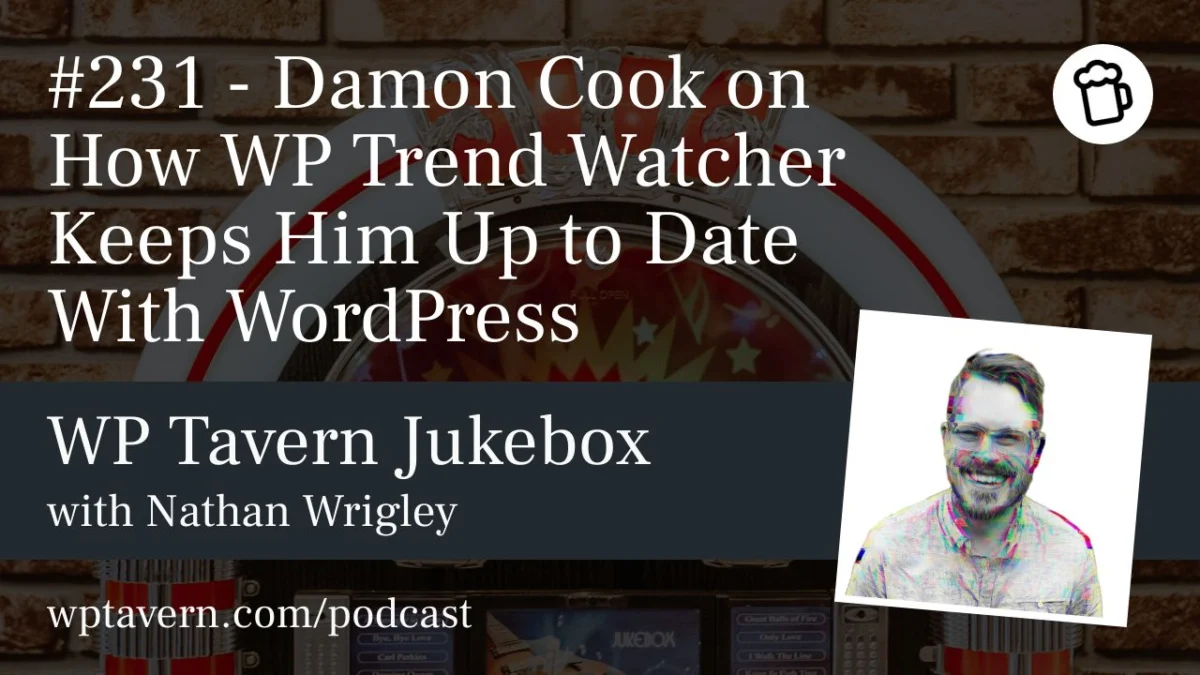
The relentless growth of the WordPress ecosystem has created a massive information management challenge for developers, freelancers, and agency owners. To combat this "fire hose" of updates, community news, and feature releases, longtime WordPress contributor and developer Damon Cook has created WP Trend Watcher, an open-source, locally run application designed to aggregate, process, and summarize the community’s digital output.
Discussing the tool on a recent Jukebox Podcast episode from WP Tavern hosted by Nathan Wrigley, Cook detailed how WP Trend Watcher bypasses the pitfalls of fully automated content mills. Instead, it utilizes a "human-in-the-loop" model. The software parses a targeted network of WordPress RSS feeds, passes the data through local artificial intelligence models via tools like LM Studio, and generates concise preliminary summaries. Cook then personally audits, fact-checks, and expands upon these summaries with his own critical oversight before publishing weekly briefings.
By running on local hardware—such as Apple Silicon with limited RAM constraints—Cook’s project showcases a privacy-conscious, highly customizable approach to modern content curation. Rather than delegating the entire process to unsupervised artificial intelligence, WP Trend Watcher bridges the gap between raw data collection and expert analysis, giving WordPress professionals a reliable lifeline to stay ahead of core developments, version shifts, and broader trends.
Chronology
The genesis of WP Trend Watcher reflects both a personal evolution in Cook’s career and the rapid advancements in edge AI capabilities.
- Pre-2024: Damon Cook establishes himself as an active developer within the WordPress ecosystem, working alongside WordPress-centric agencies and contributing heavily to core project channels, including Slack, Trac, and WordPress.org. Over a decade in the space, he experiences firsthand the shifting landscape of reliable community reporting sources.
- 2024–2025: Cook pivots his career, transitioning from a hosting company role to operating his own freelance business, Noma Digital, while taking on additional contract development work. The need to stay informed on bleeding-edge developments—such as upcoming core releases (e.g., WordPress 7.1)—becomes a critical part of maintaining business efficiency. However, the sheer volume of fragmented information proves increasingly time-consuming to track manually.
- Late 2024 / Early 2025: Driven by a personal need to streamline his information intake without relying on untrustworthy automation, Cook begins developing WP Trend Watcher as a TypeScript-based open-source project hosted on GitHub (
colorful-tones/wp-trend-watcher). - Recent Months: Cook implements local AI experimentation, utilizing applications like LM Studio to run lightweight, open-weight models (such as Qwen variants) locally on his Mac. He formalizes a weekly publishing cadence, releasing structured briefings on GitHub Pages that pair AI-driven bullet points with rigorous human fact-checking and commentary.
Supporting Data
The operational mechanics of WP Trend Watcher rely on a specific stack of modern technologies and workflows designed to balance computational efficiency with quality control:
- Technology Stack: Built primarily in TypeScript, the codebase functions as a local command-line or script-driven utility. It queries a curated list of reliable WordPress RSS feeds based on a time-elapsed check (running on a weekly cadence).
- AI Integration & Local Models: Cook utilizes LM Studio to run models locally on an 18GB memory architecture. This allows him to experiment with diverse open-weight models, swapping them out periodically to test variations in inference quality and output formatting.
- Content Output Scale: Typical weekly reports feature approximately 15 to 20 tightly edited items. Each entry includes an objective title, a source link, and a concise 20-word AI-generated summary prompted specifically for developers and agency owners.
- Quality Control Metrics: To prevent redundancy and low-value output, the prompt engineering includes automated safeguards against duplicate coverage across competing news sources, alongside explicit checks for deterministic, fact-based reporting rather than speculative fluff.
- Time Investment: Cook explicitly highlights the time he spends auditing the output, transforming a purely automated ingestion pipeline into a verified editorial product.
Official Responses and Perspectives
During their conversation on the Jukebox Podcast, Nathan Wrigley and Damon Cook explored the philosophical and practical implications of using AI for news curation:
-
Damon Cook on the "Selfish" Origin and Trust:
"It stemmed from a selfish kind of interest in keeping up on these news sources… I didn’t want to automate the whole thing, like just go get RSS feeds, AI summarises, AI publishes, just do it… I limited it to that contract of, go get these RSS feeds, the latest news, come back, summarise them, and then show them to me so I can audit them."
-
Cook on Fact-Checking as a Memory Aid:
"The key kind of component there is when the summaries happen, it’s using local models… It’s like a game of just fact-checking in a way. Because if I just read the paragraph from the AI summary… it’s not really covering, and might miss something in that full article that actually really interested me."
-
Nathan Wrigley on the Information Deluge:
"That sort of fire hose is very hard to keep a track of… It strikes me that in the era of AI, that would be… the intention here is to cut out that. Cut through the dross, sift out the bits and pieces that are of interest, and make the bits that finally reach your eyeballs worthy of attention."
-
Cook on the Transparency of Human-in-the-Loop Workflows:
"It does make me feel cheap [to use AI], and I think that’s kind of why I publish these. It’s trying to be transparent. So if anybody’s going to go and read this, they know that I even put at the bottom how much time I spent trying to look through everything."
Implications
The deployment and philosophy behind WP Trend Watcher carry several notable implications for the future of tech journalism, community organization, and professional development within open-source ecosystems:
1. The Death of Manual Content Sifting
For professionals like podcasters, agency owners, and core contributors, the daily chore of visiting dozens of disparate blogs, trac tickets, and social media channels represents a massive inefficiency. Tools like WP Trend Watcher prove that local, AI-assisted aggregation can successfully minimize dead time—helping users find relevant links in seconds rather than hours.
2. Guarding Against the "Race to the Bottom" in AI Publishing
The internet is increasingly saturated with unmonitored, purely synthetic content farms that churn out low-quality AI summaries without human oversight. Cook’s insistence on a strict "human-in-the-loop" requirement establishes a healthy counter-model. By treating AI as an indexing assistant rather than an autonomous publisher, creators can maintain integrity, voice, and factual accuracy.
3. The Rise of Local-First, Privacy-Conscious Tooling
By leveraging tools like LM Studio and open-weight models on consumer hardware (such as Apple Silicon Macs), developers can process sensitive industry intelligence without piping data through third-party cloud APIs. This trend empowers individual freelancers to build bespoke productivity suites tailored to their exact niche.
4. Toward Longitudinal Trend Analysis
As WP Trend Watcher matures, its underlying architecture hints at a fascinating future capability: maintaining long-term state across years of community developments. Rather than merely summarizing what happened this week, future iterations could theoretically answer complex, retrospective queries about how specific WordPress core features evolved from initial proposals to final shipping code—fundamentally changing how open-source communities archive and understand their own history.