In a high-stakes realignment of the AI infrastructure sector, Denver-based data center giant Crusoe has officially terminated its plans to utilize a revolutionary line of stationary natural gas turbines developed by fellow aerospace innovator Boom Supersonic. The move, which marks the end of a $1.25 billion procurement agreement, signals a significant shift in the strategic roadmap for both companies as they navigate the volatile, energy-hungry demands of the modern artificial intelligence boom.
The Genesis of the Agreement: A Synergy of Energy and Flight
To understand the weight of this dissolution, one must look at the ambitious nature of the original partnership. Announced with significant fanfare, the deal sought to bridge the gap between aviation engineering and the power-intensive requirements of AI data centers.
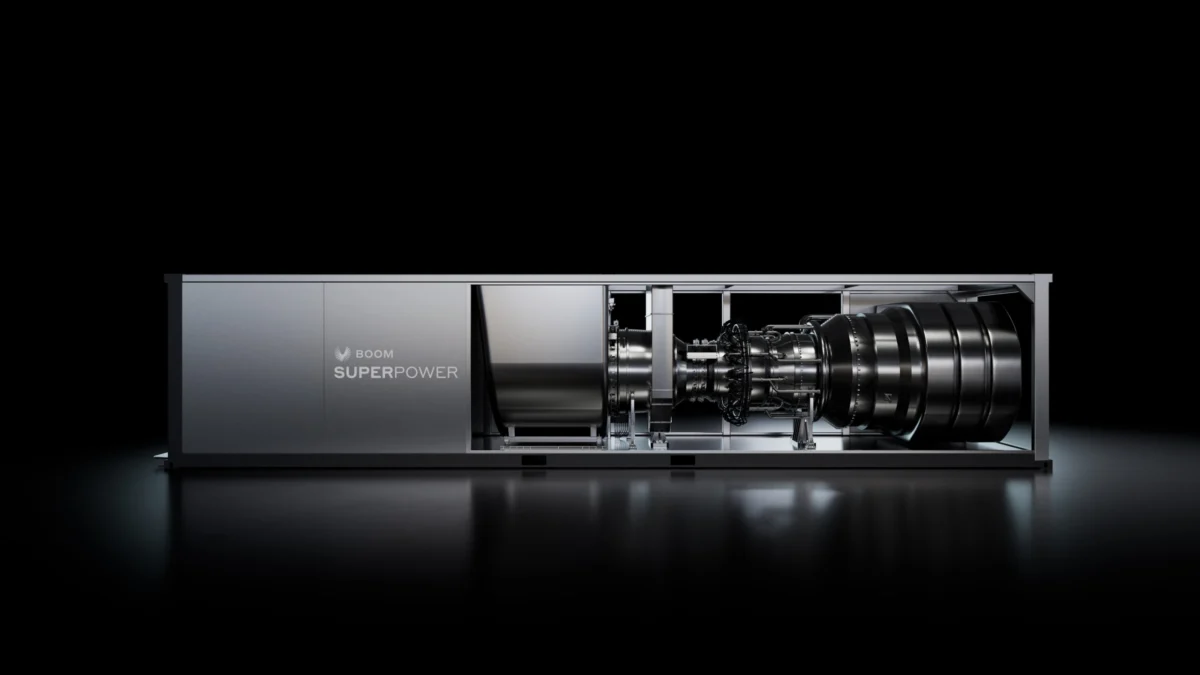
Boom Supersonic, best known for its mission to return supersonic travel to the skies with its Overture passenger jet, had pivoted a portion of its resources toward a terrestrial application. By leveraging the design of its "Symphony" engine—the propulsion system powering the Overture—Boom developed the "Superpower" turbine. With roughly 80% of parts shared between the jet engine and the stationary turbine, the move promised to provide data centers with efficient, reliable, and high-density power.
Crusoe, a company that began its life in 2018 as a pioneer in capturing "stranded" natural gas from oil fields to power bitcoin mining, has evolved into a titan of AI infrastructure. With a massive $3.9 billion fundraising round recently closed, Crusoe is currently one of the most vital architects of the "AI factory" model, building campuses in regions like Abilene, Texas, that serve as the backbone for OpenAI and Oracle’s computing needs. The agreement to purchase 29 of these 42-megawatt turbines was intended to be the cornerstone of Crusoe’s future power strategy.
Chronology: From Partnership to Strategic Realignment
The timeline of this collaboration was defined by rapid scaling and, ultimately, a cooling of objectives:
- 2018: Crusoe Energy Systems is founded, carving a niche by converting waste methane at oil sites into productive energy for computing.
- December 2025: Boom Supersonic raises $300 million to explicitly fund the commercialization of its natural gas turbine business, citing Crusoe as a primary partner.
- September 2026: Crusoe secures a massive $3.9 billion capital infusion to scale its data center operations.
- Late September 2026: Following internal reviews of their energy mix, Crusoe informs Boom Supersonic that the turbine integration no longer aligns with their immediate operational requirements.
- Friday, September 2026: Boom Supersonic CEO Blake Scholl confirms via social media that the partnership has been dissolved, emphasizing that while the specific deal with Crusoe is off, the Superpower turbine project remains on track.
The Economic and Technical Context
The decision to abandon the turbine project is rooted in the shifting nature of how AI factories are powered. Crusoe’s infrastructure requirements are fluid; as the company expands, it must weigh the reliability of traditional grid power against the independence of on-site gas generation.
Crusoe’s existing facilities reflect this diversity. Its 1.2-gigawatt campus in Abilene, which supports OpenAI and Oracle, relies primarily on the grid, using gas turbines as a secondary fail-safe. However, the company’s separate 900-megawatt project in the same region is designed to be powered directly by on-site gas turbines. The decision to cut the Boom Supersonic deal suggests that Crusoe is opting for a more diversified energy portfolio rather than committing to a single proprietary turbine architecture for its future expansion.
For Boom Supersonic, the turbines were more than just a business line—they were a financial engine. Blake Scholl has frequently highlighted that the profits generated from the stationary power business were earmarked to help subsidize the massive R&D costs associated with the Overture supersonic jet. By losing a "launch customer" of Crusoe’s scale, the company faces the challenge of proving that its technology has a market beyond its initial high-profile backer.
Official Responses and Corporate Sentiment
The public handling of the split has been notably diplomatic, characterized by mutual respect and a clear delineation of business priorities.

In a post on X, Blake Scholl addressed the end of the partnership with a sense of pragmatism: "The TL/DR is that turbines are no longer part of Crusoe’s near-term primary power mix at Abilene/etc., so a launch partnership just didn’t make sense."
Scholl was quick to reassure stakeholders that the Superpower program remains robust. "Boom will be delivering about 250MW of Superpowers next year to other sites, and we’re targeting 1GW in 2028. We’re grateful for the help Crusoe gave us in shaping Superpower and continue cheering for their successes."
Crusoe’s response, delivered through spokesperson Andrew Schmitt, echoed this sentiment of strategic flexibility: "We build AI factories from the power up, and we’re bringing new campuses online across the country, powered by innovative energy sources. As our portfolio grows, we stay flexible, choosing the energy solutions that are right for each site as its needs evolve—including turbines, along with wind, solar, batteries and the grid."
Implications for the AI Infrastructure Sector
The dissolution of this partnership has broader implications for the AI sector, which is currently undergoing a "power crisis" as data centers demand more electricity than traditional utility grids can often provide.
1. The Diversification of Energy
Crusoe’s pivot indicates that the "one-size-fits-all" approach to data center power is dead. Developers are increasingly mixing and matching energy sources. Solar and wind are being integrated with battery storage to meet sustainability goals, while on-site natural gas or even nuclear (SMR) solutions are being explored for baseload power. By moving away from a single turbine supplier, Crusoe gains the leverage to negotiate with multiple energy providers, ensuring it isn’t tethered to the production schedule or technical constraints of a single partner.
2. The High Stakes of "Spin-off" Businesses
Boom Supersonic’s attempt to leverage its jet engine technology for industrial power was a creative capital-generation strategy. However, the move highlights the risks of vertical integration. When a company relies on a secondary business line to fund a primary mission (like building a supersonic jet), any disruption in that secondary market can cause a ripple effect in the company’s overall financial health.
3. The Competitive Landscape
The race to provide power for the AI revolution is crowded. With competitors like Vertiv, Schneider Electric, and various independent power producers vying for contracts with hyperscalers like Microsoft, Google, and Amazon, the standards for equipment are tightening. Equipment manufacturers must not only prove that their technology works but that it can be deployed at the massive scale and speed required by modern AI training clusters.
Conclusion: A Long-Term View
While the termination of the Crusoe-Boom agreement is a notable headline, both companies appear to be positioning themselves for long-term growth. Crusoe remains at the forefront of the infrastructure race, backed by massive capital and a clear mandate to build the world’s most powerful AI factories. Boom Supersonic continues to pursue the ambitious goal of supersonic travel, buoyed by its own recent funding rounds and a growing pipeline of other customers for its Superpower turbine technology.
The "future is long," as Scholl noted, and the door remains open for these two Denver-based firms to cross paths again. For now, however, the split serves as a case study in the volatility of the AI gold rush—a landscape where partnerships are forged in the heat of innovation and dissolved just as quickly in the pursuit of operational efficiency. As the AI sector matures, the ability to pivot, as Crusoe has done, will likely be as important as the ability to innovate.