The digital horizon is shifting. From the intricate brushstrokes of a digital painter to the complex wireframes of a UX architect, the creative industry is currently navigating its most significant disruption since the invention of the desktop computer. With the rapid proliferation of generative AI tools like DALL-E 2, Midjourney, and Stable Diffusion, a profound question has emerged in design studios and corporate boardrooms alike: Will artificial intelligence replace the designer, or will it redefine what it means to be one?
In this comprehensive exploration, we delve into the state of modern design, address the anxieties surrounding automation, and analyze how practitioners can leverage these emerging technologies to transcend traditional limitations.
The Main Facts: A New Era of Creativity
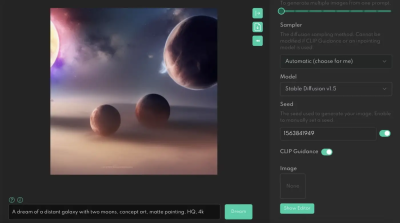
The core of the current AI revolution lies in the democratization of visual production. Text-to-image generators have transformed the barrier to entry; where once a creator needed years of training to master software like Adobe Photoshop or Blender, they now only need a nuanced understanding of language and intent.
However, viewing AI merely as a "generator" is a misunderstanding of its utility. At its heart, design is a problem-solving discipline—often characterized by the "95% craft, 5% art" ratio. Designers frequently spend the vast majority of their time on the manual labor of execution: rendering textures, aligning elements, and iterating on assets. AI promises to collapse that 95% of execution time into mere minutes, allowing the designer to shift their focus toward the "5%": the conceptual strategy, the vision, and the emotional resonance of the final output.
A Chronological Perspective: From Labor to Leverage
The trajectory of design technology has always been about efficiency. The evolution follows a clear path:
- The Analog Era: Manual drafting and physical media, where the cost of a mistake was hours of labor.
- The Digital Revolution: The advent of CAD and design software, which accelerated output but still required a high degree of technical skill.
- The AI Integration Phase: The current period, where the computer moves from being a "tool" to an "agent."
Historically, industries that feared the rise of automation—such as the textile workers of the 19th-century Industrial Revolution—initially saw machines as adversaries. While machines did displace manual labor, they also birthed new industries and increased overall economic productivity. Similarly, AI in design is not eliminating the need for human input; it is shifting the "human touch" from the stroke of a stylus to the curation of an algorithmic process.
Supporting Data: Efficiency and the "Homogenization" Risk
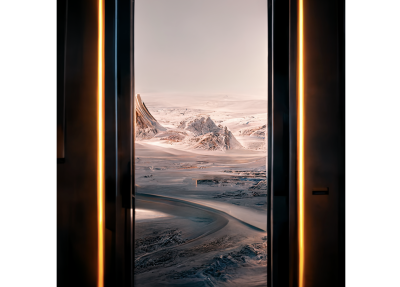
Recent industry studies and observations from platforms like Dribbble suggest that while AI increases velocity, it carries the risk of "design homogenization." Because models are trained on vast datasets of existing human art, there is a tendency for the output to gravitate toward a visual "mean"—the average of what is already popular.

However, this is not an entirely new phenomenon. For years, the industry has wrestled with the "Dribbblisation" of design, where trends become so pervasive that they stifle individual creativity. AI-generated art, if prompted without specific vision, mirrors this tendency. The solution lies in the designer’s ability to act as a curator and "director," injecting personal experience and specific stylistic constraints into the prompt, thereby preventing the output from becoming generic.
Official Responses and Ethical Considerations
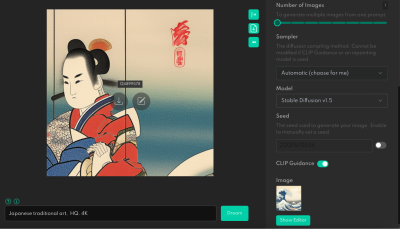
The rise of AI has not been without controversy. In early 2023, a landmark class-action lawsuit was filed against Stability AI and Midjourney, alleging copyright infringement based on the mass ingestion of artist works to train these models.
While the legal status of "AI-authored" works remains in flux, the industry is already moving toward adoption. Major stock photography providers, such as Shutterstock, have begun integrating AI-generated imagery into their ecosystems, complete with contributor reimbursement models. The emerging consensus among legal experts is that while AI tools create "new" imagery, the lack of transparency in training data creates a gray area that regulators will need to address. For now, the most professional stance for a designer is to treat AI as a collaborative partner rather than an independent creator.
Implications: The Future of Co-Creation
The true power of AI is not in its ability to replace humans, but in its potential to act as a "bicycle for the mind," a phrase famously used by Steve Jobs to describe the computer. By acting as a second brain, AI offers three major avenues for professional advancement:
1. Advanced Visual Exploration
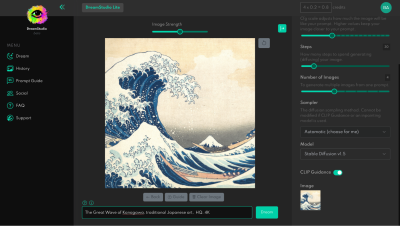
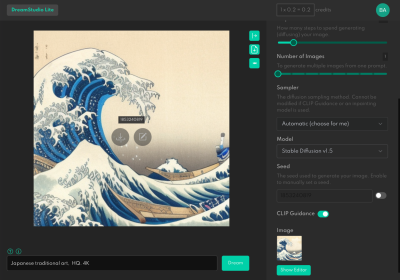
Designers can now bypass the manual creation of mood boards. By using "image-to-text" and "image-to-text-to-image" workflows, a designer can input a rough sketch or a photograph and ask the AI to generate dozens of variations on that theme. This allows for a rapid exploration of styles—shifting color palettes, lighting, or structural composition—in seconds rather than days.

2. Accelerated Prototyping
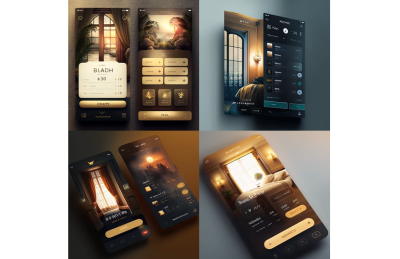
Product design, which previously required weeks of wireframing and testing, can now be conceptualized in real-time during brainstorming sessions. By providing a prompt that defines the problem space (e.g., "mobile app UI for hotel booking"), designers can generate high-fidelity concepts that allow stakeholders to see the vision immediately. This moves the conversation away from how something is built and toward why it should be built.
3. The Metaverse and Virtual World-Building
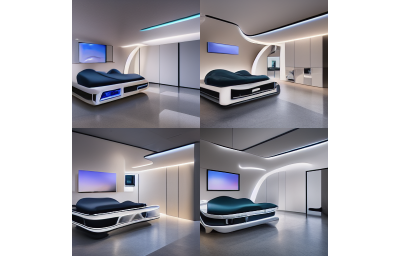
As we move toward more immersive digital experiences, the demand for high-quality, scalable 3D assets will skyrocket. The sheer scale of building virtual environments is beyond the capacity of human labor alone. In this context, the designer becomes a "world-builder" or a "director," utilizing AI to populate environments with consistent, high-quality assets while focusing their own efforts on user experience and environmental storytelling.

Conclusion: Opening the New Chapter
The fear that AI will replace the designer is grounded in the belief that design is merely the production of aesthetic assets. But design is, and has always been, about understanding human needs and crafting solutions that resonate on an emotional and functional level.
As we enter this new chapter of co-creation, the most successful designers will be those who embrace AI as an extension of their own creative agency. By offloading the tedious, manual labor to machines, we are not losing our humanity; we are freeing ourselves to dream bigger, experiment faster, and deliver designs that are more deeply reflective of our unique, human perspectives. The future of design is not a battle between man and machine—it is a collaboration, and it is just getting started.