The rapid evolution of Artificial Intelligence (AI) has sent a tremor through the creative industries. From generative text models to high-fidelity image synthesizers, the tools available to designers and creators are evolving at a breakneck pace. This technological explosion has ignited a pervasive anxiety: as machines grow more capable, will human designers become obsolete?
While AI excels at pattern recognition, data processing, and task execution, it lacks the foundational elements that define "designerly" practice. The essence of design—which goes far beyond the aesthetic output—is rooted in human consciousness, emotional intelligence, and nuanced social interaction. By leveraging these uniquely human traits, designers can transform AI from a disruptive threat into a powerful catalyst for innovation.
The Chronology of Disruption and Adaptation
The recent surge in AI capability is merely the latest chapter in a long history of technological shifts. Historically, every major advancement—from the printing press to the introduction of desktop publishing software—was met with fears that it would diminish the role of the creator.

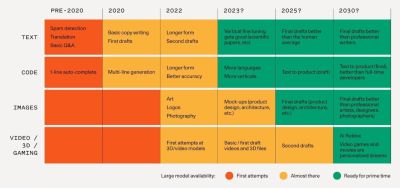
In the early stages, AI was confined to rigid, rule-based operations. However, the pivot toward Large Language Models (LLMs) and generative neural networks shifted the landscape. According to industry projections by firms like Sequoia Capital, we are currently in a "Creative New World" where AI is rapidly scaling its ability to assist in text, code, image, and video generation. As these models become more sophisticated, the "guesstimates" regarding when AI might perform human-level creative tasks have shortened, fueling the current frenzy.
However, a historical look at professional design shows that while tools evolve, the problem-solving nature of the role remains constant. Designers are not merely "pixel pushers"; they are translators of human needs. The rise of AI represents a shift in the how of design, not the why.
Supporting Data: The Anatomy of Human vs. Machine
To understand the boundaries of AI, we must analyze its fundamental architecture. AI is, at its core, a predictive engine trained on vast datasets—some estimates suggest models like GPT-3 have ingested the equivalent of a quarter of the Library of Congress. It operates on logic, consistency, and speed.
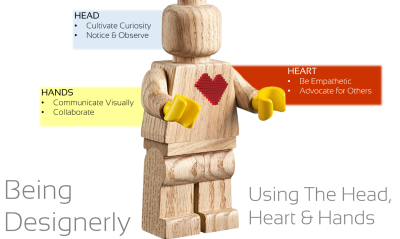
Conversely, human designers operate on intuition, lived experience, and cultural context. The "head, heart, and hands" framework offers a clear taxonomy of why the human advantage persists:
- The Head (Thinking): Involves curiosity and observation. AI is limited by its training data; it cannot "wonder" about a problem it hasn’t been fed.
- The Heart (Feeling): Involves empathy and advocacy. AI can mimic the language of empathy, but it cannot experience the physical and emotional discomfort of a user struggling with a poorly designed product.
- The Hands (Doing): Involves visual communication and collaboration. AI can produce a graphic, but it cannot "read the room" to negotiate a design direction with stakeholders.
Case Study: Designing in the Field
The necessity of human intervention is best illustrated by a real-world project conducted during the height of the COVID-19 pandemic. A lead designer was tasked with redesigning a tablet app for sales representatives at a global food and beverage giant.
Initial attempts to understand the user through video interviews were helpful, but incomplete. Once pandemic restrictions eased, the designer shadowed these representatives in a physical retail environment—the dairy and freezer aisles of a local Walmart.
The observations were revelatory. The designer saw representatives juggling multiple devices while struggling with lighting in walk-in freezers, all while attempting to navigate around busy shoppers. These pain points—the environmental chaos, the physical strain, the urgency—were invisible to any digital analytics dashboard. This deep, human-centric observation led to a redesign that achieved massive success. AI, lacking a physical body and the ability to "feel" the frustration of a cold, cramped environment, could never have synthesized these insights.
Implications: The "Designerly" Mindset
"Designerly" is a term coined by researcher Nigel Cross to describe the underlying patterns of how designers think and act. In an era where AI can generate a layout in seconds, the value of a designer shifts toward their ability to cultivate these specific behaviors.
Cultivating Curiosity
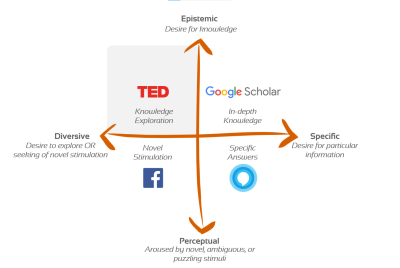
Curiosity is the fuel of innovation. While AI is programmed to provide answers, designers are programmed to question the premise of the problem itself. By practicing "epistemic curiosity"—a genuine desire to explore and learn—designers can uncover insights that exist outside the current boundaries of algorithmic prediction.
The Power of Observation
Noticing is passive; observing is intentional. Designers must train themselves to look at the world with fresh eyes, identifying patterns in human behavior that are not captured in digital logs. By stepping away from screens and engaging with the real world, designers gain a perspective that no LLM can replicate.
Radical Empathy
Empathy is more than a buzzword; it is an analytical tool. It is the ability to step imaginatively into the shoes of another. While AI is being trained to detect emotional states via facial expression or tone, it cannot understand the "why" behind the emotion. Designers who practice compassionate empathy—using the understanding of a user’s struggle to drive meaningful change—ensure their work remains relevant and impactful.
User Advocacy
In a corporate environment, a designer acts as the "voice of the user" in an ocean of competing interests. AI lacks the ethical framework and the social capital required to advocate for a user when faced with internal pressures or profit-driven mandates. A designer’s role is to ensure that technology serves the user, not the other way around.

Visual Communication and Collaboration
Visuals are the bridge between complex ideas and shared understanding. While AI can create images, humans communicate meaning. A rough sketch on a whiteboard, born from a collaborative session, is often more valuable than a high-fidelity AI render because it represents a shared consensus reached through human negotiation.
Official Responses and Industry Outlook
Industry leaders are increasingly moving away from the "AI-replaces-all" narrative, instead adopting a "Co-pilot" model. The consensus among design thinkers is that AI is an augmentation tool.
AI can handle the "tactical" heavy lifting: transcribing interviews, automating tedious layout tasks, and generating rapid iterations for brainstorming. This frees the human designer to handle the "strategic" work: defining the project’s mission, navigating organizational politics, conducting ethical risk assessments, and making final, high-stakes decisions.
Just as a head chef plans a menu, oversees the quality of ingredients, and adds the final, human touch to a dish—even if robots handle the chopping—the designer remains the architect of the experience.
Conclusion: Thriving in the New Landscape
The fear of obsolescence is a natural reaction to rapid change, but it is ultimately misplaced. Artificial Intelligence is a tool of unprecedented power, but it is a tool nonetheless. It lacks consciousness, the ability to adapt to unforeseen social dynamics, and the capacity for true innovation that stems from human experience.
The future of design does not belong to those who can produce the most content the fastest; it belongs to those who can best utilize their "designerly" skills. By doubling down on our capacity for curiosity, empathy, advocacy, and collaborative visual thinking, we can ensure that our work remains profoundly human. We must view AI not as a replacement, but as an assistant that allows us to spend less time on the mundane and more time on the meaningful. In the end, the most important design tool in the room will always be the human heart and mind.