
In the modern digital landscape, a website is far more than a digital storefront or an online brochure; it is the heartbeat of your business’s growth strategy. Yet, for many organizations, the website remains an underperforming asset—a high-traffic destination that fails to capture the value of the visitors it attracts. As businesses face increasing pressure to maximize ROI on tightening marketing budgets, the focus has shifted from merely driving traffic to the critical art of conversion optimization.
For marketers and agencies, the goal is clear: your website should function as your hardest-working sales representative, available 24/7 to identify, engage, and convert qualified prospects. By leveraging data-driven strategies and removing technical bottlenecks, teams can reclaim control over their lead-generation pipelines.
The Evolution of Lead Generation: Why Website Optimization Remains Paramount
While social media channels offer reach and email marketing provides reliability, your website remains the "home base" where the conversion journey concludes. When a visitor arrives at your site, they are signaling intent—they are actively seeking a solution to a problem. The failure to capture this interest is not just a missed opportunity; it is a direct leakage of revenue.
Historically, the hurdle to optimization was technical. Marketing teams were often tethered to IT departments, waiting weeks for simple landing page updates or A/B test implementations. Today, the shift toward drag-and-drop optimization tools has democratized the process. By implementing small, strategic changes, businesses are seeing exponential results. As evidenced by industry leaders, even minor adjustments—such as refining call-to-action (CTA) copy—can double conversion rates, proving that the gap between "we need more leads" and "we have enough leads" is narrower than most realize.
16 Proven Strategies to Drive Measurable Conversions
To transform your website from a passive asset into a lead-generating powerhouse, consider these 16 tactical pillars designed for immediate impact.
1. Deploy Dedicated Landing Pages for Campaigns
Generic homepages are designed for the masses, making them inherently poor at converting specific traffic. When a user clicks an ad for a specific solution, they expect to land on a page that addresses that exact need. By using dedicated, single-purpose landing pages, you eliminate distractions, provide a cohesive message, and guide the visitor toward one clear goal.

2. Embrace Rigorous A/B Testing
Stop guessing and start measuring. A/B testing allows you to pit two variations of a headline, button color, or form field against each other. As demonstrated by travel firm Going, a simple three-word change in their CTA—from "Sign up for free" to "Trial for free"—yielded a 104% increase in monthly conversions. When you test, you turn intuition into profit.
3. Offer Value-First Lead Magnets
The era of the "10 Tips for Success" PDF is over. To capture high-quality emails, you must offer immediate, tangible value. Whether it is an industry-specific report, a diagnostic tool, or a free trial, your lead magnet should solve a pressing pain point for your customer.
4. Optimize Form Friction
Every field added to a lead-capture form acts as a barrier. To maximize conversion, ask for the bare minimum—typically a name and email—at the start of the relationship. Utilize conditional logic to gather deeper qualifying data only after the initial trust has been established.
5. Utilize AI-Powered Traffic Routing
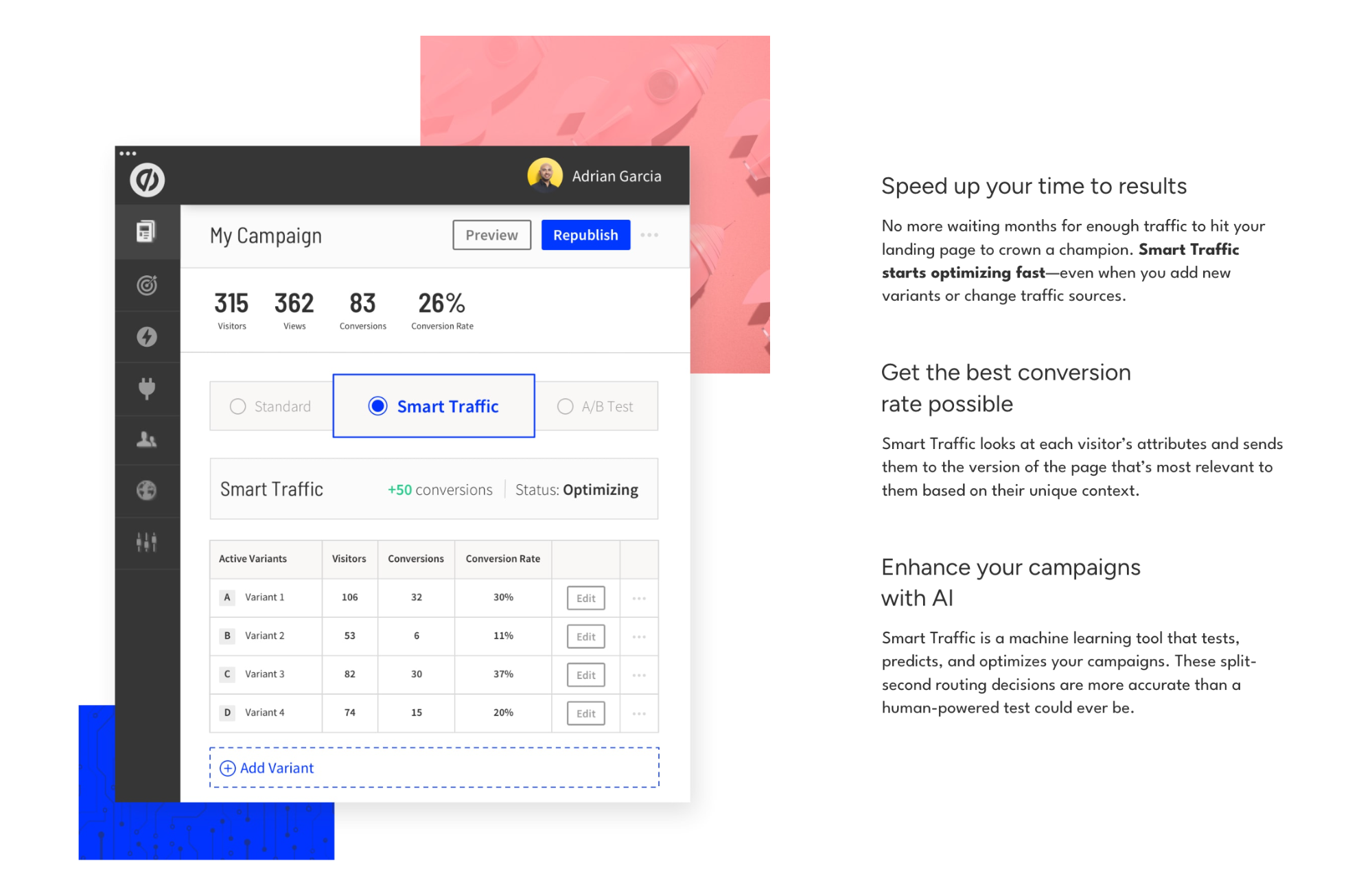
Traditional A/B testing requires time to achieve statistical significance. AI-driven solutions like Unbounce’s "Smart Traffic" analyze visitor characteristics—such as location and device—in real-time to route them to the landing page variant most likely to convert. This ensures you are playing to your visitors’ individual preferences without waiting weeks for data.
6. Strategic CTA Placement
Your CTA is the "moment of truth." It must be placed where users naturally look—typically in the hero section, at the end of a compelling narrative, or in a sticky header that follows the user as they scroll. Context is key: ensure the CTA aligns with the user’s current level of interest.
7. Leverage Social Proof to Build Trust
Potential leads are naturally skeptical. Overcome this with verifiable social proof: customer testimonials, case study snippets, industry awards, and client logos. Placing these elements near your lead capture forms can reduce hesitation and provide the reassurance needed to convert.

8. Prioritize Site Speed
In an era of instant gratification, speed is a conversion metric. Research consistently shows that a one-second delay in page load time can cause a significant drop in conversion rates. Optimize your images, minify code, and utilize content delivery networks (CDNs) to ensure your page loads in under three seconds.
9. Target Pain Points with Content
Your blog should not be a corporate repository for product news; it should be a resource center. By addressing the specific problems your target audience faces, you position your brand as an authority. Once trust is established through education, the transition to a sales-related CTA becomes organic rather than intrusive.
10. Implement Strategic Pop-ups
When used with intent, pop-ups are powerful. Utilize exit-intent technology to capture leads just as they are about to leave, or trigger a helpful resource pop-up only after a visitor has engaged with your content for a specific duration. Relevance is the difference between a helpful nudge and an annoyance.
11. Enable Real-Time Interaction
Live chat and AI-powered chatbots act as an instant safety net. When a visitor has a question, they are in the "hot" phase of the buyer journey. Providing an immediate response via chat can prevent that lead from going cold or moving to a competitor.
12. Utilize Dynamic Text Replacement (DTR)
Dynamic content allows you to personalize your landing pages based on the search terms or ad copy that brought the visitor there. By swapping key phrases to match the user’s intent, you demonstrate that you understand their specific needs, which dramatically increases trust and relevance.
13. Clarify the "Next Step"
The "Paradox of Choice" dictates that when you provide too many options, users choose none. Keep your landing pages focused. Every page should have one clear, singular call to action. Remove navigation menus if necessary to keep the visitor focused on the conversion goal.
14. Track Metrics That Lead to Action
Move beyond vanity metrics like total pageviews. Focus on actionable insights: scroll depth, form drop-off rates, and the conversion paths of high-intent visitors. Your analytics should be a blueprint for your next optimization project.
15. Nurture Leads with Value
Lead capture is the beginning, not the end. Use follow-up email sequences to provide continued value, insights, and resources. By staying top-of-mind without being overly pushy, you ensure that when the lead is ready to buy, your brand is the natural choice.
16. Implement Lead Qualification
To bridge the gap between marketing and sales, implement lead scoring. Filter out unqualified traffic and focus your sales team’s energy on leads that show high engagement and clear intent. When sales receives higher-quality leads, the entire organization benefits from improved morale and higher close rates.
Implications for Future Growth
The shift toward a conversion-centric website model has profound implications for marketing departments. By taking ownership of the conversion process, marketers can move away from waiting on IT resources and start driving measurable ROI.
As we look toward the future, the integration of AI, hyper-personalization, and data-driven decision-making will continue to differentiate the market leaders from the laggards. The businesses that succeed will be those that view their website not as a static entity, but as a living, breathing engine of growth. Start by implementing one of these strategies today, and watch as your "passive" website begins to deliver the qualified leads your sales team has been waiting for.