Main Facts: The Shift from Model-Centric to Data-Centric AI
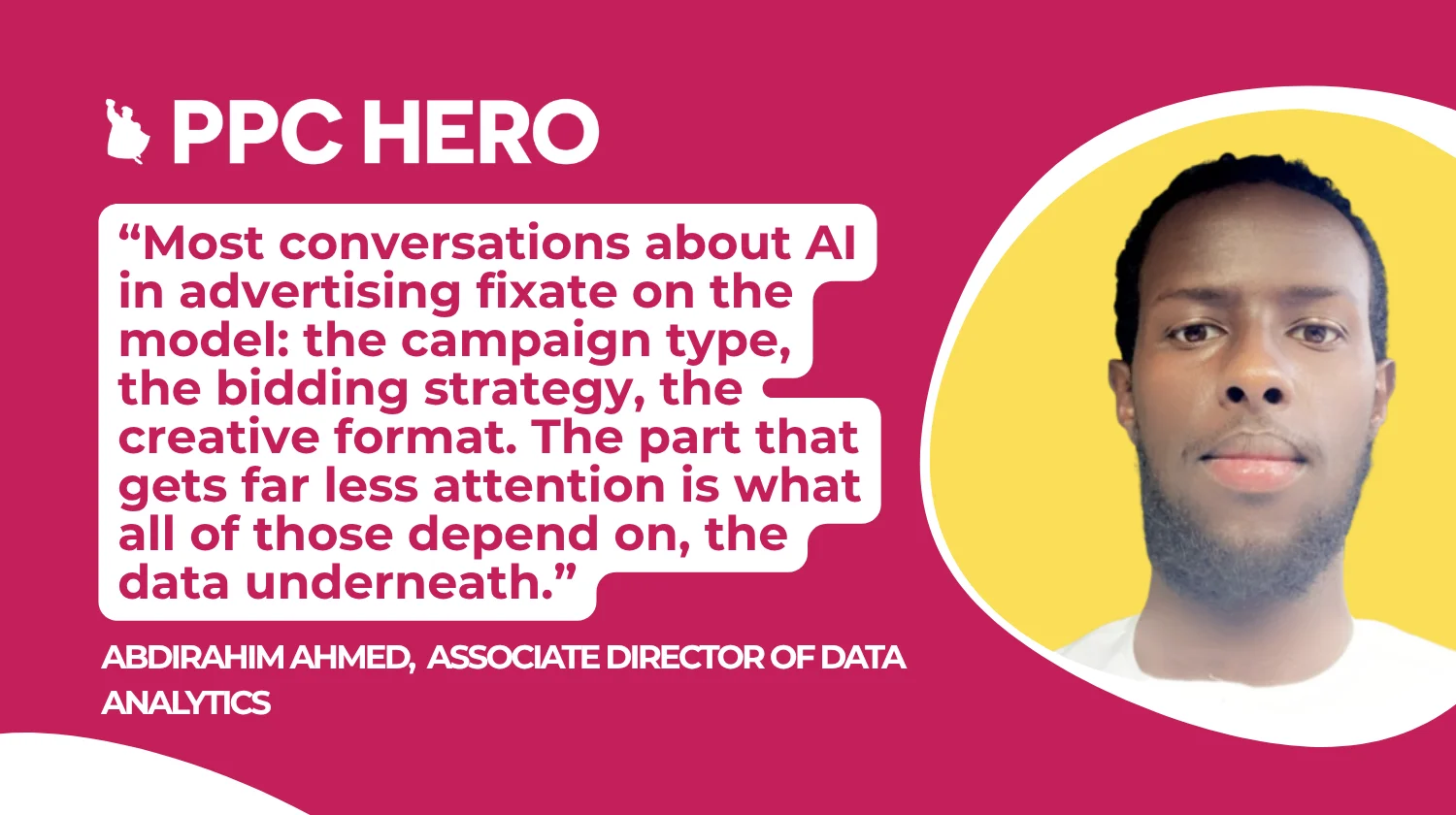
In the current landscape of digital marketing, the prevailing discourse is dominated by the prowess of Artificial Intelligence. Discussions typically center on the sophistication of the "model"—the algorithmic complexity of campaign types, the nuances of automated bidding strategies, and the generative capabilities of creative formats. However, a critical oversight is becoming increasingly prevalent among advertisers: the quality of the data that fuels these systems.
Google’s sophisticated automation ecosystem—including Smart Bidding, Performance Max, and Demand Gen—does not operate in a vacuum. These systems are entirely dependent on "conversion signals" to learn and optimize. When these signals are thin, inaccurate, or missing entirely, the AI is forced to optimize toward the wrong objectives or, in the worst-case scenarios, toward nothing at all.
To address this, a new paradigm has emerged: Data Strength. This is not merely a collection of products but a strategic framework designed to consolidate various first-party data tools—such as the Google Tag Gateway (GTG), Enhanced Conversions (EC), and Customer Match—into a unified "fuel source" for AI. According to industry benchmarks, advertisers who successfully build these strong data foundations see a 10% to 20% increase in observed conversions. The reality is stark: in the age of automation, your competitive advantage is no longer just your budget or your creative; it is the integrity of your data moat.
Chronology: The Erosion of the Digital Tracking Landscape
The journey to the current "measurement gap" has been a gradual process of erosion rather than a sudden collapse. Understanding how we arrived here is essential for grasping the urgency of the Data Strength framework.
2017–2019: The First Cracks in the Cookie
The decline began with the introduction of Intelligent Tracking Prevention (ITP) by Apple’s Safari and similar measures by Mozilla’s Firefox. These browsers began clamping down on third-party cookies, which had been the bedrock of digital attribution for two decades. Today, these two browsers account for approximately 21% of global web traffic—a massive segment of the market that has become increasingly difficult to track accurately.
2021: The ATT Earthquake
The most significant disruption arrived with Apple’s App Tracking Transparency (ATT) framework. Launched with significant fanfare, it required apps to ask for explicit user permission to track them across other companies’ apps and websites. With opt-in rates hovering between 15% and 25%, the majority of Apple users—often a high-value demographic—effectively became invisible to standard in-app tracking protocols.
2023–2024: The Rise of Technical Interception
Beyond browser and OS-level restrictions, the rise of sophisticated ad blockers and privacy-focused DNS services has added another layer of complexity. These tools often strip tracking tags before they can even fire. Furthermore, the standard Google Tag, which traditionally loads from a third-party domain, is now frequently intercepted by privacy tools designed to block third-party requests by default.
2025 and Beyond: The First-Party Pivot
As we move deeper into the mid-2020s, the industry has shifted from trying to "save" the third-party cookie to building robust first-party infrastructures. Google’s 2026 updates to its Data Manager platform represent the culmination of this shift, integrating CRM, web, and app data into a single, privacy-compliant stream that feeds directly into the AI engine.

Supporting Data: Quantifying the Measurement Gap and the Recovery Potential
The damage caused by signal loss is not merely a reporting inconvenience; it is a direct hit to Return on Ad Spend (ROAS). When Smart Bidding data is incomplete, the AI cannot distinguish which clicks or audiences drove results. It essentially "bids in the dark," leading to budget misallocation.
The Components of Data Strength
To combat this, Google has introduced several layers of technical solutions, each with documented performance uplifts:
-
Google Tag Gateway (GTG):
- The Problem: Standard tags load from third-party domains and are often blocked.
- The Solution: GTG serves the tag from the advertiser’s own domain, making it a first-party request.
- The Result: Google reports an average uplift of 14% more observed conversions. For businesses using Cloudflare, this can be implemented with minimal technical overhead.
-
Enhanced Conversions for Web (ECW):
- The Problem: A conversion occurs, but no cookie is present to identify the user.
- The Solution: It captures consented, hashed first-party data (like an email address) at the point of conversion to match the user to a Google account.
- The Result: Advertisers see an average 8.5% lift on Search and a 15% lift on YouTube conversions.
-
Enhanced Conversions for Leads (ECL):
- The Problem: Traditional offline conversion imports rely on the GCLID (Google Click ID), which is increasingly stripped by browsers.
- The Solution: It uses hashed first-party data alongside the GCLID, providing a redundant and more durable identifier.
- The Result: A 10% lift on Search and a significant 22% lift on YouTube over standard offline imports.
-
Google Data Manager:
- The Impact: By centralizing web, app, store, and CRM data, this hub allows for a holistic view of the customer journey. Advertisers connecting offline and app data through this system report an average 26% lift in incremental ROAS.
Official Responses and Industry Context
While Google provides the tools, the industry response has been one of cautious but necessary adoption. Experts note that "Data Strength" is Google’s way of rebranding a series of technical requirements into a competitive business advantage.
The official stance from Google, as articulated in various sessions and the Google Ads & eCommerce blog, is that data is the "fuel" for the automation engine. They emphasize that these products must be "stacked" rather than used in isolation. The messaging has shifted from "privacy compliance" to "competitive survival."

Industry analysts point out that this creates a "moat" effect. Because one advertiser cannot see another’s first-party data, the advertiser with the most complete data set will naturally see their campaigns learn faster and optimize more efficiently. In a landscape where the AI models are largely the same for everyone (e.g., everyone has access to PMax), the only variable left to control is the quality of the input.
Furthermore, the 2026 updates to Data Manager have expanded its reach to Search Ads 360 and Campaign Manager 360, with integrations for platforms like Mailchimp, Klaviyo, and TripleWhale. This indicates an official move to make "Data Strength" accessible not just to enterprise-level players but to mid-market advertisers who rely on diverse SaaS stacks.
Implications: The Future of Performance Marketing
The implications of the Data Strength movement are profound for the future of the advertising profession.
The End of the "Set and Forget" Automation
The idea that AI can handle everything while the advertiser sits back is a myth. The role of the modern advertiser is shifting from "bid manager" to "data architect." Success now depends on the ability to bridge the gap between the CRM and the ad platform. If the data foundation is weak, the rest of the performance will eventually crumble, regardless of how high the budget is.
Data as a Competitive Moat
In the past, a clever bidding strategy or a unique audience keyword list could win the day. Today, because Google’s AI optimizes for whoever feeds it the best data, a rival with a stronger measurement setup will win the auction more efficiently. This creates a compounding advantage: better data leads to better optimization, which leads to better ROAS, which provides more budget to collect even more data.
The "Hidden" Nature of Success
One of the most dangerous aspects of the current measurement gap is that it is invisible. Missing data, by definition, does not show up in a dashboard. An advertiser might see a 20% drop in performance and blame the creative or the market, unaware that the signals are simply being blocked. Closing this gap requires a proactive, layered approach—starting with the tag gateway and moving through enhanced conversions to full CRM integration.
Conclusion: Building the Foundation
None of these concepts are theoretical. Case studies, such as a recent engagement with a major home improvement retailer, show that a staged rollout of Data Strength tools recovered 27% of previously lost conversions. This recovery wasn’t due to a change in the ads themselves, but a change in how the AI perceived the results of those ads.
As automation decides more of the marketing outcome every quarter, the foundation of data becomes the single most important asset an advertiser owns. Those who build this foundation now will thrive in a privacy-first world; those who wait will find themselves bidding in the dark, wondering why their once-powerful campaigns have drifted into underperformance.