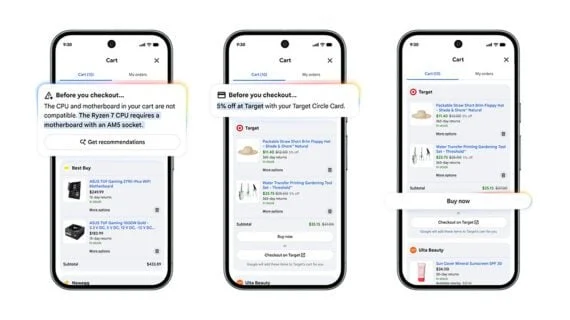
In a move that promises to fundamentally alter the digital retail landscape, Google has unveiled its "Universal Cart," a cross-platform shopping feature designed to decouple the shopping experience from individual merchant websites. Announced during the Google I/O developer conference on May 19, this initiative signals a transition from traditional e-commerce—where a consumer visits a specific store to browse and checkout—to a new paradigm of "agentic commerce," where AI agents manage the shopping journey across the entire Google ecosystem.
Scheduled for a U.S. release in the summer of 2026, the Universal Cart is poised to change how consumers discover, compare, and purchase products, potentially relegating individual retail sites to the role of fulfillment centers rather than destinations for customer engagement.
The Core Concept: Decoupling Discovery from Transaction
For decades, the e-commerce relationship has been anchored to the "one-to-one" model: a single cart associated with a single domain. Even Amazon, which hosts millions of third-party sellers, operates under this structure; regardless of the seller, the checkout process remains tethered to the Amazon platform.
Google’s Universal Cart shatters this convention. By introducing an agent-managed layer that sits above individual websites, Google is creating a persistent, unified shopping interface that follows the user across Search, Gemini, YouTube, and Gmail.
How the Ecosystem Works
The system operates through three primary pillars:
- Universal Cart: The persistent, cross-platform interface where products from disparate merchants are aggregated.
- Universal Commerce Protocol (UCP): The backend infrastructure that allows Google to communicate with merchant inventory and fulfillment systems.
- Gemini Spark & Agents Payments Protocol (AP2): The AI-driven engine that monitors prices, suggests alternatives, and automates the transaction process once the user provides authorization.
Chronology of the Shift
The path to this announcement has been marked by a decade of Google attempting to capture more of the retail funnel.
- 2015–2018: Google begins integrating "Buy on Google" buttons, attempting to keep users on its platform to reduce friction. These efforts saw varying success but highlighted the friction inherent in redirecting users to third-party mobile sites.
- 2023–2025: The rise of Large Language Models (LLMs) and Generative AI shifted the focus toward "conversational commerce." Google invested heavily in Gemini to turn search results into advisory experiences.
- May 19, 2026 (I/O Conference): Google officially introduces the Universal Cart and the underlying protocols (UCP and AP2), marking the official entry into the era of agentic commerce.
- Summer 2026 (Forthcoming): Expected public launch of the Universal Cart in the United States, alongside the integration of Gemini Spark.
Supporting Data: The Power of AI-Driven Shopping
The shift toward agentic commerce is not merely a design preference; it is a response to how modern consumers already behave. Consumers currently treat retail carts as "wishlists," adding items to track prices, comparing products across tabs, or waiting for a discount notification.
Google’s data suggests that the "fragmented shopping journey"—where a user visits five different websites to compare a single product—is a major source of cart abandonment. By providing an AI agent (Gemini Spark) that manages these comparisons, Google claims it can significantly boost conversion rates.
Consider the "Kitchen Remodel" scenario:
- Discovery: A user searches for a high-end mixer on Google.
- Persistence: The item is saved to the Universal Cart.
- Cross-Pollination: While the user browses YouTube for kitchen design inspiration, the AI suggests a Dutch oven from a different retailer.
- Optimization: The AI monitors inventory across these retailers, flagging if one seller offers a better price or faster shipping than the original.
- Finalization: The AP2 protocol handles the payments, coordinating the orders while the merchant remains the "merchant of record" for the transaction.
Official Responses and Industry Outlook
While Google frames this as a win for both consumers and merchants—promising higher conversions for sellers and less effort for buyers—the industry reaction is characterized by a mix of optimism and caution.

"We are empowering merchants to reach users where they spend their time," a Google spokesperson noted during the I/O briefing. "The goal is to remove the friction of the checkout process while maintaining the merchant’s ownership of the transaction."
However, retail analysts have raised concerns regarding data sovereignty. In the current model, retailers own the "purchase intent"—the data showing exactly what a user is looking for and why. By shifting the interface to Google, merchants risk losing the valuable behavioral data that fuels their marketing and loyalty programs. If Google becomes the primary gatekeeper of the cart, retailers may find themselves in a position where they are effectively "suppliers" to Google’s massive, AI-managed marketplace.
Implications: The Death of the Destination Site?
The implications of the Universal Cart are profound and multifaceted.
1. The Erosion of Brand Loyalty
If a user is shopping through Gemini Spark, the AI’s suggestions are likely to be prioritized over the user’s personal preference for a specific brand. If the AI suggests a "better" or "cheaper" alternative from a competitor, the merchant’s brand equity may be bypassed entirely. Retailers will have to fight for "algorithmic visibility" rather than organic traffic.
2. From SEO to "Protocol Optimization"
Historically, retailers optimized their websites for Google Search (SEO). With the introduction of the Universal Commerce Protocol (UCP), the new frontier is "Protocol Optimization." Merchants will need to ensure their inventory feeds are perfectly aligned with Google’s protocols to ensure their products are eligible for the Universal Cart. Failure to integrate with UCP could result in total exclusion from the most important shopping interface on the web.
3. The Role of the Merchant of Record
Google is careful to state that merchants remain the "merchant of record." This is a strategic legal and financial distinction. By keeping the retailer as the entity responsible for taxes, fulfillment, and returns, Google insulates itself from the liabilities of e-commerce. Yet, because Google is controlling the intent and the checkout initiation, the retailer becomes a downstream utility.
4. Competitive Dynamics
For large retailers, this may be a necessary evil to stay relevant. For smaller, niche merchants, this could be a lifeline, providing access to an AI-driven marketing engine they could never build on their own. However, the risk of "platform lock-in" is high. If Google decides to prioritize its own preferred sellers or charge fees for "featured placement" within the Universal Cart, the power balance between the search giant and the retail world could shift toward a de facto monopoly on consumer spending.
Conclusion: The Future is Agentic
The announcement of the Universal Cart marks the end of the "webpage-centric" era of retail. We are entering an era where the shopping cart is no longer a feature of a website, but a service provided by an AI assistant.
As we approach the summer of 2026, the retail industry faces a pivotal choice: adapt to the agentic protocols defined by Google, or risk becoming invisible in an environment where the consumer no longer visits the store—they simply tell their agent what they need. Whether this will lead to a more efficient marketplace or a hyper-concentrated retail environment controlled by a single algorithm remains to be seen. One thing is certain: the traditional checkout page, as we have known it for thirty years, is rapidly becoming a relic of the past.