For most professionals, the current AI experience is defined by the "chatbox loop." You prompt an AI like ChatGPT or Claude, it provides a response, and then you—the human—manually copy, paste, format, and execute the next steps. It is a productive, yet fragmented, experience.
However, a new paradigm is emerging: Agentic AI. Unlike traditional chatbots that stop at the advice stage, agentic tools are designed to take over the execution layer. Leading this shift is Manus, a platform that doesn’t just respond to prompts—it executes them by autonomously navigating web tools, managing multi-step workflows, and interacting with software environments.
The Shift from Prompting to Executing
The fundamental distinction between a chatbot and an agent lies in the objective. When you ask a chatbot for help, it offers a roadmap. When you task an agent like Manus, it takes the keys.
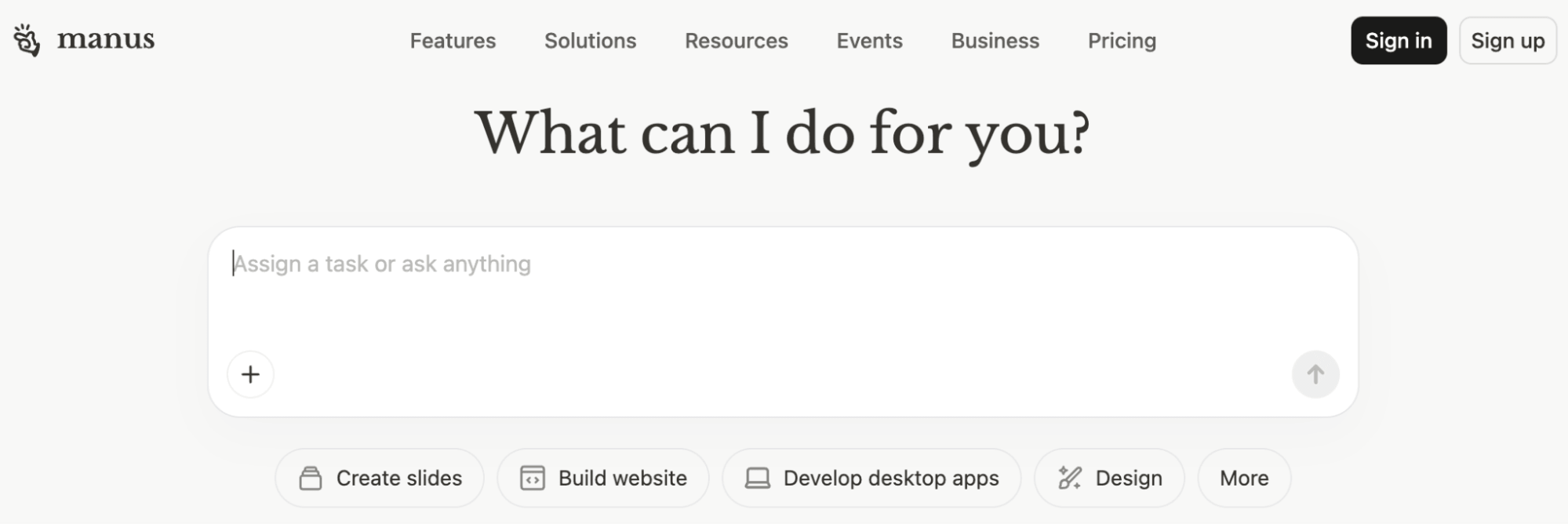
Kate vanderVoort, a marketing and communications expert who has pioneered the use of agentic workflows, notes that Manus operates on a simple but radical mandate: "What can I do for you?"
Unlike standard LLMs that remain constrained within a text window, Manus possesses the capability to access the web, log into third-party platforms, and perform complex sequences without constant human supervision. For non-technical users, this is a bridge across the digital divide. By relying on natural language instructions rather than code, Manus allows business owners to build sophisticated automation systems that were once the exclusive domain of software engineers.
Navigating the Manus Ecosystem: A Structural Overview
To leverage Manus effectively, users must understand its operational modes and pricing architecture. Manus employs a credit-based subscription model, ensuring that costs scale with usage rather than a static monthly fee.
Pricing and Resource Allocation
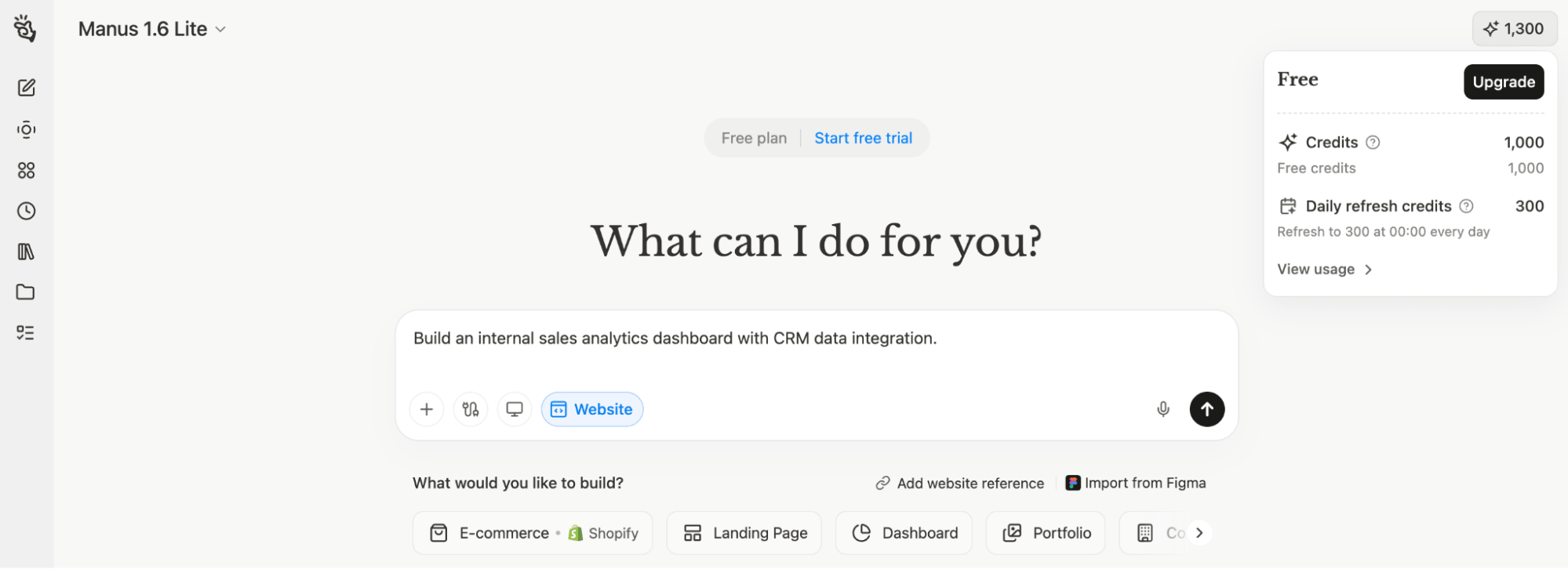
Manus offers a tiered subscription model starting at $20/month for 4,000 credits, with higher tiers reaching up to 40,000 credits for $200. Every user, including those on the free plan, receives 300 daily "refresh" credits.
Understanding the "burn rate" is essential for project management:
- Simple Queries: 5–10 credits.
- Complex Autonomous Workflows: 900+ credits.
Because credits do not roll over, users are encouraged to treat these as operational overhead, similar to a cloud computing budget.
Four Modes of Engagement
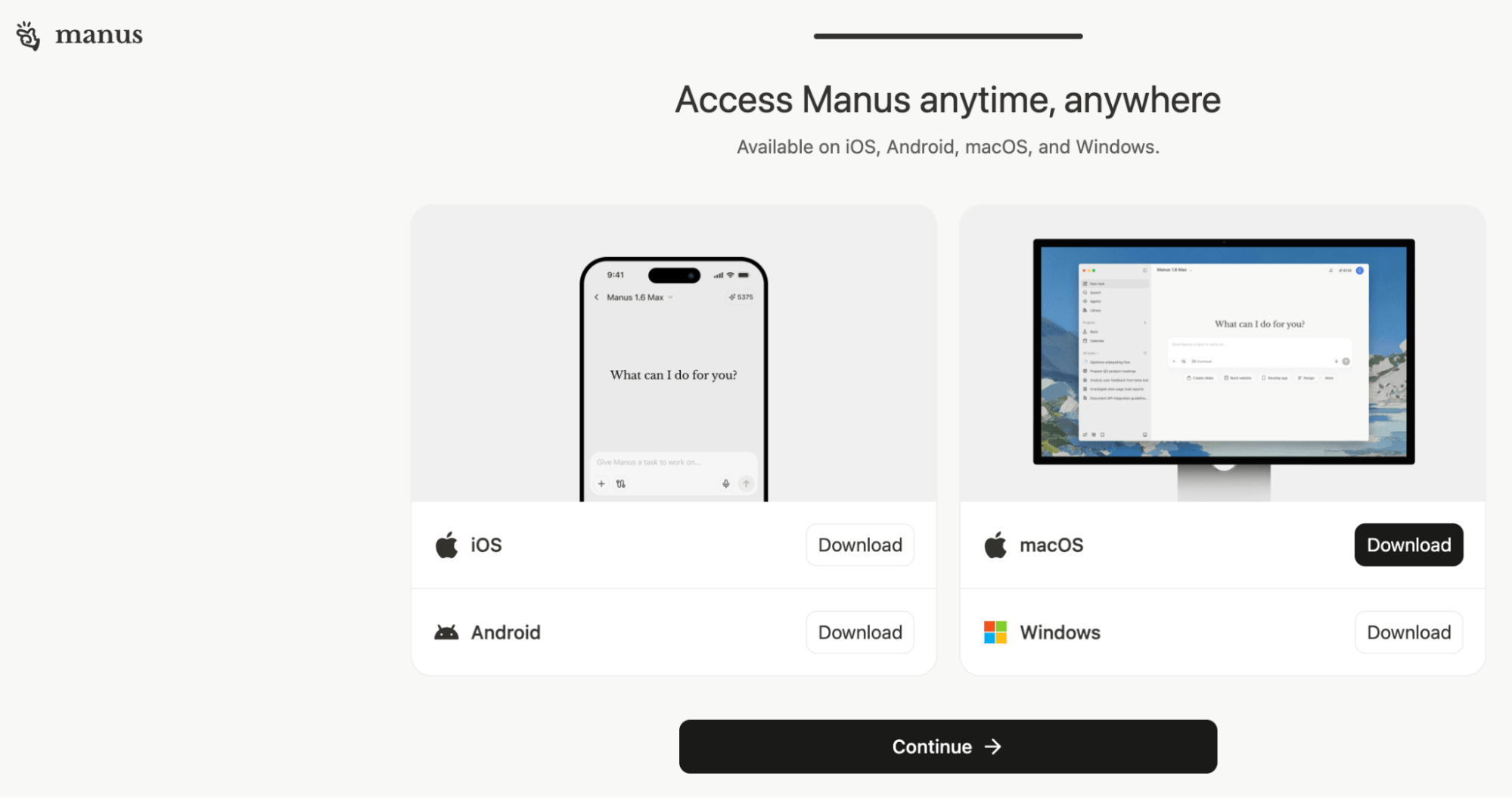
Manus provides four distinct pathways for interaction, each designed for specific operational needs:
- Browser-Based Access: The most accessible entry point. Manus runs in your browser, acting as a proxy that can interact with your professional platforms—like LinkedIn or your CRM—without ever requiring you to expose your actual login credentials.
- Desktop Application: By installing Manus as a local application, you grant the AI permission to manipulate files directly on your machine. This eliminates the need for manual uploads and allows the agent to organize, edit, and analyze local datasets in real-time.
- Telegram Integration: Designed for mobility, this allows users to monitor long-running tasks or provide input via mobile when they are away from their primary workstation.
- Cloud Computer: This is the flagship offering for power users. The Manus Cloud Computer maintains a persistent, virtualized environment. Unlike standard sessions that "forget" context once a task is finished, the Cloud Computer builds a long-term memory, enabling it to act as a 24/7 autonomous employee—monitoring market trends, managing social media queues, and updating databases.
Chronology of an Agentic Transformation: Two Case Studies
To understand the power of Manus, one must look at how it replaces traditional, manual labor-intensive processes.
The Proposal Generation Workflow
Previously, Kate vanderVoort’s client proposal process was a four-hour ordeal. It required switching between Perplexity for research, Gemini for deep background analysis, web-page building tools for KPI mapping, and Claude for final drafting.
With Manus, this entire "relay race" of tools is collapsed into a single workflow. Manus handles the research, synthesizes the data into a dashboard, and drafts the proposal. The human role is relegated to a single, high-value interaction: uploading the client call transcript. The result? A process that once consumed half a workday is now reduced to a $5 execution cost.
The L&D Training Program
In a recent engagement with a large manufacturing firm, the Learning and Development (L&D) team had spent two years attempting to develop a comprehensive training program, only to reach the fourth step of their plan.
When tasked with the same objective, Manus autonomously executed a 42-step workflow over 50 minutes. It identified that the proposed six-module structure was insufficient and corrected it to seven, subsequently generating a 150-page training manual and an interactive, graded quiz. This demonstrated that agentic AI doesn’t just speed up work; it can outperform human planning by identifying structural flaws in real-time.
The "Consultant Mindset": Best Practices for Prompting
A common pitfall for new users is treating an agent like a brainstorming partner. Kate vanderVoort argues that this is an inefficient use of resources. If you were paying a high-level consultant $500 an hour, you would not spend that time "thinking out loud." You would provide a comprehensive brief.
The Workflow for Success:
- The Brain Dump: Use a voice-to-text tool like Wispr Flow to record your requirements.
- The LLM Brief: Feed that transcript into an LLM (like Perplexity or ChatGPT) with the explicit instruction: "Please write a highly optimized prompt for a Manus AI agent. Do not do the task."
- Refinement: Ask the LLM to interview you for missing details before it finalizes the prompt.
- Execution: Drop this refined, high-fidelity prompt into Manus.
This approach ensures that your credits are spent on execution, not on the "discovery phase" of the task.
Implications: The Rise of "Skills" and SOPs
The ultimate goal of using Manus is the creation of "Skills"—reusable, modular workflows that can be triggered repeatedly. A Skill is essentially a zip folder containing instructions, brand voice guidelines, and "gold standard" examples.
Building a Business Intelligence Center
The most significant impact on business operations is the ability to turn Standard Operating Procedures (SOPs) into active AI Skills. By documenting the "why" behind your business decisions—the reasoning, the audience considerations, and the logic—you enable the AI to replicate your brand’s specific expertise.
Once your SOPs are digitized as Manus Skills, your business moves from a collection of tasks to a collection of automated assets. You are no longer just "using AI"; you are building an automated infrastructure that grows more capable with every new Skill you add.

Future Outlook
The transition from human-managed tools to agentic workflows represents the most significant shift in productivity since the invention of the spreadsheet. As tools like Manus continue to evolve, the definition of "work" will change from doing to directing.
For the modern marketer or business owner, the competitive advantage will no longer lie in who works the hardest, but in who can best articulate their business logic into the language of an agent. By embracing the agentic model today, early adopters are not just saving hours—they are architecting the future of their own businesses, one autonomous workflow at a time.
This article was co-created by Kate vanderVoort and Michael Stelzner. For more insights on the shifting landscape of business intelligence, subscribe to the AI Explored podcast on your preferred platform.