For over a decade, the ritual of the digital marketer has remained largely unchanged: log in to Meta Ads Manager, navigate a labyrinth of tabs, manually adjust bids, and upload creative assets. It was a workflow defined by the constraints of a "walled garden"—a proprietary interface where data entered but rarely interacted seamlessly with the outside world.
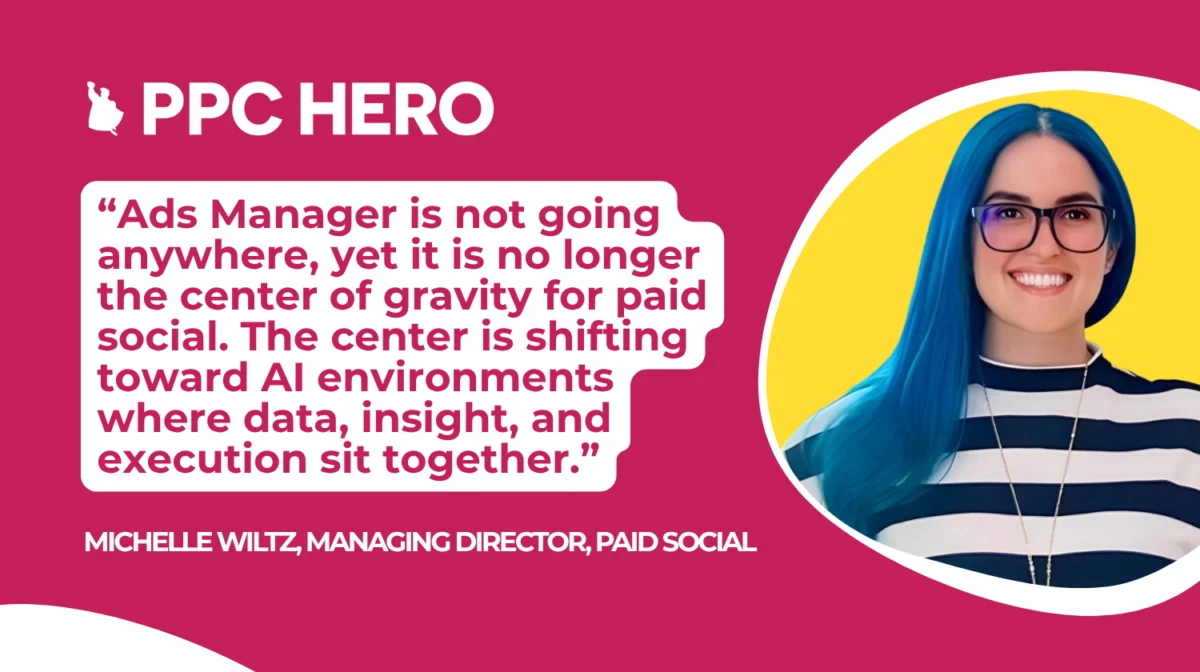
That era is officially coming to a close. With the launch of Meta Ads AI Connectors, Meta has signaled a fundamental shift in the architecture of paid social. By allowing advertisers to create, manage, and analyze campaigns directly from within third-party AI environments, Meta is effectively moving the "center of gravity" away from its own platform and into the broader AI ecosystem.
Main Facts: Breaking the Walled Garden
The introduction of Meta Ads AI Connectors represents a technical and philosophical pivot for the social media giant. Historically, integrating external tools with Meta’s advertising engine required significant engineering overhead, involving complex API configurations, developer credentials, and constant maintenance.
The Model Context Protocol (MCP)
At the heart of this innovation is the Model Context Protocol (MCP) server. This technology serves as a secure bridge between Meta’s live campaign data and the AI tools advertisers use daily—such as ChatGPT, Claude, or custom enterprise LLMs (Large Language Models).
Key features of the launch include:
- Natural Language Execution: Advertisers can now issue commands like "Increase the budget for my best-performing video ad by 20%" or "Draft a new campaign targeting lookalike audiences based on last month’s purchasers" directly within an AI chat interface.
- Zero-Code Integration: The "Connector" removes the need for traditional API projects. This democratizes access to automation, allowing small-to-medium businesses (SMBs) and non-technical marketing teams to bypass the engineering bottleneck.
- Live Data Syncing: Unlike previous AI tools that required manual data exports (CSV uploads), these connectors allow AI to "see" real-time performance metrics, enabling immediate interpretation and action.
Chronology: The Evolution of Meta’s Advertising Interface
To understand the magnitude of this change, one must look at the trajectory of Meta’s (formerly Facebook’s) advertising tools over the last 15 years.
2007–2012: The Manual Era
In the early days, "Facebook Ads" were rudimentary. Targeting was basic, and the interface was built for manual input. Marketers spent hours clicking through individual ad sets. The "Power Editor" was eventually introduced for bulk changes, but it remained a clunky, browser-bound experience.
2013–2018: The Rise of the Algorithm
Meta began integrating machine learning to help with bidding and optimization. This period saw the birth of the "OCPM" (Optimized Cost Per Mille) and the refinement of the Pixel. While the backend was getting smarter, the frontend (Ads Manager) became increasingly complex, requiring specialized "platform experts" to navigate.
2019–2023: The Advantage+ and Automation Phase
Meta launched Advantage+, a suite of automated tools designed to take the guesswork out of creative testing and audience targeting. During this phase, AI lived inside the platform. You gave Meta your assets, and Meta’s AI decided how to spend your money. However, if you wanted to use an external AI to analyze your strategy, a "wall" still existed between that insight and the execution.
2024 and Beyond: The Interoperable Era
The launch of AI Connectors marks the current phase: Interoperability. Meta has realized that the modern advertiser uses a stack of tools—Google Analytics, Shopify, Salesforce, and various AI assistants. By releasing the Connectors, Meta is allowing its "execution engine" to be plugged into whatever dashboard or AI the marketer prefers.
Supporting Data: The Need for Cross-Channel Cohesion
The move toward AI Connectors is not just a technological convenience; it is a response to the increasingly fragmented nature of the digital economy.
The "Silo" Problem
According to industry research, the average mid-sized brand manages campaigns across at least five different platforms (Meta, Google, Amazon, TikTok, and Programmatic Display). Historically, these have been managed in isolation.
- Data Latency: A 2023 survey of digital marketers found that 64% of teams spend more than 10 hours a week simply moving data between platforms for reporting.
- Optimization Gaps: When Meta is optimized in a vacuum, it often ignores what is happening on search or retail media.
The Efficiency Gains of AI
Early beta testers of natural-language marketing tools have reported a 30% to 50% reduction in "administrative" task time. By removing the need to click through the Ads Manager hierarchy (Account > Campaign > Ad Set > Ad), a process that used to take 15 minutes can now be completed with a 10-second prompt.

Furthermore, the integration of the MCP server ensures data integrity. In the past, AI interpretations of ad data were often flawed because the data was "stale" (hours or days old). Real-time connectivity ensures that AI-driven decisions are based on the latest auction dynamics.
Official Responses and Industry Perspectives
While Meta’s official documentation frames this as a "productivity feature," industry analysts see it as a strategic move to maintain dominance in an AI-first world.
Meta’s Position:
A Meta spokesperson noted that the goal is to "meet advertisers where they are." The company acknowledges that the future of work is conversational and that by lowering the friction of campaign management, they can encourage more frequent optimizations and, ultimately, better performance for advertisers.
The Agency Perspective:
Performance marketing agencies are viewing this with a mix of optimism and caution. "The ‘button-pusher’ role is officially dead," says Sarah Jenkins, a senior media buyer at a leading global agency. "If anyone can launch a campaign via a chat prompt, our value-add can no longer be ‘platform fluency.’ We have to move toward high-level strategy, creative direction, and data ethics."
The AI Developer Community:
Developers of AI marketing platforms (like Jasper or Copy.ai) have welcomed the move. For years, these tools could help write the ad, but they couldn’t post it or monitor it without complex workarounds. Meta’s Connectors provide the "missing link" that turns generative AI from a creative assistant into a full-scale media manager.
Implications: A New Hierarchy of Marketing Skills
The decentralization of Ads Manager carries profound implications for the industry, affecting everything from talent acquisition to the competitive landscape of agencies.
1. The Shift from "How" to "What"
For years, the most valuable skill in paid social was knowing "how" to use the platform—understanding the nuances of CBO (Campaign Budget Optimization), manual bidding caps, and audience exclusions. With AI Connectors, the "how" is handled by the machine.
The new premium skill is "What":
- What signals should the AI be looking for?
- What creative direction will resonate with the target demographic?
- What guardrails must be in place to prevent the AI from overspending on a low-margin product?
2. Holistic Decision-Making
When Meta data sits alongside Google and Shopify data in a single AI environment, "holistic marketing" finally becomes a reality. An AI can see that Meta’s ROAS (Return on Ad Spend) is dropping, but search volume for the brand is spiking on Google. It can then make a strategic decision to maintain Meta spend to "feed the funnel," even if the direct attribution looks weak. This level of cross-channel nuance was previously only available to brands with massive data science teams.
3. The Democratization of Sophistication
Small businesses have long been at a disadvantage because they could not afford the specialized talent required to run complex, multi-variate tests on Meta. AI Connectors level the playing field. A founder with a clear vision can now use an AI tool to execute a sophisticated testing framework that previously would have required a five-figure monthly agency retainer.
4. Security and Governance
As execution leaves the platform, security becomes paramount. The use of the MCP server is a strategic choice by Meta to ensure that even though the interface is third-party, the data transmission remains encrypted and compliant with privacy standards. However, brands will need to establish strict "AI Governance" policies to ensure that automated changes to live budgets are subject to human oversight.
Conclusion: The New Center of Gravity
The Meta Ads AI Connector is more than a feature; it is a declaration that the era of the monolithic ad platform is ending. While Ads Manager will remain available for those who prefer the manual touch, it is no longer the indispensable sun around which the marketing world orbits.
The new center of gravity is the Integrated AI Environment. In this new reality, data flows freely, execution is conversational, and the lag between insight and action is eliminated.
For marketing teams, the message is clear: those who continue to rely solely on manual platform management will find themselves outpaced by competitors who have embraced the speed and cross-channel intelligence of AI-driven execution. The future belongs not to those who can navigate the most complex menus, but to those who can provide the most intelligent directions to the systems that now do the heavy lifting.