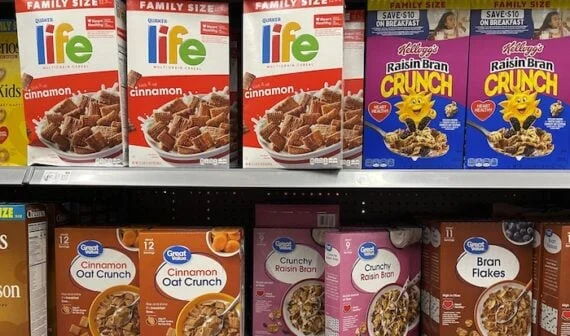
For over a century, the fundamental objective of consumer packaged goods (CPG) marketing has remained remarkably consistent: create demand, cultivate brand loyalty, and secure the most coveted real estate in the marketplace. Whether that "shelf" was a local craft fair stall, a bustling grocery aisle, or the high-stakes world of search engine results pages, the underlying intent was always to influence the consumer’s purchase decision at the moment of truth.
As we move deeper into 2026, we are witnessing the next great evolution in this enduring battle. The digital shelf is no longer just a collection of websites or social media feeds; it is being rapidly reshaped by artificial intelligence. Today, the competitive landscape is shifting from human-navigated discovery to AI-assisted curation, forcing brands to rethink how they earn visibility in a world where machines are increasingly the gatekeepers of commerce.
AI Shopping: The New Frontier of Product Discovery
The integration of generative AI into the shopping journey is no longer a futuristic concept—it is a daily reality for millions. Recent data underscores the rapid adoption of these tools. A May 2026 fact sheet from CapitalOne Research suggested that nearly 60% of consumers have already utilized AI to assist in their shopping habits. Corroborating this shift, NielsenIQ reported that 42% of American consumers have engaged with at least one AI-driven shopping tool within the last 30 days alone.
These tools are not merely search engines; they are active participants in the decision-making process. Consumers are using AI to compare product specifications, synthesize hundreds of disparate customer reviews, and receive personalized recommendations based on specific dietary or lifestyle needs.
This transformation poses a significant challenge for CPG companies. If a consumer asks an AI assistant for the "best organic coffee for a cold brew," the answer provided by the model is the only "shelf" the customer sees. If a brand is not part of that conversation—or worse, if the AI is not "educated" to recognize that brand as a superior option—the brand effectively ceases to exist for that shopper.
The Evolution of the Shelf: A Historical Perspective
To understand the current crisis of visibility, one must look at the traditional retail model. For decades, the physical shelf was the ultimate battlefield. Brand managers understood that success was predicated on a delicate combination of factors: packaging design, pricing, eye-level placement, and the tactical use of end-cap displays.
However, the "shelf" was never just about the end consumer. It was a multi-layered ecosystem involving category managers, distributors, wholesalers, and retailers. Brands spent as much time lobbying these human stakeholders as they did crafting television commercials or print advertisements designed to build brand equity before the shopper even stepped inside the store.
The arrival of the internet began to fracture this model. It replaced the singular grocery aisle with a fragmented landscape of e-commerce marketplaces, social media platforms, and search algorithms. Each of these new digital channels required a unique strategy, forcing marketers to balance their budgets across a growing list of "shelves." Today, generative AI represents the most complex layer yet, as it forces brands to move beyond traditional search engine optimization (SEO) and into the realm of "LLM optimization."
Expert Insight: Educating the Machines
Anthony Ferry, CEO of Wayvia, a prominent commerce technology firm, argues that while the core role of the brand remains unchanged—to promote and sell—the methodology has undergone a tectonic shift.
"The job is still to advertise and promote your company and your products to people and retailers," Ferry told Practical Ecommerce. "But it now includes educating Large Language Models (LLMs) to recommend the brand’s products over competitors."
This process is fundamentally different from traditional marketing. Where once a brand might buy a billboard or a high-ranking Google ad, they must now ensure that their product data, brand values, and unique selling propositions are effectively ingested and prioritized by the AI models powering platforms like ChatGPT, Gemini, and specialized retail assistants. If a brand’s digital footprint is messy, outdated, or lacks structured data, the AI may fail to see it as a viable recommendation, effectively "delisting" the product from the consumer’s perception.
The Fragmentation of the Advertising Budget
One of the most pressing implications of this shift is the strain on marketing budgets. Historically, companies operated on a relatively simple model: allocate the lion’s share of the budget to television, radio, and print. As the internet matured, the "pie" had to be carved into smaller slices to accommodate search, display ads, and social media.
Ferry notes that the proliferation of channels has reached a breaking point. "Then the internet came out. It’s like, ‘I’ve got an online channel now, I’ve got to allocate some of my ad budget pie,’" he explains. "Now there are 30 channels. Each new channel requires a decision to invest, or not."
With generative AI entering the fray, CPG companies are facing a "channel saturation" crisis. Marketers are now tasked with:
- Auditing current presence: Determining where the brand is already appearing in AI responses.
- Structuring data: Ensuring that product information is easily "readable" and "understandable" by AI crawlers.
- Investing in new levers: Just as companies once paid for "slotting fees" to get better placement in a grocery store, we are likely to see the rise of "AI placement fees," where brands pay for visibility within the curated responses of AI assistants.
Implications for Future Strategy
The shift toward AI-assisted commerce forces brands to adopt a more proactive and technical posture. The "digital shelf" is no longer a static page to be optimized; it is an intelligent, conversational environment.
1. Brand Equity as a Competitive Moat
In an AI-dominated world, brand recognition is more important than ever. If a consumer asks an AI to "recommend a laundry detergent," and the consumer has a strong preference for a specific brand, they may specifically name that brand in their prompt. Brands that have invested in traditional awareness campaigns will find that their names are more likely to be retrieved by AI systems when consumers provide intent-based, brand-inclusive queries.
2. The Data Supply Chain
Success in 2026 and beyond will depend on the "Data Supply Chain." Brands must treat their product information—ingredients, dimensions, sustainability certifications, and usage scenarios—as a strategic asset. If this data is not consistently syndicated across the web, AI models will draw from incomplete or inaccurate information, leading to poor recommendations or exclusion.
3. The Return of Direct-to-Consumer (DTC)
As marketplaces and AI tools tighten their grip on visibility, many brands may look to strengthen their own DTC channels. By creating a direct relationship with the consumer, brands can collect first-party data that can be used to feed their own AI tools, potentially bypassing the "middleman" of the large platform algorithms.
Conclusion: The New Rules of Engagement
The "shelf" is not disappearing; it is simply becoming invisible. While the tools of the trade have evolved from cardboard displays to neural networks, the objective remains the same: winning the heart and mind of the consumer.
For CPG companies, the path forward is clear but daunting. They must navigate a world where they are no longer just selling to humans, but are also actively training the machines that humans trust to make their decisions. The winners in this new era will be those who can successfully bridge the gap between human storytelling and machine-readable precision. As Anthony Ferry suggests, the battle for attention is far from over—it has merely moved into the code.
In this landscape, visibility is the new SEO, and the ability to influence the AI conversation will be the defining metric of market share for the next decade. Companies that fail to adapt to this "algorithmic retail" environment risk being relegated to the bottom of the virtual shelf, unseen and unpurchased in an increasingly automated world.