By: Global Cybersecurity & Email Infrastructure Desk
Published: October 2026
Main Facts
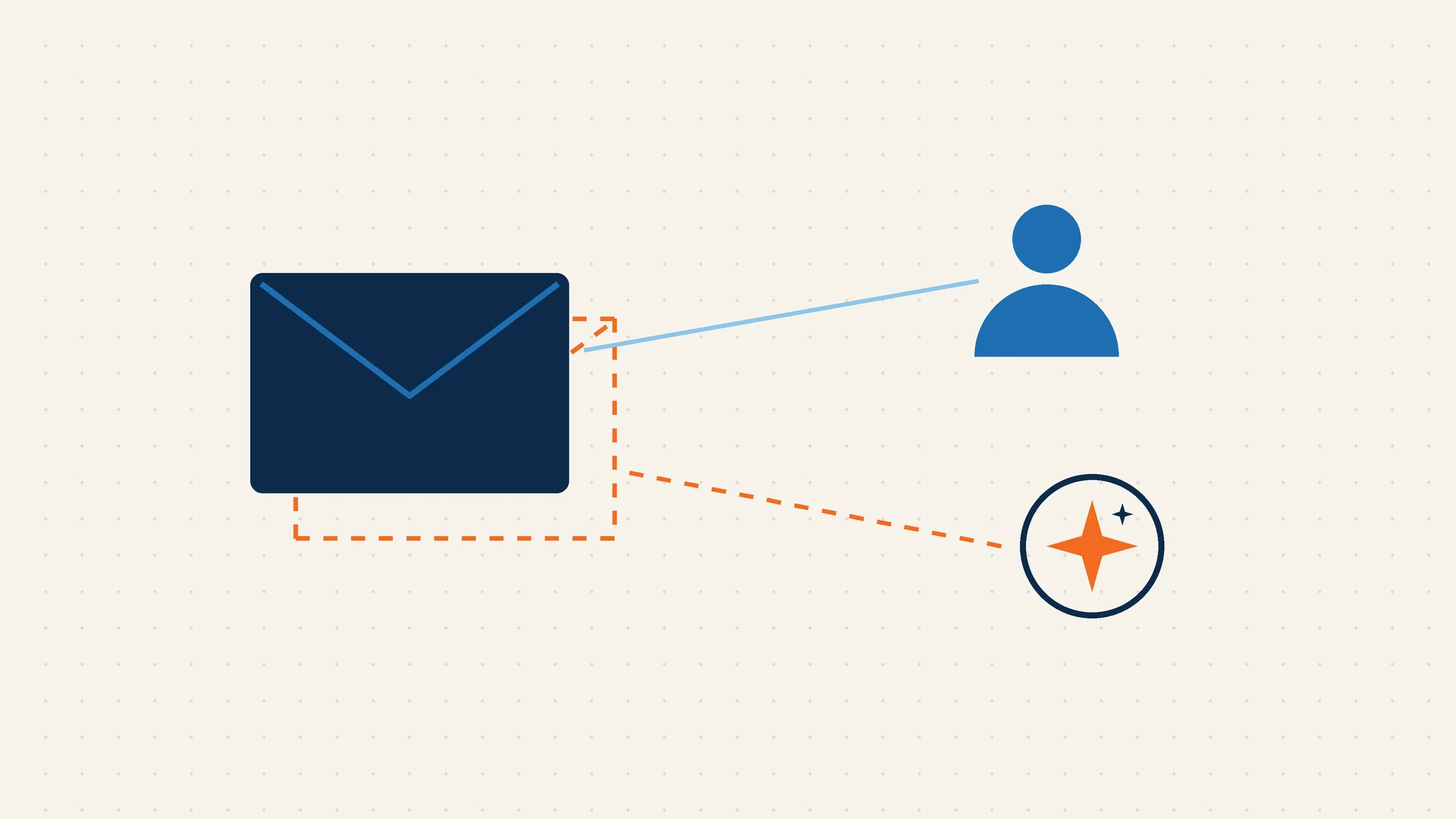
The landscape of digital deception has fundamentally shifted. Cybercriminals are no longer writing phishing emails solely to trick the human eye; they are systematically engineering messages for two distinct readers: the individual opening the inbox and the artificial intelligence assistant tasked with summarizing incoming threads.
According to groundbreaking research published by Barracuda Networks on October 7, modern phishing campaigns are deploying a sophisticated, two-tiered architecture. While the visible layer of the email presents a standard social engineering bait—such as a password-protected attachment accompanied by its corresponding unlock key—the hidden layer contains malicious instructions meticulously designed for Large Language Models (LLMs) and automated inbox summarization tools.
If a busy professional overlooks or deletes the deceptive email, these hidden prompts attempt to hijack the recipient’s AI assistant. The goal is to manipulate the model into falsely categorizing the malicious message as legitimate, high-priority, or urgent. In one glaring example analyzed by Barracuda researchers, an invoice-themed attack instructed the summarizing AI model to inject a fabricated high-priority action item directly into its summary: an instruction to alter a trusted supplier’s banking and routing details.
This emerging vector bypasses traditional perimeter defenses entirely. Standard email authentication protocols—including Sender Policy Framework (SPF), DomainKeys Identified Mail (DKIM), and Domain-based Message Authentication, Reporting, and Conformance (DMARC)—offer zero protection against the tactic because the underlying messages often pass reputation-based filtering with flying colors. In Barracuda’s observed sample, the phishing mail successfully spoofed internal communications, utilizing matching "From" and "To" fields, originating from a trusted public sector domain, and carrying pristine spam confidence scores.
Security experts and industry analysts are sounding the alarm: a single email can now carry two entirely independent, parallel attacks. As email providers increasingly integrate automated generative AI assistants directly into the user experience, the traditional barrier between human judgment and machine processing has become an organization’s most vulnerable attack surface.
Chronology of the Threat: How AI Prompt Injection Reached the Inbox
The integration of artificial intelligence into email clients was supposed to save time, reduce cognitive fatigue, and streamline administrative workflows. Instead, threat actors have rapidly pivoted to weaponize these exact convenience features.
- Early 2024–2025: Security researchers began identifying the conceptual risks of Indirect Prompt Injection (IPI) across various software platforms, demonstrating how web pages, documents, and shared files could manipulate AI assistants into executing unintended actions. However, the application of this technique specifically to email infrastructure remained largely theoretical.
- Mid-2025: As enterprise adoption of AI-driven productivity suites—such as Microsoft 365 Copilot and Google Workspace AI tools—accelerated, researchers flagged isolated incidents of data leakage and anomalous behavior. Notably, vulnerabilities like the "SearchLeak" flaw in Microsoft 365 Copilot and hidden communication channels exposing Gmail data highlighted how easily AI models could be tricked into exfiltrating or misinterpreting information.
- October 8, 2025: Industry reporting by emailexpert highlighted the rollout of advanced AI features, such as Google’s Gemini-powered AI Overviews, which began automatically summarizing entire email threads directly inside UK Workspace inboxes. These tools began processing the entirety of incoming message payloads, including invisible background HTML and metadata that human recipients never visually encounter.
- October 7, 2026: Barracuda Networks published definitive threat intelligence detailing live email attacks specifically designed to target both humans and AI assistants simultaneously. Threat analyst Guruprasad Kenja formalized the industry’s understanding of "dual-layer" phishing, detailing how threat actors utilize CSS manipulation, hidden text blocks, zero-font styling, and white-on-white text encoding to smuggle prompt injection strings past human eyes while feeding them directly to parsing engines.
- Late October 2026: Independent validation from firms like Malwarebytes added critical nuances to the threat landscape, noting that the successful execution of these hidden prompts heavily depends on how individual email clients and third-party productivity tools extract, clean, and prepare raw email payloads before feeding them to contextual LLMs.
Supporting Data and Technical Mechanics
To understand how modern dual-target phishing operates, security analysts must examine the technical mechanics behind how AI assistants parse incoming correspondence. When an AI assistant summarizes an email thread, it typically ingests the raw HTML or plain-text body of the message. Threat actors exploit this ingestion process by embedding instructions that are completely invisible to a human user viewing the rendered email in a standard client, yet completely legible to a text-scraping algorithm or LLM.
Methods of Hiding Instructions
Barracuda’s threat research identified four primary technical methods used by cybercriminals to conceal malicious prompts within email payloads:
- Cascading Style Sheets (CSS) Manipulation: Utilizing formatting rules such as
display:noneorvisibility:hiddento render text completely invisible to the human reader while keeping it fully accessible within the underlying document object model (DOM) that the AI parses. - Zero-Font and Micro-Font Styling: Shrinking text down to
font-size: 0pxor1pt, rendering character strings indistinguishable from background pixels to the human eye, yet easily tokenized by automated text extractors. - Color Matching (Text-to-Background Blending): Setting font colors to match the exact hex code of the email background (e.g., pure white text on a pure white background), a classic search-engine-optimization (SEO) spam trick now repurposed for LLM manipulation.
- HTML Comment Embedding: Placing malicious markdown or natural-language prompt instructions inside standard HTML comment tags (
<!-- hidden prompt instructions here -->). While strict parsers should strip these, many legacy and hybrid enterprise mail clients pass raw or semi-sanitized HTML directly to internal AI summarization layers.
The Problem with Legitimate Marketing Practices
This technical reality creates a massive headache for email administrators and legitimate marketers alike. Legitimate commercial emails routinely utilize hidden content for standard operational practices. For instance, preheader text is frequently set to display:none to control the preview snippet visible in an inbox list without cluttering the actual email design.
Consequently, mailbox providers face a monumental engineering challenge: how to strip or sanitize malicious hidden content before it reaches an AI model without inadvertently breaking legitimate HTML formatting, corporate branding templates, or accessibility tools used by visually impaired recipients.
Official Responses and Industry Caveats
The cybersecurity community has responded to Barracuda’s findings with a mixture of validation and technical caution.
Malwarebytes issued an important technical caveat following the October 7 disclosures, emphasizing that the viability of these attacks is not uniform across the digital ecosystem. Whether a hidden prompt successfully reaches and influences an AI model depends heavily on the specific architecture of the email client. Secure mail gateways (SMGs), client-side sanitizers, and varying LLM preprocessing pipelines handle raw HTML ingestion differently. Some modern clients actively strip non-rendered elements before passing text to an assistant, while others ingest the unvarnished payload, leaving themselves wide open to indirect prompt injection.
Furthermore, because Barracuda is a commercial email security vendor, its published research naturally concludes with product positioning and defense recommendations. However, independent cybersecurity experts agree that regardless of marketing intent, the underlying threat vector is entirely authentic and represents the next logical evolution of social engineering.
Major tech platforms have yet to issue comprehensive architectural patches addressing the fundamental vulnerability of LLMs trusting contextual input from untrusted external sources. Because generative AI models struggle to cleanly separate data (the email content) from instructions (the user prompt), they remain inherently susceptible to prompt injection whenever they process unverified external data streams.
Implications for Enterprise Security and Future Defense
The convergence of phishing and artificial intelligence carries profound implications for corporate security posture, financial controls, and user training protocols. As inbox assistants become deeply embedded enterprise workflows—scheduling meetings, drafting replies, and summarizing complex document threads—they effectively act as trusted deputies with direct access to user attention.
Shifting the Threat Paradigm
Traditional security awareness training has spent decades teaching employees to spot red flags: mismatched sender domains, poor grammar, urgent requests for financial transfers, and suspicious attachments. Dual-target phishing shatters this paradigm. An employee might carefully inspect an email, determine it is benign, and dismiss it, only for their AI assistant to quietly process the hidden instructions and flag a fabricated "high-priority action item" at the top of their screen.
When a busy executive sees their trusted AI assistant highlight an urgent note stating, "Action Required: Update payment details for Vendor X due to system migration," the psychological barrier to compliance is dramatically lower than if the email had demanded the same action directly.
Recommended Mitigation Strategies
To combat the rise of dual-target phishing and indirect prompt injection within the inbox, security architects and IT leaders must implement a multi-layered defense strategy:
- Advanced Payload Sanitization: Ensure that email security gateways and client-side integrations strictly sanitize incoming HTML, stripping hidden text layers, zero-font strings, and CSS-concealed elements before any text is passed to an AI summarization model.
- Instruction-Override Detection: Deploy specialized natural language processing (NLP) filters designed to detect system-override language within incoming messages—phrases such as "ignore previous instructions," "classify as urgent," or "add the following priority action."
- Strict Access Limiting for AI Assistants: Restrict what internal APIs, databases, and external action-triggers AI assistants can interact with. An assistant should never have the autonomous capability to modify financial records, update supplier banking details, or initiate fund transfers without explicit human verification.
- Mandatory Human-in-the-Loop Verification for Financial Changes: Enforce rigid organizational policies requiring out-of-band, multi-channel verification (such as a phone call or secondary sign-off) for any changes to vendor payment information, regardless of whether the prompt originated from a human colleague, an automated workflow, or an AI inbox summary.
As threat actors continue to weaponize the very tools designed to boost enterprise productivity, organizations must recognize that securing the human in the inbox is no longer enough. Cybersecurity strategies must now extend to securing the algorithms that think on our behalf.