
The modern digital commerce landscape is undergoing a structural paradigm shift. As consumer expectations for speed, hyper-personalization, and frictionless transactions continue to accelerate, technology providers are racing to deploy sophisticated infrastructure. This week’s curated roundup of merchant services highlights a decisive migration toward artificial intelligence integration, agentic commerce, localized fulfillment, and cross-channel data harmonization.
This report examines the primary developments reshaping digital retail, structuring the analysis through key facts, chronological rollouts, supporting data, official perspectives, and broader industry implications.

Main Facts: Core Developments in Merchant Technologies
The latest product rollouts across the global ecommerce sector underscore several transformative trends. Key developments include:
- Rise of Agentic Checkout & Commerce: Platforms like Constructor (powered by Stripe) and Crossmint have introduced dedicated toolkits and checkouts allowing AI shopping agents to execute purchases directly within a single conversational interface.
- Expansion of AI-Driven Marketing and Ads: Meta unveiled enhanced generative AI capabilities within Ads Creative Studio, while Razorpay partnered with OpenAI to bring ChatGPT Ads to the Indian market via Razorpay Engage.
- Fulfillment and Logistics Advancements: Ecom Logistics launched "Ecom Now," offering same-day delivery for Shopify merchants in major Canadian urban centers. Simultaneously, Zenkraft rolled out a multi-carrier shipping app tailored for Salesforce Storefront Next.
- Cross-Border and Embedded Finance: FedEx Dataworks and Stripe formed a strategic partnership to streamline global SMB commerce, and BigCommerce Payments by PayPal expanded its embedded checkout infrastructure into the U.K.
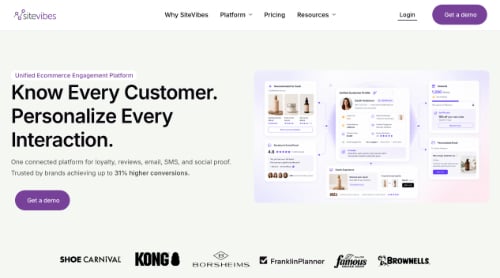
- Unified Data and Personalization: Integrations like Listrak and SiteVibes are merging real-time loyalty insights into cross-channel messaging, while Sellforte introduced its "Incremental Pixel" to bring causal attribution to daily retail media.
Chronology of Platform Releases
The deployment of these cutting-edge capabilities has unfolded through a rapid sequence of strategic product launches and ecosystem expansions:

Early October 2026: Logistics and Global Partnerships
- FedEx Dataworks and Stripe announced their alliance to reduce friction in global commerce, focusing on SMB financing and integrating Stripe’s multi-payment infrastructure into FedEx checkouts.
- SyncSpider introduced B2Bware, a centralized portal designed to eradicate legacy spreadsheet-based order management across platforms like Shopify, Shopware, and Odoo.
- Kantar launched Experience Impact, powered by Qualtrics, merging brand intelligence with operational customer data.
Mid-October 2026: Agentic Workflows and Attribution
- Sellforte debuted its Incremental Pixel, bridging the gap between customer journey tracking, incrementality experiments, and marketing mix modeling for daily attribution.
- Constructor rolled out Agentic Checkout in partnership with Stripe, enabling seamless discovery-to-purchase workflows inside AI agent ecosystems.
- Shopify upgraded the Shop app, enabling cross-device cart syncing, faster guest verification, and pre-filled Shop Pay buttons.
- Meta showcased its expanded AI business assistants and generative video tools at Advertising Week New York, focusing on automated audience discovery and image-to-video transformations.
- Typeform launched its AI Landing Pages builder, permitting brands to construct, test, and collect payments on conversational landing pages instantly.
- Shopware published the Agentic Commerce Maturity Index, giving merchants a 24-question framework to assess their AI readiness across discovery, fulfillment, and operations.
Late October 2026: Regional Expansion and Last-Mile Innovation
- Ecom Logistics brought Ecom Now to Shopify merchants in Canada, targeting same-day delivery windows (order by noon, deliver by 9 p.m.) across Toronto, Montreal, Vancouver, and Calgary.
- BigCommerce Payments by PayPal officially extended its native, co-branded embedded checkout solution to merchants in the United Kingdom.
- Zenkraft introduced its native shipping app for Salesforce B2C Commerce Storefront Next, providing automated delivery estimates and returns.
- Crossmint deployed its Agent Commerce Toolkit, enabling autonomous AI agents to manage card storage and checkouts via a single integration script.
- Listrak expanded its SiteVibes integration, permitting real-time webhook data sharing for loyalty programs and customer reviews to drive automated email and SMS triggers.
- Razorpay finalized its collaboration with OpenAI to expand ChatGPT ad capabilities and campaign management for brands in India.
Supporting Data and Technical Architecture
The technical underpinnings of these announcements reveal an industry prioritizing modular, API-first integrations over monolithic systems.
- AI Integration Maturity: According to metrics cited in structural frameworks like Shopware’s Agentic Commerce Maturity Index, merchants currently split their operational focus across four pillars: discovery, transactions, fulfillment, and operations. Early adopters utilizing tools like Constructor’s Agentic Checkout report reduced drop-off rates because the friction of redirecting users from conversational assistants to external checkout pages is eliminated.
- Attribution Accuracy: Sellforte’s Incremental Pixel tackles the historical blind spots of standard last-click attribution by integrating causal validation models. By analyzing daily marketing mix data alongside experimental incrementality benchmarks, brands can optimize media spend with higher precision.
- Real-Time Data Pipelines: Listrak’s integration with SiteVibes leverages webhooks to pass event data instantaneously. This eliminates batch-processing delays, allowing brands to trigger SMS and email marketing campaigns the exact moment a customer interacts with a loyalty tier or leaves a product review.
- Logistics Thresholds: Ecom Now’s operating parameters—guaranteeing 9:00 p.m. delivery for orders placed before 12:00 p.m.—rely on densely connected urban logistics networks in Toronto, Montreal, Vancouver, and Calgary, bridging the gap between Shopify back-ends and local carrier capacity.
Official Perspectives and Industry Responses
Industry leaders have emphasized that these tools are not merely incremental upgrades, but foundational components for the future of digital retail.

- On Agentic Commerce: "The transition from human-driven search to intent-driven agentic commerce requires infrastructure that can securely process payments and verify intent on behalf of autonomous entities," noted representatives from Crossmint during the rollout of their Agent Commerce Toolkit. Similarly, Constructor highlighted that blending discovery and checkout into a unified agent conversation reflects a fundamental shift in how consumers interact with digital storefronts.
- On Global Infrastructure: Speaking on the FedEx Dataworks and Stripe collaboration, executives underscored the necessity of bridging physical logistics networks with flexible financial architecture. By streamlining international payments and extending financial services to SMBs, both entities aim to level the playing field for smaller merchants competing globally.
- On Measurement and Attribution: "Marketers can no longer rely on vanity metrics or siloed platform reporting," remarked data strategists following the launch of Sellforte’s Incremental Pixel. The push toward causal measurement indicates a broader industry demand for accountability in paid media investments.
Implications for Merchants and the Future of Ecommerce
The accumulation of these product updates signals profound implications for online merchants, software developers, and platform providers alike.
1. The Imperative of AI Readiness
As frameworks like Shopware’s Agentic Commerce Maturity Index demonstrate, merchants must audit their digital infrastructure for AI compatibility. Brands that fail to structure their product catalogs, metadata, and APIs for consumption by AI shopping agents risk being rendered invisible as consumer discovery shifts away from traditional search engines toward conversational assistants.
2. Compression of the Customer Journey
The boundaries between inspiration, evaluation, and purchase are collapsing. With tools like Typeform’s AI Landing Pages, Meta’s conversational checkout extensions, and Constructor’s Agentic Checkout, the consumer journey is becoming an uninterrupted continuum. Merchants must adapt their conversion rate optimization (CRO) strategies to account for zero-click environments and agent-driven transactions.
3. Hyper-Localization and Fulfillment as a Differentiator
Same-day delivery models, such as Ecom Now in Canada and advanced multi-carrier applications from Zenkraft, demonstrate that logistics is no longer a backend utility—it is a front-facing marketing asset. Merchants utilizing localized fulfillment networks gain a distinct competitive edge against cross-border giants constrained by longer transit times.

4. Data Unity and Unified Customer Views
Siloed data is rapidly becoming a relic of the past. The deepening integrations between customer retention platforms (such as Listrak and SiteVibes) and enterprise data portals (such as SyncSpider’s B2Bware) prove that modern merchants require a single source of truth. Unifying inventory, loyalty data, and real-time behavioral triggers enables brands to deliver truly contextualized, cross-channel experiences that foster long-term customer lifetime value (LTV).
In summary, the digital commerce sector is entering a high-velocity era defined by autonomous agents, localized fulfillment, and rigorous attribution. Merchants who proactively adopt these integrated solutions will be best positioned to capture consumer intent and thrive in an increasingly automated marketplace.