In the rapidly evolving landscape of generative AI, businesses are increasingly finding themselves in a precarious position. By tethering entire operational infrastructures to a single platform—whether it be OpenAI’s ChatGPT, Anthropic’s Claude, or Google’s Gemini—marketers and entrepreneurs are creating hidden vulnerabilities. When a platform suffers an outage, changes its pricing structure, or experiences a decline in model performance, the consequences for a business can be catastrophic.
To mitigate these risks, industry experts, including AI strategist Nicole Leffer, are advocating for a paradigm shift: moving away from platform-specific ecosystems toward "portable AI workflows." This strategy ensures that your operational intelligence, instructions, and context remain yours, allowing you to pivot between AI providers as easily as changing a web browser.
The Strategic Imperative: Why Portability Matters
For many professionals, the convenience of building custom GPTs or internal agents within a single tool feels like an efficiency win. However, this convenience often masks a dangerous dependency.
1. Operational Stability and Risk Management
When a business relies on one AI provider, that provider’s uptime becomes a single point of failure. If an enterprise-grade model experiences a global outage, work grinds to a halt. By designing workflows that are platform-agnostic, organizations can maintain operational continuity by simply shifting to a secondary model during downtime.
2. Performance and Model Agility
AI models are not static; they undergo "drift" and updates that can unexpectedly alter output quality. An AI agent that produces perfect copy one week may behave erratically the next due to an underlying model update. Portability allows users to test and deploy different models for different strengths—for instance, using Claude for long-form reasoning while switching to a specialized image-generation model for creative tasks—without losing the foundational context of the project.
3. Financial Leverage
Current AI pricing is historically low, largely due to competitive land-grabs by major tech firms. However, as the industry matures, price hikes are inevitable. Organizations that are "locked in" to a specific ecosystem lose all bargaining power. Portability ensures that if one provider increases costs significantly, the business retains the flexibility to migrate its workflows elsewhere.
Building the Portable Foundation: Three Pillars of Agility
Creating a portable workflow does not require a complete overhaul of your current systems. It is primarily a matter of re-architecting how you store and manage your intellectual property.
Pillar 1: Externalizing Context and Instructions
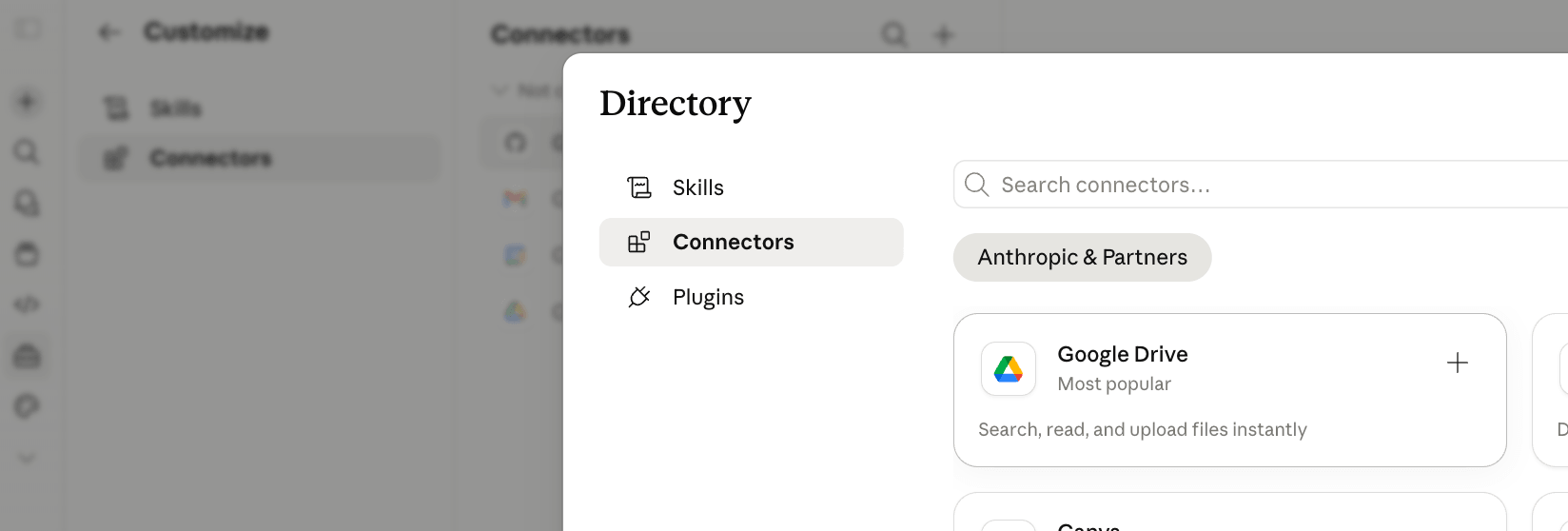
The most effective way to maintain portability is to detach your instructions and data from the AI platform’s internal storage. Instead of relying on a tool’s native "Memory" or "Knowledge" features, store these assets in neutral locations like Google Drive, Dropbox, or local encrypted hard drives.
By using Model Context Protocol (MCP) connectors, you can bridge these external repositories with any AI model. Think of MCPs as standardized APIs that allow your AI to reach out into your own secure folders to pull relevant information. By limiting the AI to a curated folder rather than giving it access to an entire, bloated drive, you actually improve the model’s performance. AI functions most accurately when it is provided with precise, relevant context rather than forced to sift through irrelevant noise.

Pillar 2: Leveraging "Skills" as Portable Assets
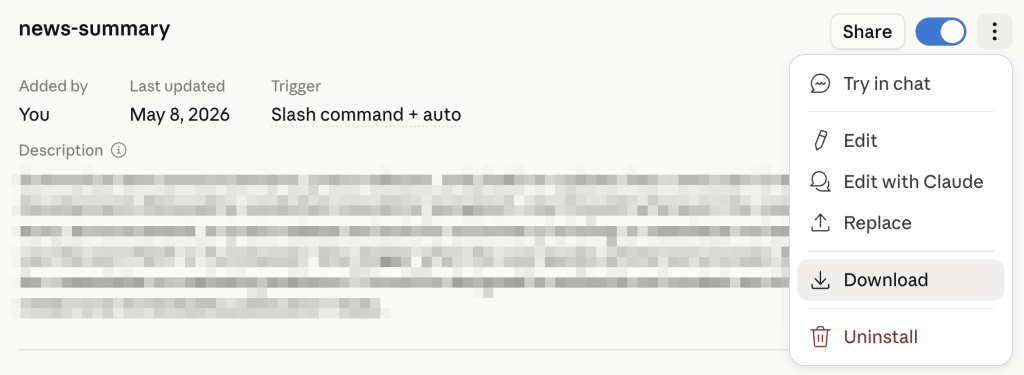
A "skill" is essentially a modular package of intelligence. By creating a .zip file containing a SKILL.md file (a Markdown-formatted document), you can define how an AI should behave for a specific task.
This markdown file serves as the "brain" of the operation, holding instructions, brand guidelines, code snippets, and procedural logic. Because this is a universal file format, a skill developed in Claude can be transferred to ChatGPT or other agent-based systems. It acts as a digital version of Neo’s "martial arts download" in The Matrix: the moment the AI receives the file, it instantly understands the required workflow, formatting, and stylistic constraints.
A Note on Security: While skills are powerful, they should be treated with the same caution as executable code. Only utilize skills created by trusted sources—specifically the AI providers themselves or verified internal team members. Downloading "black market" skills from online forums carries the risk of prompt injection or malicious code designed to exfiltrate data from your CRM or internal systems.

Pillar 3: The Spreadsheet as an Operating System
Perhaps the most sophisticated application of portability is the use of Excel as an AI-agnostic interface. By utilizing the Excel plugins for Claude, ChatGPT, and Copilot simultaneously, users can treat their spreadsheets as a persistent "workspace" that survives platform switches.
Chronology of a Portable Excel Workflow:
- Conceptualization: Before opening Excel, use an LLM (like Codex) to plan the workbook architecture. Define tabs, formulas, and desired outcomes.
- Briefing: Have the AI generate a
briefing.mdfile. This acts as the "source of truth" for your workbook. - Deployment: Open Excel, load your plugins, and drop the briefing file into the chat sidebar. The AI will build the workbook structure, including "Prompt Tabs" that contain the instructions for future agents.
- Self-Briefing Integration: Build a "History Log" tab into the workbook. Instruct the AI to read this tab as its first action in every new session. By doing this, the AI "remembers" the context of the work regardless of whether you are using Claude today or ChatGPT tomorrow.
Implications for the Modern Enterprise
The transition toward portable AI is not merely a technical preference; it is a strategic necessity for the modern enterprise. As AI becomes the central nervous system of business operations, the ability to maintain "data sovereignty"—the ability to control your own workflows and move them at will—will define which companies remain agile and which become trapped by their vendors.
The "Self-Briefing" Advantage
The primary implication of this methodology is the shift from "Human-as-Operator" to "Human-as-Architect." By building self-briefing documents directly into your assets, you reduce the time spent re-prompting the AI at the start of every session. The workbook or project document effectively "teaches" the next agent what it needs to know, ensuring that the project remains consistent even as the underlying technology evolves.
Scaling and Standardization
For organizations, this approach enables a standardized "AI Language." By sharing validated, high-quality skill files across departments, a company can ensure that every employee is using the same brand voice and operational procedures, regardless of which AI subscription they personally prefer.
Conclusion: The Path Forward
Portability is not about using every AI platform at once; it is about ensuring that you are never trapped by one. By adopting the habits of external storage, modular skill creation, and workbook-embedded instructions, you insulate your business against the volatility of the AI market.
As you begin to build your own portable workflows, remember the core philosophy: Your intelligence is your asset; the AI is merely the engine. By keeping your assets separate from the engine, you ensure that your business remains in the driver’s seat, ready to adopt the next generation of technology without having to rebuild your foundation from the ground up.
In a world where AI platforms rise and fall, the businesses that succeed will be those that have mastered the art of being platform-agnostic, keeping their workflows flexible, secure, and—above all—truly their own.