Introduction
As open-source projects mature, maintaining momentum requires continuous adaptation in both software development and community engagement. For WordPress—a platform powering over 40% of the web—the challenge lies not only in shipping reliable code, but also in invigorating a global community recovering from the structural disruptions of the COVID-19 pandemic.
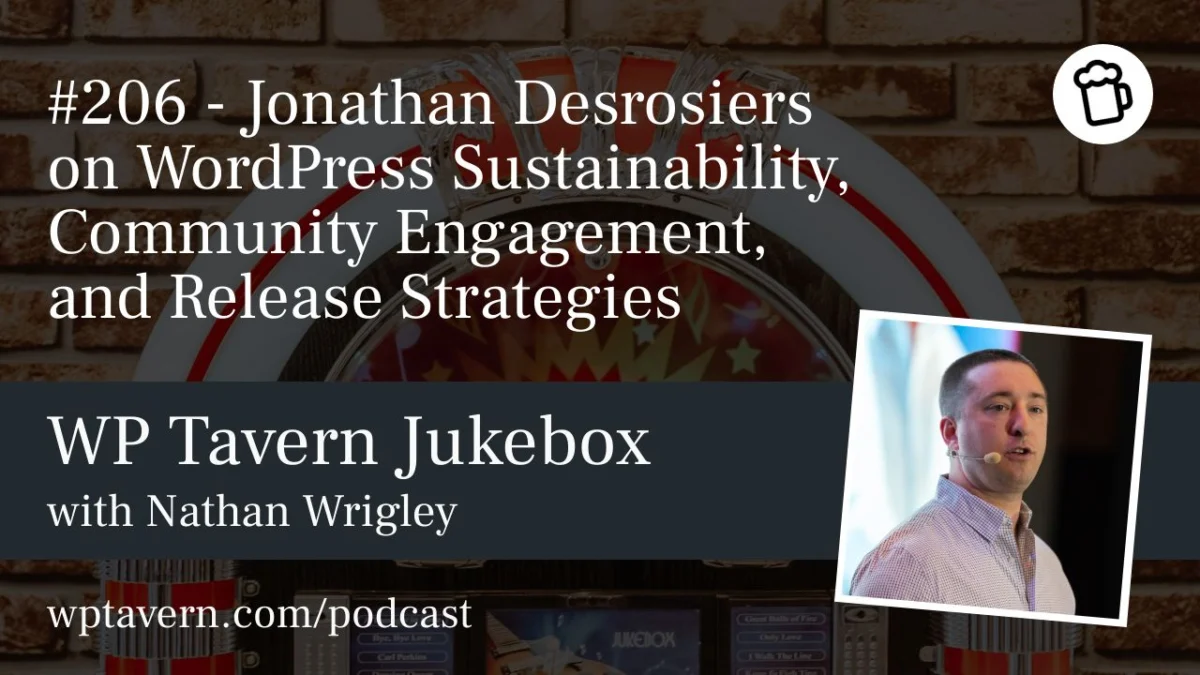
In a recent episode of the Jukebox Podcast from WP Tavern, host Nathan Wrigley sat down with Jonathan Desrosiers, a principal software engineer at Bluehost, a Five for the Future sponsored contributor, and a long-standing WordPress Core committer. Their wide-ranging discussion explored a bold new release strategy for 2026, the logistical hurdles of aligning software deployment with flagship WordCamps, the state of local meetups, and how the intersection of artificial intelligence and open source is reshaping the next generation of builders.
Main Facts: Aligning Releases with Flagship Events
The core revelation of the discussion centers on a strategic shift in how WordPress approaches major software rollouts. Traditionally viewed as isolated technical milestones, software updates are being reimagined as high-profile cultural and community moments.
- The Catalyst: In late 2025, the release of WordPress 6.9 serendipitously coincided with the live State of the Word address in San Francisco. The successful theatricality of the rollout—complete with a live countdown and a celebratory atmosphere—sparked a new vision within the project’s leadership.
- The 2026 Strategy: For the 2026 calendar year, WordPress aims to synchronize its three major software releases directly with its flagship global events:
- WordCamp Asia (scheduled for April in India)
- WordCamp Europe (scheduled for June)
- WordCamp US and the year-end State of the Word
- The Philosophy: Desrosiers emphasizes that while code and licenses are vital, the underlying engine of any open-source project is its human community. By coupling software releases with physical gatherings, the project seeks to transform routine updates into shared global celebrations.
Chronology: Navigating Global Calendars and Logistical Realities
Coordinating a global software release with physical events is an exercise in complex choreography. Desrosiers detailed the intricate calendar constraints that dictate the WordPress release lifecycle.
The Holiday and Religious Calendar Bottleneck
Planning a release schedule is deceptively difficult. The Core team cannot simply dictate when major events occur, as WordCamp organizers must factor in budgets, regional travel, venue availability, and seasonal weather.
Simultaneously, the software release path must navigate international holidays:
- November–December: Complicated by U.S. Thanksgiving, Hanukkah, Christmas, and New Year’s. Much of the global open-source community takes extended leave during December, effectively rendering it a "washed month" for active development.
- April: Frequently interrupted by major religious holidays scattered across different regions of the world.
- The Intermediary Gap: Because WordCamp Asia takes place in April and WordCamp Europe follows closely in June, the temporal gap is too narrow to support an intervening major software cycle. Consequently, the 2026 roadmap relies on targeted releases aligned with Asia, US, and year-end milestones.
Global Coverage and Travel Logistical Challenges
With release leads and contributors scattered worldwide, travel presents another puzzle. When a release happens live at an event like WordCamp Asia, some squad members are on airplanes, battling jet lag, or struggling with unreliable venue Wi-Fi.
To mitigate this, the release squads are deliberately constructed with geographic diversity.
- Members physically present at the event can participate in live testing and celebration.
- Distributed members across other time zones (such as North America) step in as daytime approaches in their regions to carry the torch, handle follow-up issues, and provide continuous oversight.
Supporting Data: Acceleration in Core Adoption
Despite the complexities of modern release cycles, data indicates that the end-user adoption of WordPress core updates is accelerating rapidly. Desrosiers shared insights from a recent post-release data analysis of WordPress 6.9.
- Rapid Milestone Passages: Historically, tracking update speeds revealed gradual curves. However, analysis of the last six to 8 major releases shows that every version has crossed the 35% adoption threshold of all WordPress sites in two days or less.
- Breaking Previous Records: WordPress 6.9 reached the 50% adoption threshold in just 10 days—four days faster than WordPress 6.8, which previously held the record as the fastest-adopting release.
- Quality Assurance: Desrosiers attributes this accelerating trend to the success and increasing reliability of automatic updates. As major versions are installed faster by more people, it signals growing user confidence in the stability of the software and highlights the effectiveness of modern release engineering.
Official Responses and Community Health
While the software metrics reflect robust technical health, the health of the physical grassroots community tells a more nuanced story. Wrigley and Desrosiers analyzed the lingering effects of the pandemic on local ecosystems.
The "Long Tail" COVID Effect on Meetups and WordCamps
The pandemic fundamentally disrupted local engagement pipelines. Many veteran organizers who kept regional meetups and WordCamps alive either burnt out or moved on during lockdowns.
- Regional Disparities: While the Asia-Pacific (APAC) region boasts a booming, highly enthusiastic community experiencing rapid growth, Western regions—particularly the United States and the United Kingdom—face steeper challenges in rebuilding local meetup momentum and securing event speakers.
- Societal Shifts: Changing post-pandemic habits, transportation costs, and evolving preferences in how people consume information have made in-person gatherings harder to sustain in mature markets.
Revitalization Initiatives
To counteract this plateau, WordPress leadership—including figures like Mary Hubbard—has prioritized educational and mentorship frameworks:
- The WP Credits Program and Contributor Mentorships: Structured mentorship programs running across multiple quarters have successfully birthed a new tier of contributors who transition from mentees to team leads and release squad members.
- WP Campus Connect: Initiatives aimed at engaging younger demographics at the high school and university levels, introducing them to open source and providing clear career pathways within the WordPress ecosystem.
Implications: The Intersection of Open Source, AI, and the Next Generation
As the WordPress project looks toward the next decade, its long-term survival depends on its ability to captivate younger generations accustomed to closed, siloed digital platforms.
Battling the Walled Gardens
Younger demographics have grown up under platforms optimized for ad delivery and walled content. However, Desrosiers and Wrigley observe a fascinating counter-trend: a grassroots resurgence in open alternatives like RSS readers, self-hosted blogs, and the Fediverse. Users are increasingly fatigued by centralized platforms arbitrarily altering rules or shutting down APIs.
The Empowerment of Artificial Intelligence
The wildcard—and perhaps the greatest catalyst for community renewal—is the integration of artificial intelligence into open source.
- Personal Empowerment: AI acts as a great equalizer, allowing individuals with minimal coding experience to build bespoke tools, websites, and applications tailored to their exact needs.
- Lowering Barriers to Entry: By distilling complex documentation into digestible, personalized learning paths, AI gives a new wave of builders the confidence to experiment, tinker, and solve problems independently.
"AI is making it easier to build, but it’s also making you more aware that you have to build… People are starting to scoff at the walled gardens a little bit more." — Jonathan Desrosiers
Conclusion
By anchoring software releases to high-profile flagship events, expanding educational mentorships, and leaning into the builder enthusiasm catalyzed by AI, WordPress is actively engineering its own cultural renaissance. While challenges remain in rebuilding post-pandemic local meetups, the structural alignment of community gatherings and technical milestones signals a resilient project prepared for its next decade of growth.