In the high-velocity world of B2B software, the narrative has long been focused on the product: the model, the accuracy of the output, and the seamlessness of the integration. However, a silent, structural crisis has emerged beneath the surface of the artificial intelligence boom. For the modern enterprise, the most significant obstacle to scaling isn’t the development of a superior AI agent—it is the challenge of putting a price tag on it.
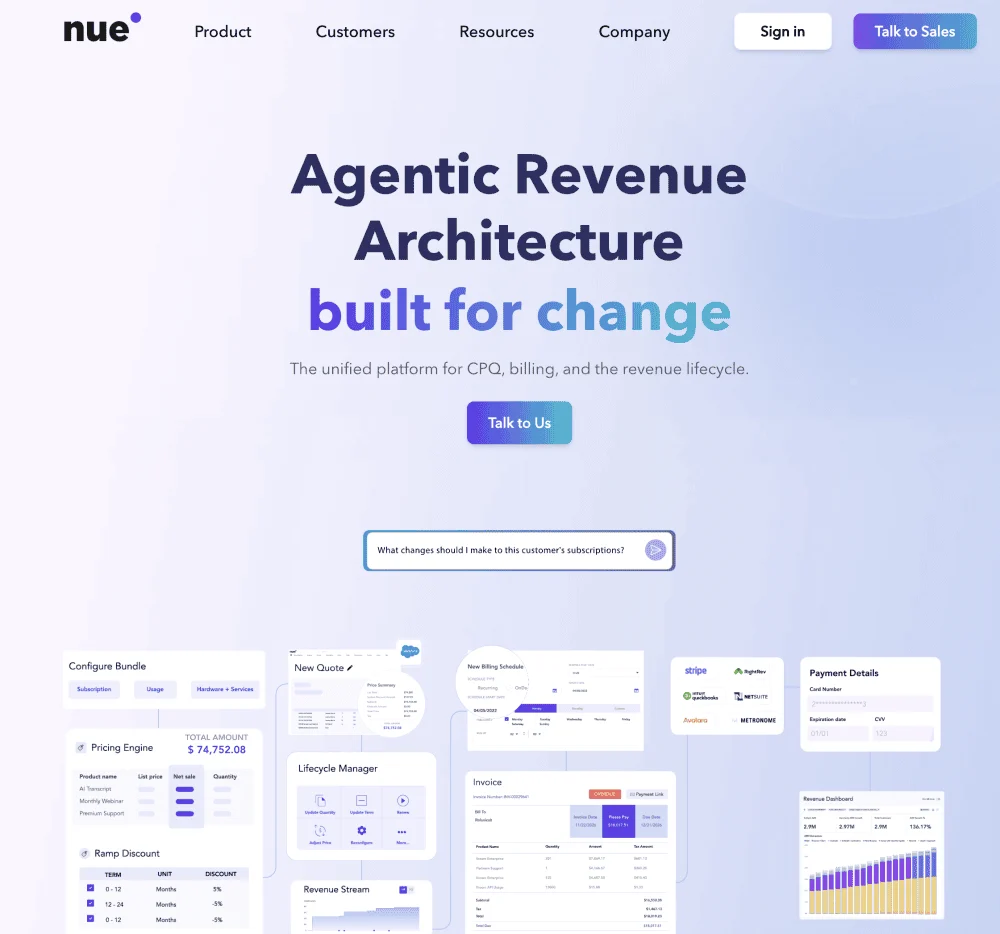
As companies shift away from the traditional, comfortable era of per-seat licensing, they are hitting a wall of legacy infrastructure. Nue, the platform leading this week’s industry spotlight, has emerged as the definitive answer to this bottleneck, providing a unified quote-to-revenue engine designed specifically for the era of consumption-based, dynamic pricing.
The Main Facts: Why "Per-Seat" is Dead
For decades, the software-as-a-service (SaaS) industry thrived on the predictability of per-seat billing. You bought 500 licenses, you paid for 500 users, and the finance department rejoiced in the simplicity.
The rise of AI agents has shattered this model. If an AI agent performs the work of ten employees, charging per-seat is not only antiquated—it is a value-capture failure. AI companies are now rapidly migrating toward:
- Consumption-based models: Paying for what you use (tokens, compute, API calls).
- Outcome-based models: Paying for successful results, such as a resolved support ticket or a qualified lead.
- Hybrid frameworks: Combining base subscription tiers with variable usage-based add-ons.
The core problem is that the "plumbing" of the enterprise—CPQ (Configure, Price, Quote) tools, billing engines, and revenue recognition systems—was built for a world where pricing changed once a decade. Today, that rigidity is a competitive liability.
A Chronology of the Quote-to-Cash Crisis
To understand why Nue is gaining traction, one must look at the evolution of the B2B tech stack:
- 1995–2010 (The Perpetual Era): Software was sold as a one-time license. Pricing was static.
- 2010–2020 (The SaaS Era): The rise of subscription billing. Companies like Salesforce and NetSuite mastered the recurring revenue model. Pricing remained largely fixed per user.
- 2020–2024 (The Early AI Transition): Early AI adopters attempted to shoehorn agentic capabilities into existing per-seat billing tools. This led to "duct-taped" architectures where usage data lived in one silo, billing in another, and finance was forced to reconcile the two via manual spreadsheets.
- 2025–Present (The Unified Era): The industry recognizes that pricing is the product. Companies are now looking for a "System of Record" that treats pricing as a dynamic variable rather than a static attribute.
Nue enters this chronology as the corrective force. By collapsing the silos between quoting, metering, and invoicing, the platform allows for the iteration that the current market demands.
Supporting Data: The Cost of Fragmented Infrastructure
Research into current B2B AI operations reveals a startling trend: the "Revenue Gap." When a founder decides to pivot their pricing strategy, they are often met with a multi-quarter engineering project.
The data suggests that:
- Time-to-Market: Companies using legacy stacks take 3–6 months to implement a new pricing model.
- Operational Friction: On average, finance teams in AI startups spend 15–20 hours per week manually reconciling usage data that doesn’t sync with the CPQ system.
- Revenue Leakage: Because sales teams lack the ability to cleanly quote complex, usage-based contracts, they often default to discounted flat-rate plans, significantly eroding the Lifetime Value (LTV) of the customer.
Nue addresses this by acting as a single source of truth. By centralizing the data model, it eliminates the "none of them agree" problem where billing, usage, and revenue recognition software provide conflicting reports.
Official Perspectives: The Founder’s View
"The hardest problem in B2B + AI right now is not building the product. It’s pricing it," say the architects behind Nue. Their philosophy is rooted in the idea that pricing is no longer a downstream administrative task—it is a core product feature.
In conversations with early adopters, a consistent theme emerges: companies feel "locked in" by their own billing software. By choosing tools that cannot handle consumption metrics, they essentially prevent their product teams from experimenting with monetization. Nue’s value proposition is simple: they enable the "move fast and break things" mentality to apply to business models as much as codebases.
Implications: Pricing as a Competitive Edge
The transition to usage-based and outcome-based pricing has profound implications for the future of the enterprise market.
1. The Death of the "Sales Tax" on AI
When pricing is tied to value (outcomes), the alignment between the vendor and the buyer becomes absolute. If the AI doesn’t deliver value, the bill is naturally lower. This transparency is becoming a mandatory requirement for enterprise procurement teams.
2. The Rise of "Pricing Agility"
The companies that win in the next five years will be those that can iterate their business models without massive overhead. If an AI startup discovers that a "credit pack" model is driving better retention than a "per-query" model, they need to be able to switch within days, not quarters. Nue provides the infrastructure for this agility.
3. Financial Integrity and Compliance
As AI companies grow, they face increasing scrutiny from auditors. Revenue recognition is complex when pricing is non-linear. By integrating the metering layer directly into the billing engine, Nue ensures that every dollar invoiced is traceable and compliant, providing a layer of "audit-readiness" that is often missing in high-growth startups.
Strategic Recommendations: Who Should Adopt?
It is vital to distinguish between those who need this level of infrastructure and those who should wait.
- The Case for Adoption: If you are a B2B AI company already running, or planning to run, hybrid pricing models—or if you find yourself struggling to explain your billing logic to your own customers—Nue is the logical next step. It is built for companies where the complexity of the pricing exceeds the capacity of a manual spreadsheet.
- The Cautionary Note: For pre-revenue startups or those with a simple, single-tier product, adopting a sophisticated revenue stack too early can be a distraction. Revenue infrastructure should be scaled in tandem with product complexity.
Conclusion: The New Frontier of B2B
The "agentic" nature of modern AI has effectively broken the traditional contract. We are witnessing a shift where the software does the work, and the billing system must account for that work with precision.
Nue is not just a tool; it is a fundamental shift in how the SaaS ecosystem views the "Quote-to-Revenue" stack. By treating pricing as a fluid, dynamic, and essential part of the product experience, Nue is positioning itself at the center of the most important monetization conversation in the technology sector today.
For those attending SaaStr AI 2027 in May, the opportunity to see these systems in action is invaluable. The industry is moving toward a future where pricing is as programmable as the software itself—and the companies that embrace this reality are the ones that will define the next decade of AI growth.
Do you have an AI-driven platform that is solving a structural industry problem? Nominate your company for the SaaStr AI App of the Week and join the conversation on the future of B2B monetization.