In the high-stakes world of B2B sales, a "warm lead" is the industry’s most precious commodity. It represents a potential customer who has already signaled intent, cleared the initial hurdle of awareness, and moved into the consideration phase. Yet, for many organizations, the transition from a hand-raised lead to a closed contract is where the revenue machine breaks down—not due to market conditions, but due to a fundamental failure in human connection.
A recent experience involving a potential $100,000-a-year fund administration contract for the SaaStr Fund serves as a cautionary tale for sales leaders everywhere. It highlights a recurring epidemic in modern enterprise sales: the substitution of genuine engagement with scalable, robotic, and ultimately disqualifying automation.
The Anatomy of a Missed Opportunity
The narrative began on LinkedIn, where a vendor initiated contact regarding fund administration services. As a prospective client currently in the market, the interest was genuine. However, being "in the market" is vastly different from being an "easy close."
Switching vendors is a high-friction event. It involves operational risk, time-intensive migration projects, and the burden of re-training staff. For a prospect to justify such a move, a vendor must clear a significant threshold: they must prove they are objectively superior, demonstrate a higher level of attentiveness, and provide a clear roadmap to solving existing pain points.
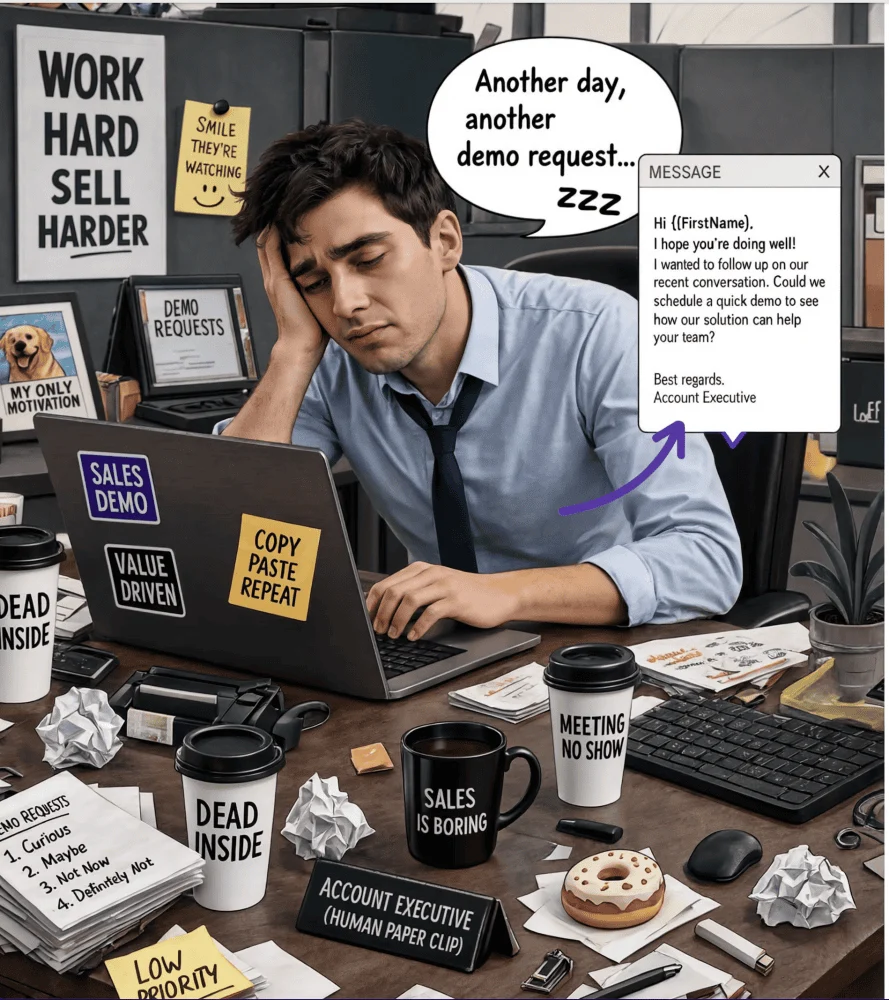
The vendor, however, failed to clear the first hurdle. Despite the initial LinkedIn connection, the follow-up process devolved into a series of generic, automated emails that lacked any semblance of research or personalization.
The Chronology of Disengagement
- Initial Contact: A LinkedIn outreach established the first point of contact. The prospect responded, offering a "best shot" opportunity for a high-value, six-figure deal.
- The "Cold" Follow-up: Despite the prospect’s explicit signal of interest, the sales representative sent two subsequent emails that were entirely devoid of research. There was no mention of the fund’s specific size, the current operational challenges, or a point of view on why the vendor’s solution was the right fit.
- The Confrontation: The prospect challenged the representative, asking pointed questions about whether any research had been conducted—or if even basic AI tools had been utilized to craft a meaningful pitch.
- The "Gate" Strategy: The representative responded with a generic, non-customized overview document. To access it, the prospect was required to navigate a sign-in wall—demanding contact information to view content that hadn’t even been tailored to the prospect’s specific business needs.
The Paradox of Automation in the Age of AI
There was a time when "research didn’t scale." Sales representatives could argue that they simply didn’t have enough hours in the day to customize outreach for hundreds of accounts. In 2026, that argument is functionally dead.
With the proliferation of advanced AI, a sales representative can pull a prospect’s fund size, portfolio, recent public statements, and existing tech stack in under three minutes. They can feed this data into a Large Language Model to generate a highly tailored, insightful communication. The fact that many reps still choose to spray "template-and-pray" emails is not a symptom of a lack of time; it is a symptom of a lack of caring.
The "Gate" That Blocks the Sale
A critical point of friction in this interaction was the use of a lead-capture form for a boilerplate deck. In B2B sales, the exchange of contact information for content is a transaction. When a vendor asks a prospect to "spend" their time filling out a form, they are effectively asking for an investment.
When the content behind that form is generic, the vendor is effectively signaling that they do not value the prospect’s time. By stacking friction—a generic email followed by a gate requiring a sign-in to view non-customized collateral—the vendor transformed a warm lead into a cold rejection.

Implications for Sales Leadership
The implications of this lazy outbound strategy are profound. When a vendor relies on templates to approach a warm prospect, they aren’t just failing to earn a reply; they are disqualifying themselves.
1. The Pre-Sale Preview
Buyers are savvy. They know that the way a vendor treats them during the sales process is the best they will ever be treated. If a sales representative is indifferent and lazy while they are trying to win the business, the prospect correctly assumes that support will be nonexistent once the contract is signed and the money has cleared. A template-driven, high-friction sales process is a window into a future of poor customer service.
2. The "Summary" Fallacy
Many sales leaders rely on AI-driven dashboards to track the health of their pipeline. These systems provide neat rollups: "1,200 emails sent, 14 meetings booked." These metrics are deceptive. They quantify volume, but they mask quality. A summary might state, "Two follow-ups sent, no response," failing to capture the reality that those emails were "interchangeable garbage."
By relying on compressed summaries, leaders strip away the very details that are losing them their biggest deals. The "deal-killing" specifics—the lack of research, the generic tone, the tone-deaf requests—are hidden in the noise of the metrics.
3. Burning the Expensive Top-of-Funnel
Founders and sales leaders spend immense capital on lead generation—marketing, content, events, and SDR salaries. This is the most expensive part of the business. When a representative takes a hand-raised, qualified lead and incinerates it with a template, they are wasting the company’s most costly asset. A weak email to a bad-fit prospect is a negligible loss; a weak email to a high-fit prospect is a hemorrhage of potential revenue.
The Path Forward: Quality Over Quantity
If organizations are to thrive, the strategy for outbound must shift from volume to value. The "lazy third email" cadence—the practice of sending a series of canned, forgettable messages—must be abandoned.
Recommendations for Immediate Improvement:
- Audit the Raw Data: Leaders must stop looking exclusively at dashboards. Spend time every week reading the raw, uncompressed emails that your team is sending to your top-tier accounts. Look at the threads that failed to convert. That is where the truth lives.
- Mandate Research as a Baseline: In the era of AI, research is a default setting, not a luxury. If a representative is not pulling a prospect’s recent activity and tailoring their message to it, they are not performing their job.
- Kill the Friction: If you are going to gate your content, ensure the asset behind the wall is worth the trade. A generic overview deck should never be gated. It should be the hook that earns the conversation, not a tollbooth that halts the process.
- Focus on the "Next Touch": The goal for the coming week should be singular: make every outbound touch materially better than the last. This doesn’t require new software, expensive consultants, or additional headcount. It requires a shift in culture—a commitment to treating every single prospect like a high-value human being rather than a data point in a CRM.
Conclusion: The Margin of Excellence
The math of sales excellence is binary. Every lead that you convert through a sharper, more personalized touch represents near-pure margin, because the cost of acquiring that lead has already been sunk.
When a lead raises their hand, they are inviting you to prove your value. They are looking for a reason to trust you with their business. By choosing to be lazy, to be automated, and to be generic, you are telling them that they are not worth your effort. The fix is simple, but it is not easy: it requires the discipline to care about the details, to use your tools to provide insight rather than noise, and to remember that in the world of high-stakes B2B, the most effective sales tactic is still the oldest one—genuine, thoughtful, and human-centric connection.