In the expansive world of open-source software, few platforms have cultivated an interconnected web of commercial and community interest quite like WordPress. For over two decades, this ecosystem has functioned as a delicate, high-stakes symbiosis between three primary pillars: agencies, product companies, and infrastructure providers. However, as we navigate the economic landscape of 2026, the traditional “rising tide” philosophy—where a healthy community creates mutual prosperity—is facing a stress test.
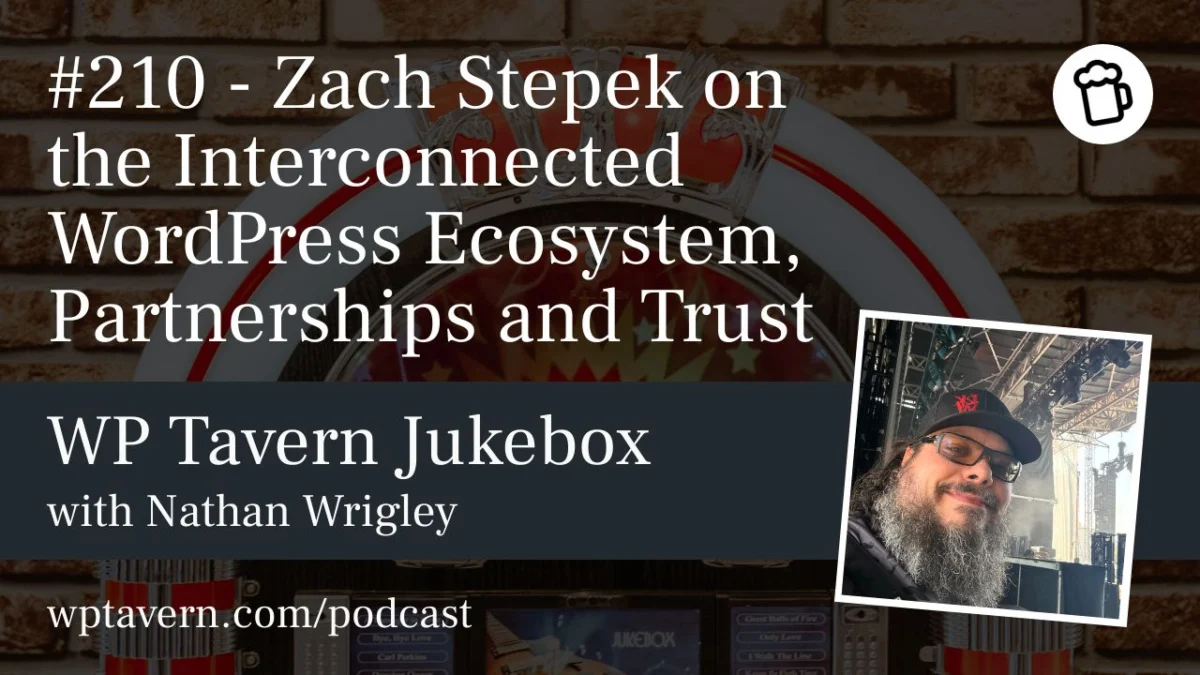
Zach Stepek, a veteran of the WordPress space whose career has spanned from the early days of Flash and ColdFusion to the modern era of WooCommerce, suggests that the industry is at an inflection point. In a recent appearance on the Jukebox Podcast, Stepek argued that while the WordPress ecosystem has historically thrived on values-driven collaboration, a shift toward short-term, transaction-heavy metrics threatens the long-term stability of the platform.
The Three Pillars of WordPress Success
To understand the current tension in the market, one must first understand the structure of the WordPress economy. Stepek characterizes the ecosystem as a “Celtic knot” of three interdependent layers:
- Agencies and Freelancers: These are the architects of the web, responsible for implementing technology and managing client expectations. They are the frontline workers who translate the complex needs of businesses into functional WordPress sites.
- Product Companies: These are the developers of the themes, plugins, and blocks that extend WordPress’s core functionality. They solve specific problems—from e-commerce checkout flows to advanced SEO—that allow the platform to serve as a versatile business tool.
- Hosting and Infrastructure: Often viewed as the "real estate" of the internet, hosting provides the foundation. In an era where traffic spikes can make or break a business, the quality of this infrastructure is the silent arbiter of a site’s success.
Stepek emphasizes that these layers do not exist in a vacuum. A breakdown in one—such as a plugin conflict or a poorly configured server—inevitably cascades through the entire chain. When agencies, product developers, and hosts work in harmony, the result is a resilient, scalable digital environment. When they fail to communicate or collaborate, the entire system becomes fragile.
A Chronology of Evolution: From Viral Growth to Systemic Maturity
The history of the WordPress ecosystem is not one of a master plan, but of organic, chaotic growth. Early in his career, Stepek experienced this volatility firsthand. Recounting a pivotal moment in his early professional life, he described a situation where an organization he was supporting went viral during an NFL broadcast.
The site, built on WooCommerce, was hosted on a modest virtual private server (VPS). While the traffic brought the potential for growth, the lack of robust infrastructure—specifically, the email spool filling the server’s memory—led to a complete system crash. The incident provided a brutal lesson in the necessity of infrastructure planning.
“It was never designed for the level of traffic they received,” Stepek noted. That incident was not merely a technical failure; it was a catalyst. It led to his deeper involvement with the WooCommerce team and his eventual transition into the hosting space. This trajectory—from designer to developer, to consultant, to infrastructure strategist—reflects the broader evolution of the WordPress community: moving from hobbyist experimentation to enterprise-grade mission-critical operations.
The Rise of Transactional Thinking and the ROI Trap
As the WordPress market has matured, the influx of private equity and institutional capital has introduced a new dynamic. While investment can drive innovation, it often brings a laser-like focus on Return on Investment (ROI) that can clash with the ethos of an open-source community.
Stepek argues that when ROI becomes the sole metric for success, the "partnership" model begins to erode. He describes a scenario where companies, pressured by external stakeholders to maximize short-term revenue, shift their focus away from ecosystem health.
The Dangers of Short-Termism
When a company prioritizes immediate profit over long-term relationship equity, it essentially treats its partners as line items. This, Stepek warns, is a “house of cards.”
- Erosion of Trust: When interactions become purely transactional, the collaborative spirit that built WordPress begins to dissipate.
- Component Shortages and Cost: With the current global strain on hardware, driven partly by the massive resource demands of AI-driven computing, hosting providers are facing increased costs. Those who built business models on ultra-low-cost hosting are now facing a reality where their infrastructure can no longer sustain their promises.
- Belt-Tightening: The current economic climate has led to a noticeable decline in event participation. As companies cut costs, the "glue" that holds the community together—in-person networking and knowledge sharing—is beginning to weaken.
Implications for the Future: Cultivating Relationship Equity
The core argument for the future of WordPress is that trust is a "durable asset." In an era of economic uncertainty, the companies that will survive are not necessarily those with the largest immediate revenue spikes, but those that have invested in the community.
The Case for Stewardship
Stepek highlights companies like 10up (via Fueled) and WebDevStudios as examples of "good stewards." By open-sourcing tools like ElasticPress or developing solutions like the Theme Switcher Pro, these agencies demonstrate that building products based on real-world needs—rather than just selling subscriptions—creates a more sustainable ecosystem.
Measuring the Immeasurable
One of the greatest challenges for WordPress businesses today is how to quantify "goodwill." For years, the community operated on an unspoken agreement: contribute back to the project, support your peers, and the community will support you.
Stepek suggests that if the industry is to survive the current pivot, it must find better ways to track and reward contribution. "Relationship equity precedes the revenue," he stated. If the community can move toward a system where contributor hours, long-term collaboration, and mutual support are recognized with the same weight as quarterly profit, it may be possible to stabilize the ecosystem.
Conclusion: Planting a Forest vs. Picking Apples
The central metaphor provided by Stepek is one of sustainability: "If all you want is the apples, you just strip the branches of all the apples and you move on. But if you’re planting a forest together, you’re thinking about the ecosystem."
The "death by a thousand cuts" scenario—the slow removal of support, the reduction in event sponsorship, and the focus on transactional revenue—can be reversed, but only if the industry chooses to prioritize the "rising tide." As WordPress enters this new era, the entities that will thrive are those that view their partners not as sources of immediate revenue, but as essential components of a shared, long-term, and mutually beneficial endeavor.
The future of WordPress will not be determined by a single entity or a solitary breakthrough. It will be decided by the thousands of agencies, developers, and hosts who must decide, day by day, whether they are in the business of harvesting the current crop or tending to the health of the entire forest. For those committed to the latter, the path forward requires patience, transparency, and a renewed commitment to the principles of open-source collaboration that made the platform the bedrock of the modern web in the first place.