Date: October 2, 2026
Industry: Artificial Intelligence / Music Technology
The Main Facts: A New Chapter for a Digital Pioneer
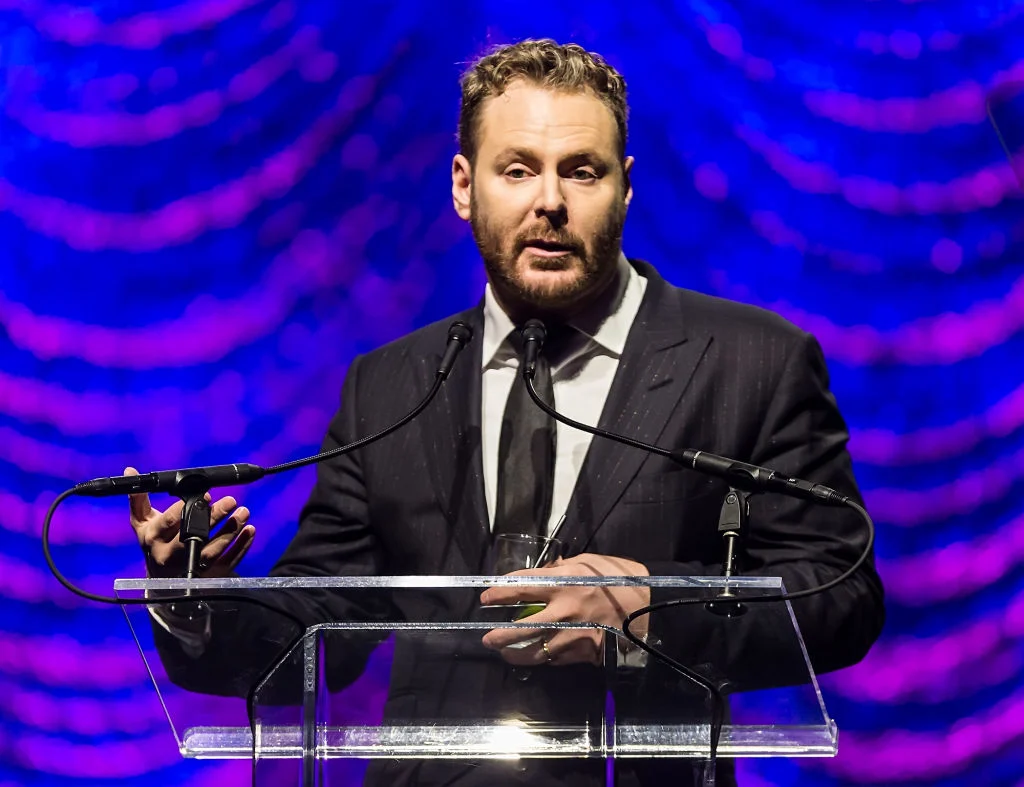
Sean Parker, the legendary entrepreneur best known as the co-founder of Napster and the first president of Facebook, has officially re-entered the music industry—this time, with a drastically different playbook. Two years after spearheading an $80 million rescue mission for Stability AI, Parker and current CEO Prem Akkaraju are positioning the company not merely as an image-generation pioneer, but as the premier AI engine for the global music industry.
In a candid interview with The Information, Parker acknowledged the irony of his return. His first foray into music, the file-sharing behemoth Napster, famously operated on the mantra of "asking for forgiveness rather than permission," a strategy that eventually led to the company’s legal collapse under the weight of copyright litigation. This time, Parker insists, the approach is strictly institutional. By securing partnerships with industry giants and focusing on licensed, ethical AI development, Stability AI is attempting to bridge the gap between disruptive generative technology and the entrenched interests of major record labels.
Chronology: From Image Generation to Audio Innovation
The transformation of Stability AI has been swift and, at times, tumultuous. To understand the company’s current trajectory, one must look at the timeline of its evolution:
- Mid-2023: Internal friction begins to mount at Stability AI, fueled by concerns over fiscal management and corporate governance. These issues eventually lead to the departure of founder Emad Mostaque.
- June 2024: Amidst a period of deep uncertainty and a precarious cash position, Sean Parker leads a pivotal $80 million capital injection to keep the company afloat. Prem Akkaraju is appointed CEO, tasking him with stabilizing the ship.
- August 2026: Stability AI secures a significant $76 million funding round, backed by a consortium of music industry titans: Sony, Warner Music Group, and Universal Music Group. This round is unique because it is explicitly tied to licensing agreements, allowing the company to use vast swaths of these labels’ catalogs to train their AI models legally.
- September–October 2026: Following the funding, Stability AI rolls out three proprietary audio models and a suite of AI-driven music-editing software designed for professional producers.
The Strategic Pivot: Supporting Data and Partnerships
The core of Stability AI’s new strategy lies in its embrace of the music industry’s infrastructure rather than its subversion. The partnership with Sony, Warner, and Universal represents a massive shift in how AI firms handle intellectual property. By licensing the catalogs, Stability AI ensures that the training data is clean and compensated, effectively neutralizing the legal "copyright bomb" that has hindered many of its competitors.
The company’s recent technical releases include:
- Audio Model Alpha/Beta: Capable of generating high-fidelity instrumental tracks from text-based prompts.
- Snippet Synthesis: Designed for rapid prototyping, allowing composers to generate short musical motifs or soundscapes in seconds.
- Future-Forward Features: Parker teased an upcoming iteration of the platform that will utilize voice and rhythm recognition. Users will be able to hum a melody or beatbox a drum pattern, which the AI will interpret, expand, and harmonize into a full-scale musical arrangement.
This functionality is targeted specifically at professional musicians and producers, aiming to automate the "grunt work" of music creation—such as generating backing tracks or iterating on rhythmic ideas—while leaving the creative "soul" and final arrangement to the human artist.
Official Responses and Industry Sentiment
The industry’s reception has been cautious but undeniably curious. While many in the music industry remain wary of generative AI, the involvement of the "Big Three" labels suggests that they view Stability AI as a controlled experiment—a way to steer the inevitable evolution of music technology rather than be run over by it.
"We are building tools that empower creators," Prem Akkaraju stated during a recent press briefing. "There is no intent to replace the artist. The goal is to eliminate the friction between a creative thought and a professional-grade output."

Sean Parker’s personal branding as a "changed man" is central to this narrative. By working in tandem with the RIAA-affiliated labels that once hunted him, Parker is attempting to secure his legacy as someone who ultimately helped save the industry he once disrupted. His transition from a disruptive renegade to an industry partner serves as a case study in how the tech industry is attempting to normalize generative AI in sensitive creative sectors.
Implications: The Future of the Creative Economy
The implications of Stability AI’s pivot are profound for the broader creative economy.
1. The End of the "Wild West" Era
For the last three years, generative AI companies have operated under a cloud of legal ambiguity. Stability AI’s model of "licensing for training" establishes a potential industry standard. If successful, this could force other AI firms—such as OpenAI, Midjourney, or Suno—to adopt similar licensing structures to survive, effectively ending the era of scraping the internet without consent.
2. The Professionalization of AI Music
By moving away from "fun" social media filters and toward professional-grade editing tools, Stability AI is signaling that the next wave of AI will be utilitarian. The software is designed to integrate into existing Digital Audio Workstations (DAWs), ensuring that it complements the current workflow of professional engineers rather than demanding a complete overhaul of how music is produced.
3. The Democratization vs. Saturation Debate
While Parker touts the democratization of music, critics argue that the flood of AI-generated content could saturate the market, making it harder for independent human artists to find an audience. If anyone can "beatbox" a hit song into existence, the value of traditional musical skill sets may face further devaluation. However, proponents argue that this is merely a new instrument, comparable to the invention of the synthesizer or the sampler, both of which were initially feared by traditionalists before becoming essential tools of the trade.
4. Parker’s Legacy
For Sean Parker, this is a rare opportunity to rewrite his own history. If Stability AI succeeds in creating a sustainable, profitable, and legal framework for AI music, it would effectively balance his ledger. He would be remembered not just for the chaos of Napster, but for being a primary architect of the next generation of musical creation.
Conclusion: A Measured Approach
As we move toward the end of 2026, the tech landscape is littered with failed AI startups that over-promised and under-delivered. Stability AI’s advantage lies in its unique intersection of capital, licensing, and leadership. By betting on the established players rather than against them, Parker and Akkaraju are attempting to build a sustainable ecosystem that respects the economics of the music industry while pushing the boundaries of what is technologically possible.
The industry will be watching closely as the next update—the ability to hum or beatbox into a full production—hits the market. If it functions as promised, it may not just change how music is made; it may change who gets to be called a musician. For now, however, the message from the Stability AI camp is clear: they are no longer looking for a fight. They are looking for a seat at the table.