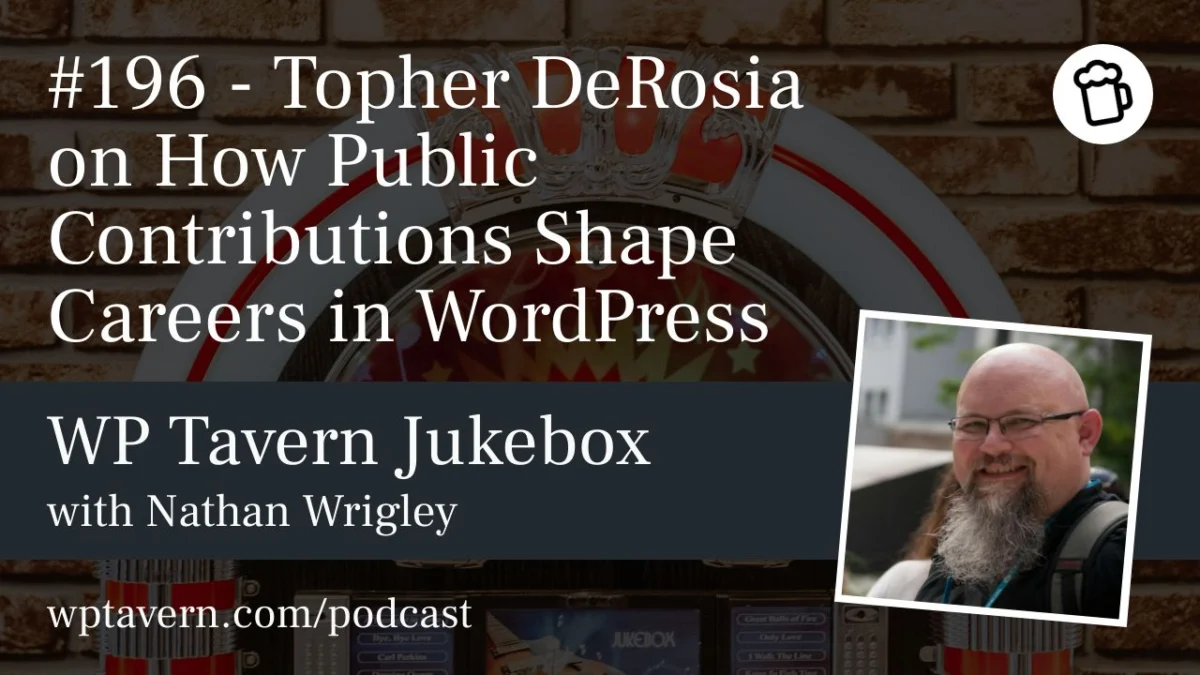
In an era increasingly dominated by the transactional nature of social media and the rapid, often volatile rise of "influencer" culture, the concept of contributing to open-source software—specifically WordPress—stands as a compelling counter-narrative. For Topher DeRosia, a veteran web developer with three decades of industry experience, the true value of a career is not found in the pursuit of viral fame, but in the slow, organic accumulation of a public body of work.
DeRosia, a fixture in the WordPress community for the past 15 years, recently joined the Jukebox podcast to discuss the profound, life-altering impact of contributing transparently to open-source projects. His journey—from a developer unaware of the community’s existence to a global advocate for the power of remote, collaborative work—serves as a blueprint for those looking to build a sustainable, meaningful career in technology.
The Genesis of a Community-Driven Career
DeRosia’s entry into the WordPress ecosystem was largely serendipitous. Despite having spent 15 years as a web developer prior to his WordPress debut, it was a suggestion from colleague Brian Richards that shifted his trajectory. "Brian said to me, ‘Hey, we should do a WordCamp.’ I said, ‘What’s a WordCamp?’ And then, of course, my life changed forever," DeRosia recalls.
What began as a local meetup quickly evolved into a deep, long-term commitment. Over the last decade and a half, DeRosia has attended nearly 80 WordCamps globally. This participation was not merely professional; it became personal. DeRosia notes that the WordPress community has become a surrogate family, with his wife and children actively participating, speaking, and forging international friendships that transcend borders.
For DeRosia, the "secret sauce" of the WordPress community—and indeed, other open-source ecosystems like Umbraco or Drupal—is the shared ethos of altruism. While commercial interests certainly exist, the bedrock of these communities is a collective belief in enabling others to have a voice on the internet.
Chronology of Contribution: Building a Legacy
The concept of "working in public" is central to DeRosia’s professional philosophy. He argues that by consistently sharing code, documentation, and insights, one creates a permanent digital footprint that serves as a professional anchor.
- The Early Years (Documentation & Learning): DeRosia spent years creating video content for OS Training. While these were initially paid, closed-loop projects, the act of creating them built a reputation for expertise that would pay dividends years later.
- The Rise of HeroPress: His work with HeroPress—a platform dedicated to highlighting how people leverage WordPress to improve their lives—solidified his status as a community leader. It was not a calculated move for fame, but a project driven by the desire to showcase the human element of open source.
- The Modern Era (Aggregating the Work): Recognizing the need to consolidate his decades of contributions, DeRosia recently launched topher.how. Using WordPress’s inherent RSS capabilities and import tools, he centralized his scattered blog posts, videos, and tutorials into a single repository. This archive now serves as a dynamic resume, one that proves his capabilities to potential clients without the need for traditional corporate credentials.
The Philosophy of "Community Known" vs. "Famous"
A recurring theme in DeRosia’s discussion is the distinction between "fame" and being "community known." He cautions against the pursuit of fame, which he views as a pursuit of vanity that often leads to burnout and dissatisfaction.
"Do not seek to be known because that will only lead to tears," DeRosia warns, echoing advice he received early in his career from well-known developers like Pippen Williamson. Instead, he advocates for "community known" status—the respect and recognition earned by consistently helping others and contributing to the collective knowledge base.
This recognition often manifests in "serendipitous" career opportunities. DeRosia shares an anecdote about a client in Bangladesh who reached out to him for a video project specifically because they had followed his work in the WordPress community for years. In a traditional corporate model, the geographic distance between Michigan and Bangladesh would be a barrier; in the open-source world, it is an afterthought.
Navigating the Commercial Tension
The WordPress community faces an ongoing, complex challenge: the tension between its philanthropic roots and the growing commercialization of its ecosystem. As WordCamps grow in size and business influence, some participants have expressed concern about the "corporate feel" of the space.
DeRosia acknowledges this friction, noting that companies within the ecosystem face a difficult balancing act. "If you’re running a business and people are depending on you for their livelihoods, you have to make the decisions… It’s never going to be comfortable," he observes.
However, he remains optimistic about the community’s resilience. He suggests that while there will always be disagreements and challenges, WordPress remains an outlier in the tech world for its diversity and commitment to inclusivity. The key, he argues, is for the community to avoid "resting on its laurels." As long as the focus remains on the "17-year-old picking up a computer at the library for the first time," the spirit of the project will endure.
Implications: The Long-Term Value of Giving
The implications of DeRosia’s philosophy for modern developers are significant. In a world where digital content is often fleeting, the "long game" approach—building a body of work over years rather than seeking instant viral success—is not only more sustainable but more rewarding.
Why Giving Matters:
- The Happiness Predictor: Scientific and anecdotal evidence suggests that giving of one’s time without expectation of return is a primary driver of human happiness.
- The Multiplier Effect: A single, free tutorial or plugin can change the trajectory of someone’s career. DeRosia recounts being approached by a stranger who had lost his job and used DeRosia’s free videos to pivot into a new career, ultimately supporting his family through WordPress. These moments provide a source of motivation that financial compensation alone cannot match.
- Foundation-Building: By making documentation for common issues (his rule: if asked three times, write a guide), developers inadvertently build a professional brand that creates trust long before an interview even begins.
Conclusion: The Path Forward
As DeRosia embarks on his latest project—a YouTube channel dedicated to helping beginners master the WordPress admin interface—he is reminded that success is not defined by subscriber counts or immediate revenue. His commitment to making this content free, despite suggestions to gate it behind a paywall, reflects his unwavering belief in the power of access.
"Anything I put behind a paywall is not going to be able to help a 17-year-old who’s making a dollar a week. And that’s where my heart is," DeRosia says.
For those looking to follow in his footsteps, the advice is simple: start small, be helpful, and do it in public. Whether it is blogging, recording videos, or contributing to core, the act of sharing knowledge creates a network of support and opportunity that is uniquely resilient. In the rapidly evolving landscape of 2025 and beyond, the most valuable asset a developer can possess is not their code, but their reputation as a reliable, generous, and community-focused contributor.
As the WordPress ecosystem continues to shift, the core of the community remains anchored in the people who show up, listen to stories, and continue to build—not for the sake of fame, but for the sake of the next person just starting out.