In the modern digital economy, the most successful entrepreneurs have learned a singular, transformative lesson: you cannot grow by manually performing every task. As a business scales, the overhead of human intervention becomes the primary bottleneck to profitability. For ecommerce founders and digital marketers, the solution lies not in hiring more staff, but in deploying a sophisticated, automated ecosystem that functions as a 24/7 sales department.
Email automation—the practice of sending triggered, behavior-based messages—has evolved from a simple "out-of-office" convenience into the backbone of high-growth ecommerce operations. It is the bridge between a casual browser and a lifelong brand advocate. By leveraging data to send the right message at the precise moment a customer is most receptive, founders can achieve a level of revenue efficiency that manual broadcasting simply cannot touch.
The Core Mechanics of Email Automation
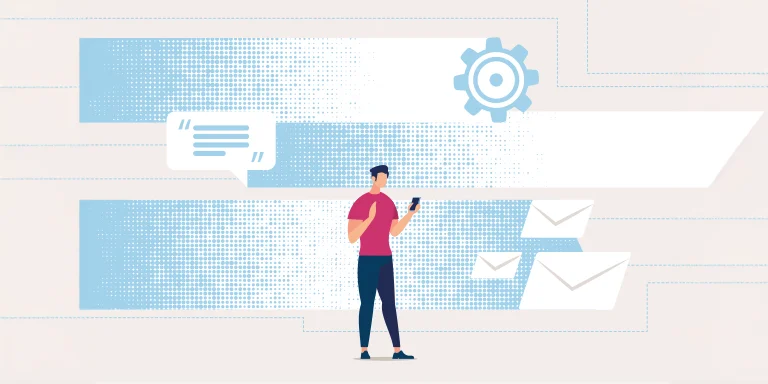
At its most fundamental level, email automation is the process of setting up "if-then" workflows within your marketing stack. When a user performs a specific action—such as abandoning a cart, signing up for a newsletter, or completing a purchase—an automated sequence is triggered.
Unlike traditional "blast" newsletters, which arrive at a predetermined time regardless of user intent, automated flows are hyper-relevant. They operate on the principle of context. When a potential customer views a product, they are in a state of high intent. If they leave without purchasing, an automated, personalized email sequence can gently nudge them back to the site. This removes the friction of manual follow-up, ensuring that no lead is left behind.
Supporting Data: Why Automation Outperforms Manual Campaigns
The argument for shifting from manual campaigns to automated flows is supported by compelling industry benchmarks. According to recent data from Omnisend, automated emails generate an average of 320% more revenue per email than standard, one-off marketing campaigns.
This disparity in performance is driven by three key metrics:
- Open Rates: Because automated emails are triggered by user behavior, they are perceived as helpful or transactional rather than promotional, leading to higher engagement.
- Click-Through Rates (CTR): Personalized, context-aware content is significantly more likely to drive clicks than generic, blast-style emails.
- Conversion Rates: By addressing specific customer pain points—such as cart abandonment or post-purchase anxiety—at the exact moment they occur, businesses can significantly reduce the "drop-off" rate in their sales funnel.
For the modern founder, this translates to a massive reduction in "busy work." Instead of spending 10 to 20 hours a week crafting newsletters, they can dedicate their time to high-level strategy, product development, and brand positioning, knowing that their sales infrastructure is already firing on all cylinders.
The Seven Essential Automations for Sustainable Growth
To build an effective automated system, one does not need dozens of complex flows. In fact, most successful brands focus on seven specific pillars that cover the entire customer lifecycle.
1. The Welcome Series
The welcome series is your brand’s digital handshake. It is the sequence that initiates the relationship with a new subscriber. It should be a 3-to-5 email sequence that introduces your company’s origin story, showcases your mission, and delivers any promised incentives. By the end of this series, the subscriber should clearly understand why your brand is unique and what value they can expect from your future communications.
2. Abandoned Cart Recovery
The "Abandoned Cart" flow is arguably the most critical revenue driver in your stack. High abandonment rates are a reality of ecommerce, often caused by minor distractions or price sensitivity. By sending an automated reminder—ideally within the first hour of abandonment—you recapture users who were ready to buy but failed to cross the finish line.
3. Browse Abandonment
Often overlooked, "Browse Abandonment" targets users who explored your site but didn’t add an item to their cart. This is a subtle re-engagement opportunity. A simple reminder, such as "Still thinking about this item?" coupled with social proof or customer reviews, can be the catalyst that turns a passive browser into a first-time buyer.
4. Post-Purchase Nurturing
Many brands make the fatal error of going silent after the sale. The post-purchase flow is vital for building long-term loyalty. This sequence should include order confirmations, shipping updates, and helpful "how-to" content related to the purchased product. By reducing buyer’s remorse and providing genuine value, you set the stage for repeat purchases and long-term brand advocacy.
5. The Win-Back Sequence
It is far cheaper to retain an existing customer than it is to acquire a new one. The "Win-Back" flow identifies customers who have been inactive for 60 to 120 days. Through personalized offers or "we miss you" messaging, you can reignite the relationship and potentially reclaim revenue that would have otherwise been lost to churn.
6. Review Requests
Social proof is the currency of the internet. By automating the request for feedback shortly after product delivery, you ensure a steady stream of reviews. This not only provides valuable data to your team but also serves as the social validation needed to convert future customers.
7. Milestones: Birthdays and Anniversaries
Personalization is the final frontier of marketing. Celebrating a customer’s birthday or their "customer anniversary" adds a human touch to an automated system. These emails tend to have exceptionally high engagement rates because they make the customer feel valued as an individual rather than just a transaction ID.
Implications for Future Growth
The transition to an automated model is not merely a tactical change; it is a shift in business philosophy. As automation becomes more sophisticated, incorporating AI-driven insights and machine learning, the gap between businesses that automate and those that do not will continue to widen.
When you implement these seven flows, you are essentially building a scalable digital asset. Unlike a human employee, these flows do not require a salary, they do not get tired, and they do not forget to follow up. They represent a "set-and-forget" infrastructure that allows for nonlinear growth.
However, the "set and forget" label is a bit of a misnomer. While the workflows run automatically, the smartest founders treat them as living systems. They conduct quarterly audits to test subject lines, refine the timing of their emails, and A/B test their calls to action (CTAs). Even a 2% improvement in conversion rate, when compounded across thousands of automated sends, can lead to a significant increase in annual recurring revenue.
Official Guidance and Professional Strategy
For founders looking to implement these systems, the recommendation is to start small. Do not attempt to launch all seven flows simultaneously. Begin with the Welcome Series and the Abandoned Cart flow—these two alone will account for the vast majority of your automated revenue. Once these are optimized, move on to the post-purchase and win-back sequences.
In the current market, platforms like Omnisend have become the industry standard for this transition. By integrating directly with ecommerce platforms like Shopify or WooCommerce, these tools provide the data necessary to trigger these flows with surgical precision.
Ultimately, the goal of email automation is to reclaim your time. By moving away from the "one-off" campaign model, you stop being a slave to the keyboard and start being an architect of your business’s growth. When you wake up to find that sales have been made while you slept, you have successfully transitioned from a solopreneur managing tasks to a founder scaling a machine.
In this new era of commerce, speed and relevance are the only currencies that matter. With the right automated framework, you can ensure that your brand is always present, always relevant, and always closing the sale.