The WordPress ecosystem, which powers over 40% of the internet, is currently grappling with a sophisticated, largely invisible security crisis: supply chain attacks. Unlike traditional hacking, where an attacker exploits a known vulnerability in a theme or plugin to break into a site, these attacks involve the subversion of the software update process itself.
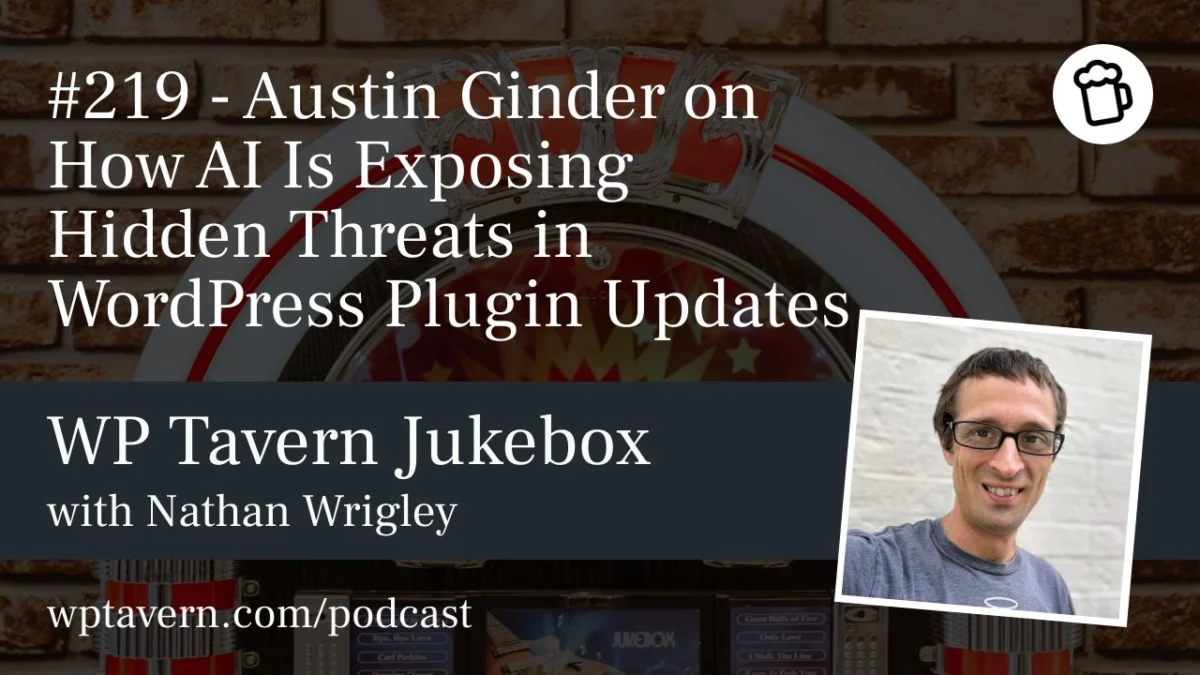
Austin Ginder, a long-time WordPress developer and founder of the hosting management service Anchor Hosting, has emerged as a key investigator into this trend. Through the innovative application of Artificial Intelligence (AI) to forensic auditing, Ginder is exposing a troubling reality: malicious actors are infiltrating the WordPress repository by purchasing legitimate plugins and transforming them into conduits for malware.
The Anatomy of a Supply Chain Attack
A supply chain attack functions by compromising the "trust" built between a user and a plugin author. In a standard scenario, a user installs a plugin from the official WordPress.org repository. They trust the plugin to function as intended and to receive legitimate updates.
The attacks Ginder has uncovered follow a chillingly effective pattern:
- Acquisition: A bad actor purchases a well-regarded, established plugin from its original developer.
- Infiltration: The new owner pushes an "update" through the official repository. While the plugin’s primary functionality may remain intact to avoid suspicion, the update includes a "backdoor."
- The Pivot: In some cases, the update redirects the plugin’s update server away from WordPress.org to a rogue, attacker-controlled channel.
- The Payload: Once the update channel is hijacked, the attacker can push any malicious payload—ranging from SEO spam and credit card skimmers to full-site takeovers—without the WordPress Plugin Review Team ever seeing the malicious code.
"As a user, you just update your plugin and you don’t realize you’re updating to something that’s harmful for your website," Ginder explains. "These are bad actors trying to hide themselves. They’re not just uploading malware; they’re sneaky."
Chronology: From Accidental Discovery to Systematic Investigation
The journey into this underworld began for Ginder in early 2026, not as a planned research project, but as a byproduct of routine client site maintenance.
- February 2026: Ginder noticed an unexplained spike in malware infections across his managed sites. While performing a cleanup, he used AI-powered tools to conduct deep-dive forensics. The investigation led him upstream, pointing directly to a compromised plugin that had been updated through the official channels.
- Spring 2026: Ginder realized this was not a localized event. He began applying his AI forensic techniques to a broader scope, identifying at least four distinct instances of high-level supply chain compromise.
- May 2026: Ginder launched the WP Beacon Project (wpbeacon.io). This resource acts as a repository for his findings, aiming to document, track, and alert the community to these specific threats.
One of the most alarming cases involved the "Essential Plugins" package—a suite of over 30 plugins. When the WordPress Plugin Team identified suspicious activity, they were forced to take the extreme measure of closing the entire suite and issuing a site-wide security alert to users.
The Role of AI in Threat Detection
Before the widespread availability of advanced AI models like Claude, the task of auditing 60,000+ plugins on the WordPress repository was humanly impossible. The volume of code changes occurring daily meant that manual review could only catch a fraction of the threats.
Ginder describes AI as his "superpower" in this fight. "AI has been my friend. It’s just right place, right time… with AI, it’s very easy to do a thorough, in-depth investigation. How did this happen? Where did it come from? Is my site actually clean now?"
By feeding large datasets—such as raw plugin code from the SVN repository—into AI models, Ginder can identify patterns of anomalous behavior that would be invisible to the naked eye. He notes that while AI can be difficult to manage, it has become an essential tool for "shaving out the noise." By auditing only the changes between versions rather than the entire codebase every time, he can efficiently pinpoint malicious injections.
Implications for the WordPress Ecosystem
The discovery of these attacks has sent shockwaves through the community, raising fundamental questions about the "open" nature of the WordPress repository.
The "Dormant" Threat
Perhaps the most unsettling finding is the "dormant" malware strategy. Ginder discovered plugins installed on thousands of sites that were not actively doing anything malicious—yet. These plugins serve as a "sleeper cell." The attacker waits for the right moment, or a specific trigger, to deploy the payload. This means thousands of site owners could be sitting on a ticking time bomb, completely unaware.
The Responsibility of Hosting Providers
Ginder argues that hosting companies are sitting on a "gold mine" of data that could be used to stop these attacks. "Any site that gets malware, that is the gold," Ginder says. "If you can point AI at every malware situation or attack, you can sometimes back-channel it to figure out where it actually happened, and start to paint a bigger picture." He envisions a future where large-scale hosts collaborate to share intelligence, creating an immune system for the broader WordPress ecosystem.
Security Researchers vs. Bad Actors
The battle is currently asymmetrical. Bad actors are highly motivated by the potential for financial gain through SEO poisoning and data theft. On the other side, independent researchers like Ginder are working to build defensive infrastructure. The success of the WP Beacon Project, however, proves that transparency is a potent weapon. When Ginder flags a compromised plugin, he works with contacts in the hosting industry to take down the attacker’s infrastructure, effectively cutting off the supply chain at its source.
Official Responses and Future Outlook
The WordPress Plugin Review Team has been consistently responsive when presented with evidence of these compromises. In several cases, they have taken swift action, closing the affected repositories and, in rare instances, overriding the malicious updates with clean versions.
However, the question remains: How do we prevent this from happening again?
- Enhanced Auditing: The community must move toward a model of near-100% code coverage auditing. This does not necessarily require a central authority, but rather a collective effort by researchers and developers to utilize AI tools to monitor changes in the repository.
- Improved Security Infrastructure: While WordPress thrives on its open-source, low-barrier-to-entry philosophy, the reality of modern cyber warfare may necessitate new guardrails. Whether this takes the form of stricter ownership verification for plugin authors or automated integrity checks for update servers, the status quo is increasingly untenable.
- User Awareness: Site owners must understand that "automatic updates," while convenient, can be a vector for compromise if the supply chain is poisoned. Ginder encourages users to monitor their site’s behavior and, where possible, use tools that can verify the integrity of their installed software.
Conclusion: A Call to Vigilance
Austin Ginder’s work serves as a stark reminder that the security of an open-source project is only as strong as the integrity of its contributors. The "Wild West" era of WordPress, where any developer could publish code without scrutiny, is colliding with the harsh realities of the modern internet.
While the situation is undoubtedly alarming, the emergence of AI as a defensive tool offers a glimmer of hope. By democratizing the ability to perform complex forensic analysis, individuals are no longer powerless against sophisticated attackers. As Ginder noted, his goal is to make it "harder and harder" for bad actors to operate. If the WordPress community can harness these new forensic capabilities, it may be possible to turn the tide, transforming the repository from a target into a fortress.
For now, the lesson is clear: in the digital supply chain, trust is not a static state—it is a responsibility that must be continuously verified.