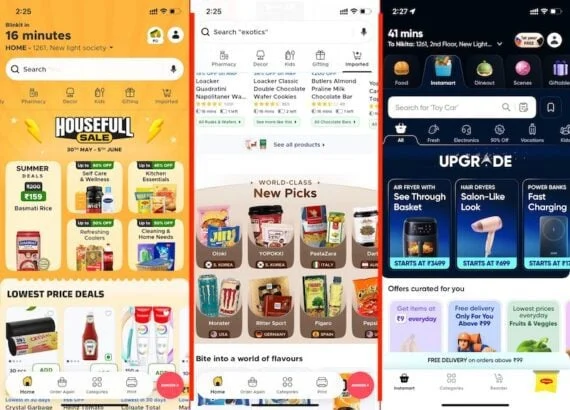
In the bustling urban centers of India, the definition of "convenience" has undergone a radical transformation. What once required a trip to the local kirana store or a scheduled grocery delivery has been compressed into a ten-minute window. This is the era of quick commerce (q-commerce)—a high-velocity retail model where consumers order everything from fresh produce and diapers to imported gourmet snacks, receiving them at their doorstep in under half an hour.
As of April 2026, the sector has emerged as the most significant disruptor in Indian retail. According to a joint report by Deloitte and Google, the Indian quick-commerce market is projected to skyrocket to $50 billion in annual revenue by 2030, accounting for roughly 10% of the nation’s total e-retail expenditure. This hyper-growth is not merely a trend; it is a structural shift in how 1.45 billion people consume goods.
The Triad of Speed: Market Dynamics and Key Players
The current market landscape is defined by a fierce tripartite rivalry: Blinkit, Swiggy Instamart, and Zepto. These platforms have effectively commoditized instant gratification. In many urban households, the brand names have transcended their corporate identities to become verbs—much like "Google" or "FedEx."
The success of these platforms is underpinned by two primary factors: India’s extreme population density and a rapidly growing middle class with increasing disposable income. By leveraging a network of "dark stores"—micro-warehouses strategically located in high-traffic residential zones—these companies have minimized the "last-mile" friction that typically plagues traditional e-commerce.
A Chronology of the Quick-Commerce Ascent
- The Incubation Phase (2020-2022): Accelerated by the pandemic, the demand for contactless, rapid delivery surged. Early players pivoted from grocery delivery to the 10-minute model.
- The Consolidation Phase (2023-2024): Industry shakeouts occurred as smaller players failed to sustain the high burn rates required for warehouse operations. Market dominance concentrated in the hands of the "Big Three."
- The Regulatory Realignment (2025): To comply with India’s complex foreign direct investment (FDI) laws, major players restructured their ownership models to ensure compliance while maintaining control over inventory-led dark store operations.
- The Tier-3 Expansion (2026-Present): With Tier-1 and Tier-2 markets nearing maturity, platforms have begun aggressive expansion into Tier-3 cities, targeting the massive demographic shift occurring outside the major metros.
Supporting Data: The Economics of the Instant
The unit economics of quick commerce are unconventional. Unlike traditional e-commerce, which prioritizes basket size, q-commerce relies heavily on frequency and customer retention. The goal is to become the default choice for daily consumables: dairy, snacks, beverages, and personal care items.
According to data from Eternal (formerly Zomato), which operates Blinkit, the scale is staggering. In the fiscal year ending April 2026, Eternal reported that 109 million users across its platforms generated $10 billion in revenue. Blinkit alone now manages a vast network of 2,243 dark stores, acting as the primary artery for goods moving from manufacturers to households.
Research from SW Cybernetics provides insight into the "advertising tax" of this ecosystem. For brands looking to gain visibility, the costs are significant:
- Sponsored Ads: Average $0.11 per click.
- Banner Placements: $2.11 to $3.16 CPM (cost per mille).
- Slotting Fees: Brands pay between $1,000 and $5,000 per month for prime shelf space within the dark stores.
- Platform Commissions: These range from 10% to 25%, varying by city and product category.
Implications for Global Brands: The "India Playbook"
For international brands—ranging from American staples like Doritos and Monster Energy to Japanese snack giant Pocky and Korean favorites like Nongshim—the Indian market presents a unique paradox. While the market is massive, it is also notoriously difficult to navigate.

Foreign brands often falter by treating India as a monolith, incorrectly grouping it with China or Southeast Asia. Success in India requires an intimate understanding of local regulatory requirements, unique platform economics, and deep-seated consumer habits.
Navigating the Regulatory Maze
India’s FDI policy for multi-brand retail is restrictive. Foreign entities cannot simply open an online store to sell third-party goods. However, there are workarounds:
- The Distributor Model: Brands can partner with Indian-registered "sellers of record" (distributors) who hold inventory and list products on marketplaces like Amazon, Flipkart, or the q-commerce platforms.
- The Single-Brand Route: If a foreign company sells only its own products, it may be permitted to operate its own direct-to-consumer (DTC) channels, provided it meets local sourcing requirements.
The q-commerce platforms themselves occupy a legal gray area. While they function as marketplaces, their control over the dark-store supply chain mimics an inventory-led model. The 2025 restructuring of Blinkit’s parent company to achieve Indian-owned status serves as a blueprint for how platforms intend to keep their operations compliant while scaling rapidly.
Marketing to the Value-Conscious Consumer
Indian consumers are famously value-conscious, yet they place a high premium on the perceived credibility of Western brands. To succeed, international brands must move beyond mere presence and focus on "localized optimization."
- Packaging and Pricing: Well-designed, smaller-format packaging at lower price points is essential to lower the "trial barrier."
- The AI Edge: Platforms use AI to personalize listings. Brands that optimize their metadata for local search terms—and those that utilize paid search to combat competitor keyword bidding—gain a distinct advantage.
- The Sample Strategy: Free sampling remains one of the most effective ways to drive early adoption, particularly when coupled with micro-influencer campaigns that build social proof.
Looking Ahead: The Tier-3 Frontier
The most critical development for 2027 and beyond is the migration of quick commerce into Tier-3 cities. With approximately 700 million people living in these regions—nearly half of India’s population—the growth potential is exponential.
However, the challenges will differ from those in Mumbai or Delhi. Infrastructure, logistics in smaller geographies, and the necessity for even tighter price points will define the next wave of competition. The platforms that can solve the "last-mile" puzzle in smaller cities while maintaining the 10-to-30-minute delivery promise will ultimately dominate the next decade of Indian retail.
Conclusion
Quick commerce in India is no longer a luxury experiment; it is an essential utility. For foreign brands, the message is clear: the market is open, but the price of entry is high. Success requires more than just capital; it demands an agile supply chain, a deep respect for local labeling and pricing sensitivities, and the ability to operate within the nuances of India’s complex regulatory framework. As the $50 billion target approaches, the brands that can integrate themselves into the daily, "chaotic" routines of the Indian family will be the ones that define the future of retail.