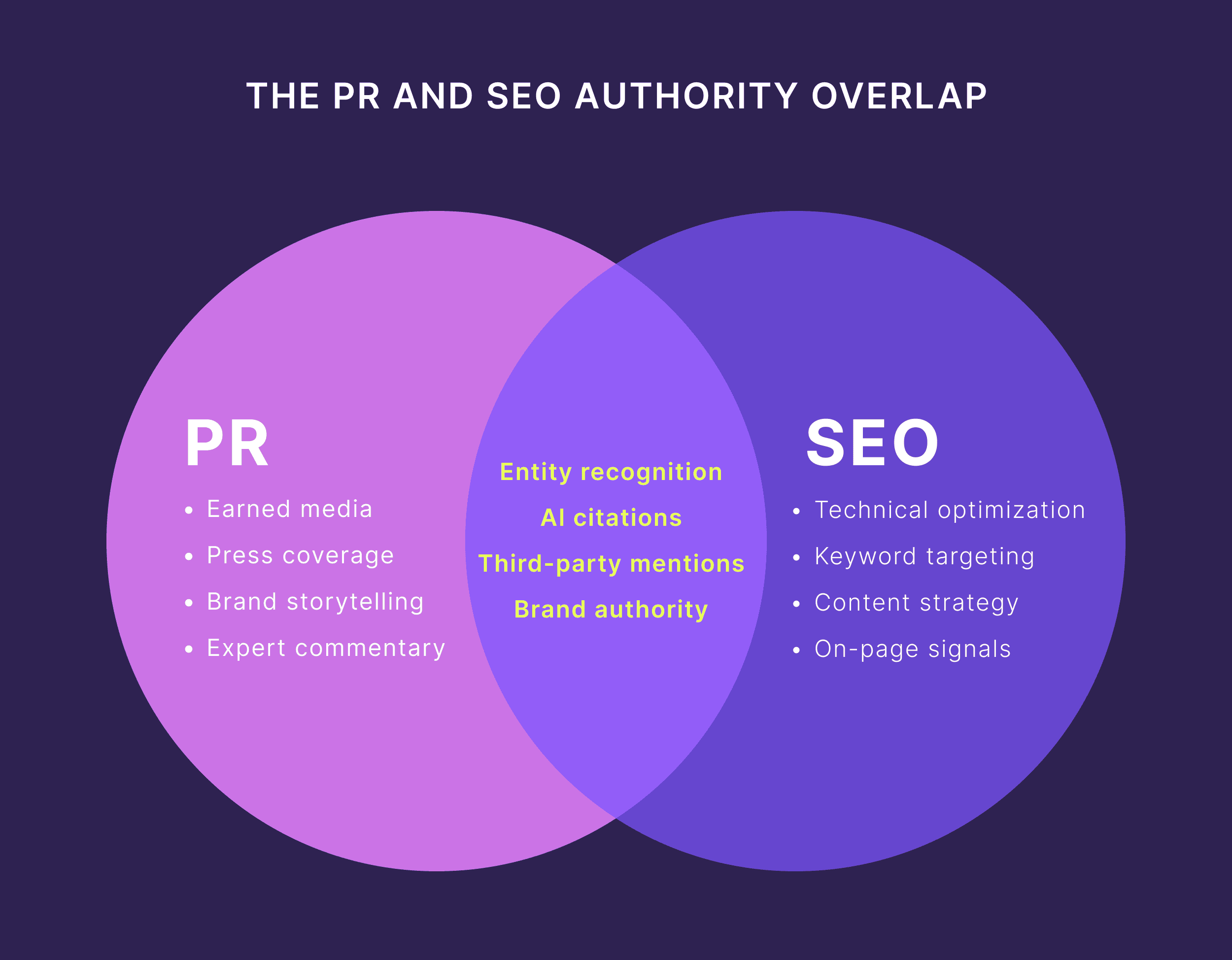
In the modern digital landscape, the wall between Public Relations (PR) and Search Engine Optimization (SEO) has not just cracked—it has crumbled. For years, these disciplines operated as distinct entities: PR focused on brand sentiment and media relations, while SEO concerned itself with technical audits and keyword rankings.

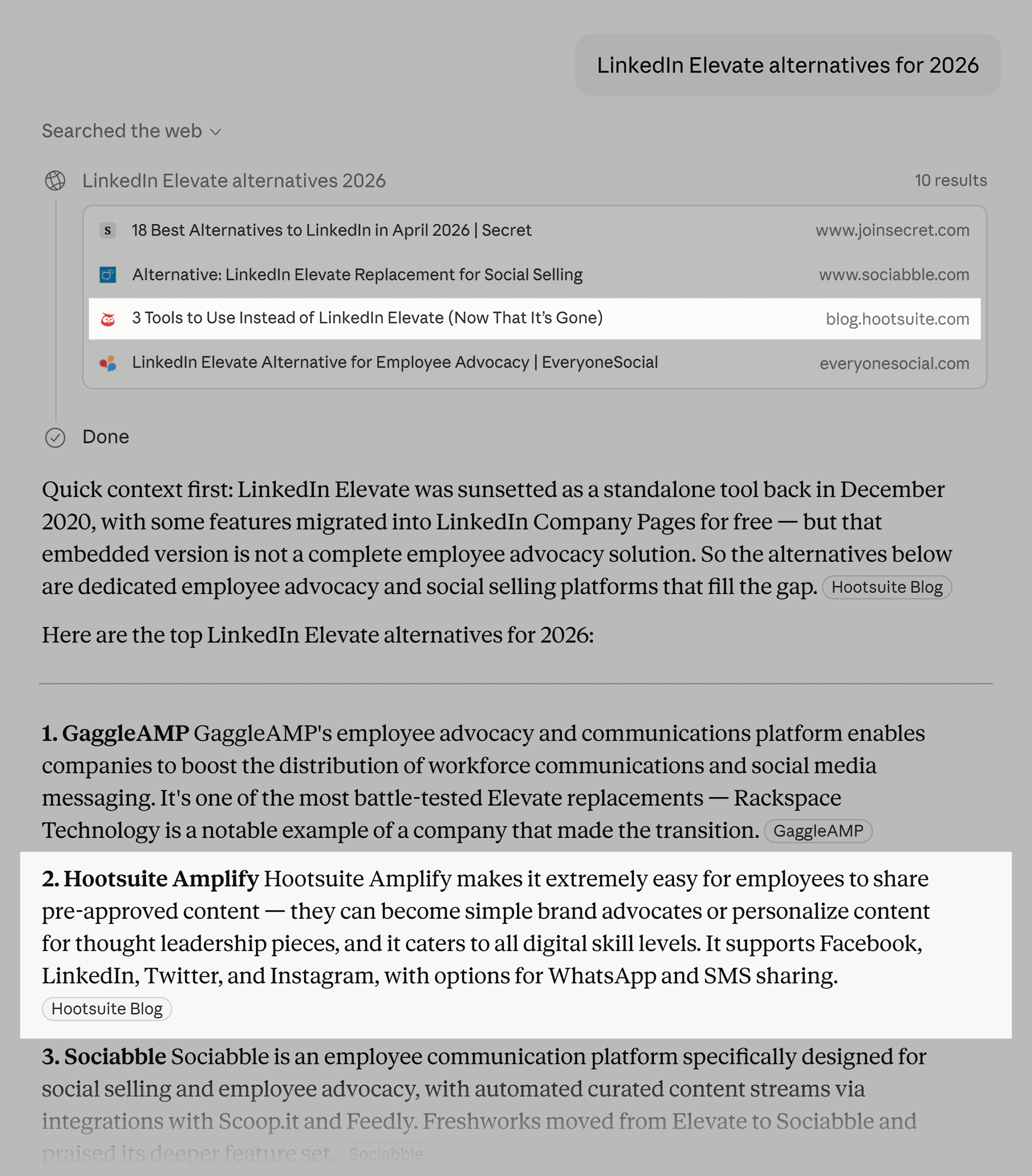
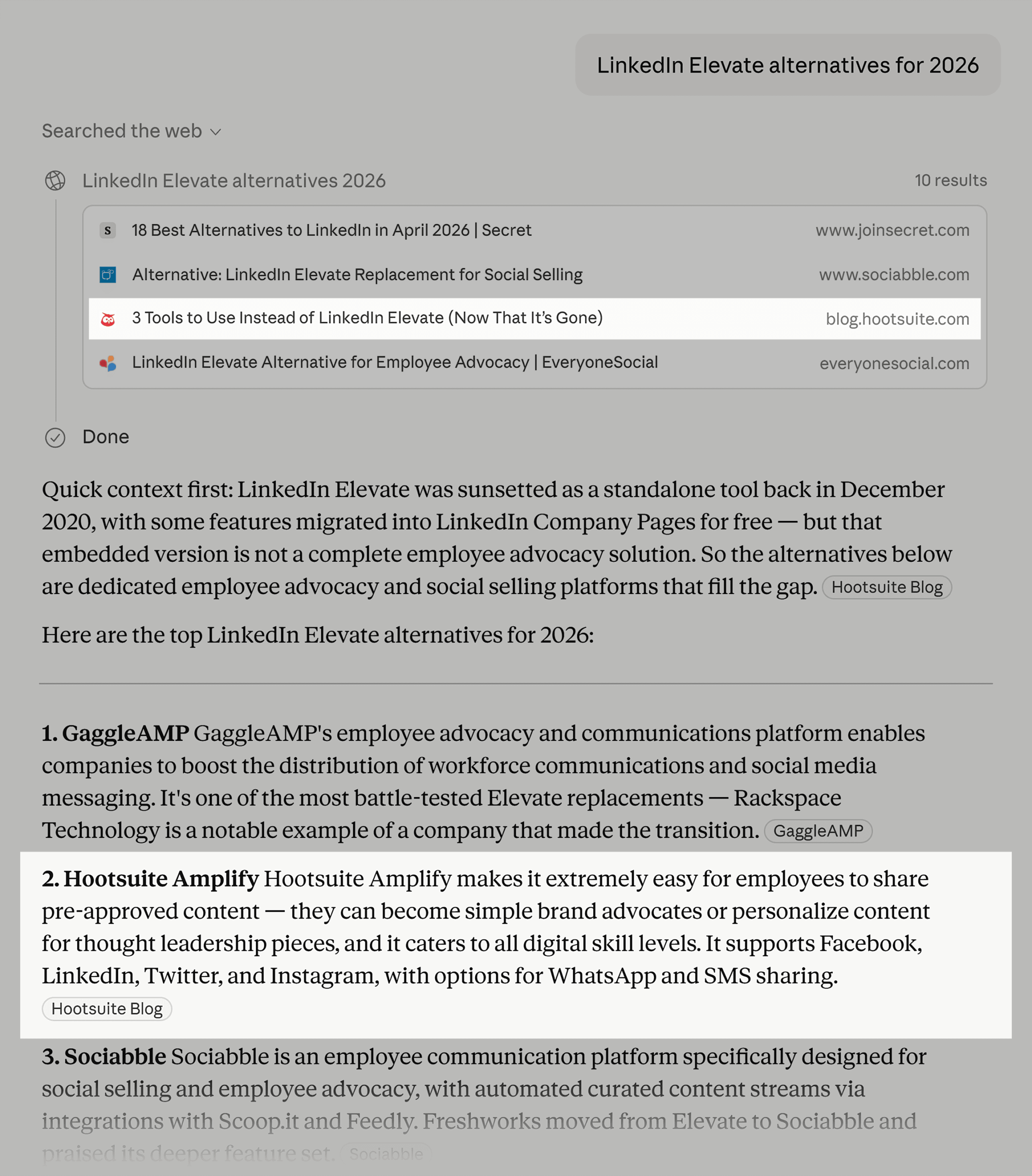
Today, that separation is a strategic liability. Both Google’s search algorithms and the rising tide of Large Language Models (LLMs) rely on the same fundamental data points to evaluate brand credibility: backlinks, third-party mentions, expert commentary, and sustained coverage in reputable publications. When these two teams operate independently, they leave significant authority on the table. When they operate as one, they create an "always-on" authority engine that dominates across search, media, and artificial intelligence.
The Convergence of Search and Authority
The evolution of search toward "Answer Engine Optimization" (AEO) means that the platforms powering the web are prioritizing brands that appear as trusted, authoritative entities. This is no longer just about optimizing a website; it is about building a digital footprint that machines recognize as reliable.
When a brand is cited by industry experts, featured in major trade publications, and recommended by users on forums like Reddit or G2, that brand becomes a "source of truth" for AI models. This visibility is the new currency of the internet.
A Five-Step Playbook for Unified Authority
To successfully integrate these departments, organizations must move beyond occasional collaboration and adopt a structured, unified workflow.
1. Align Research and Intelligence
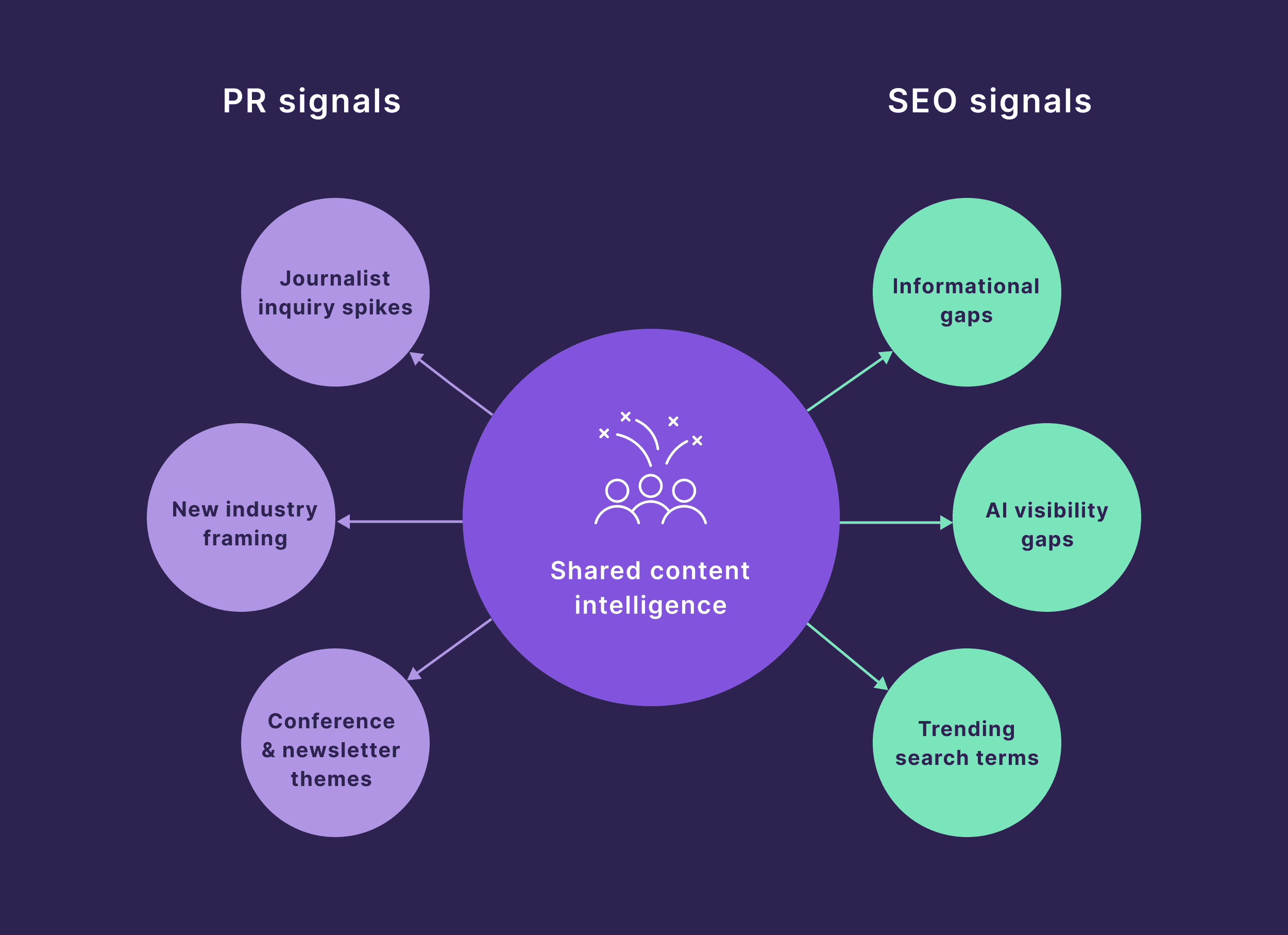
An always-on partnership begins with shared data. Without it, companies suffer from "predictable gaps"—missed opportunities where SEO knows what people are searching for, but PR doesn’t know how to pitch it, or vice versa.
- Identify Emerging Trends: PR teams often spot shifts in industry sentiment through journalist inquiries or conference themes before they show up in keyword tools. By establishing a shared Slack channel or a standing weekly sync, PR can alert SEO to these nascent topics, allowing the content team to create resources before the search volume actually spikes.
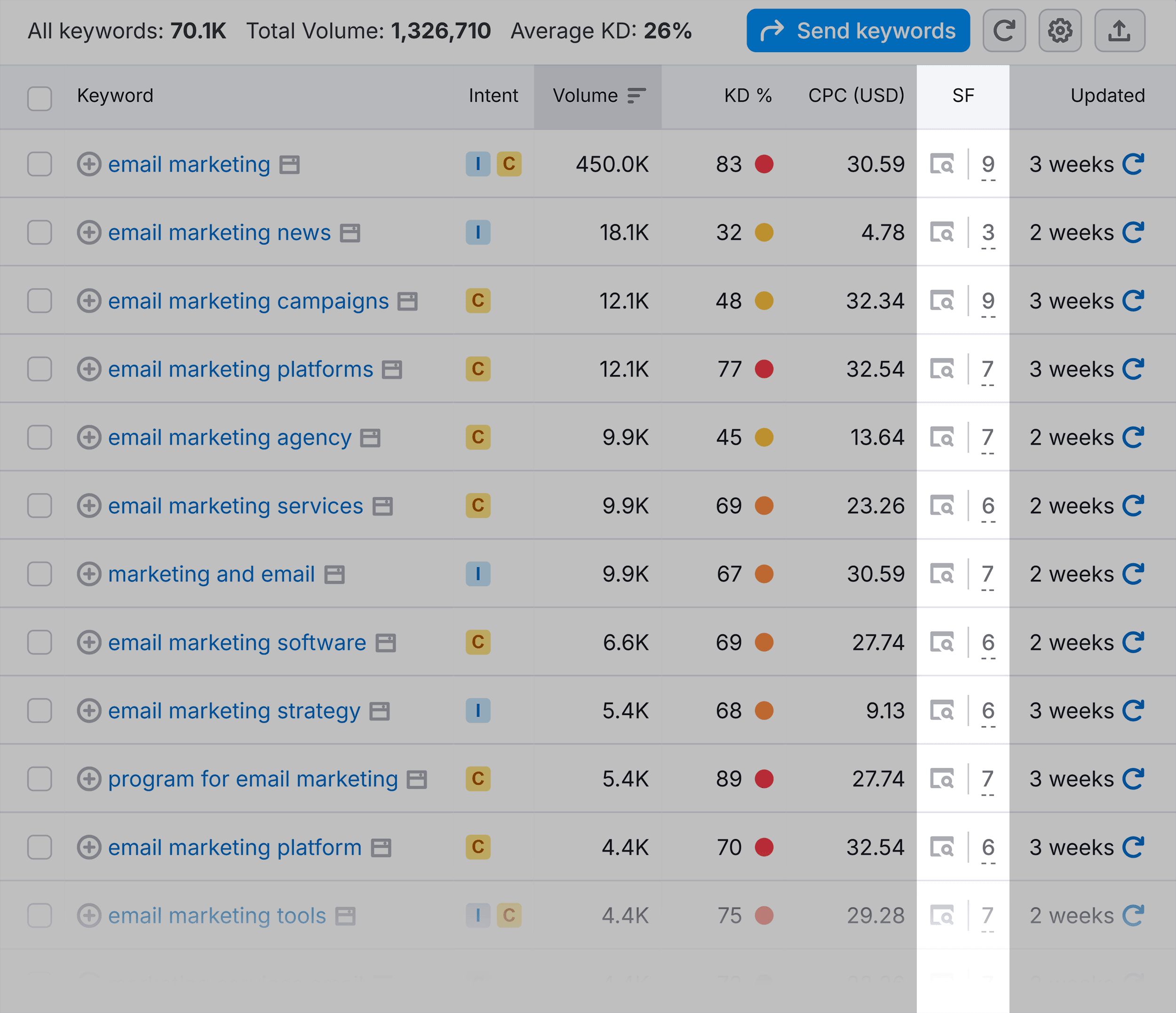
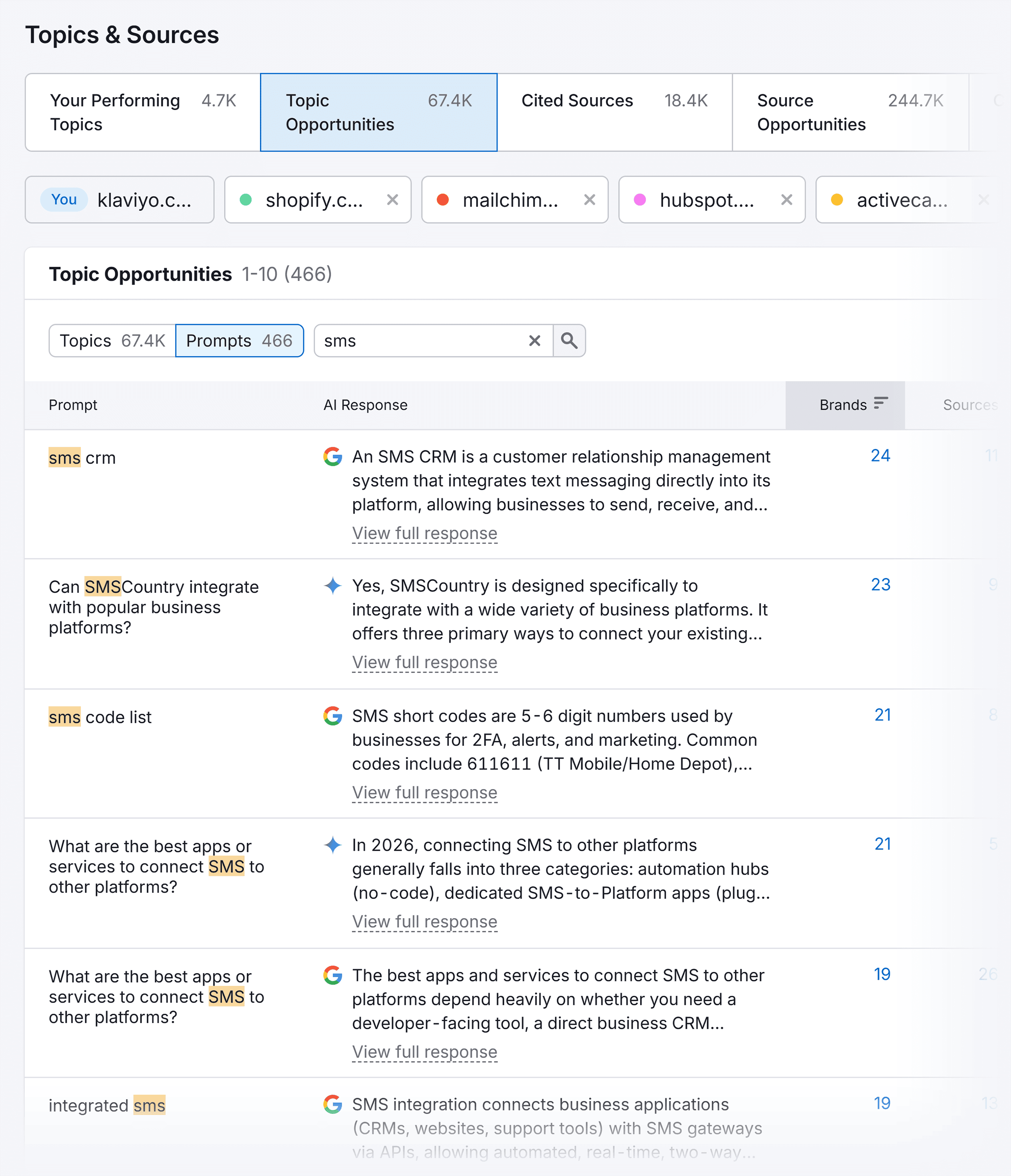
- Leverage SEO for PR Pitches: Conversely, SEO tools like Semrush can identify when a topic is gaining momentum, seasonal trends, or where editorial gaps exist. By using "SERP Features" data—such as "Top Stories" or "People Also Ask"—SEO can provide PR with a data-backed foundation for their pitches.
2. Collaborate on AI-Ready Assets
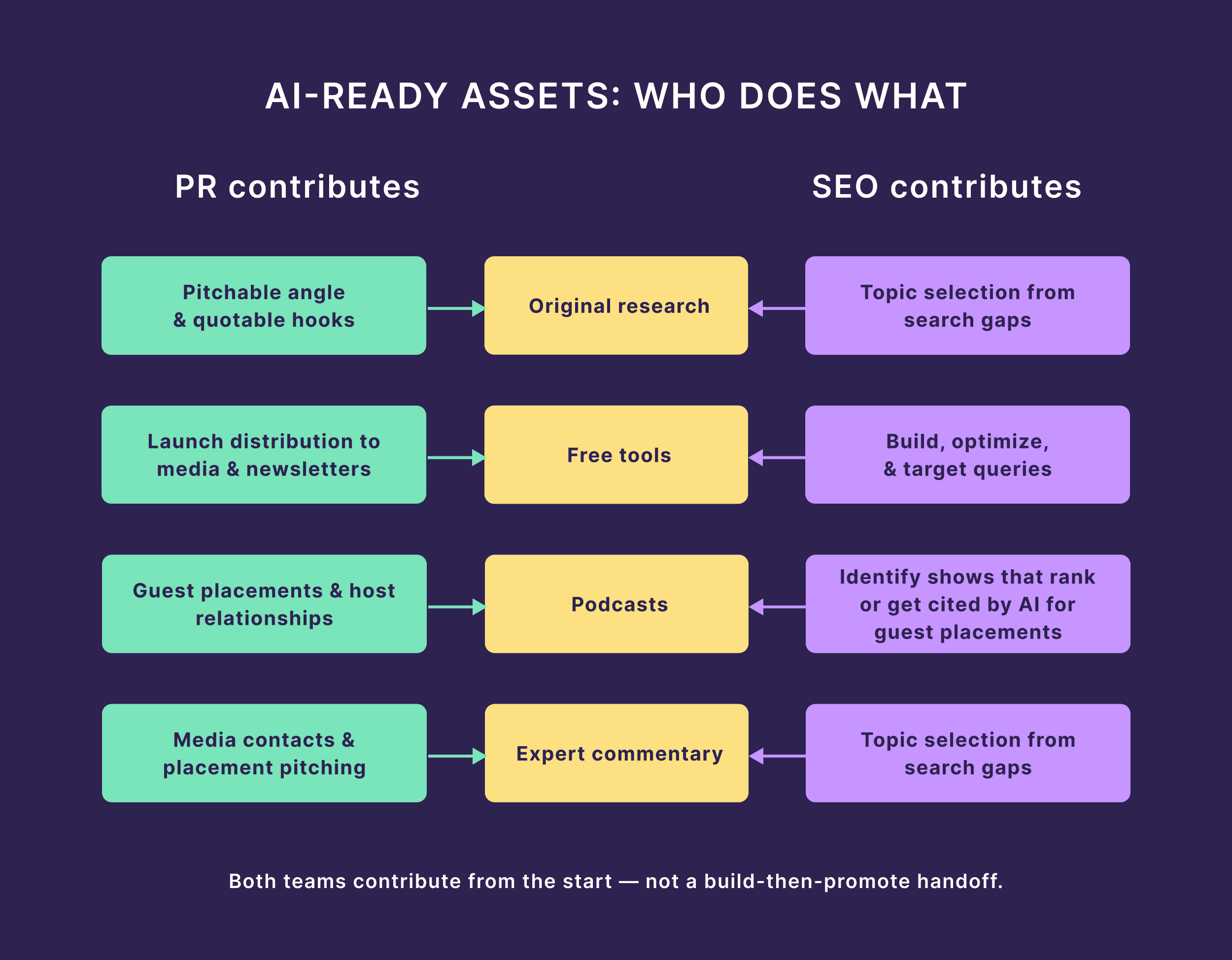
Content that is designed to be found and cited by AI models is known as an "AI-ready asset." This involves moving beyond standard blog posts to create structured, high-utility content.
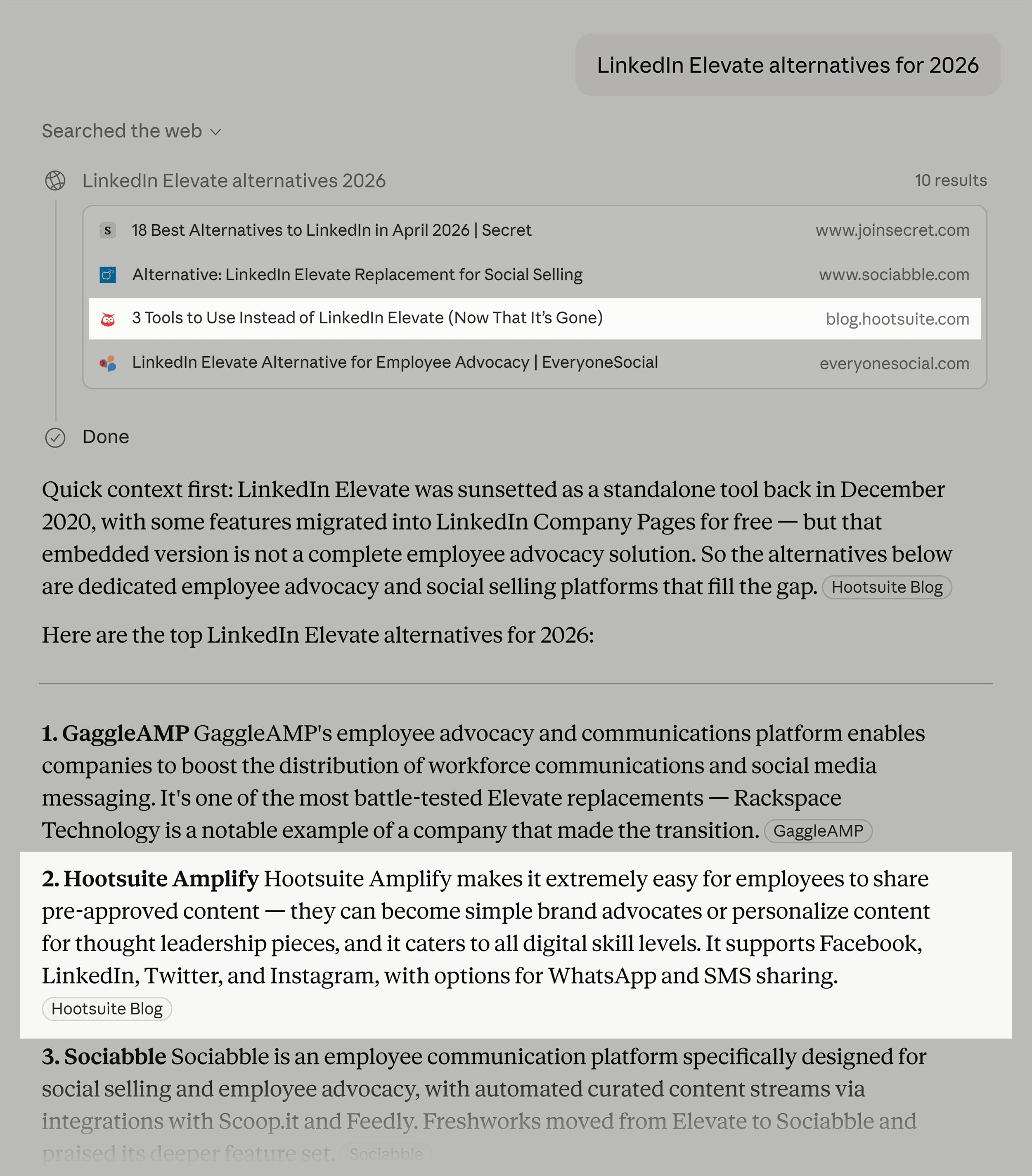
- Original Research and Data Reports: These remain the gold standard for earning both backlinks and AI citations. The workflow is simple: SEO identifies the high-demand, low-competition topic, and PR shapes the findings into "pitchable" hooks that appeal to journalists.
- The Power of Non-Gated Content: High-value assets should live on crawlable, non-gated landing pages. By keeping these pages consistent year-over-year, you build topical authority that search engines and AI view as a connected, authoritative cluster rather than a collection of random articles.
3. Co-Build a Third-Party Presence
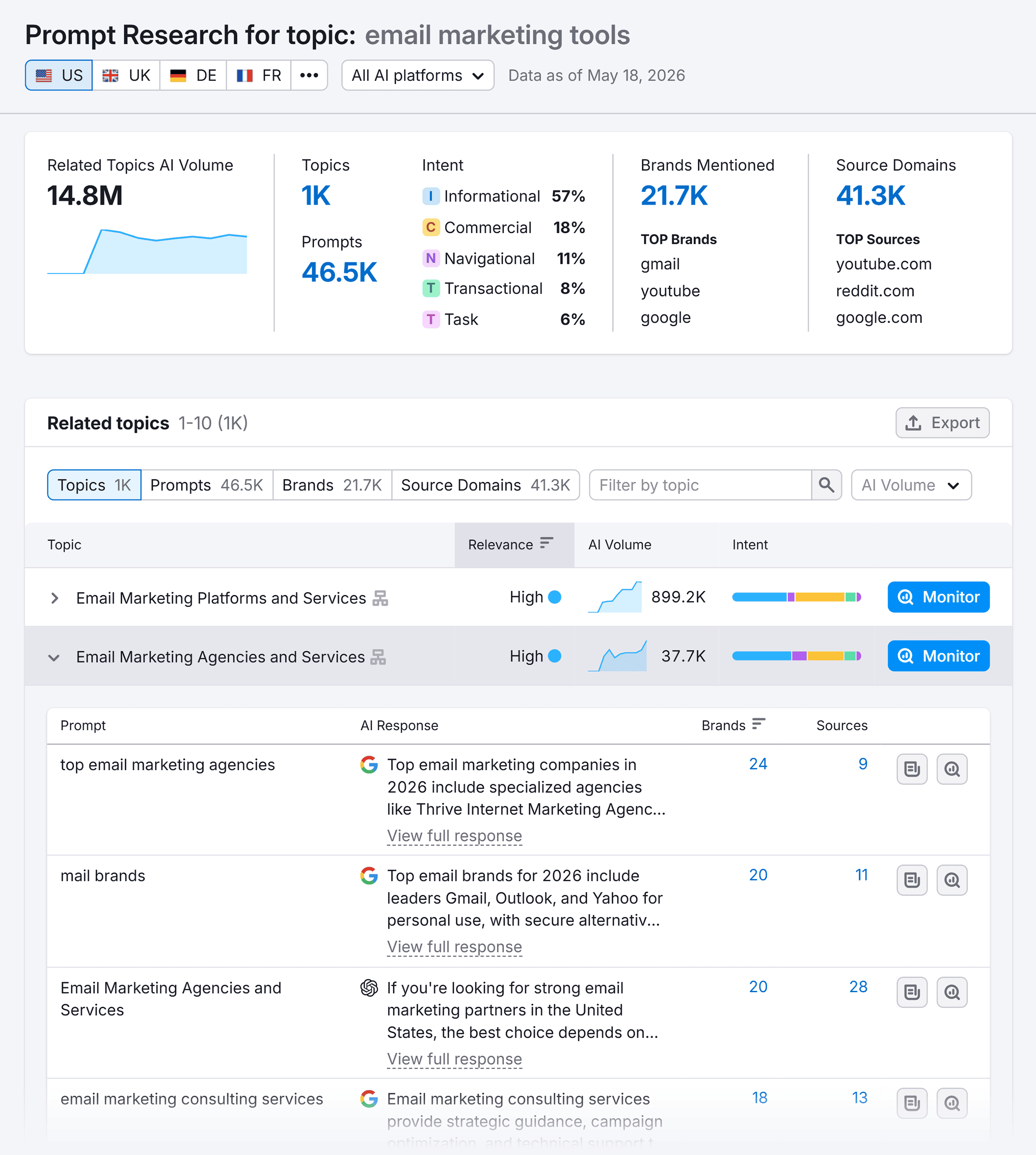
Data shows that brands are 6.5x more likely to appear in AI answers through third-party signals than through their own owned content. This makes off-site authority the most critical battleground for modern SEO.
- Expert Commentary: Data-backed, specific quotes are the most citable form of content for LLMs. PR should prioritize getting company experts into conversations that matter, while SEO monitors which publications are already being cited by AI for those specific topics.
- Review Sites and Forums: AI models frequently pull product recommendations from platforms like G2, Trustpilot, and Reddit. PR and SEO must work together to maintain active, positive profiles on these sites, as they provide the granular user feedback that machines use to differentiate between products.
- The Wikipedia Strategy: Wikipedia remains a cornerstone of the Google Knowledge Graph. While brands cannot edit their own pages due to neutrality rules, SEO can monitor the page for accuracy, while PR ensures the brand remains "notable" through consistent, independent media coverage.
4. Unify the Outreach Strategy
The most common friction point in PR/SEO collaboration is the "pitching collision"—when both teams unknowingly reach out to the same contact with different messages.

- Shared Target Lists: Build a master list of high-authority domains that have both organic ranking potential and media influence. Prioritize sources that appear on both lists.
- Divide by Strengths: SEO teams should handle technical, structured outreach (like fixing broken links or inclusion in listicles), while PR teams should handle relationship-based outreach (like analyst briefings, podcast appearances, and feature articles).
5. Report on Performance Together
Metrics should not be viewed through a siloed lens. Instead of tracking mentions and rankings separately, teams should evaluate the effectiveness of an asset based on shared outcomes:
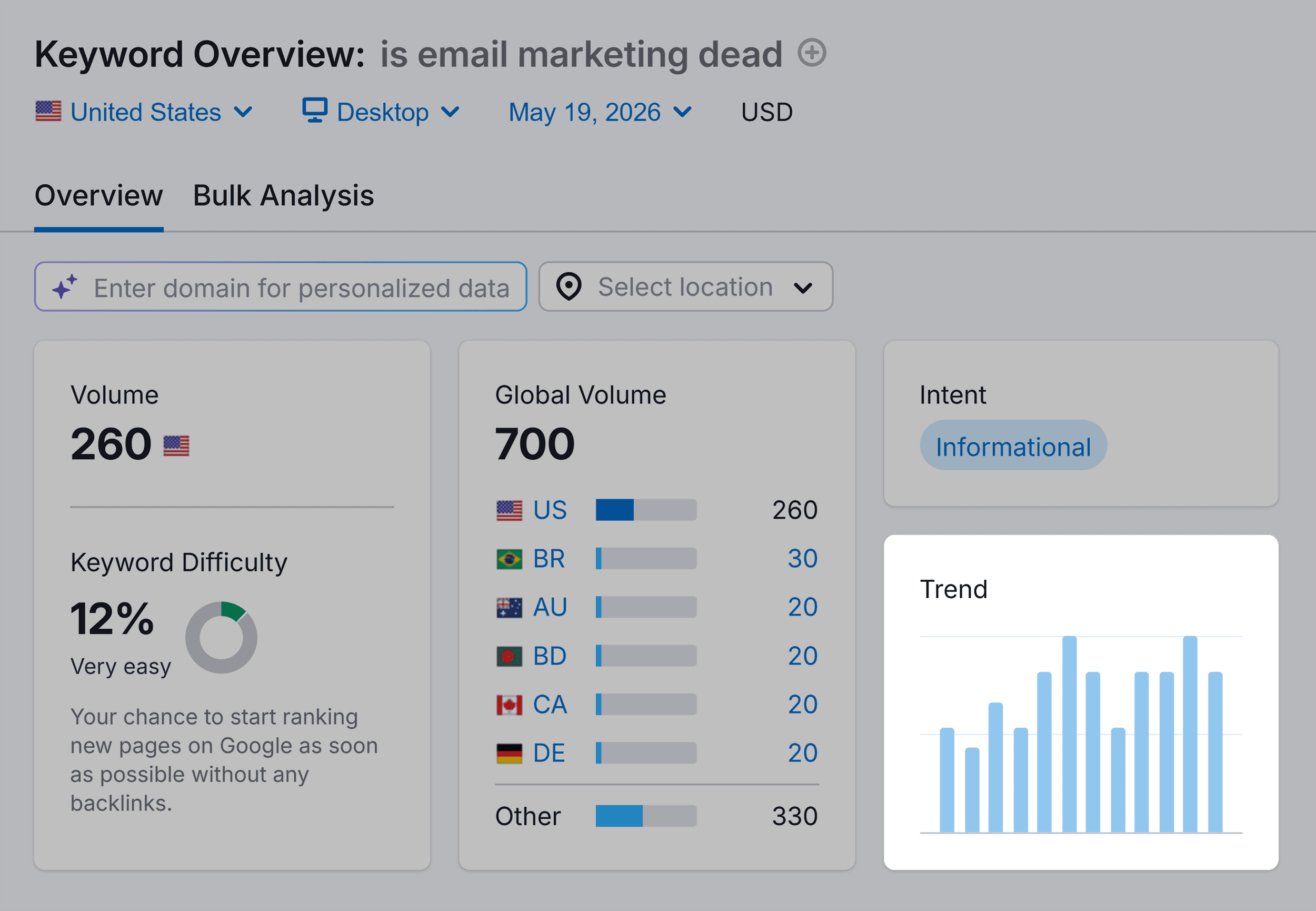
- Visibility: Did the asset increase the brand’s share of voice in AI search results?
- Credibility: Did it earn high-quality, unique referring domains?
- Demand: Did it influence the buyer’s journey, even if it wasn’t the "last click"?
Chronology of an Authority Campaign
To understand how this works in practice, consider the lifecycle of a successful campaign:
- Month 1 (Planning): SEO identifies a search trend; PR vets the topic for media relevance.
- Month 2 (Creation): Content team builds an AI-ready asset with embedded data.
- Month 3 (Execution): PR pitches the data to journalists; SEO reaches out to sites for link inclusion.
- Month 4 (Monitoring): Teams track AI citations and branded search volume.
- Month 5 (Review): Quarterly sync to analyze what worked and refine the list for the next cycle.
Implications for the Future of Search
The shift toward AI-driven search results is not a temporary trend; it is a fundamental change in how information is indexed and delivered. Brands that treat PR and SEO as separate functions will find themselves increasingly invisible in AI-generated answers.
Conversely, brands that align their PR and SEO strategies are building an "Authority Engine." This engine does more than just drive traffic—it establishes the brand as an entity. By consistently feeding the web high-quality, data-backed, and human-verified information, these brands ensure that when AI is asked to answer a question, the answer is them.
In the final analysis, the goal of modern marketing is not just to rank higher; it is to be cited more often. By unifying the creative storytelling of PR with the analytical rigor of SEO, companies can secure their place in the future of the digital ecosystem.