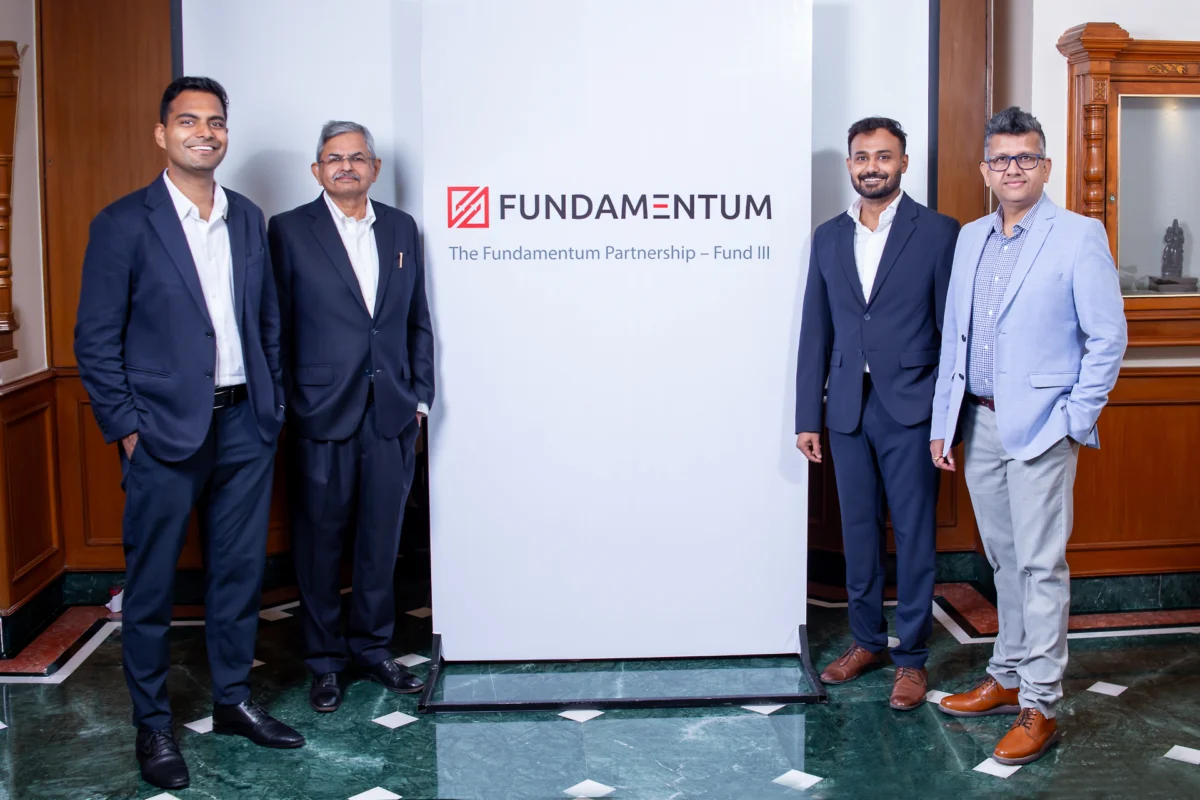
In a significant leadership transition for India’s venture capital landscape, Nandan Nilekani, the legendary co-founder of Infosys and a titan of the Indian technology sector, is stepping down from his role as a general partner at Fundamentum Partnership. The firm, which he co-founded nearly a decade ago, announced the change as it prepares to launch its third fund, targeting a corpus of $200 million.
Despite vacating his partner status, Nilekani’s influence over the firm remains profound. He will transition into an advisory role, serving as the anchor investor for the new fund while continuing to mentor founders within the firm’s portfolio. This shift marks a strategic evolution for the venture capital house, which has played a pivotal role in scaling some of India’s most recognizable startups.
The Chronology of a Visionary Partnership
The genesis of Fundamentum Partnership dates back to 2017, when Nilekani teamed up with Sanjeev Aggarwal, a seasoned investor known for his work at Helion Venture Partners. At the time, the Indian startup ecosystem was in a state of rapid maturation, moving beyond the nascent stages of growth. Nilekani and Aggarwal sought to create a platform that would provide more than just capital; they aimed to offer the kind of "patient capital" and strategic operational wisdom that only seasoned entrepreneurs could provide.
Over the last eight years, Fundamentum has successfully navigated the peaks and troughs of the Indian market. Its portfolio is a testament to its thesis: backing high-growth companies at the Series B stage and beyond. Notable investments include the used-car marketplace Spinny, online pharmacy giant PharmEasy, audio storytelling platform Kuku FM, and the rapidly growing devotional technology app Sri Mandir (developed by AppsForBharat).
The firm’s trajectory has been marked by disciplined growth. Having made 17 investments across its first two funds, Fundamentum has demonstrated a strong track record of value creation. Aggarwal notes that the firm has already returned approximately half of the capital from its first fund to its limited partners, a milestone that underscores the efficacy of their investment strategy.
The Strategic Shift: Fund III and Beyond
As Fundamentum sets its sights on its third fund, the organizational structure is evolving. While Nilekani steps back from day-to-day partnership responsibilities, the firm is broadening its leadership bench. Joining Sanjeev Aggarwal at the helm of Fund III are three key leaders:
- Prateek Jain: An original member of the founding team since 2017.
- Mayank Kachhwaha: A fintech specialist who joined the firm ahead of the launch of Fund II.
- Sanjay Chaturvedi: The firm’s finance chief, who has provided operational continuity for nearly a decade.
This expanded leadership team signals a move toward institutionalization. Fund III aims to deploy capital into eight to 10 high-potential, early-stage startups, specifically focusing on consumer technology, fintech, and AI-driven products. The firm has already begun deploying capital and expects to conclude the fundraising process over the next 12 to 18 months. Initial checks are expected to be in the range of ₹100 crore (approximately $10.5 million).
Data-Driven Perspectives on the Indian Ecosystem
The evolution of Fundamentum serves as a mirror for the maturation of the Indian venture capital market. When Aggarwal helped launch Helion Venture Partners in the mid-2000s, the landscape was entirely dependent on foreign institutional capital.
"When we launched Helion, there was no domestic capital in the country, and all the capital was raised from the U.S.," Aggarwal recalls. "Over the last five years, we are experiencing very strong interest from Indian investors to back venture capital firms. Now, you can build a venture firm with domestic capital."
This shift is reflected in the target composition of Fund III. The firm plans to raise roughly half of its $200 million goal from international investors, while the remaining half will be sourced from Indian institutions, family offices, and individual founders—a demographic that has become increasingly sophisticated and hungry for high-growth alternative assets.
Furthermore, Nandan Nilekani’s commitment to Fund III is described as his largest-ever personal allocation to a venture fund. While the specific figure remains confidential, the symbolic weight of this investment is clear: it signifies a continued, high-conviction bet on the Indian growth story.

Official Responses and the "Title Thing"
The transition has been characterized by the firm as a natural evolution rather than a departure. Sanjeev Aggarwal was quick to clarify the nature of the change in an interview with TechCrunch, describing it as "just a title thing."
"He is an integral part of our firm," Aggarwal stated, emphasizing that Nilekani’s core value add—mentoring founders—remains unchanged. "The one thing that he enjoys the most is mentoring the teams that we back, and he will continue to do so in Fund III."
This sentiment aligns with Nilekani’s broader career trajectory. At 71, he remains one of India’s most influential figures. Beyond his private sector success, he is credited as the architect of Aadhaar—the world’s largest biometric identity system—and has been the driving force behind the Unified Payments Interface (UPI) and the Open Network for Digital Commerce (ONDC). His focus has consistently been on building "digital public infrastructure," and his role at Fundamentum allows him to bridge the gap between large-scale systemic innovation and private-sector agility.
Implications: The Future of AI in India
A critical component of Fundamentum’s future strategy is its stance on Artificial Intelligence. While the global venture capital market is currently obsessed with "frontier" AI models—often requiring billions in capital for compute and research—Fundamentum is taking a more pragmatic approach.
Aggarwal notes that the firm sees the greatest opportunity for India in the "application layer" of AI. Rather than competing with the massive capital-intensive R&D labs of the U.S. and China, Fundamentum believes that Indian startups can excel by building specialized applications on top of existing global models. Specifically, they are looking at financial services, content creation, and vernacular language interfaces.
This strategy avoids the "AI bubble" risks associated with model training and instead focuses on the practical, scalable implementation of technology to solve specific Indian consumer problems.
Leadership Flux and Market Context
The leadership change at Fundamentum occurs against a backdrop of wider movement within the firm. The departure of former general partner Ashish Kumar, who recently launched his own AI-focused fund, Fundamentum Frontier Advisors (F2A), is a notable development.
While Nilekani is also an anchor investor in F2A, the firms remain distinct. Aggarwal clarified that F2A is an entirely separate entity with no operational connection to Fundamentum, and that Kumar is not involved in the management of Fund III. This "graduation" of talent is often a sign of a healthy, robust ecosystem where alumni move on to start new ventures, further deepening the pool of experienced venture capital leadership in India.
Conclusion: A Legacy of Mentorship
As Fundamentum Partnership enters its next phase, the transition of Nandan Nilekani from General Partner to advisor and anchor investor represents a shift toward a sustainable, multi-generational firm. By backing the next generation of Indian startups and empowering a new, broader leadership team, the firm is positioning itself to capitalize on the next decade of India’s digital transformation.
Nilekani’s influence will continue to be felt not through the daily grind of deal-sourcing or term-sheet negotiation, but through the strategic guidance he provides to the entrepreneurs who will define the next chapter of the Indian economy. As India moves toward a $10 trillion economy, the role of firms like Fundamentum—and the mentors behind them—becomes not just an investment, but a national necessity.