In the high-stakes world of product development, the "design system" has become the holy grail. Organizations spend thousands of hours cataloging buttons, inputs, and typography tokens, hoping these elements will magically create a cohesive user experience. Yet, despite these massive efforts, many teams find themselves plagued by the same old bottlenecks: misaligned visions, inconsistent implementations, and a lingering friction between designers and developers that slows down every sprint.

The reality is that a library of components is not a design system; it is a catalog of parts. To truly unlock value, teams must shift their focus from static elements to design patterns. By defining reusable, purpose-driven modules—rather than just isolated UI atoms—teams can move in parallel, minimize rework, and create a shared language that survives the chaos of rapid product development.

The Core Problem: Why "Elements-First" Fails
Collaboration between engineering and design is notoriously difficult. Even when both sides are composed of brilliant, highly motivated individuals, the "handoff" process remains a significant point of failure. Teams often spend weeks in meetings, only to realize halfway through development that they have fundamentally different interpretations of a feature’s purpose.
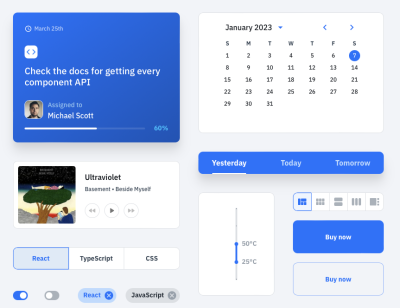
The traditional approach focuses on "elements": the button, the chip, the card. While these are necessary, they are insufficient. Having a high-quality set of UI elements does not guarantee that a feature will be built efficiently or that the design intent will be preserved. When developers and designers treat the design system as a collection of static assets rather than a logic-based framework, they miss the opportunity to codify how the product behaves.
A New Paradigm: The Power of Design Patterns
The alternative is a shift toward "design patterns"—a concept rooted in urban planning and software architecture. Christopher Alexander, in The Timeless Way of Building, noted that even the most complex structures are defined by a small number of composable patterns.

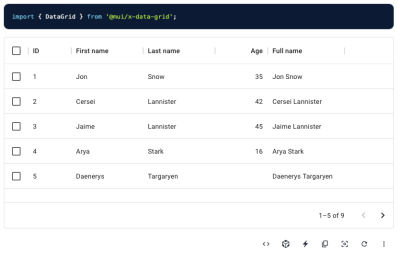
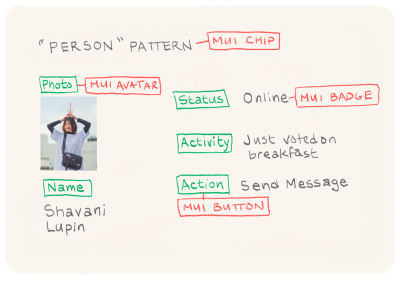
In a product design context, a pattern is a reusable combination of elements designed for a specific purpose. Unlike a button (which is an element), a "Data Grid" or a "User Profile Preview" is a pattern. These patterns are not just visual; they are functional, solving specific product experience problems repeatedly.
Chronology of Implementation: The "WeTrip" Case Study
To understand how this approach transforms team dynamics, consider the hypothetical app "WeTrip," a tool for groups to coordinate travel logistics. Instead of starting with a visual design in Figma, the team—comprising product owners, designers, and engineers—began by defining the "objects" of the app.

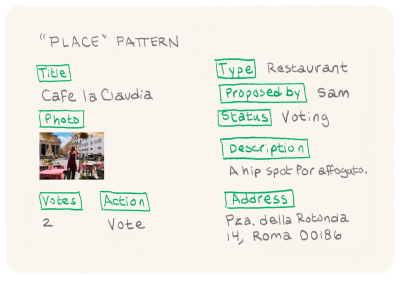
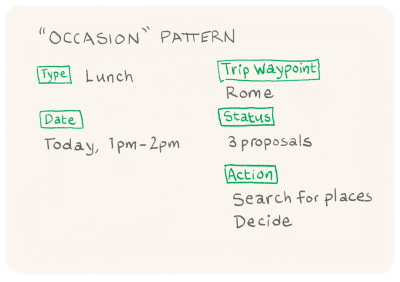
- Discovery & Naming: The team gathered to identify the core entities of the product: a "Person," a "Place," and an "Occasion." This took place on a whiteboard, ensuring all stakeholders agreed on the terminology before a single pixel was drawn.
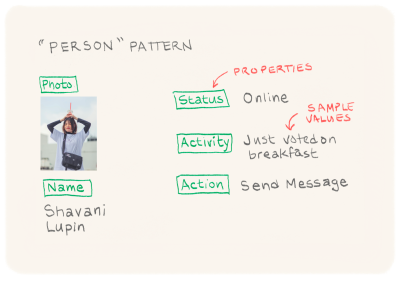
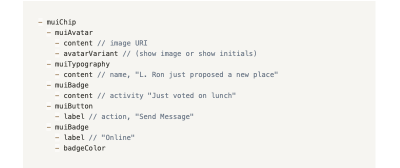
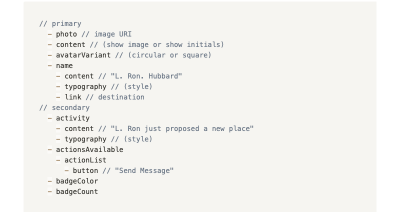
- Property Mapping: For each entity, the team listed the necessary attributes. A "Person" needed a name, a status, and a "presence" indicator. This list became the blueprint for both the Figma components and the TypeScript interfaces.
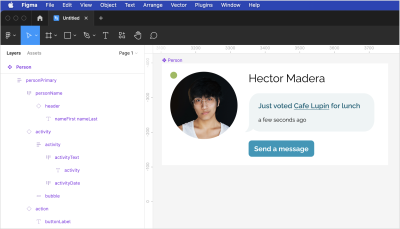
- Collaborative Documentation: The team maintained a live Notion document. If an engineer realized they needed a new state (e.g., "offline" status), they added it to the document. The designer then updated the Figma component to match. This eliminated the traditional "wait-and-see" bottleneck.
- Parallel Execution: Because the "pattern" (the data structure and the intent) was agreed upon, the engineer could begin building the logic in the backend while the designer was still refining the visual interface. There was no risk of misalignment because the "contract" for the component was already written.
Supporting Data: Why Patterns Speed Up Development
The efficiency gains from a pattern-based workflow are significant. By de-emphasizing the creation of custom UI elements—and instead relying on robust libraries like MUI, Tailwind, or Bulma—teams can focus their limited time on the unique logic of their product.
- Reduction in Handoff Friction: Because the design pattern document acts as a "source of truth" that is updated by both sides, the need for exhaustive documentation and long, agonizing handoff meetings drops significantly.
- Increased Reusability: When patterns are designed for specific product needs, they are inherently more reusable. The "Person" pattern in WeTrip, for example, was eventually used in three different views, saving hours of redundant design and coding time.
- Testable Logic: Because these patterns map directly to data models, they are easier to test. Just as unit tests verify code, design patterns verify the consistency of the user experience across the entire application.
Official Perspectives: The Shifting Industry Stance
Leading industry voices are increasingly acknowledging that the "Atomic Design" era—which focused heavily on the smallest possible components—is evolving. While atomic elements remain the foundation, the industry is moving toward "compositional" systems.
Product leads at high-growth startups report that when they stopped asking designers to "pixel-push" every single page and started asking them to define the "pattern of a list" or the "pattern of a notification," the speed of development increased by nearly 30%. By treating the design system as a living product with its own users, engineering and design teams can align their objectives with the company’s broader mission.
The Broader Implications for Teams
Adopting a pattern-first philosophy has deep implications for organizational structure and culture.
1. The Death of the "Handoff"
In a mature pattern-based system, there is no "handoff." Instead, there is a continuous stream of collaboration. When an engineer notices a bug in a pattern, they update the documentation. When a designer realizes a feature requires a new property, they update the Figma library. The "system" is no longer a static document kept in a dark corner of a server; it is an active, collaborative tool.
2. Scalability Through Federations
As a company grows, these patterns can be broken out into separate repositories. Larger teams may even assign "owners" to specific patterns. This mimics a micro-frontend architecture, where different teams manage different pieces of the puzzle, yet everyone remains aligned through the shared definitions created during the initial pattern-discovery phase.
3. Measuring Success
Teams that adopt this approach can measure success by tracking "reuse metrics." Just as developers track test coverage, design teams can track how often a specific pattern is reused across the product. A high reuse rate is a direct indicator of a successful, efficient design system that is providing genuine value to the development cycle.

4. Cultural Harmony
Perhaps the most important implication is the improvement in morale. When engineers and designers are no longer in an adversarial or blocked relationship, the entire team dynamic shifts. The "us vs. them" mentality, which often plagues large product organizations, is replaced by a sense of shared ownership over the patterns that build the product.

Conclusion: A Vision for Harmonious Development
The goal of a design system should not be to build a perfect library of components, but to build a team that communicates effectively. By focusing on design patterns, organizations can create a workflow that is flexible, scalable, and—most importantly—human-centric.
The next time your team prepares to start a new project, resist the urge to jump immediately into UI design. Gather your developers and product owners, sit in front of a whiteboard, and ask: "What are the core patterns we are building?" You will likely find that by spending a few hours on patterns today, you will save weeks of frustration tomorrow. The harmony you seek isn’t found in the pixel-perfect precision of a button; it is found in the shared understanding of how your product works.