
In the contemporary digital landscape, a dangerous misconception persists: that User Interface (UI) design and User Experience (UX) design are synonymous. While the former focuses on the aesthetic and functional mechanics of a digital canvas, the latter is a far more expansive discipline. As industry expert Paul Boag argues, treating these roles as interchangeable isn’t just a misnomer—it is a strategic error that fundamentally undermines the quality of the end-to-end customer journey, particularly within the complex ecosystem of Business-to-Business (B2B) sales.
To improve the user experience, designers must transcend the screen. They must account for the entirety of the journey, including offline interactions, human-to-human communication, and the critical "gaps" that exist between digital touchpoints.
The Complexity of the B2B Landscape
The fundamental distinction between B2C and B2B lies in the nature of the transaction. While B2C experiences are often transactional, impulsive, or short-lived, B2B interactions are characterized by extended timelines, multiple stakeholders, and high-stakes decision-making.

An enterprise-level sales journey rarely happens in a vacuum. A typical client might spend months vetting a vendor. During this period, the prospect may attend webinars, download whitepapers, engage with email nurture campaigns, participate in discovery calls, and present proposals to internal committees.
A UI designer might be tasked with crafting the landing page where the prospect first downloads a report. A UX designer, however, must view that landing page as a single, infinitesimal piece of a massive, multi-month mosaic. If the UX designer ignores the subsequent sales call or the email follow-up sequence, they have failed to design the experience—they have merely designed a page.
Mapping the Journey: A Strategic Necessity
The primary tool for reconciling these disparate interactions is Customer Journey Mapping. This practice is not merely an academic exercise; it is a diagnostic requirement.
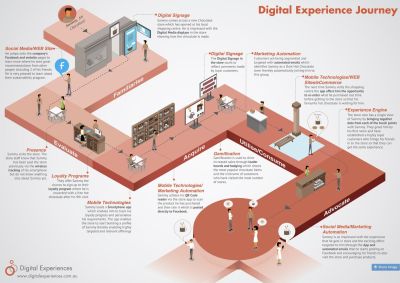
The Anatomy of the Funnel
Mapping allows designers to visualize where a prospect is in their lifecycle. For instance, traffic originating from a targeted LinkedIn advertisement arrives with a different psychological profile than a user arriving via organic search. A landing page designed for the former must be tailored to those specific expectations.
Failure to map the journey leads to disjointed experiences. A classic example is the aggressive pop-up overlay offering a discount to a first-time visitor who hasn’t yet had the chance to understand the value of the product. This "conversion at any cost" mentality often alienates potential customers, resulting in a higher bounce rate and a diminished brand perception. By mapping the journey, designers can identify the optimal moment for an interaction, such as triggering a call-to-action only after the user has engaged with core product content.
The Peril of "The Gap"
Perhaps the most significant value a UX designer provides is the identification and mitigation of "gaps." A gap is any moment where the customer experience falters, whether due to a change in device, a handover between departments, or a significant delay in response time.

Why Gaps Occur
- Siloed Systems: When data does not travel between the marketing automation platform and the CRM, the user is forced to repeat information.
- Channel Fragmentation: Moving from a mobile device to a desktop should be seamless. If a user loses their form progress during this transition, the brand has essentially told the customer their time is not valued.
- Human-to-Human Hand-offs: The most common gap occurs when a digital interaction is handed over to a human sales representative. If the salesperson is unaware of the prospect’s previous digital behavior, the conversation feels disjointed and cold.
Modern organizations are increasingly relying on sophisticated sales pipeline software and CRM integrations to bridge these gaps. However, technology alone cannot fix a fundamentally broken process. The designer’s role is to ensure that the transition from a digital interaction to a human one is as invisible and frictionless as possible.
The Human Factor: The "Soft" Side of UX
A common critique in the design community is that focusing on human interaction falls under the banner of Customer Experience (CX) rather than User Experience. However, this is a distinction without a difference in the modern B2B world.
Every digital tool—from Zoom and Slack to automated email sequences—is merely a conduit for human-to-human interaction. A user does not distinguish between the "UX of the website" and the "experience of the salesperson." To them, it is all one brand experience.

When a customer receives a generic, automated, and insensitive response from a support team, the "UX" has failed, even if the website itself is beautifully designed. UX designers should take an active role in coaching sales and support teams on digital communication etiquette. Whether through creating internal communication templates or running workshops on empathy-led digital engagement, designers must ensure that the "human touch" remains consistent with the brand’s digital promise.
Implications for the Modern Designer
If you are a UX designer who feels confined to creating wireframes, you are being underutilized. The shift toward a holistic approach has profound implications for how design teams should be structured and valued:
- Breaking the Silos: UX designers must advocate for a seat at the table during sales and marketing strategy meetings. Design decisions should be informed by sales data, just as sales strategies should be informed by user research.
- Redefining Success: KPIs for design teams should move beyond "conversion rates on page X" to "customer satisfaction scores throughout the entire journey."
- The Rise of the "Experience Architect": As roles evolve, the most successful designers will be those who can connect the dots between the interface, the data infrastructure, and the human conversations that ultimately close a deal.
Conclusion: The Holistic Imperative
The future of B2B design lies in the recognition that the "user" is not just an entity interacting with a screen, but a person moving through a complex series of relationships. If organizations continue to limit UX designers to the role of "interface decorators," they will continue to lose leads in the gaps of their own making.
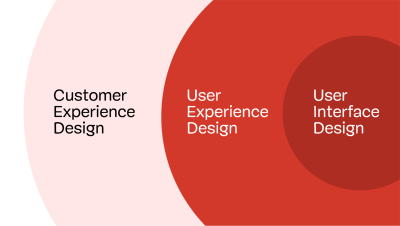
To create truly effective experiences, designers must embrace the full scope of the journey—the digital, the physical, and the human. It is time to look past the pixels and start designing for the entire relationship. As Paul Boag concludes, the challenge is not just to design a better interface, but to design a better way of doing business. The designers who can achieve this integration are the ones who will define the next generation of industry standards.