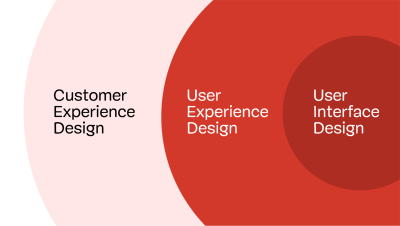
In the modern digital landscape, the distinction between User Interface (UI) design and User Experience (UX) design has become increasingly blurred. To the untrained eye, the two are often treated as interchangeable synonyms. However, for industry veteran Paul Boag, this misconception is more than just a linguistic error; it is a fundamental flaw that compromises the success of complex business-to-business (B2B) transactions.
Boag argues that while UI design focuses on the aesthetic and functional elements of an interface, true UX design is a comprehensive discipline concerned with the entirety of a user’s journey. In the B2B sector, where sales cycles are long and touchpoints are fragmented, failing to look beyond the screen is a recipe for business stagnation.
The Anatomy of the B2B UX Challenge
To understand why the B2B landscape demands a broader approach, one must first recognize its inherent complexity. Unlike B2C transactions, which are often transactional and immediate, B2B experiences are defined by long-term, multi-layered relationships.

A typical B2B engagement involves a protracted timeline. A prospective client might move from initial awareness to contract signature over several months. Throughout this period, the client is exposed to a myriad of touchpoints: marketing whitepapers, social media engagement, email exchanges, formal sales calls, and even offline interactions.
For the UX designer, the task is not merely to design a landing page that converts, but to map the internal logic of this entire journey. The challenge lies in the fact that these touchpoints are rarely managed by a single department. Marketing, sales, product, and customer service often operate in silos, creating a fragmented experience that can alienate a prospect before a deal is ever closed.
Chronology: Mapping the Client’s Path to Purchase
Effective UX design in B2B requires a chronological understanding of the buyer’s evolution. By employing journey mapping, designers can identify the psychological and functional needs of a lead at every stage of the funnel.
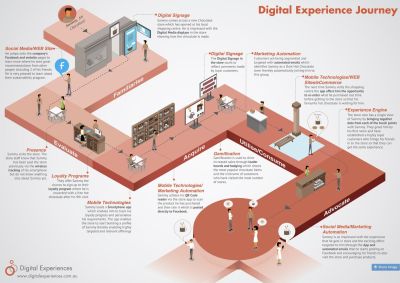
1. Discovery and Awareness
In the early stages, the user is identifying a problem. They are not looking for a sales pitch; they are looking for expertise and solutions. A well-designed UX strategy at this stage focuses on content—blog posts, webinars, and organic search—designed to build authority and trust rather than push a product.
2. Consideration and Evaluation
As the user moves into the consideration phase, the requirements shift. This is where the digital interface must be robust. However, even here, the UX designer must consider the "handoff." If a user downloads a case study, the next logical step should be an invitation to engage further, not an immediate, aggressive sales call.
3. Decision and Conversion
This is the critical junction where digital interfaces meet human intervention. The UX designer must ensure that the transition from a digital form submission to a conversation with a sales representative is seamless. If the messaging on the website is not aligned with the language used by the sales team, the "experience" breaks, leading to a loss of trust.

Supporting Data: Why Gaps Cost Companies Money
The "gaps" in a customer journey—those moments where a user transitions between devices, departments, or platforms—are the primary sites of failure. Data consistently shows that friction in these transitions is a leading cause of churn.
Consider the common scenario of an "information reset." A potential client fills out a form on a mobile device, only to find that when they switch to a desktop to complete the process, their data is lost. This is a technical failure, but it is fundamentally a UX failure. The cost of such gaps is measurable: every minute a customer spends re-entering data or explaining their history to a new support representative is a minute they are reconsidering their relationship with the provider.
Furthermore, statistics on conversion optimization demonstrate that contextual relevance is paramount. Industry data suggests that when businesses attempt to force conversions (e.g., displaying aggressive discount overlays before a user has engaged with the product), conversion rates plummet. Users feel pressured, not assisted. By contrast, organizations that utilize CRM and pipeline management software to "plug the gaps" and nurture leads over time see significantly higher lifetime value (LTV) per customer.

Official Perspectives: Redefining the Role
The industry consensus is shifting toward a more integrated definition of design. Experts like Paul Boag suggest that if a UX designer is restricted to "pixel-pushing" or wireframing, the organization is failing to capitalize on the designer’s true value.
"If you have been hired as a UX designer and yet spend all of your time creating wireframes for websites, apps, and other interfaces, I would suggest your organization or clients are failing to utilize you to the full," Boag asserts.
From an organizational standpoint, this requires breaking down silos. The "Human Factor"—the reality that many B2B interactions occur between people rather than between a user and an interface—must be a core concern of the design team. Whether it is coaching a sales team on how to communicate more empathetically or ensuring that support emails reflect the brand’s voice, these are all UX tasks. If the human-to-human interaction is cold or inconsistent, the digital experience is essentially moot.
Implications for the Future of Design
The implications of this holistic approach are twofold:
- For the Designer: The role is evolving into something more strategic. Designers must become facilitators who work across departments, influencing marketing strategies, sales scripts, and CRM configurations. The ability to advocate for the user beyond the screen is becoming the hallmark of a senior-level designer.
- For the Organization: Companies that refuse to adopt this view will continue to struggle with disjointed customer experiences. In a competitive B2B market, the quality of the "experience" is often the only true differentiator between two technically competent providers.
The Verdict: A Call for Integration
Ultimately, the future of user experience design lies in the recognition that the "interface" is not the product. The product is the relationship. When designers step out of the box defined by wireframes and prototypes and start looking at the entire end-to-end journey, they stop being mere technicians and start being architects of business growth.
The road ahead for UX designers is one of greater influence and responsibility. By "minding the gap"—the space between the digital and the human, the screen and the conversation—designers can ensure that every touchpoint serves the ultimate goal: a meaningful, lasting connection between two businesses. It is time for the industry to move past the superficiality of UI and embrace the profound, holistic reality of true User Experience.