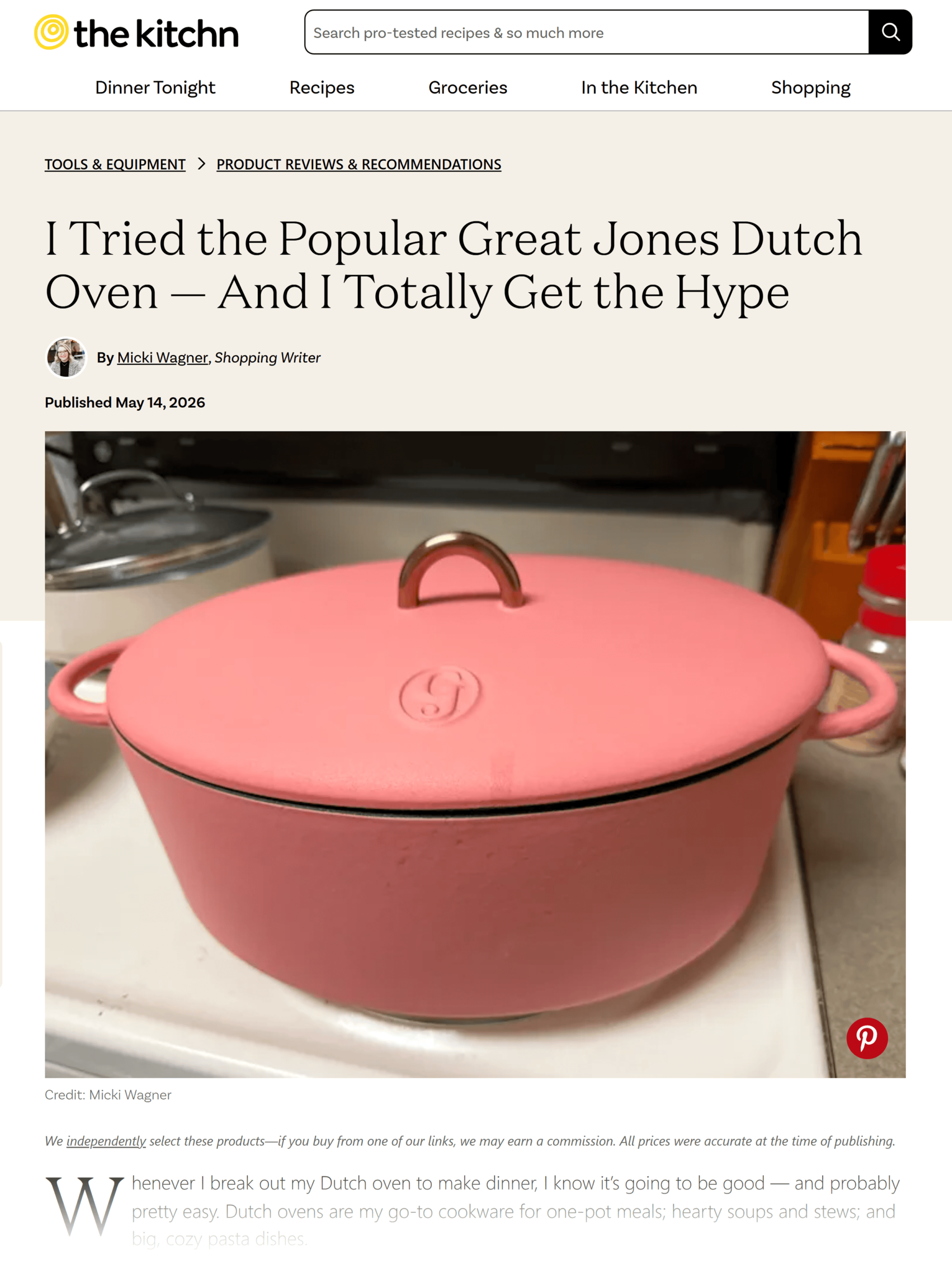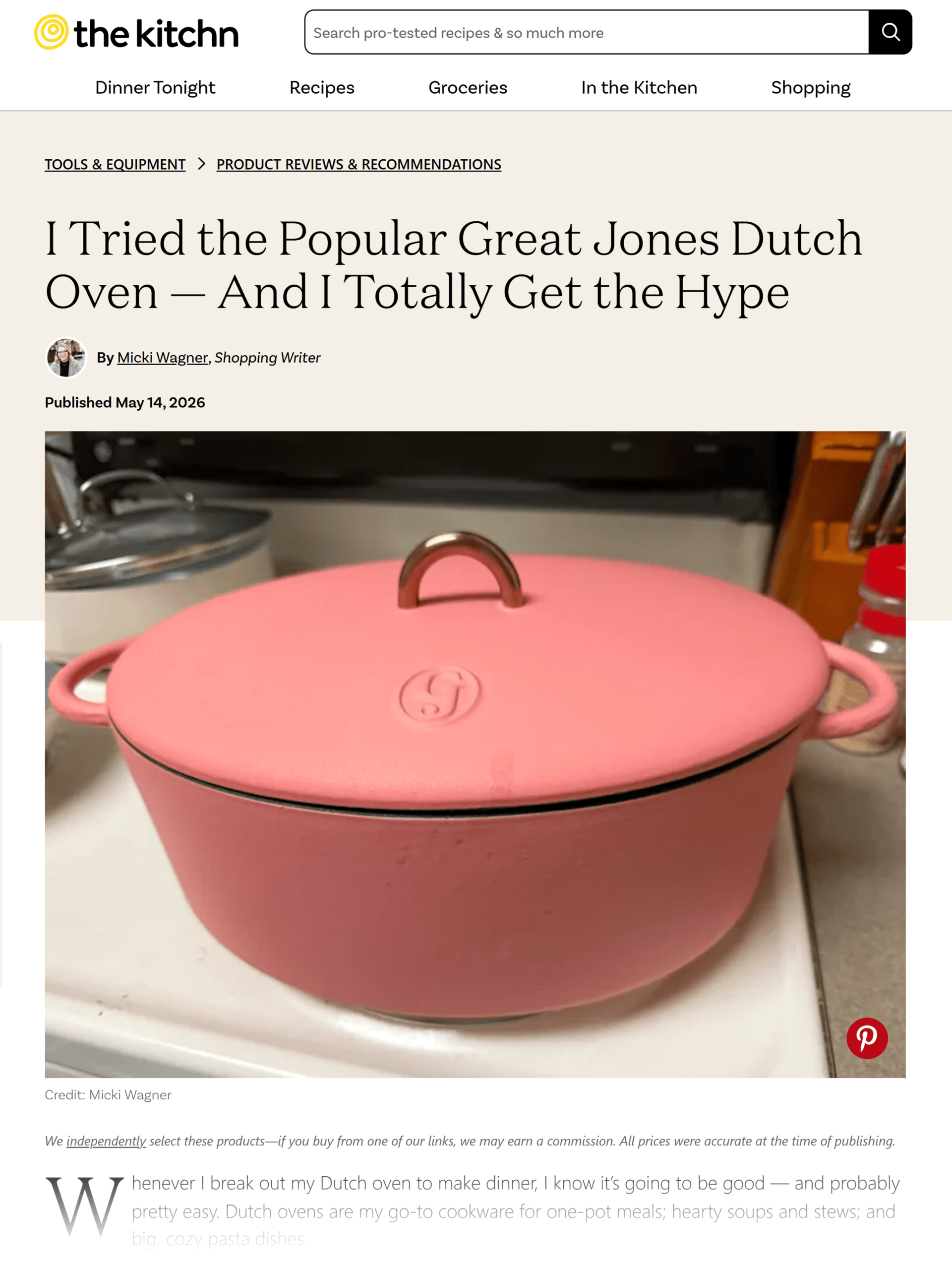
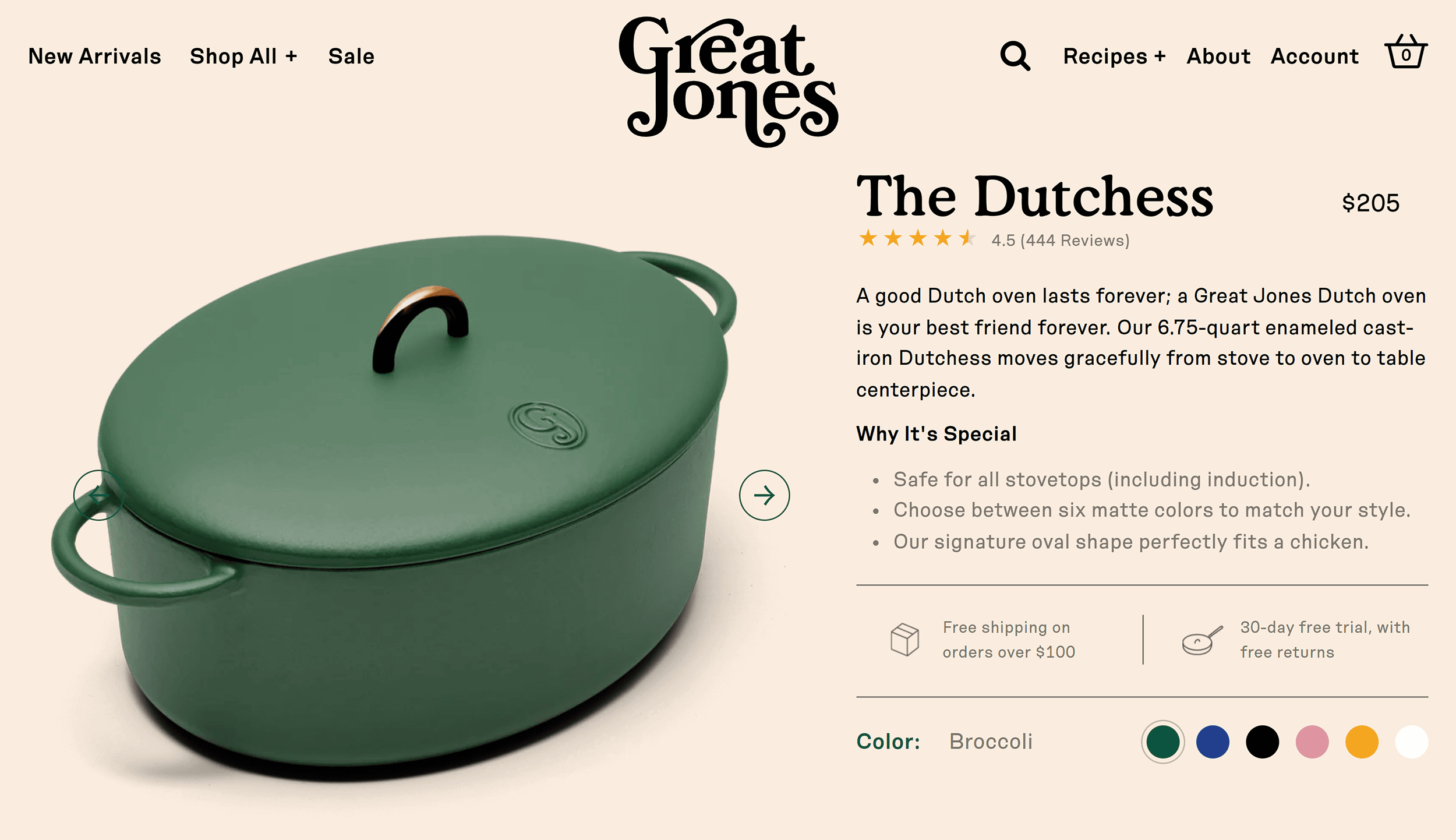
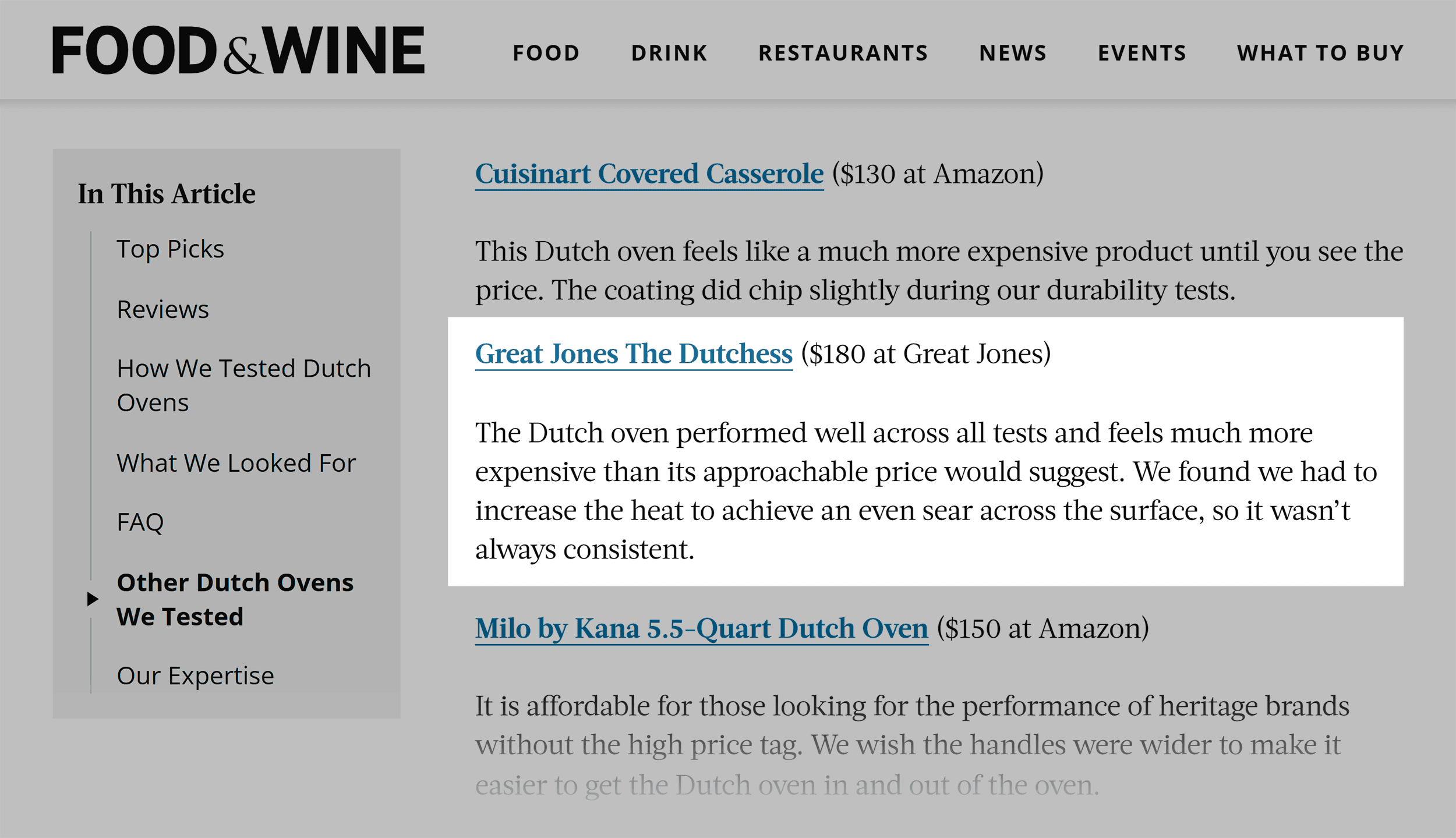
In the modern digital landscape, brand reputation is often measured by media mentions, high-end design, and glowing editorial reviews. By these traditional metrics, Great Jones—the direct-to-consumer kitchenware brand—should be an undisputed market leader. Their signature Dutch oven, "The Dutchess," is a visual icon, frequently lauded by industry titans like Vogue, The New York Times, Bon Appétit, and The Kitchn.

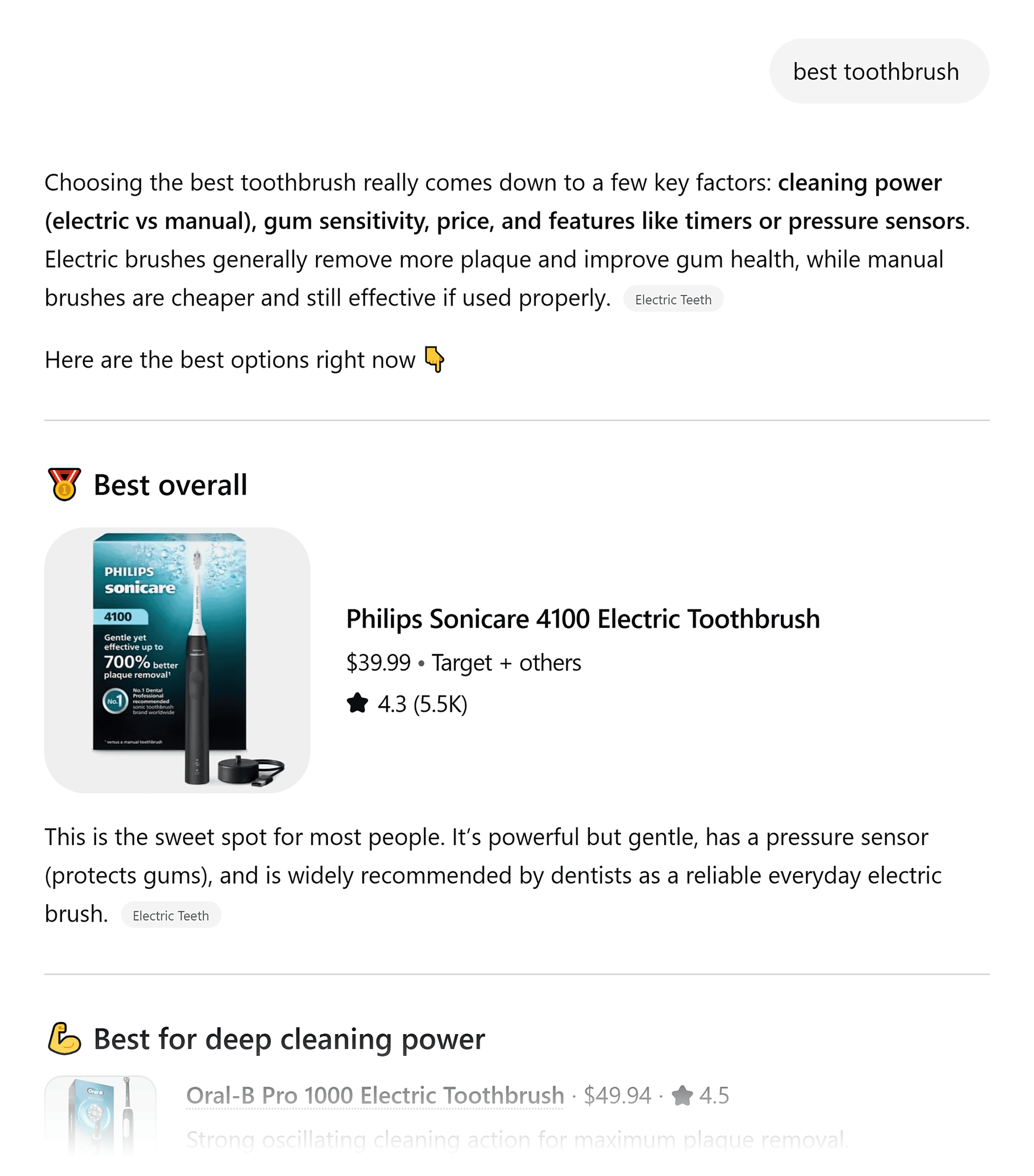
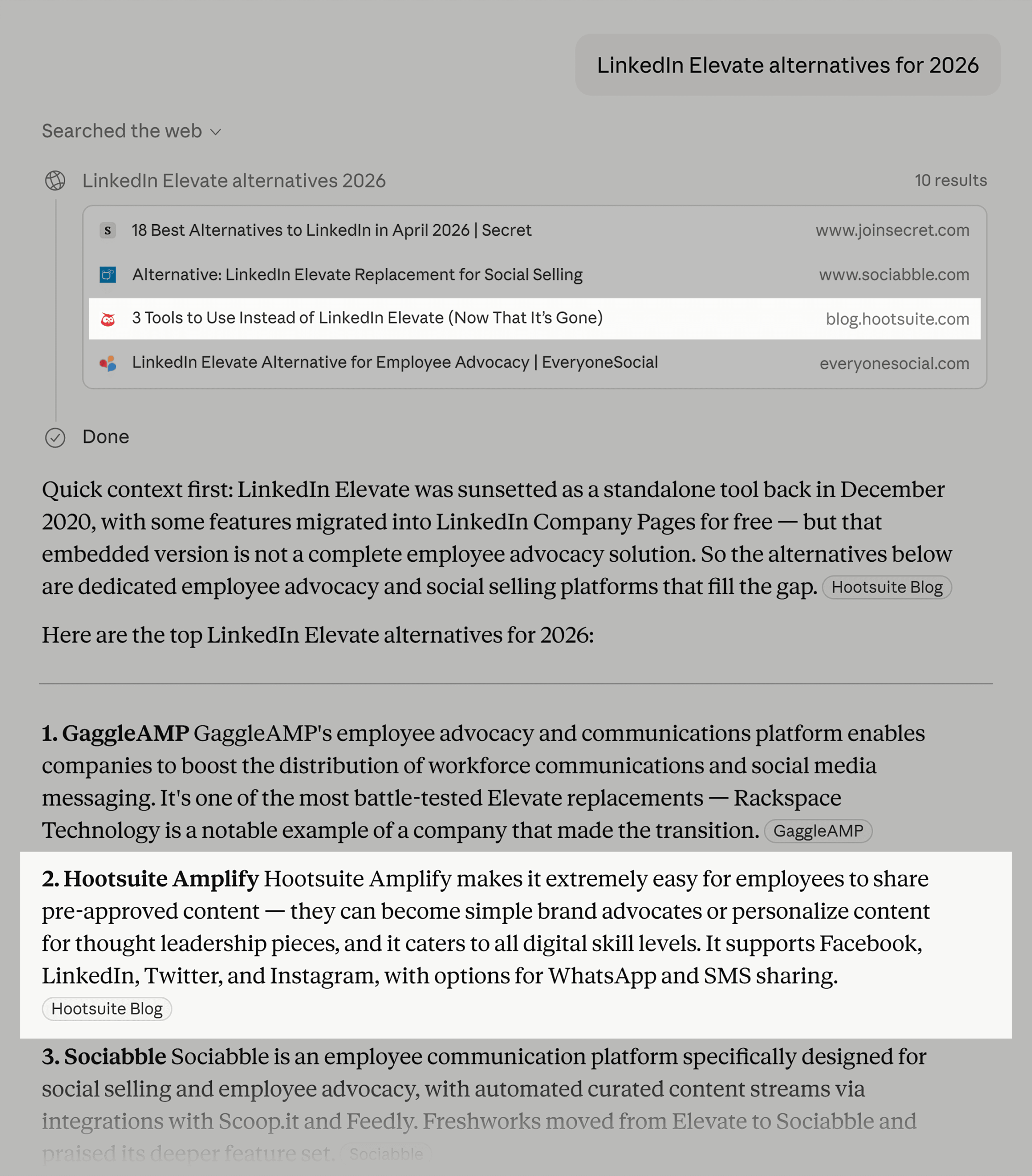
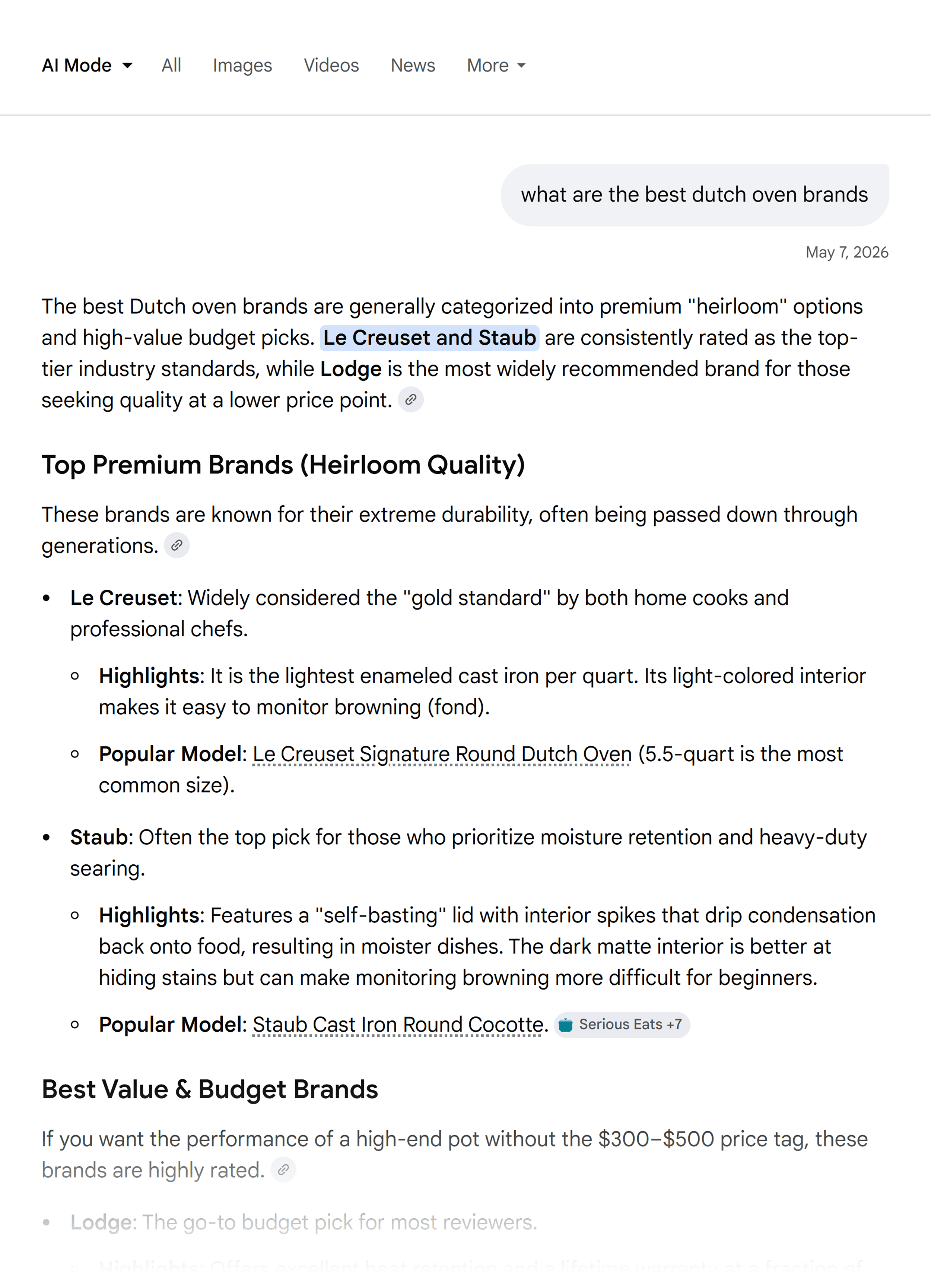
Yet, despite this massive media footprint, there is a glaring hole in the brand’s digital armor. When a consumer queries "best Dutch ovens" on Google, or asks a Large Language Model (LLM) for a high-quality recommendation, Great Jones is frequently absent.
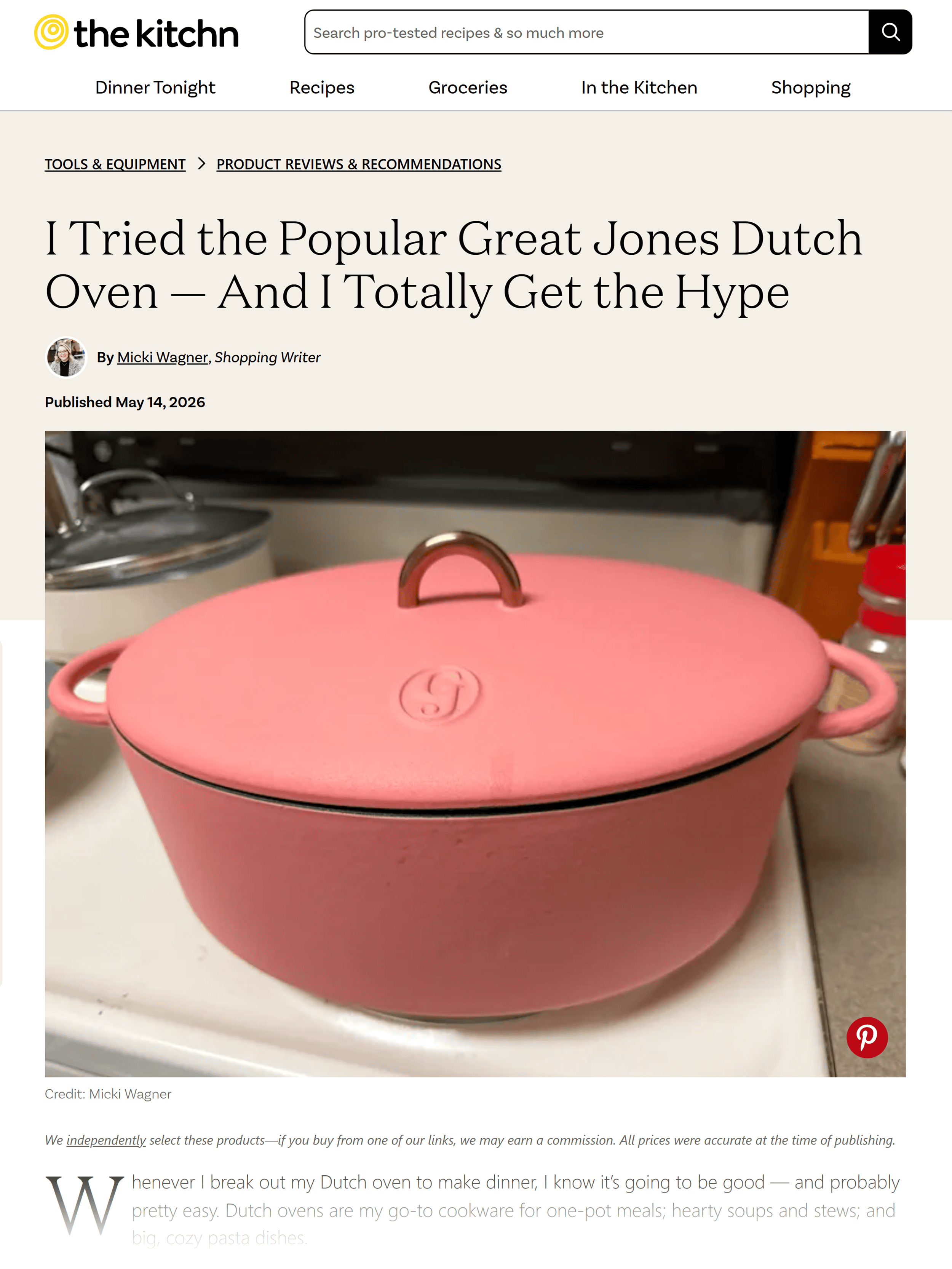
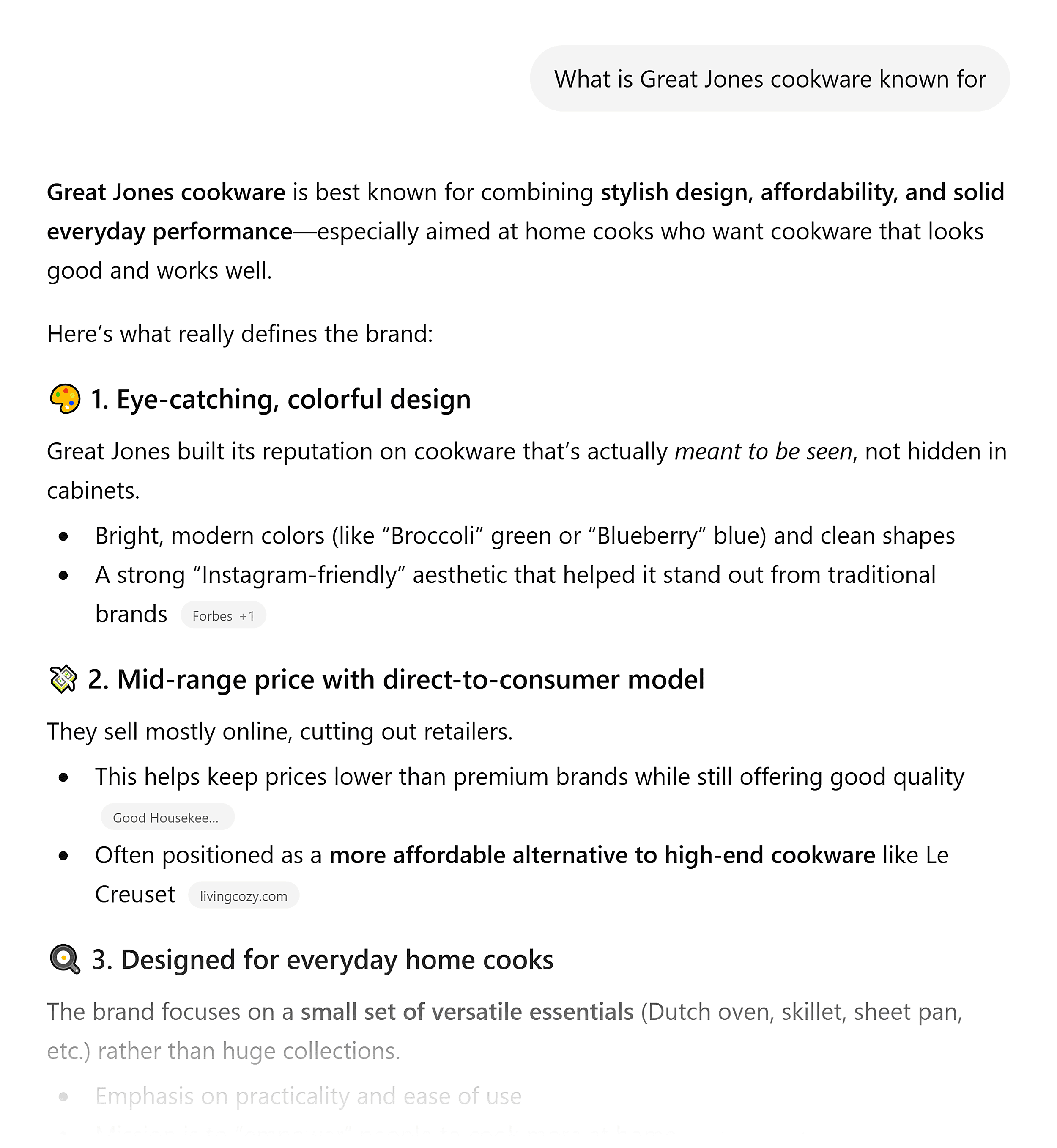
This is not a failure of product quality or public relations. It is a failure of topical authority. In an era where AI-driven search engines prioritize consistent, verifiable patterns over isolated mentions, Great Jones serves as a cautionary tale: you can be a household name in design magazines and still be invisible to the algorithms that drive modern e-commerce.
The Anatomy of an Authority Gap
Topical authority is no longer just about the volume of content or the number of backlinks pointing to your domain. It is the earned reputation for expertise on a specific subject, formed when your brand and a topic appear together consistently across the digital ecosystem.
When a brand lacks a "pattern"—a cohesive, positive framing that ties their products to a specific category—search engines and LLMs struggle to categorize them. Without this clear association, AI systems default to legacy brands with stronger, more persistent signal trails.
Many companies operate with this gap, but the rise of AI-driven search has brought it into sharp focus. The good news is that this disconnect is fixable. By utilizing the Topical Authority Pyramid, a framework designed to bridge the gap between brand presence and search relevance, companies can systematically transform their digital footprint.
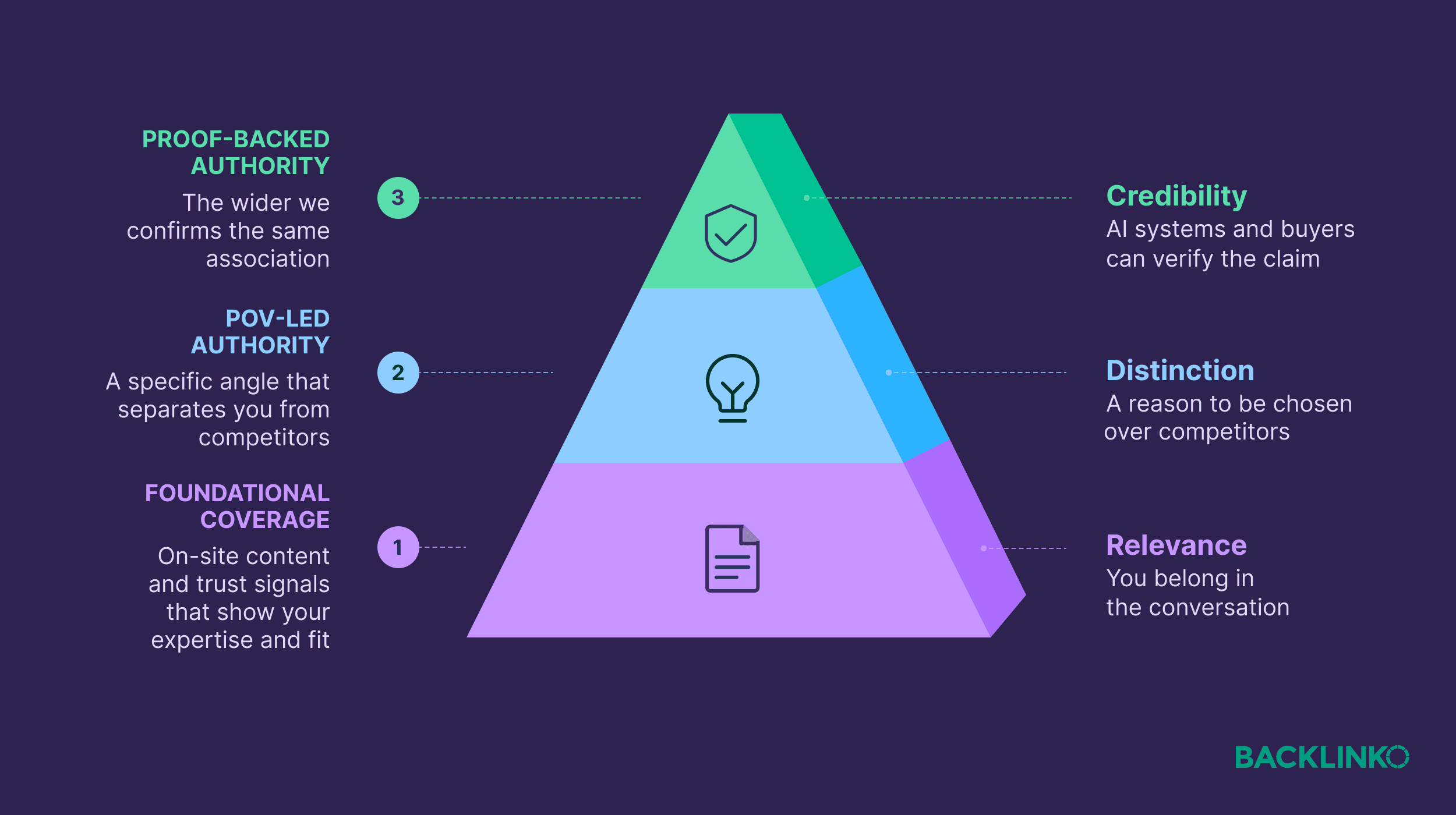
Defining the Topical Authority Pyramid
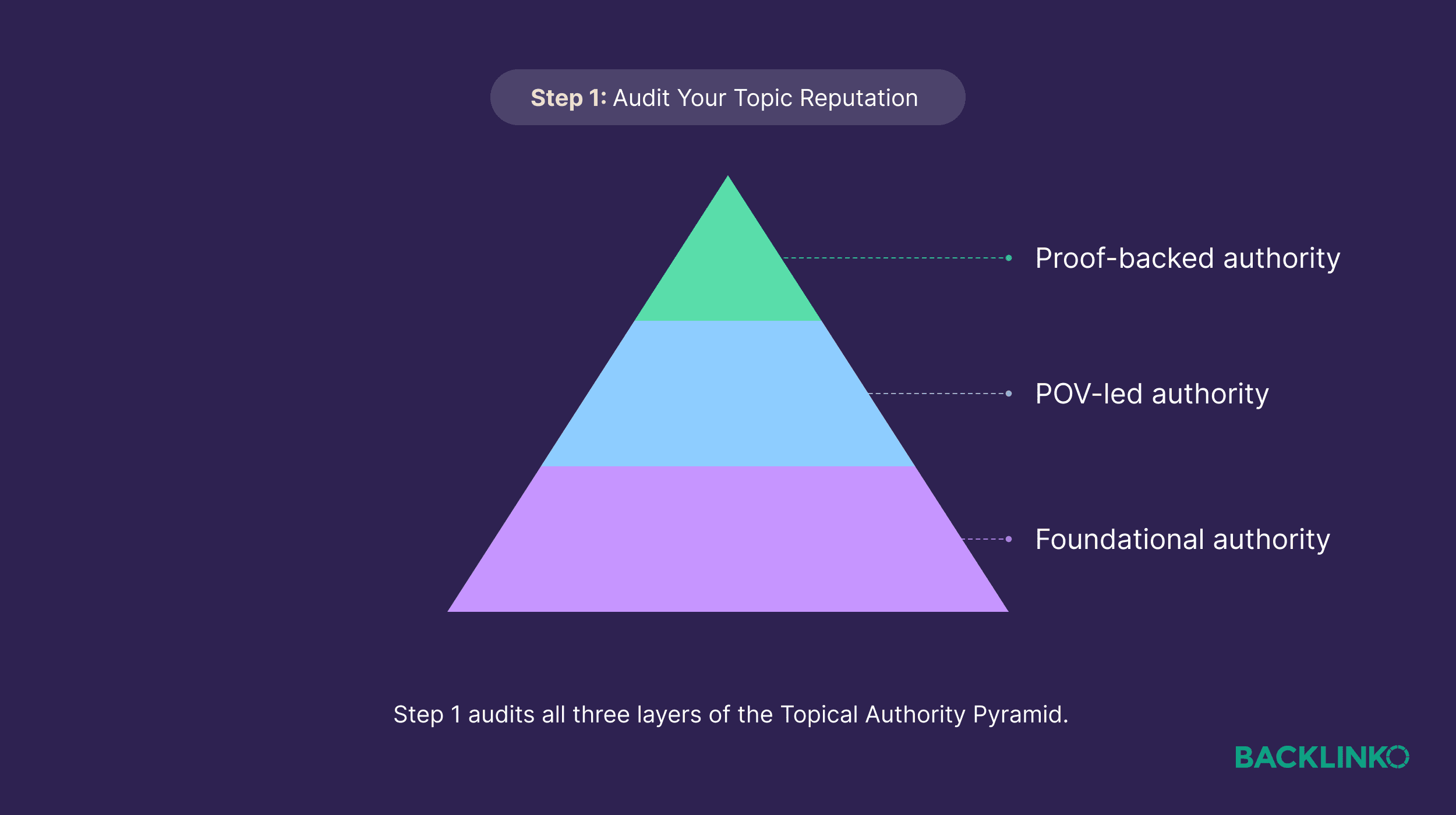
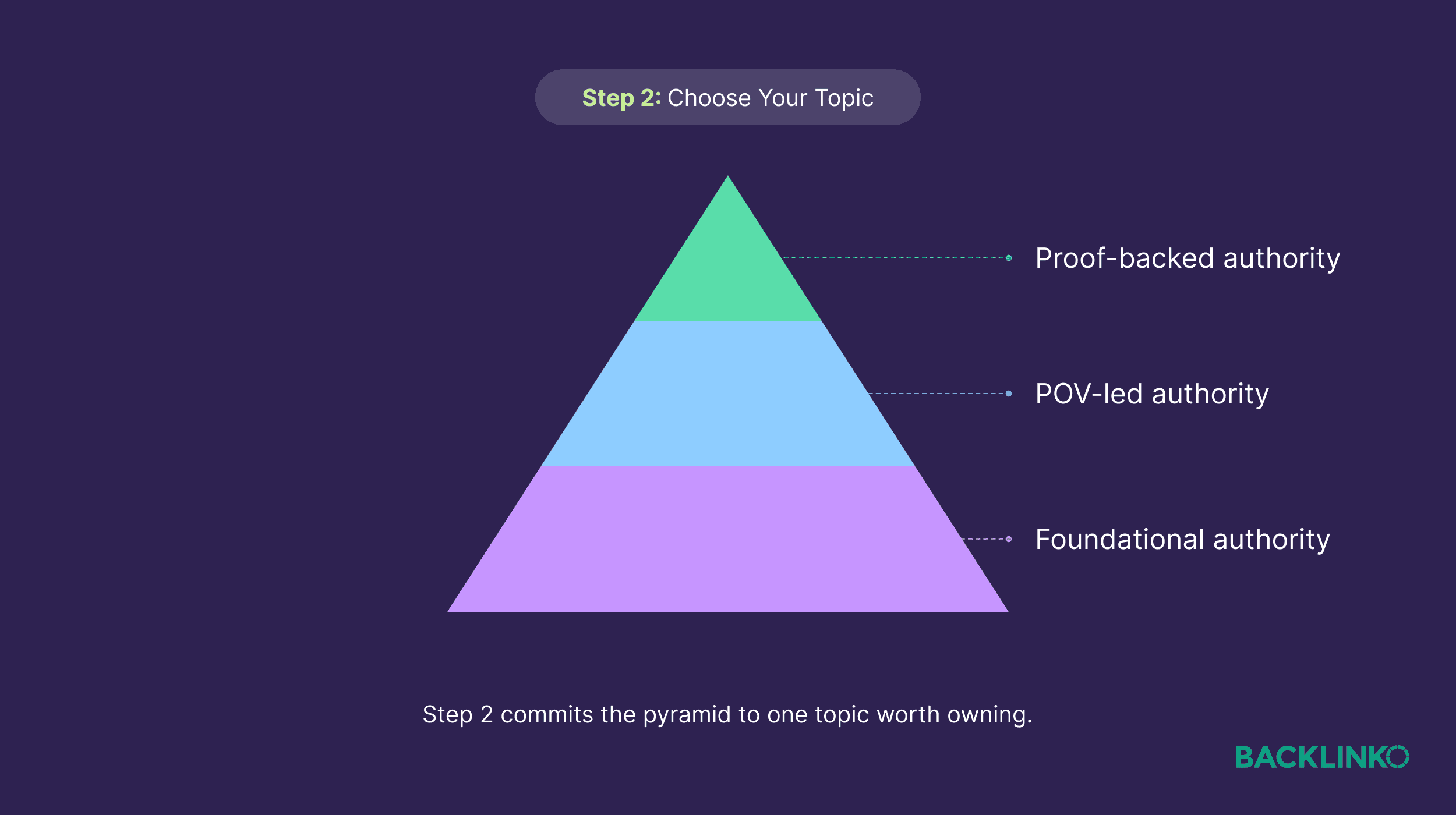
The traditional approach to SEO—creating comprehensive content coverage—is no longer sufficient. Today, search engines and LLMs seek a "clear position" on a topic supported by external evidence. The Topical Authority Pyramid categorizes this into three vital layers:
- Foundational Authority: The bedrock of your on-site content, ensuring that your core pages are structured to signal deep expertise.
- Point of View (POV): A specific, consistent angle that differentiates your brand from the "me-too" competitors.
- Proof Systems: The external validation, data, and citations that verify your expertise to both users and algorithms.
Step 1: Auditing Your Topic Reputation
Your brand already has a topical reputation, whether or not you have cultivated it intentionally. The first step in building authority is to audit your existing standing.
The On-Site Reality Check
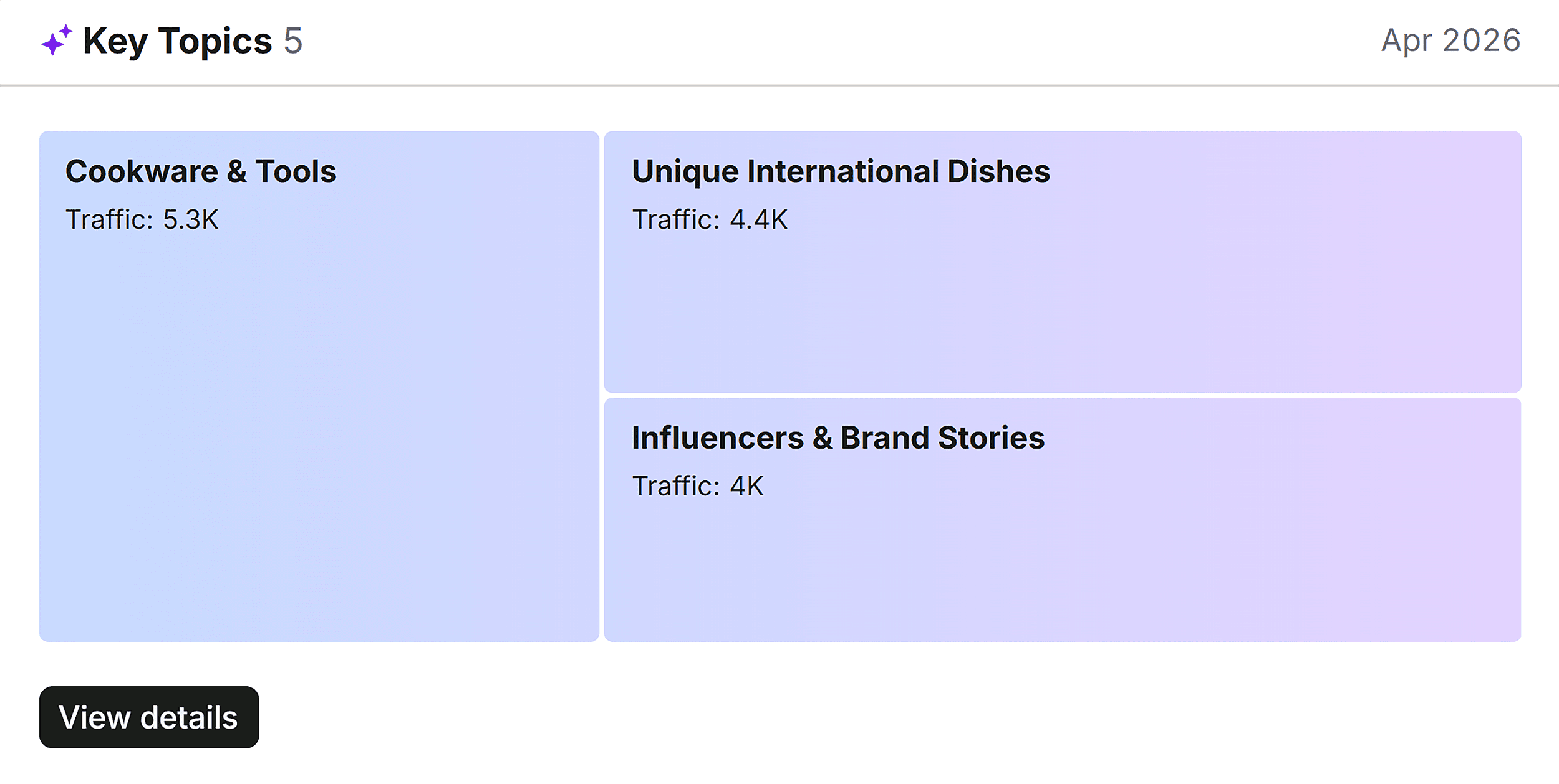
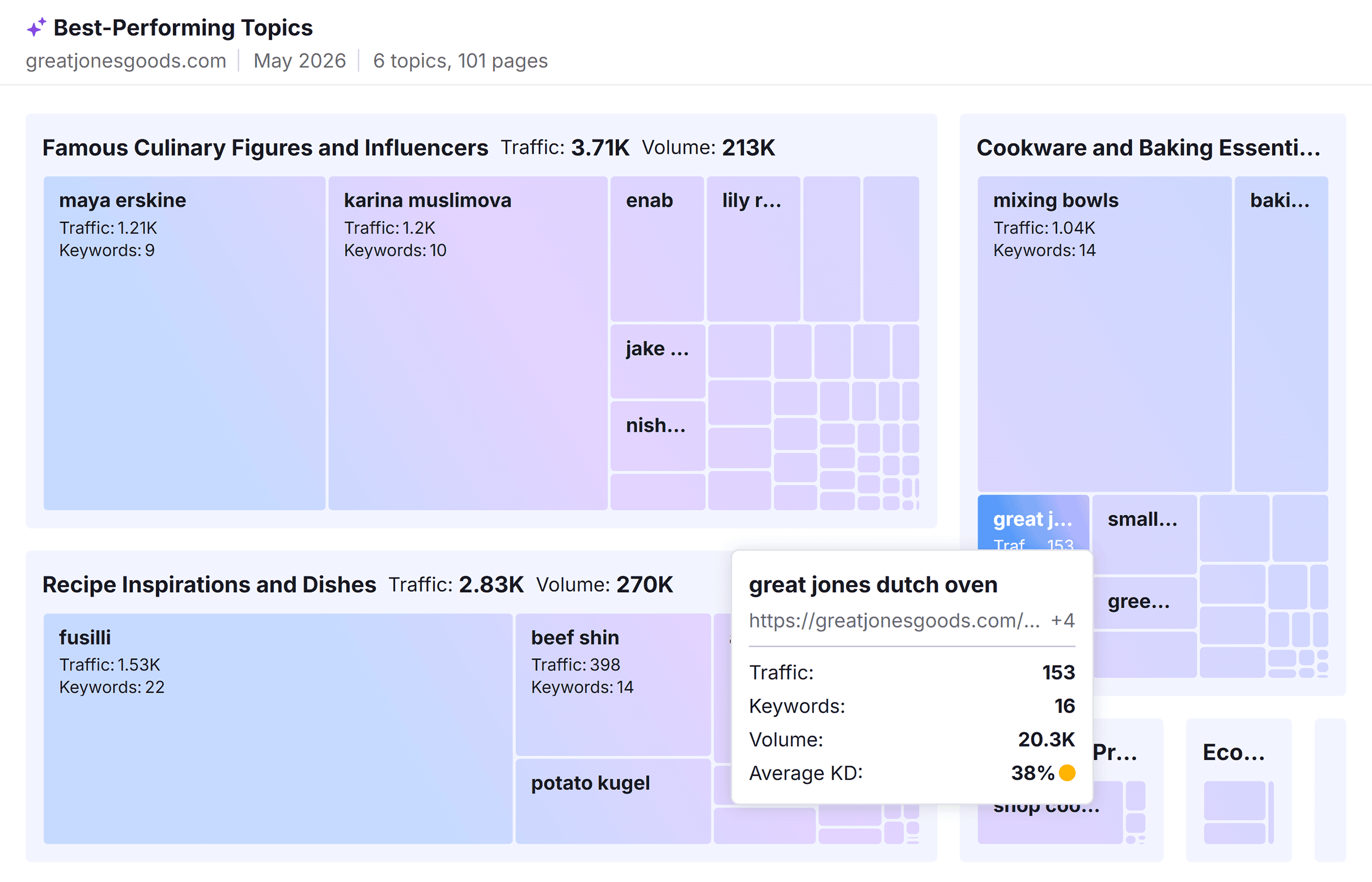
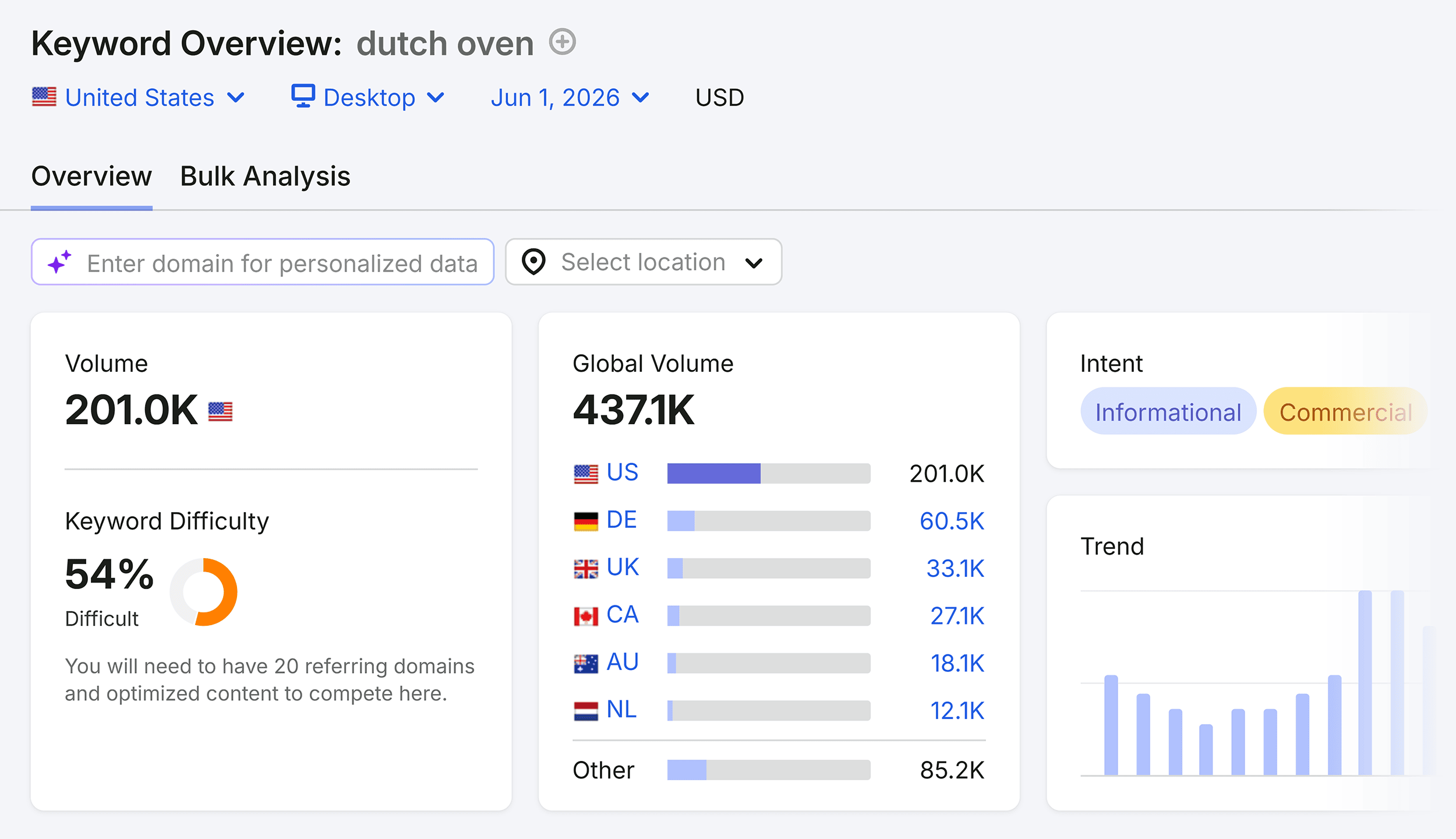
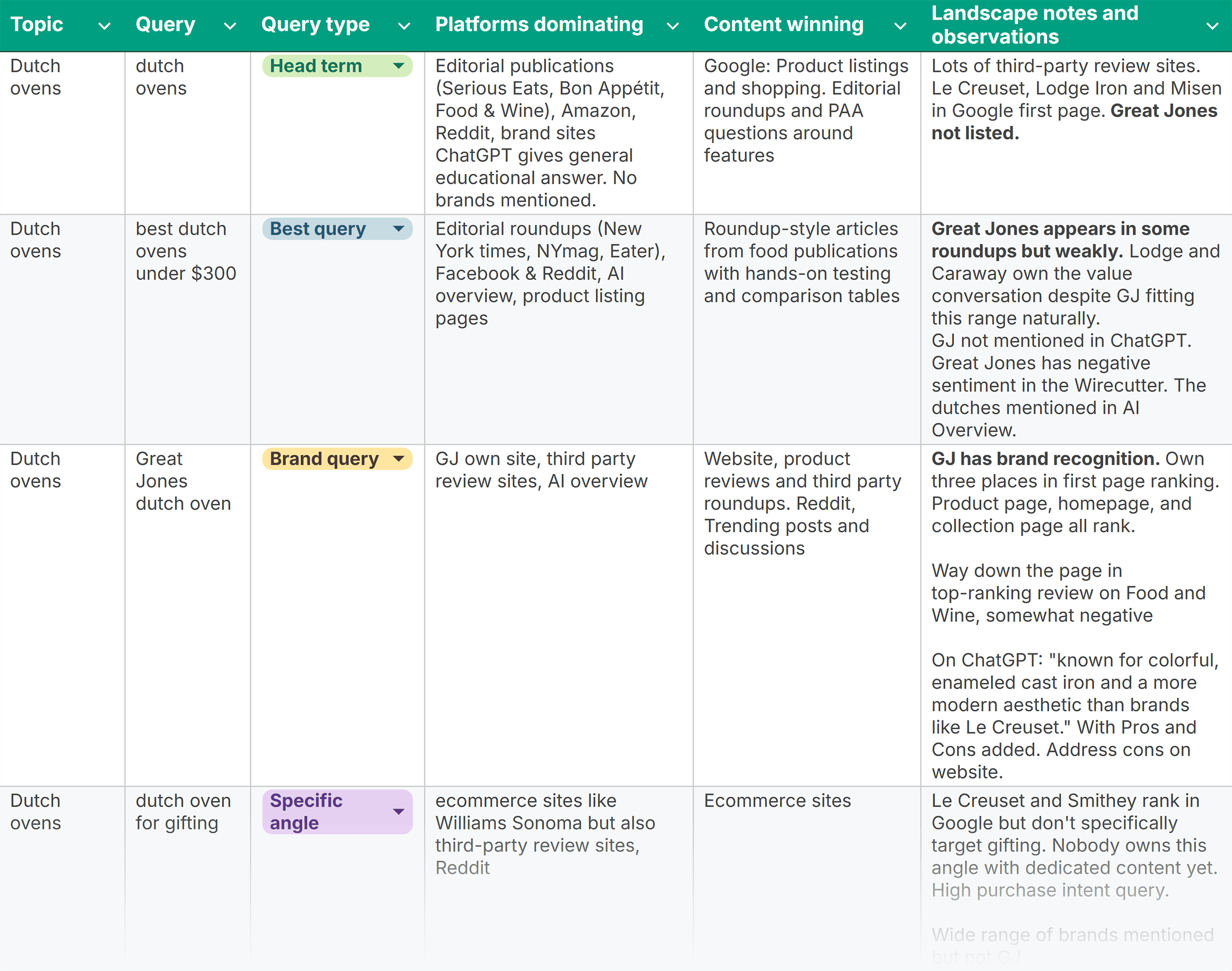
Using tools like Semrush’s Organic Rankings, brands can see their strongest current associations. When we analyzed Great Jones, their primary search visibility was tied to "recipes" and "celebrity chefs." While these are positive attributes, they are not directly tied to their core product: the Dutch oven. Despite this product having a massive monthly search volume of over 200,000, the brand remained uncoupled from the category in the eyes of search engines.
The Off-Site Audit
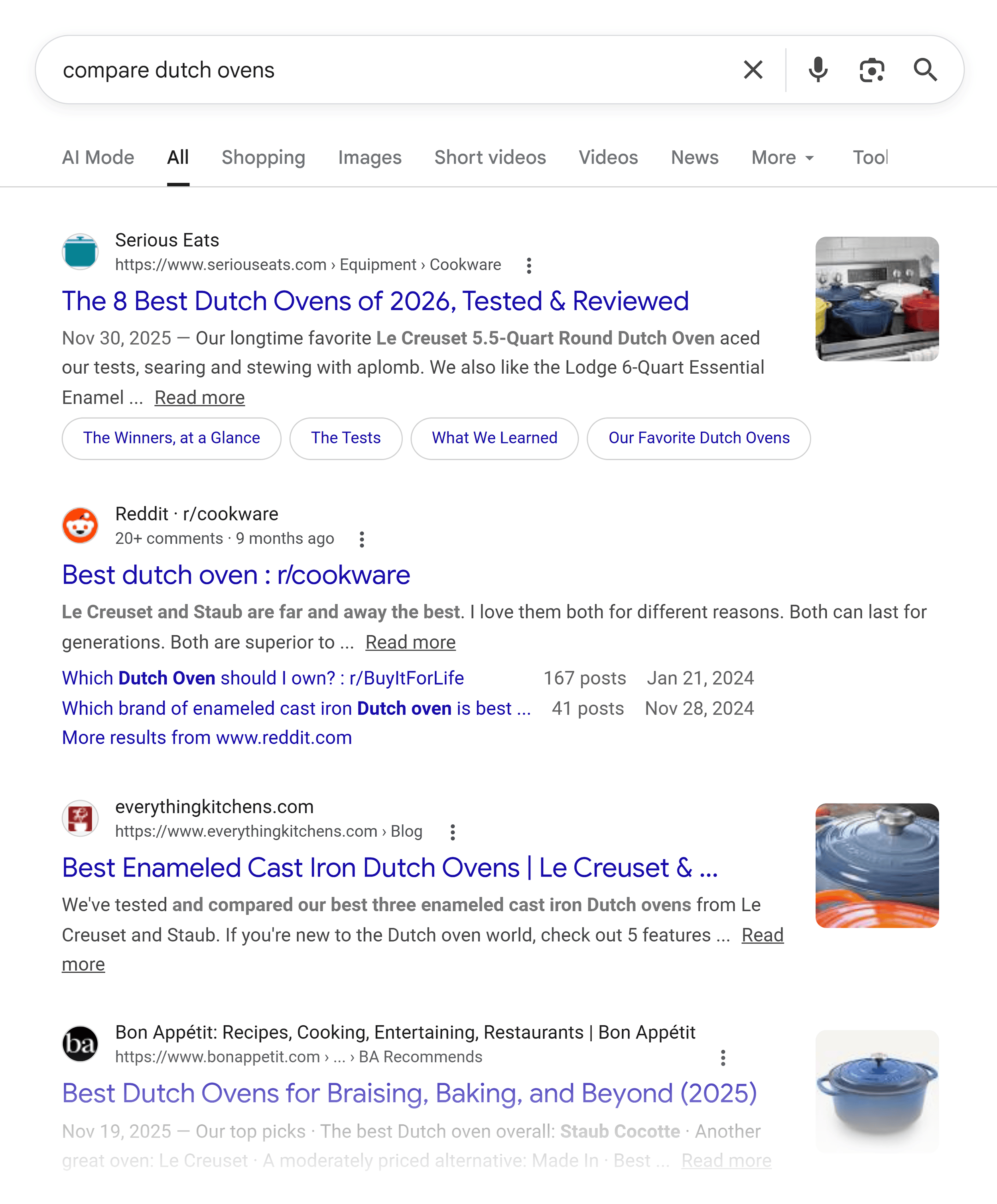
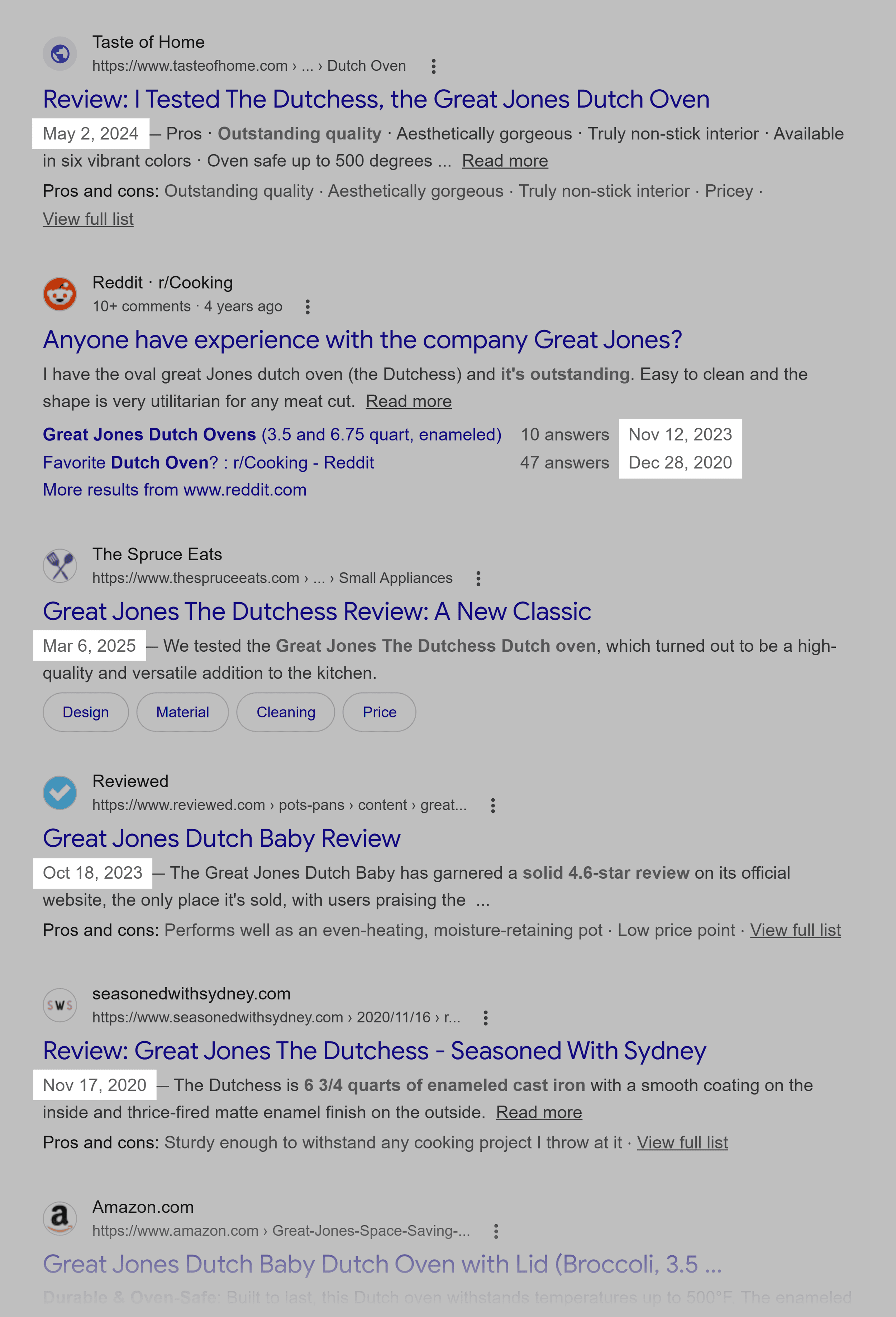
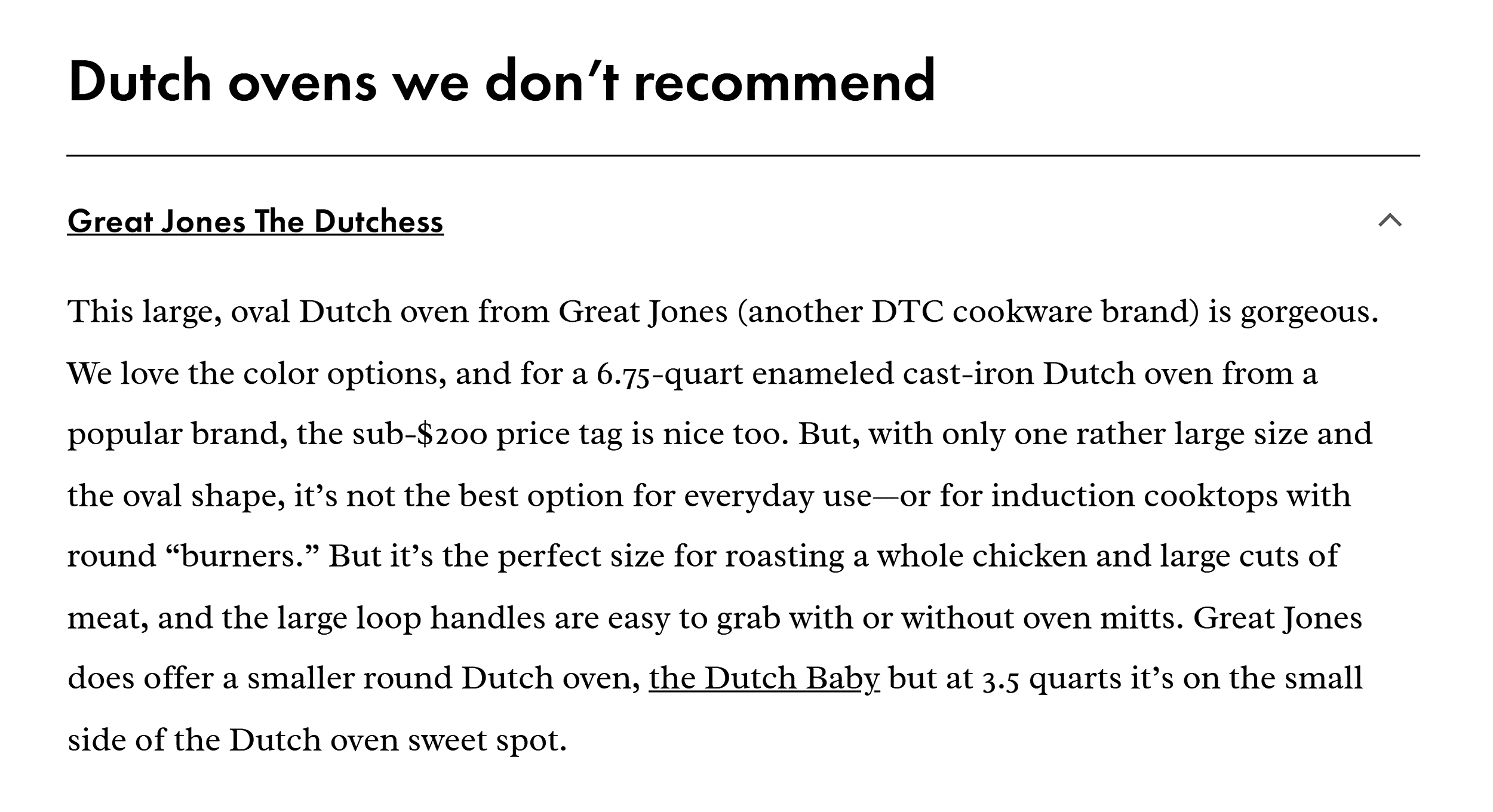
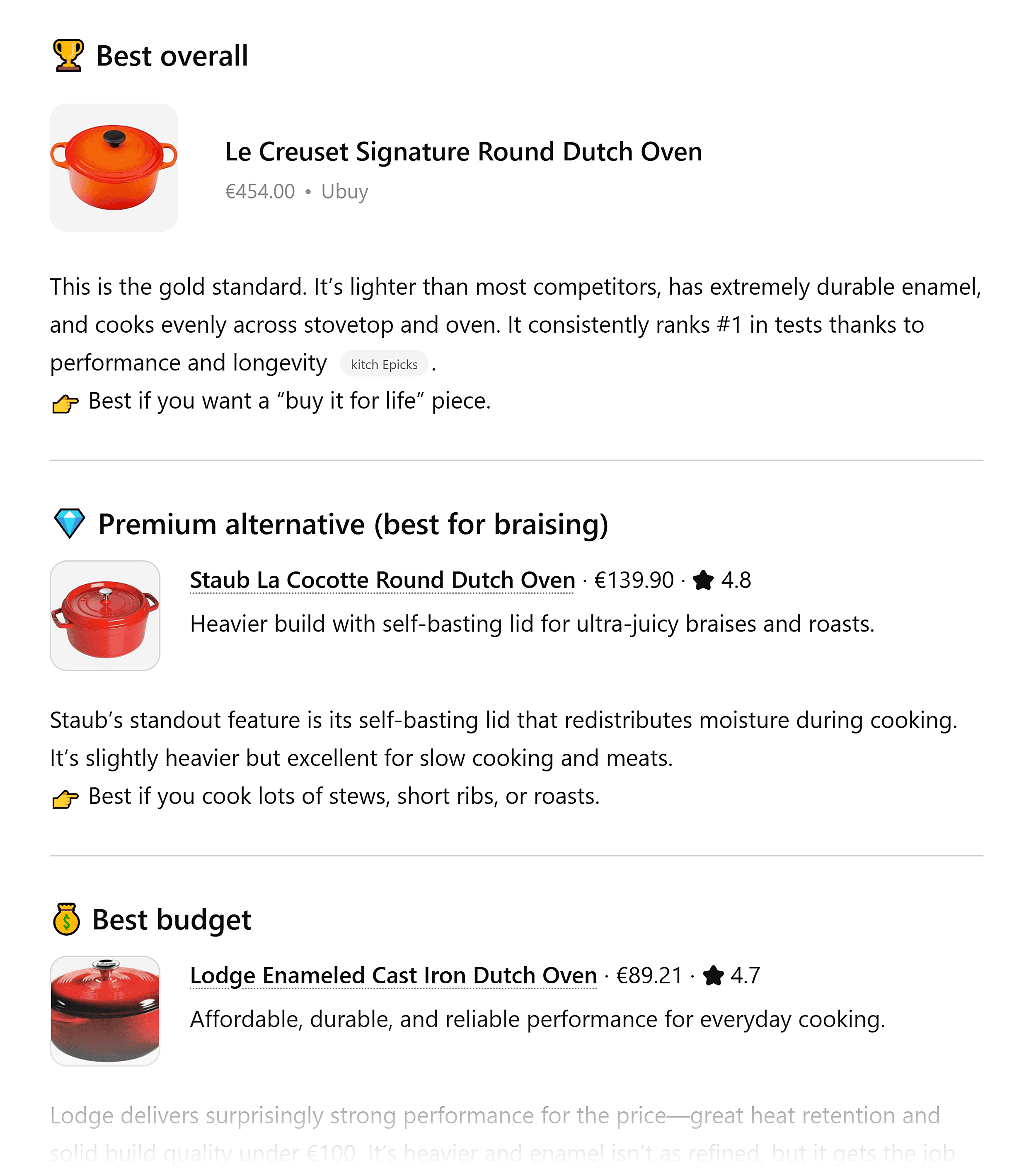
The most significant gap for most brands—and the one AI systems weigh most heavily—is third-party coverage. A review of the search results for "best Dutch ovens" reveals that top-ranking content is often years old. Furthermore, the sentiment is inconsistent. In Bon Appétit roundups, for example, Great Jones was once relegated to a "Dutch ovens we don’t recommend" category, creating a negative signal that lingers in the training data of LLMs.
Step 2: Choosing Your Battleground
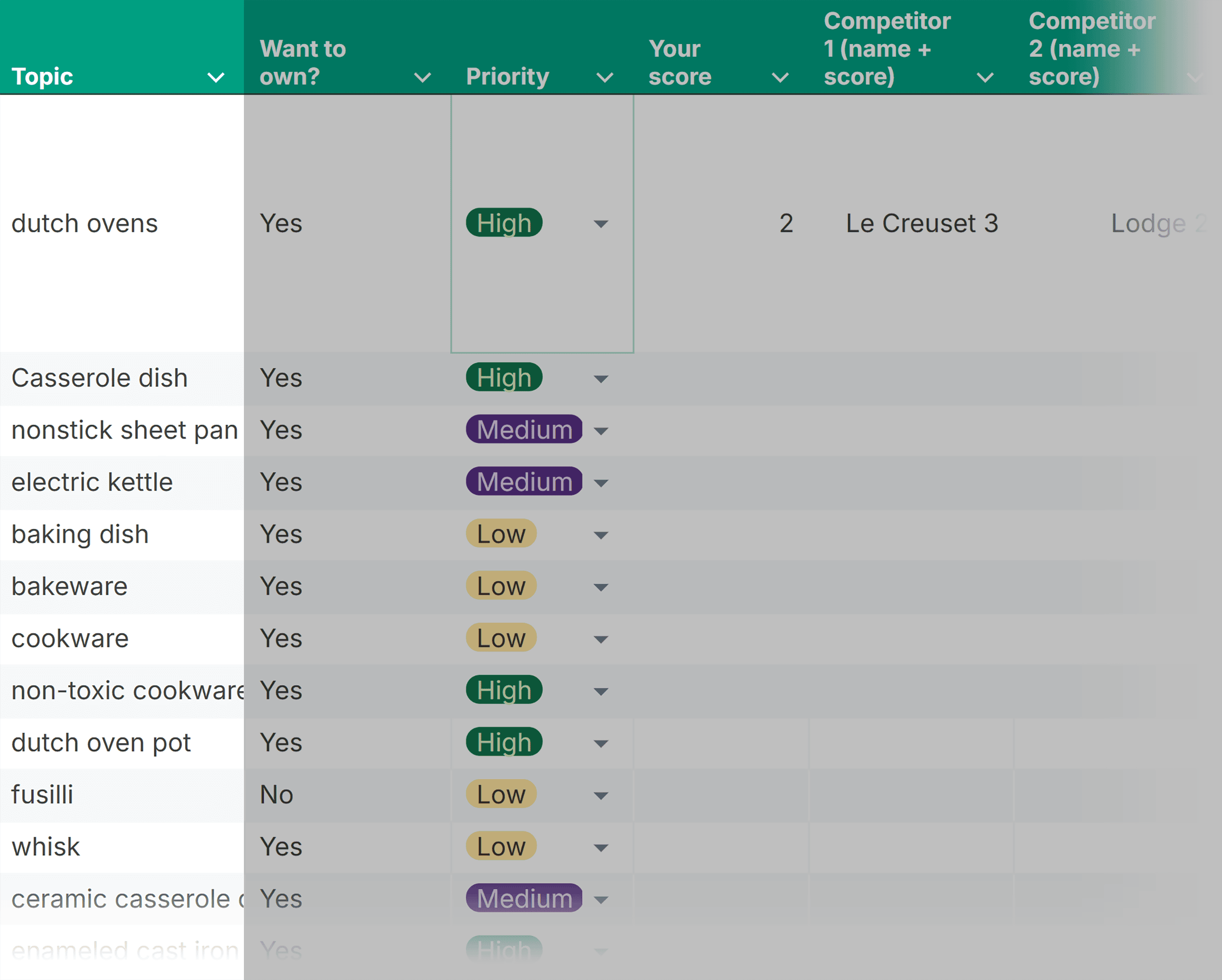
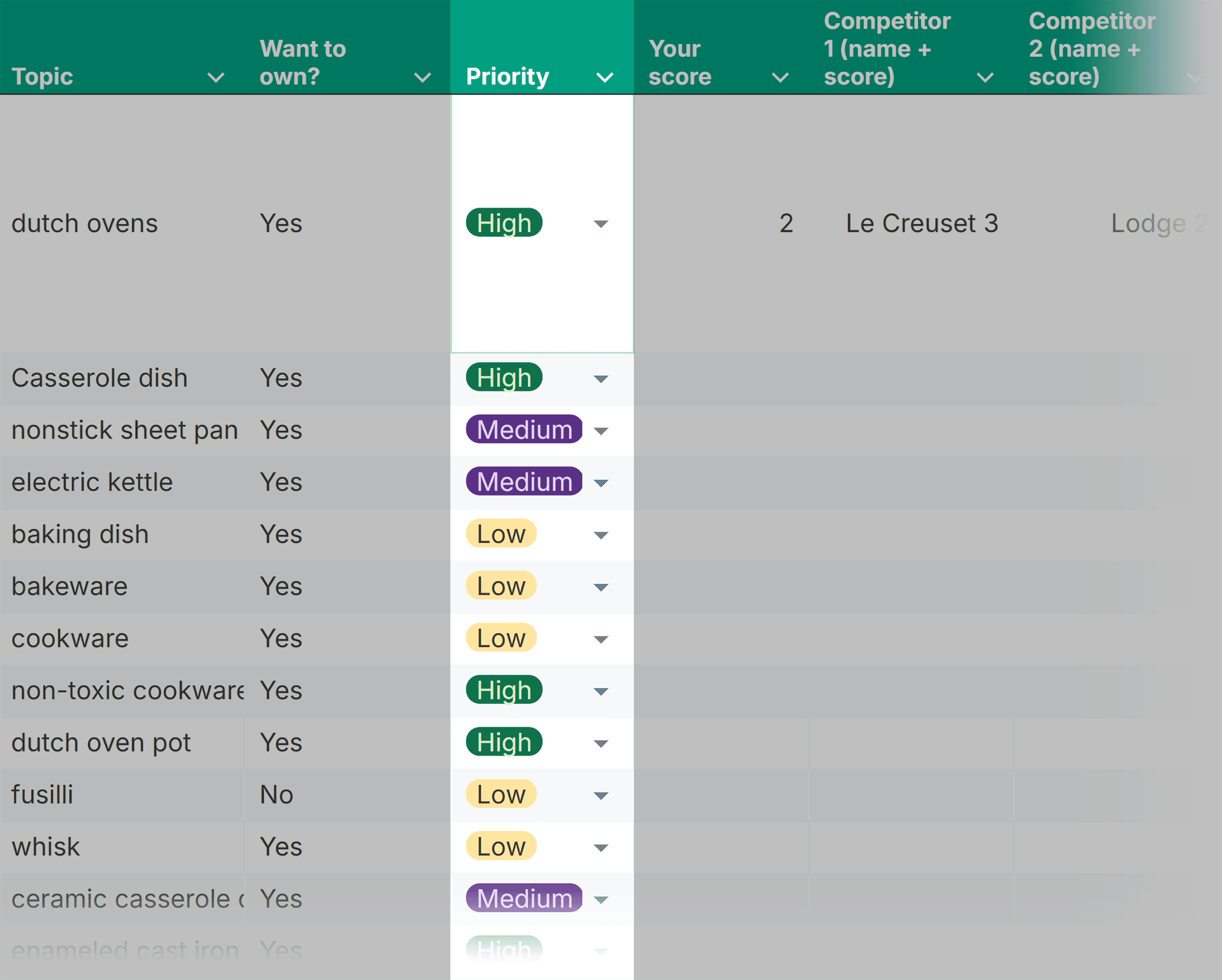
You cannot build authority on every topic simultaneously. You must prioritize based on three factors:
- Revenue Impact: Does the topic drive actual sales?
- Competitive Landscape: Is the space already saturated, or is there an "open" angle?
- Urgency: Is there a seasonal or immediate need for the content?
By narrowing the focus to 10–15 topics and scoring them based on these criteria, you can identify high-priority areas where you have a "winnable position."
Step 3: Defining Your Point of View (POV)
Your POV is the unique angle you own within your niche. It is the differentiator that makes your brand the obvious choice for a specific user.
For Great Jones, while "design" is an existing strength, "gifting" represents an under-served opportunity. People are already looking for Dutch ovens as wedding or house-warming gifts. If the brand can anchor its messaging to the concept of the "ultimate, display-worthy gift," they can claim that specific mental real estate.
A strong POV is best tested by writing it as a single, punchy sentence. If you cannot summarize your authority angle in one sentence, your positioning is likely too diffuse.
Step 4: Mapping the Proof Architecture
A POV without proof is merely a claim. To build a reputation that lasts, you need evidence at every stage of the buyer’s journey:
- Awareness: Industry studies and customer statistics.
- Consideration: Expert endorsements and certifications.
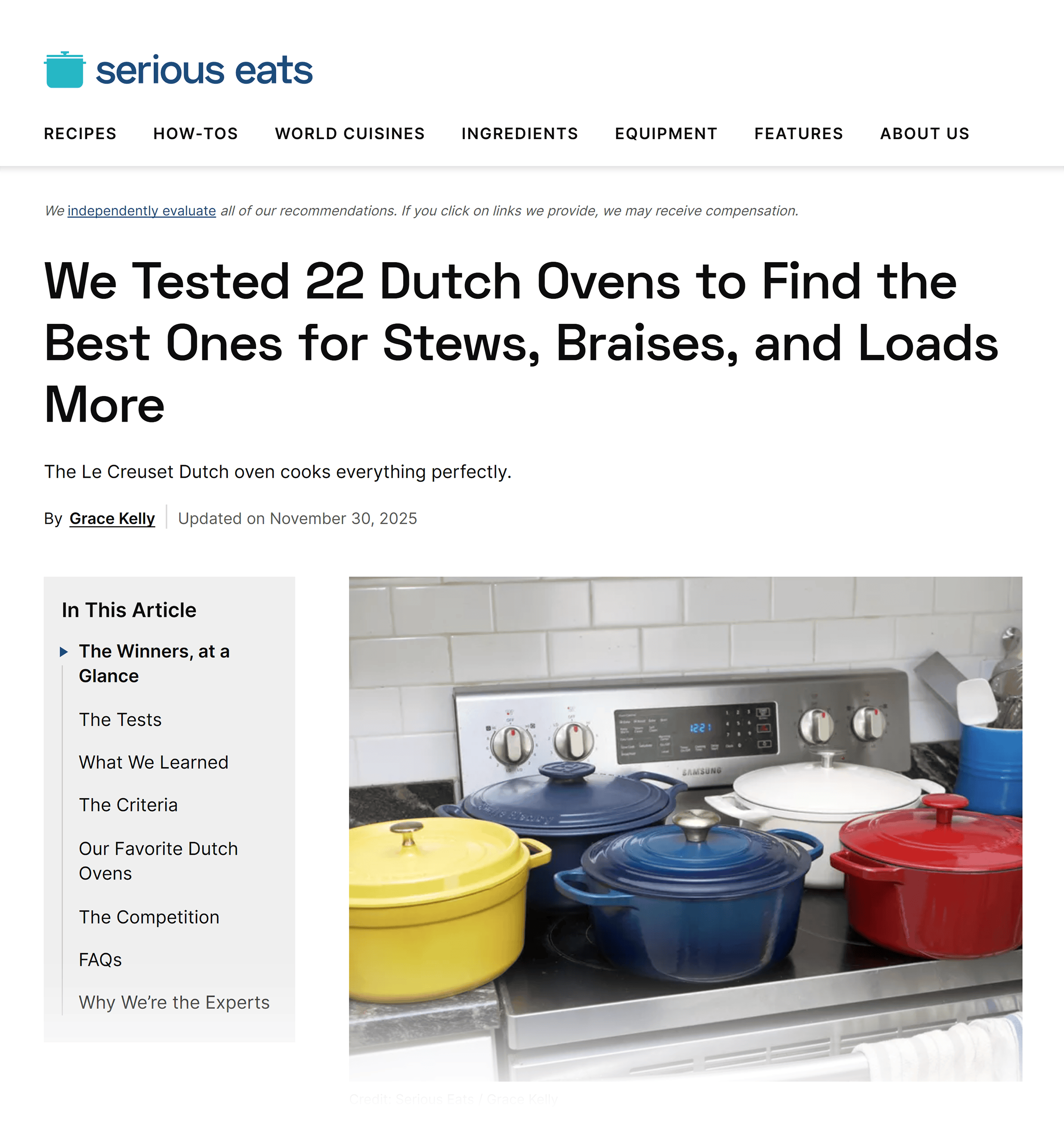
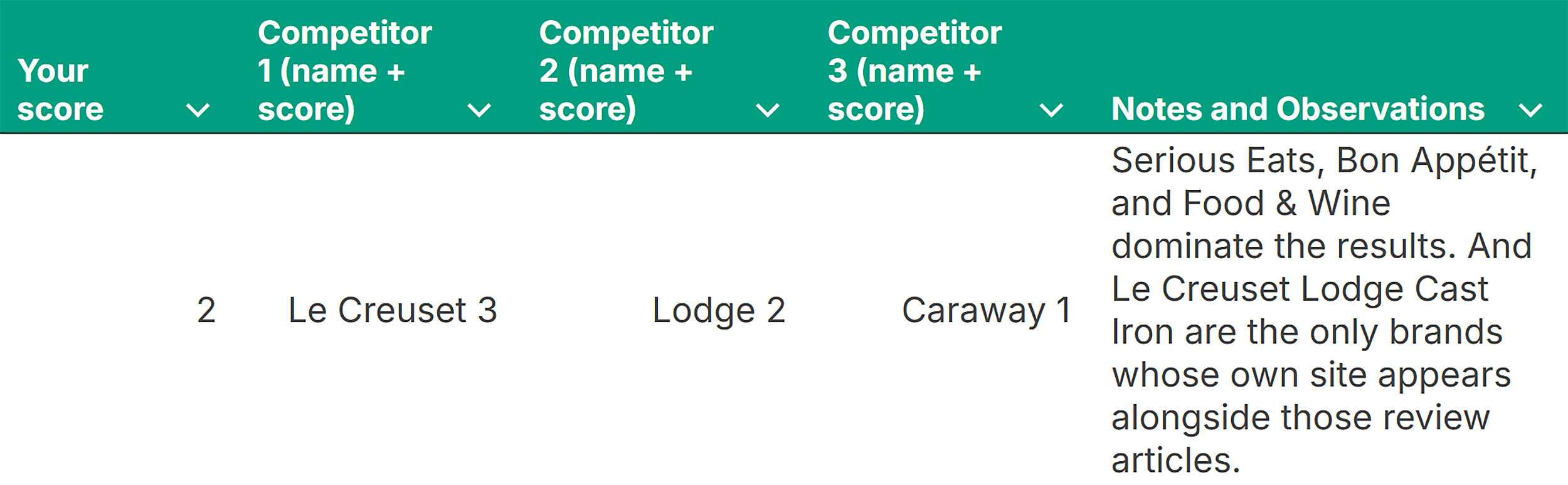
- Comparison: Head-to-head testing and analyst rankings.
- Evaluation: Implementation examples and usage data.
- Decision: Verified reviews and repeat purchase rates.
By mapping these assets, you create a blueprint for the content you need to produce.
Step 5: Constructing the On-Site Foundation
The "Hub and Spoke" model remains the gold standard for structural SEO. You need a central hub page for your POV (e.g., a "Dutch Oven Gifting Guide") that links out to supporting pages (e.g., "Best Gift Baskets," "Cookware Care for Beginners").
This structure must be optimized for both readers and machines. Using the "Inverted Pyramid" approach—placing the most critical information at the top—ensures that when an LLM scrapes your page, it captures the essential signal immediately.
Step 6: Creating an Off-Site Proof System
This is the most critical shift in modern SEO. To win in AI search, your proof must exist outside your own domain. You need to create "Signature Proof Points"—original stories or data-driven insights that others want to cite.
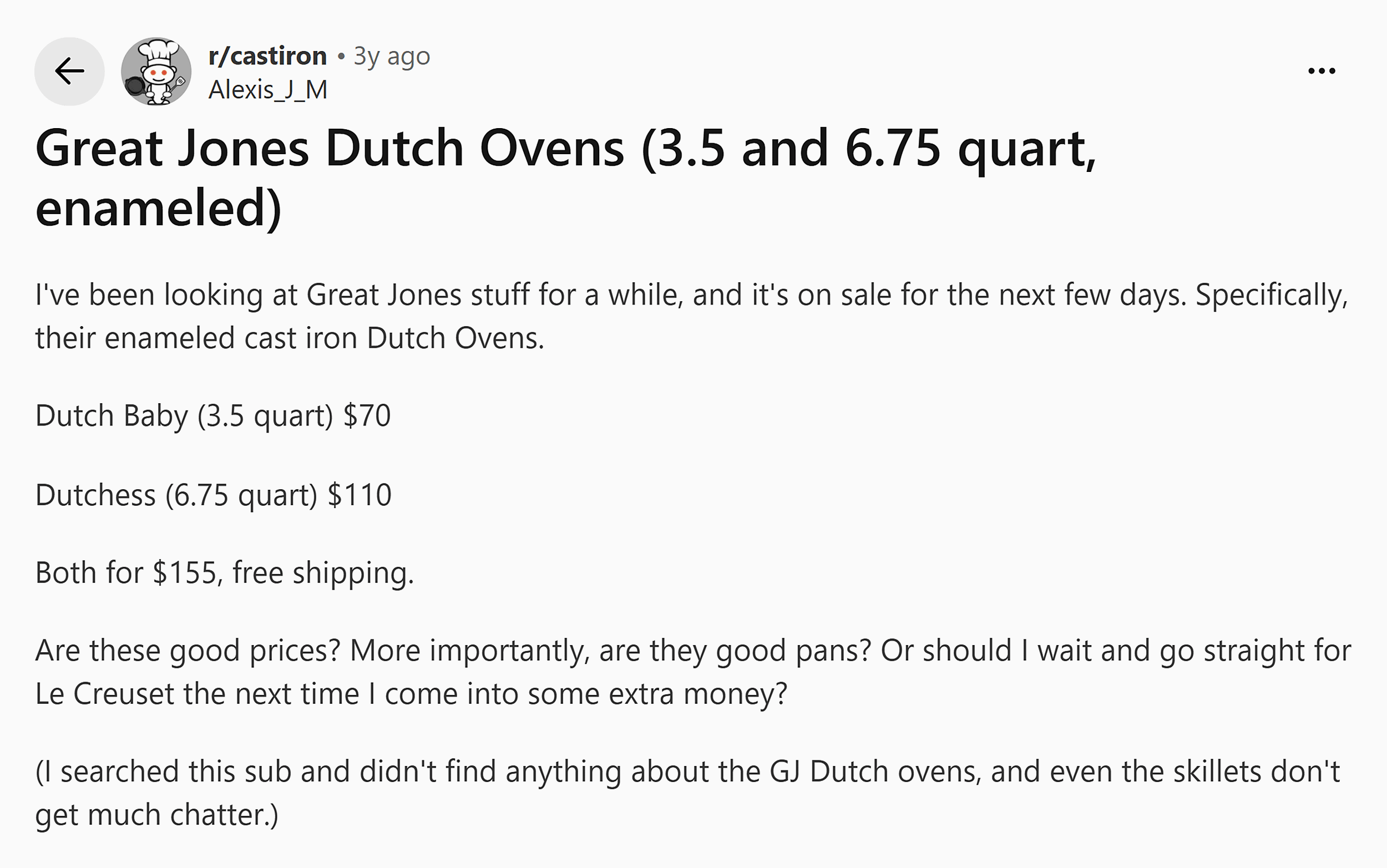
If Great Jones releases a report on "The Surge in Dutch Oven Gifting During Mother’s Day," that report becomes a press pitch, a YouTube video, and a Reddit thread starter. By distributing one core insight across these channels, the brand creates a consistent, verifiable pattern of authority.
Step 7: Tracking Progress and Iterating
Topical authority is not a destination; it is a trajectory. Using the "Progress Tracker" method, you should monitor your search footprint at 30, 60, and 90-day intervals.
- 30 Days: Check for increased impressions on targeted non-brand queries.
- 60 Days: Monitor if your POV language is beginning to appear in third-party mentions or reviews.
- 90 Days: Evaluate if your brand is being cited as a "default" in LLM responses or niche community discussions.
The Bottom Line
Great Jones is a case study in why digital excellence requires more than just high-quality products. In the age of AI, authority is earned through the persistent, systematic association of your brand with specific, high-value topics.
By building a robust, three-tiered pyramid—anchored by a strong POV and reinforced by multi-channel proof—any brand can stop being a "well-reviewed product" and start being an "authority." The brands that win the future will be those that realize that in the AI era, you don’t just win search results; you win the association game.