For over a decade, the WordPress ecosystem operated on a simple, almost gravitational logic: if you built a useful tool and released it into the repository, users would come, the community would champion it, and growth would follow. It was the era of the "rising tide," where the sheer momentum of the platform’s market share ensured that almost every well-intentioned plugin or theme could find its niche.
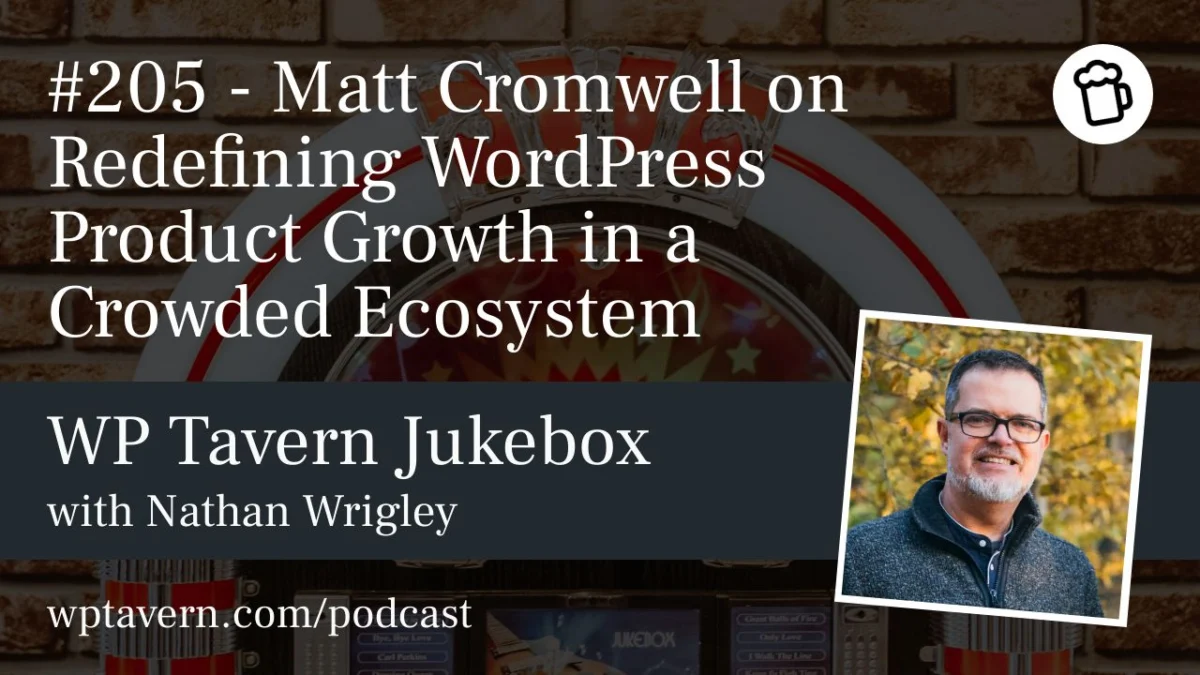
However, as the ecosystem matures in 2026, that golden age of organic discovery has given way to a more complex, competitive landscape. Matt Cromwell, a veteran of the WordPress product space and co-founder of GiveWP, believes that the era of "build it and they will come" is officially over. In a recent interview on the WP Tavern Jukebox podcast, Cromwell outlined his new venture, Roots & Fruit, and explained why the future of WordPress success depends less on lines of code and more on the intentional, strategic management of the customer journey.
Main Facts: The New Reality of WordPress Product Growth
The WordPress ecosystem is currently navigating a period of significant flux. While the platform remains a dominant force on the web, product makers are facing tightening budgets, increased market saturation, and a shift in how users perceive "WordPress products."
Cromwell, who successfully scaled GiveWP before overseeing a portfolio of products under the StellarWP umbrella, notes that the barrier to entry has shifted. It is no longer enough to be a talented developer. Today’s market demands that founders act as product leaders, focusing on branding, customer experience (CX), and disciplined marketing strategies.
His new agency, Roots & Fruit, is designed to function as a "fractional Chief Growth Officer" service. The firm aims to bridge the gap between technical excellence and commercial viability, helping solo founders and established product teams navigate the crowded marketplace by moving away from scattered, reactive growth tactics toward a process-driven approach.
A Chronological Perspective: From Plugin Launch to Acquisition
Cromwell’s trajectory mirrors the evolution of the WordPress economy itself. When he first launched GiveWP, the environment was different. The plugin directory was a primary engine for discovery, and the community was smaller, more tight-knit, and arguably less crowded.
- The Early Days (2015–2020): During the growth phase of GiveWP, the focus was on solving specific problems for nonprofits and developers. The team benefited from the general growth of the web and the specific uptick in demand for digital donation tools, particularly during the COVID-19 pandemic.
- The Acquisition Era (2021–2025): Following the acquisition of GiveWP by Liquid Web, Cromwell joined the leadership team of StellarWP. This provided him with a bird’s-eye view of how various products—ranging from themes to utility plugins—respond to market pressure. He observed firsthand the "COVID-19 hangover," where the massive surge in digital adoption leveled off, forcing companies to move beyond reliance on platform growth and focus on retention and efficiency.
- The Pivot (2025–Present): After exiting his leadership role in the fall of 2025, Cromwell spent time analyzing the state of the market. He realized that the "itch to build" remained, but the market dynamics had changed. This realization led to the birth of Roots & Fruit, a consultancy focused on the "harvesting" phase of product life cycles—the stage where a product must transition from a code-based tool to a sustainable business.
Supporting Data: Why "Code" is No Longer the Product
One of the central arguments in Cromwell’s philosophy is the distinction between "code" and "product."
"You never once said, ‘I inspected the code to figure out if it was good enough,’" Cromwell noted during his conversation with host Nathan Wrigley. "All of the things that convinced you to use that product had nothing to do with the code at all."
The data supports this transition. With the advent of AI-assisted development, the ability to generate functional code has been commoditized. If a developer can write a plugin to solve a niche problem, AI tools can now help a marketer or a non-technical founder do the same. Consequently, the value proposition has shifted away from the utility of the code toward:
- Trust-building: The customer’s perception of the brand’s reliability.
- Onboarding: The friction-less path from installation to the first "Aha!" moment.
- Customer Support: The human element that differentiates a generic tool from a professional solution.
- Market Positioning: Clearly defining why a solution exists in a market where six similar AI-driven plugins might launch in a single week.
Official Perspectives: The Role of AI and Ecosystem Evolution
When asked about the future of WordPress in the face of emerging technologies, Cromwell remains cautiously optimistic. He points out that while AI has increased the noise in the repository, it has also provided the infrastructure for WordPress to remain relevant.
"I do think the way in which WordPress Core has been tackling AI… is making sure that WordPress itself as a platform has not only a future, but a lucrative future," Cromwell stated. He argues that because WordPress is one of the most documented open-source projects in history, AI models have an intimate understanding of its codebase. This creates a symbiotic relationship where the platform becomes easier to build with, ironically making the market even more competitive for individual product makers.
The "threat" of saturation, according to Cromwell, is only a threat to those who rely on "hope-based marketing"—the belief that simply existing in the directory is a strategy. For those who view their product through a customer-centric lens, the saturation is merely a signal that the demand for web solutions is higher than ever.
Implications for Future Developers
The path forward for WordPress product businesses is characterized by three pillars: process, diligence, and prioritization.
1. The Death of the "Scattergun" Approach
Many developers fall into the trap of trying every growth hack simultaneously—posting on Reddit, running LinkedIn ads, writing blog posts, and engaging in social media—without a coherent strategy. Cromwell suggests that the most successful businesses are those that identify the one or two channels that actually drive value and focus their resources there, rather than diluting their energy across every possible platform.
2. Prioritization as a Competitive Advantage
In a world of infinite features and endless marketing channels, the ability to say "no" is a superpower. Founders must be willing to sacrifice "cool" technical features that don’t directly serve the customer’s desired outcome in favor of refining the parts of the product that drive retention and trust.
3. The Shift to "Fractional" Leadership
The launch of Roots & Fruit highlights a trend toward professionalized management in the WordPress space. As products grow, founders often find themselves trapped in a cycle of managing HR, support, development, and marketing. By hiring fractional C-level support—like a Chief Growth Officer—founders can offload the strategic side of the business, allowing them to return to the parts of the work that actually energize them.
Conclusion
The WordPress ecosystem is moving out of its "wild west" phase and into a period of professional consolidation. The winners of the next decade will not necessarily be the ones with the most lines of code, but the ones who master the art of the customer journey.
Matt Cromwell’s transition from a product founder to a growth strategist underscores a broader shift in the community: the realization that while code is the foundation, the business is the structure built upon it. For those willing to put down the "scattergun" and adopt a disciplined, customer-first approach, there is still plenty of fruit to be harvested in the WordPress garden.