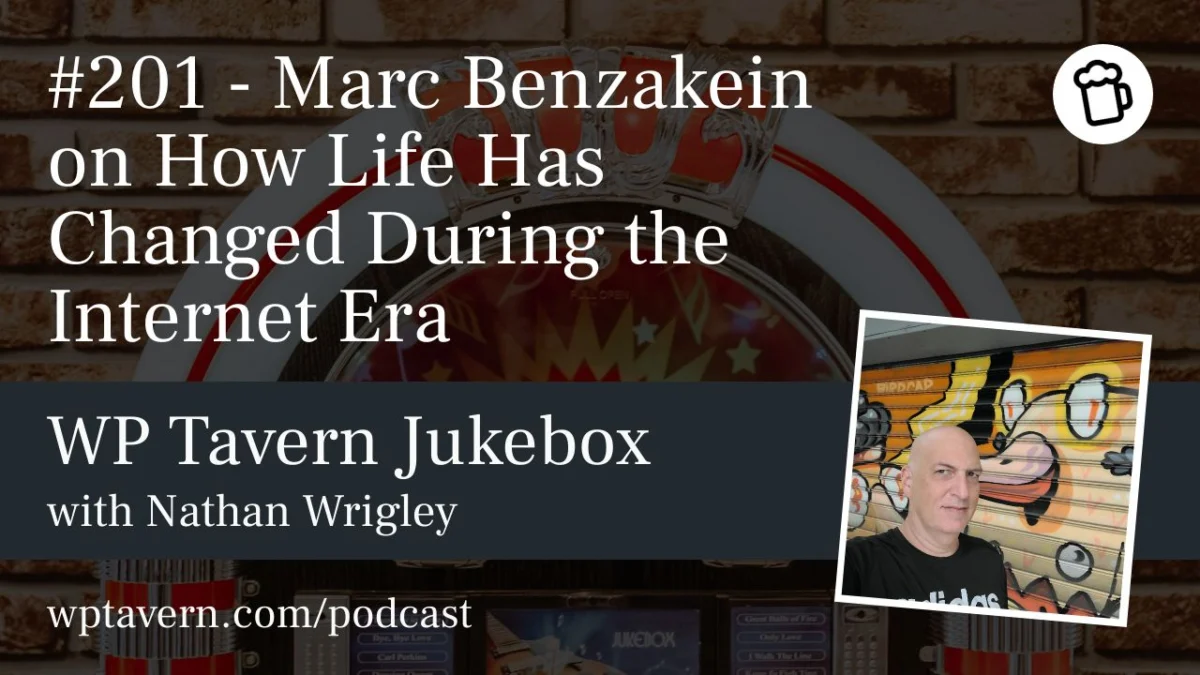
The story of the internet is not merely one of fiber optics, high-speed processors, and cloud computing. It is a deeply human narrative—a chronicle of how a niche, hobbyist playground of the mid-1990s transformed into an invisible, ubiquitous utility that now underpins the entirety of modern civilization.
In a recent episode of the Jukebox Podcast from WP Tavern, host Nathan Wrigley sat down with industry veteran Marc Benzakein to unpack this profound societal shift. Moving away from the typical technical discourse on WordPress plugins and themes, the conversation served as a meditative "walk down memory lane," exploring how the internet has reshaped our work, our attention spans, and our social fabric.
The Early Days: Modems, BBS, and the "Wild West"
To understand the current digital landscape, one must look back to the mid-1990s. For Marc Benzakein, this era was defined by curiosity, low bandwidth, and a distinct lack of user-friendly interfaces.
"I got involved as a user with a company called Netcom," Benzakein recalls. "It didn’t have an interface to guide you. You had to use tools like Gopher and conduct real research just to navigate."
In these formative years, internet access was an intentional, manual act. Users didn’t simply "connect"—they initiated a handshake over telephone lines. Benzakein’s early technical experience included managing a Bulletin Board System (BBS) from his apartment, utilizing a 14.4K modem—a speed considered cutting-edge at the time.
"I remember the sound of the modem," Benzakein notes. "I would drop whatever I was doing just to see who was connecting to my system. It felt like being part of an elite group of nerds. We didn’t have the foresight to know it would become what it is today; it was a hobby, much like being a Ham radio operator."
Chronology of Connectivity: From Snail Mail to Instant Access
The transition from the mid-90s to the present day can be viewed through several distinct technological milestones:
- 1995–1996: The era of Gopher, text-based interfaces, and the rise of early ISPs like Netcom and AOL. The internet was a destination, not a constant state of being.
- The Late 90s/Early 2000s: The shift toward ISDN and the birth of DSL. This period marked the transition from "dialing in" to "always-on" broadband, fundamentally changing how households interacted with their computers.
- The Mid-2000s: The rise of social networks and the "Web 2.0" movement. The internet ceased to be just a repository for information and became a platform for constant communication and commerce.
- The 2010s to Present: The era of the "pocket computer." With the proliferation of smartphones, the internet moved from the desktop to the body, becoming an invisible utility that users now expect to be present everywhere, from rural trails to high-speed trains.
Supporting Data: The Cost of Efficiency
A recurring theme in the discourse between Wrigley and Benzakein is the paradox of productivity. Technology was marketed as a tool to liberate humanity from drudgery—to do in two hours what previously took eight. However, the reality has been quite different.
"I learned very quickly that nobody was working a two-hour day," Benzakein observes. "Instead, people brought their work home, extending their days to 14 or 16 hours. We have all this power at our fingertips, but we haven’t developed the societal discipline to know when to stop."
This observation aligns with modern data on "always-on" culture. As internet speeds increased and connectivity became mobile, the boundary between professional and private life dissolved. This has led to what many psychologists call "digital fatigue," where the expectation of instant availability creates a state of constant, low-level anxiety.
The Shift Toward Digital Minimalism
One of the most compelling insights from the discussion is the emerging counter-movement among younger generations. While Millennials and Gen X were the "adopters" who grew up alongside the internet, Gen Z is increasingly exhibiting a form of "tech skepticism."
Benzakein highlights his own son’s generation as a prime example. "He hates everything that has to do with technology. He prefers hiking, reading physical books, and even chooses phone calls over text messages because they feel more intentional."
This trend toward digital minimalism—often evidenced by the resurgence of analog media like vinyl records and the deletion of social media apps—suggests that the "shiny new object" syndrome of the early 2000s is losing its luster. The novelty has worn off, and for the next generation, the internet is no longer a miracle; it is merely a tool, and one they are increasingly learning to put down.
Implications for the Future: AI and the "Level Playing Field"
As we stand at the threshold of the AI era, the conversation shifts to the responsibility of stewardship. The internet was once heralded as the "great leveler," a place where a small business could compete with a global conglomerate on an equal footing. While algorithmic dominance by giants like Amazon and Google has complicated that ideal, the potential for democratization remains.
"The mission of the internet should always be to keep the playing field level," Benzakein asserts. "It is still the greatest opportunity we have to provide equal access to knowledge."
However, the rapid acceleration of AI presents new challenges. If the pace of technological change continues to outstrip our ability to process it, society risks losing the "breathing room" necessary for deep, slow thought. Reflecting on a "magic lantern" show he recently attended, Wrigley noted that the beauty of historical entertainment lay in its slowness—the gaps between slides that allowed the mind to wander and reflect.
Concluding Thoughts: Maintaining the Human Element
The evolution of the internet is an ongoing experiment. We have moved from the slow, manual connections of the BBS era to an age of instantaneous, AI-driven information retrieval. The implications are profound: we have gained the world in our pockets but have arguably lost the capacity for patience.
As Benzakein and Wrigley concluded, the key moving forward is not to reject technology, but to exercise the discipline to manage it. We must recognize that downtime, meditation, and offline social interaction are not "lost time"—they are essential to the human experience.
Whether we are nostalgic for the screech of a 14.4K modem or excited by the potential of neural networks, one truth remains: the internet is a reflection of us. If we want a more thoughtful, balanced digital future, the change will not come from an algorithm. It will come from our collective decision to occasionally disconnect, look up from our screens, and reclaim the analog life that still persists beneath the digital surface.
For more insights into the history of the web and the WordPress community, listeners are encouraged to tune into the Jukebox Podcast hosted by Nathan Wrigley.