In the expansive ecosystem of WordPress, few products command as much recognition—or stir as much debate—as Jetpack. Since its inception, the suite has aimed to bridge the gap between self-hosted WordPress sites and the streamlined, feature-rich infrastructure of WordPress.com. However, as the ecosystem has matured, so too has the criticism. Often described as a "jack of all trades, master of none," the plugin has frequently struggled with feature bloat and a fragmented user experience.
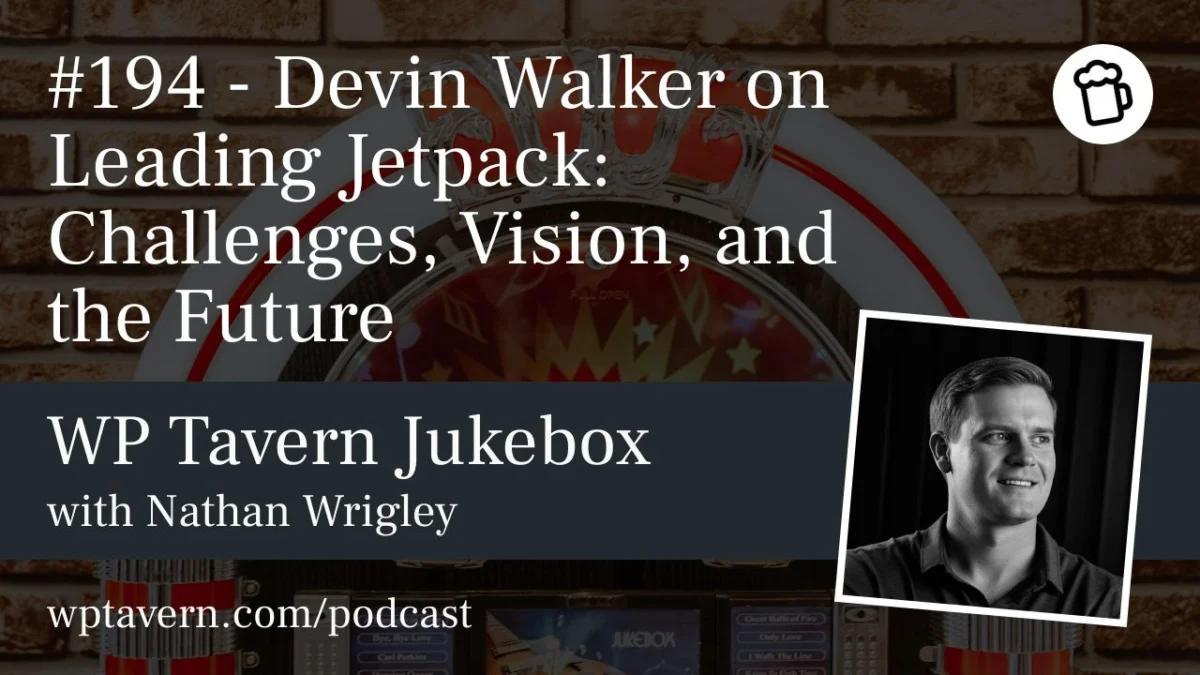
Now, a new chapter begins. Devin Walker, a seasoned veteran of the WordPress community and co-founder of the successful GiveWP platform, has stepped into the role of "Artistic Director" (essentially head of product) for Jetpack at Automattic. In a recent interview on the WP Tavern Jukebox Podcast, Walker outlined a bold, transformative vision: moving away from constant, disjointed feature expansion and toward a refined, cohesive, and user-centric experience.
The Man Behind the Wheel: Devin Walker’s Path to Automattic
Devin Walker is no stranger to the pressures of product development. With 16 years of experience in design, development, and marketing, his tenure as co-founder of GiveWP—which he scaled from 2014 until its acquisition by Liquid Web in 2021—serves as his foundational blueprint. During his time under the Liquid Web umbrella, Walker worked across a portfolio of industry-defining brands, including iThemes (now SolidWP), Kadence, LearnDash, and The Events Calendar.
When Matt Mullenweg, CEO of Automattic, approached Walker about leading Jetpack, the decision was not immediate. Walker admitted to weighing the prospect of starting another independent venture against the massive, high-stakes challenge of managing a product with 4 million active installations. Ultimately, the opportunity to shape the future of a product that touches so much of the WordPress web—and the chance to work within the unique culture of Automattic—tipped the scales.
"If I succeed at this, it can really open some other doors at Automattic," Walker noted during the interview. "I’m head of this product, which touches almost everything on Automattic as far as the WordPress business goes."
Chronology of a Leviathan: From Utility to Bloat
To understand the task ahead, one must appreciate the history of Jetpack. When it launched, it was revolutionary, providing essential services like site stats, backups, and social sharing to users who lacked the technical infrastructure to manage them. Over the last decade, however, the landscape of WordPress plugins has evolved dramatically.
Specialized competitors now dominate specific niches: Gravity Forms and WPForms lead in form building; UpdraftPlus and others lead in backups; and specialized SEO plugins have become standard for growth. Jetpack, meanwhile, remained a catch-all solution. As Walker acknowledges, the product eventually suffered from a lack of focus.
The Turning Point: A Shift in Organizational Philosophy
Walker’s arrival coincides with a broader restructuring at Automattic. The company is transitioning from a traditional, siloed product structure to a "matrix organization." In this new model, product teams are more fluid. Instead of isolated groups working solely on one Jetpack module, engineers and designers now collaborate across shared roadmaps. This allows for a more unified approach where Jetpack, WooCommerce, and WordPress.com can leverage shared architecture, leading to a more consistent experience for the end-user.
Supporting Data: The Scale of the Challenge
The sheer scale of Jetpack is both its greatest strength and its primary obstacle. With 4 million active installs, any change carries significant risk.
- The "4 Million" Constraint: Every update must be treated with extreme caution. The team cannot simply "move fast and break things" in the way a smaller startup might.
- The Review Metric: Walker has identified a clear goal: pushing the product’s review score consistently above 4.0 stars. He notes that the primary drivers of negative sentiment are performance issues and a perceived lack of support.
- Monthly Release Cycles: The team operates on a strict monthly cadence, balancing the pressure to innovate with the mandate to maintain absolute stability for a massive user base.
Official Responses and Strategic Pillars
Walker’s strategy for the coming months is defined by "finesse" rather than the addition of new features. He is championing a "Jobs to Be Done" framework, which forces the product team to view Jetpack through the lens of a user trying to solve a specific problem, rather than a list of technical capabilities.
1. Refinement and Consolidation
One of the most pressing issues is the current UI, which Walker frankly describes as a "Frankenstein" of various features. He intends to consolidate the disparate management menus, removing the "quirks" and "toggles" that currently confuse users.
2. The AI Frontier
Perhaps the most significant differentiator for the next 12 to 24 months is Artificial Intelligence. While currently subtle—used primarily for content excerpts and image generation—Walker views AI as the "glue" that will bind the disparate parts of Jetpack together.
"It’s not going to cost you really much at all, and it’s gonna be done in the WordPress way," Walker explained. He envisions AI not just as a content companion, but as a site-building assistant that can generate custom blocks on the fly, effectively acting as an extension of the WordPress core. By utilizing Automattic’s internal AI capabilities (such as those seen in their Telex experiments), Jetpack could soon allow users to generate specific site functionality through simple prompts, removing the need for dozens of individual plugins.
3. A Renewed Focus on Marketing
Walker acknowledges that for years, Jetpack relied on a "build it and they will come" mentality. In a crowded marketplace, this is no longer sufficient. He plans to significantly increase the marketing investment, ensuring that users not only understand that Jetpack exists, but why they should choose it over third-party alternatives.
Implications: A New Era for WordPress?
The implications of Walker’s appointment and his vision for Jetpack are significant for the broader WordPress community. If successful, Jetpack could evolve from a "Swiss Army knife" plugin that people install out of obligation into a streamlined, essential platform for site growth.
The "Apple-fication" of WordPress
Walker explicitly cites Apple’s design and integration philosophy as a north star. The goal is for Jetpack to make the WordPress experience feel cohesive, where features don’t feel like "slammed together" modules but rather a unified OS for the web.
Bridging the Gap
The move to require an OAuth connection for certain features, while historically divisive, is presented by Walker as a necessity for privacy and performance. By leveraging the cloud infrastructure of WordPress.com, Jetpack can offer enterprise-grade services to small business owners for free. The challenge, as Walker notes, is to communicate this value effectively to a user base that is often skeptical of Automattic’s influence.
Conclusion: A Twelve-Month Roadmap
As Walker settles into his role, the path forward is clear: simplify the interface, sharpen the focus on core utilities like forms and SEO, and lean heavily into AI as the future of site building.
The WordPress community will be watching closely. Whether Jetpack can truly shed its reputation for bloat and emerge as a lean, powerful engine for growth remains to be seen. However, with a leader who understands the developer experience as well as the customer’s pain points, the outlook is one of cautious optimism.
"Why don’t we have a check-in in 12 months and see where we’re at on this journey?" Walker suggested. In a year’s time, we will know if the leviathan has been successfully steered—or if the complexities of the platform proved too great to tame. For now, the "Artistic Director" is busy sketching out a more elegant future for the most important plugin in the WordPress ecosystem.