For years, the promise of Artificial Intelligence in the workplace has been defined by "chatting"—a reactive process where a human types a request, waits for a response, and then manually copies that output into their actual workflow. But a paradigm shift is underway. OpenAI’s Codex, a specialized desktop application, is moving beyond simple text generation to become an active, autonomous participant in your digital infrastructure.
No longer limited to software engineers, Codex is designed for the business owner, the marketer, and the operations manager. By bridging the gap between natural language commands and deep-system execution, Codex is redefining what it means to "run" a business.
The Core Concept: What Is OpenAI’s Codex?
The most pervasive misconception regarding Codex is that it is a tool strictly for coding. Karl Yeh, an expert in AI implementation, argues that this narrative is the single biggest barrier preventing business owners from reclaiming their time.
To understand Codex, one must rethink the architecture of modern AI. Think of a Large Language Model (LLM) like ChatGPT as the "brain." Whether you are using a web interface or a dedicated application, you are simply providing a "harness" for that brain. Codex is that harness.
While the web version of ChatGPT is designed for conversational interaction, the Codex desktop app is designed for execution. It allows you to move from reactive prompting to proactive automation. With Codex, you aren’t just asking for a spreadsheet; you are instructing the AI to review a folder, verify the data, create a new file, delete redundant records, and execute multi-step workflows—all without writing a single line of code.
Chronology: Setting Up Your Digital Workforce
Integrating Codex into your tech stack is a systematic process. Unlike browser-based tools that require third-party bridges like Zapier or Make, Codex communicates directly with your local files and software environment.
1. Deployment and Local Integration
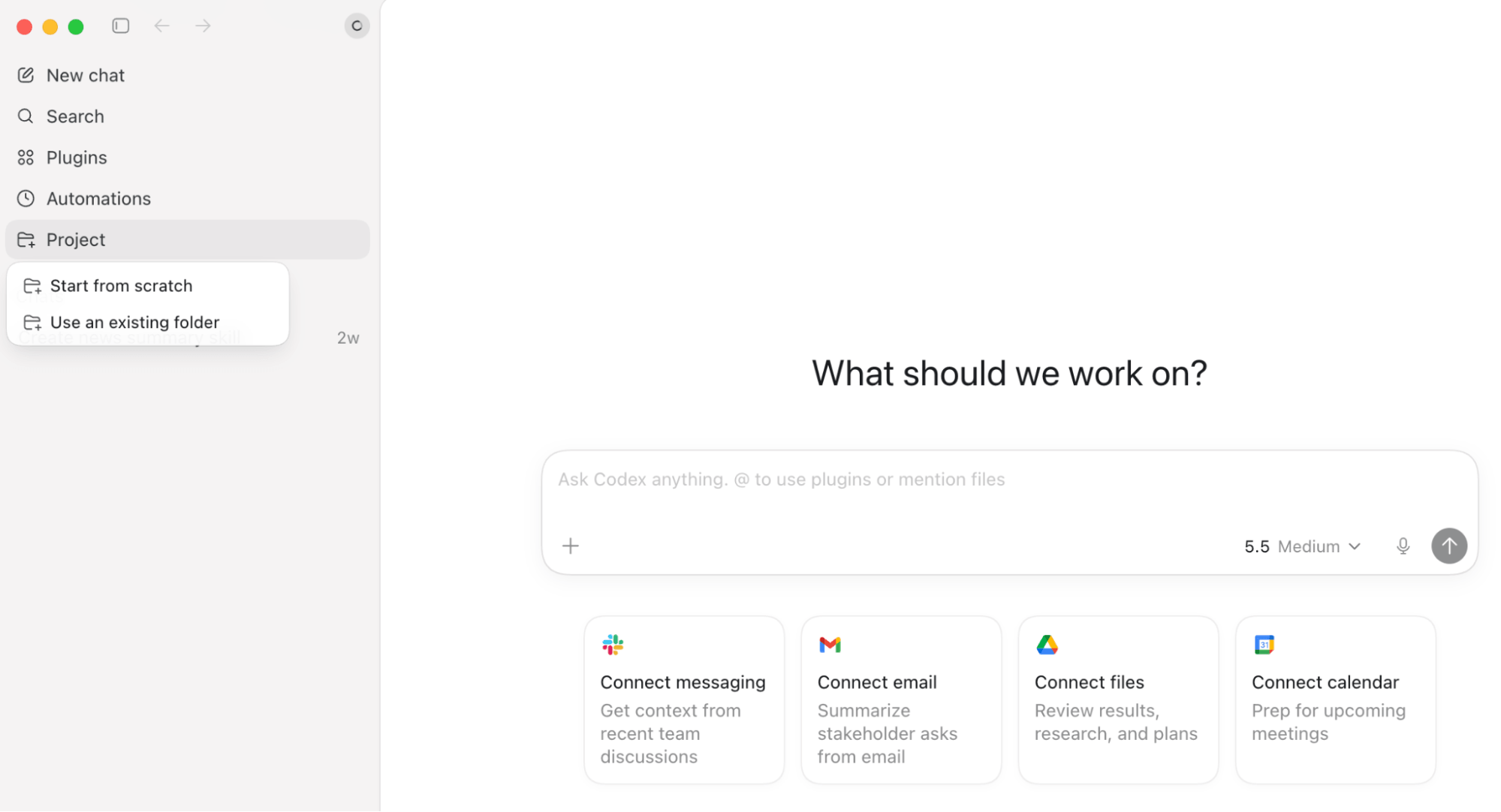
The journey begins by downloading the dedicated Codex desktop application for PC or Mac. Upon launch, you will notice a familiar interface—sidebar threads for chat history—augmented by specialized panels for Plugins and Automations.
The true power of the software lies in Folder Connection. By pointing Codex to a specific directory on your computer or local network, you grant it the ability to read, modify, and manage the files within that scope. It effectively turns your folder into a living workspace, where every action taken by the AI is logged in a thread, providing a transparent audit trail of your automated operations.
2. Expanding the Ecosystem
Codex supports deep integration into the enterprise tech stack. For Microsoft-heavy environments, this includes seamless interaction with Outlook, Teams, SharePoint, and OneDrive. For Google-centric organizations, it hooks into Gmail, Google Calendar, and Google Drive. By bridging these platforms, Codex acts as a central nervous system for your business operations.
The Architecture of Security and Governance
As Codex gains the ability to interact with sensitive files, security becomes paramount. Users must adopt a "least privilege" mindset.
The Dedicated Folder Strategy
The most critical security protocol is the use of a "scoped" directory. Never connect Codex to your root drive or your primary sensitive working directory. Instead, create a dedicated folder. This limits the AI’s operational "blast radius." If you give the AI access to your entire network, you grant it the power to accidentally delete or modify critical infrastructure. By isolating your automation tasks, you maintain control while enabling the AI to function effectively.
Navigating Permission Levels
Codex offers tiered permission modes. Experts strongly recommend beginning with default, restricted permissions. Only once you have audited the AI’s behavior and confirmed its "logic" should you consider escalating to full-access permissions.

The Threat of Prompt Injection
One of the most nuanced risks identified by practitioners is "prompt injection." As the web becomes saturated with AI-optimized content, some sites contain hidden instructions designed to override your agent’s safety parameters. A research agent browsing the web might be tricked into extracting your internal financial records or installing unauthorized files.
To mitigate this, maintain a strict "clean separation" framework:
- The Gatherer Agent: Scrapes raw data from the outside world.
- The Auditor Agent: Verifies the integrity of that data.
- The Executive Agent: Performs the final task.
By separating these roles, you ensure that no direct link exists between the untrusted web and your internal, sensitive workflows.
Leveraging Skills and Plugins for Recurring Processes
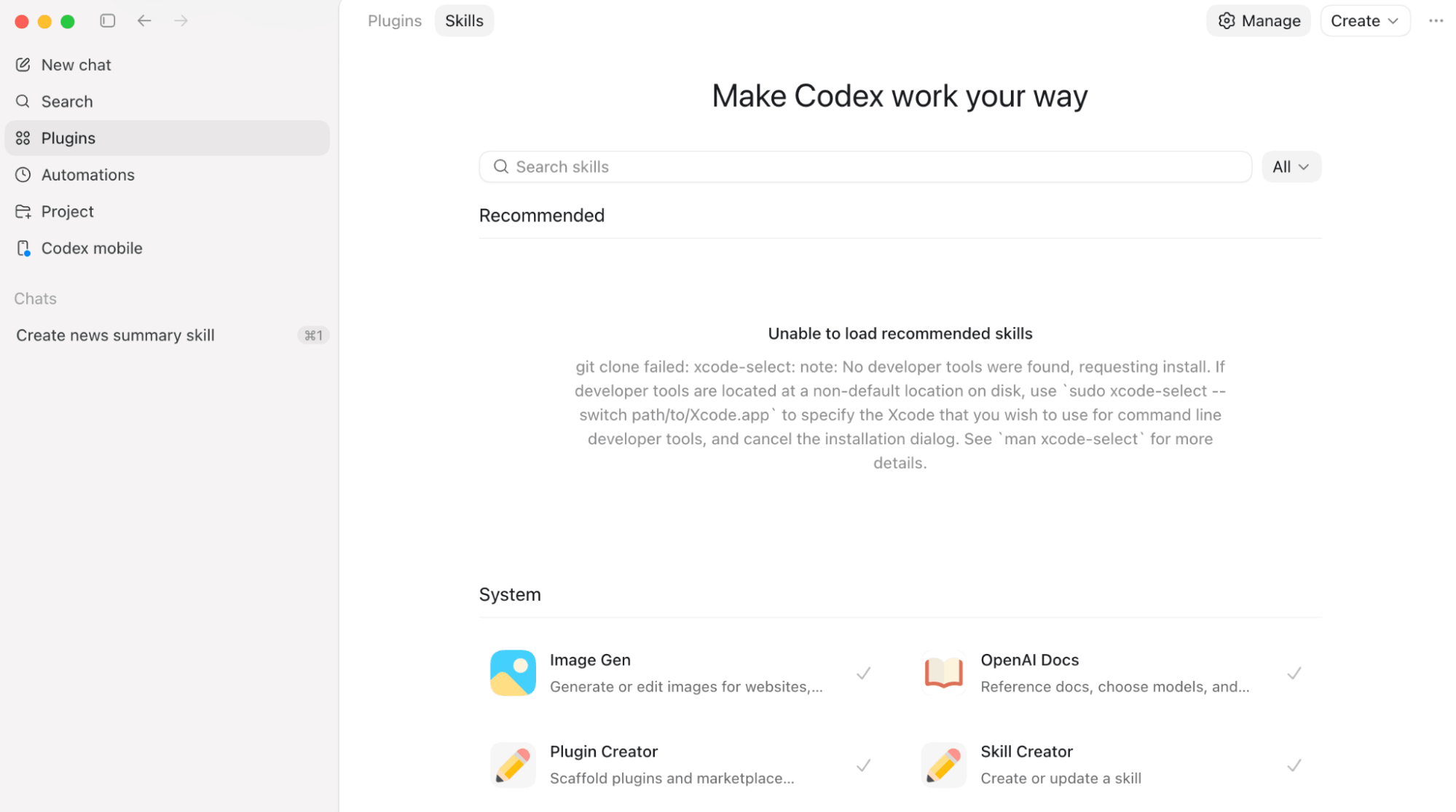
At its heart, Codex is powered by Skills and Plugins. A Skill is a defined workflow—a set of instructions you teach the AI. A Plugin is the connector that allows that Skill to interact with external tools.
Building Standardized Skills
Business processes are often repetitive. By creating a "Skill," you effectively program your company’s standard operating procedures (SOPs) into the AI. For instance, you can ingest your company’s brand guidelines into a Skill. From that point forward, any employee using that Skill will generate content that perfectly matches your brand voice, eliminating the inconsistency of individual prompting.
The Power of the Chrome Plugin
The Chrome plugin is arguably the most transformative tool in the Codex ecosystem. By installing it via the Chrome Web Store, you enable Codex to "see" and "click" through web applications. This is revolutionary for legacy software that lacks an API. Codex can navigate, log in, fill out forms, and pull data from websites just as a human would, effectively acting as a digital employee.
Advanced Automations: Goals, Heartbeats, and Scheduling
The true mastery of Codex involves moving from manual execution to scheduled, autonomous workflows.
- Goals: By using the
/goalcommand, you provide the AI with an objective (e.g., "Summarize competitor AI news every morning at 8 AM"). The AI then works independently, potentially for hours, to fulfill that goal. - Automations vs. Heartbeats:
- Thread-based Automations are ideal for discrete, one-off tasks where a clean record is required for each run.
- Heartbeats are for ongoing, iterative processes. A Heartbeat allows Codex to "wake up" at defined intervals, check your status, perform a task, and update the existing conversation thread. This creates a cumulative knowledge base that grows more intelligent over time.
Implications: The Construction Industry Case Study
To understand the real-world impact of Codex, consider the experience of a mid-sized construction firm struggling with invoice reconciliation.

Historically, this task required two to three days of manual labor per month. Even with basic ChatGPT, it took hours. With Codex, the process is now fully autonomous. The firm places invoices into vendor-specific folders. Every Sunday night, Codex spawns five simultaneous subagents—one for each vendor—to reconcile the invoices against a master spreadsheet. By Monday morning, the report is complete.
In another instance, the firm used a three-subagent workflow to manage field logs. One agent navigates the legacy project management system, the second performs the calculations, and the third updates the master records. The entire process, which once took 9 minutes per log per foreman, now runs unattended in under 20 minutes, overnight.
Conclusion: The Future of Business Operations
The transition to Codex represents a fundamental change in the relationship between humans and software. We are moving away from an era of "using" software to an era of "directing" autonomous agents.
The barrier to entry is lower than it has ever been, provided users respect the security implications and invest the time to build robust, modular skills. By treating AI as a capable, yet supervised, employee, businesses can eliminate the mundane, high-volume tasks that consume their most valuable asset: time. As these tools continue to evolve, those who master the art of the "Goal" and the "Heartbeat" will find themselves at a distinct competitive advantage in an increasingly automated economy.