The traditional architecture of online retail is undergoing a radical decomposition. For two decades, the "build-it-and-they-will-come" model—centered on a proprietary website, a curated product catalog, and a dedicated checkout flow—has been the gold standard for ecommerce. However, the latest innovation from Lithuania-based hosting giant Hostinger suggests that the future of selling may not reside in a store at all, but in the fragmented, fluid spaces of social media and artificial intelligence.
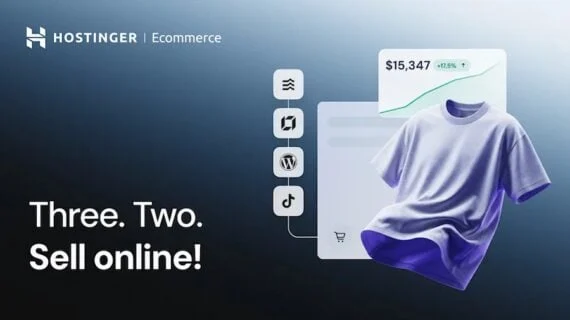
Hostinger recently unveiled "Quick Links," a tool designed to bypass the complexity of website construction by allowing merchants to turn a single product photograph into a functional, AI-generated checkout link. By uploading an image, the platform’s AI engine automatically generates a professional product description, detailed specifications, and dynamic pricing suggestions. The merchant is then provided with a URL that can be embedded into a TikTok post, a WhatsApp message, or an email campaign. While the tool simplifies the barrier to entry, its release serves as a litmus test for a broader industry shift: the decoupling of the "store" from the "transaction."
The Chronology of Disintermediation
To understand why Hostinger’s move is significant, one must look at the evolution of digital commerce over the last decade. The industry has been steadily moving toward "headless" and "distributed" commerce, a timeline characterized by the erosion of the central website’s monopoly.
- 2010–2015: The Rise of Marketplaces. Early shifts saw retailers move away from independent sites toward aggregators like Amazon and eBay, prioritizing volume over brand ownership.
- 2016–2020: The Social Commerce Explosion. Platforms like Instagram and Facebook began integrating "Shop" buttons, allowing users to browse without leaving the app. Payment providers like Stripe and PayPal simplified the "Buy" button, making it possible to transact without a full cart infrastructure.
- 2021–2023: The Link-in-Bio Era. Tools like Linktree and Shopify Starter formalized the idea that a merchant’s digital presence could be reduced to a single, high-converting landing page.
- 2024–Present: The Agentic Future. With the integration of AI, we are entering the era of "conversational commerce," where transactions occur via chat-based interfaces, AI assistants, and automated social triggers.
Hostinger’s Quick Links is the latest milestone in this timeline, specifically targeting the "micro-merchant" demographic that has previously been intimidated by the technical overhead of platforms like WooCommerce or Magento.
Supporting Data: Why the "Store" is Becoming Optional
The shift toward distributed selling is not merely a stylistic choice; it is a response to the changing behavior of the modern consumer. Data suggests that the traditional sales funnel—awareness, interest, desire, action—has become non-linear.
According to recent industry analytics, over 60% of Gen Z consumers discover products through social media platforms rather than search engines or brand websites. Furthermore, friction remains the primary enemy of conversion; every additional click required to move from a "discovery" phase to a "checkout" phase results in a significant drop-off in sales.
By removing the need for a website, Hostinger is addressing the "conversion gap." When a user sees an item on a feed, the intent to purchase is at its peak. By providing a direct checkout link, Hostinger capitalizes on that micro-moment. The platform’s internal metrics suggest that sellers utilizing "link-only" models see an increase in conversion rates for impulsive, low-to-medium-ticket items compared to those who force consumers to navigate a multi-page website.
Official Perspectives: The Vision Behind the Code
In a recent company release, Aukse Žirgule, the head of Hostinger’s website builder and ecommerce division, articulated a vision that extends far beyond a simple marketing tool.
"Commerce is moving from simple stores to ecosystems," Žirgule noted. "People discover products across channels, and AI agents increasingly help them choose, compare, and buy. For small sellers, the opportunity is huge, but only if their business can move as fast as their customers do. They should not have to guess which channel will matter next."
This sentiment reflects a strategic pivot for Hostinger. The company, traditionally known for providing the infrastructure (servers and hosting) that allows sites to exist, is now acknowledging that the "site" is becoming a secondary asset. The firm is betting that by providing the AI-driven layer that bridges the gap between a product photo and a global payment gateway, they can capture the next generation of social-first entrepreneurs who view a website as a luxury rather than a necessity.

The Implications for Retailers: A Hybrid Future
For the average online retailer, the introduction of tools like Quick Links creates both an opportunity and a strategic dilemma. The core question for business owners is no longer "How do I build my site?" but rather "Where should my transaction happen?"
1. The Death of the Centralized Cart
The traditional model of the "shopping cart" is being challenged. In the new ecosystem, the cart is a ghost—a temporary state of a transaction that may be finalized in a DM thread, a comment section, or an AI agent’s chat window. For retailers, this means that tracking inventory and customer data becomes significantly more complex. When a sale occurs "outside" the store, syncing that transaction with accounting software, CRM platforms, and inventory management systems becomes the new technological hurdle.
2. The Resurgence of the "Brand Home"
Despite the efficiency of checkout links, the merchant-owned website is not dead—it is changing its function. If the "transaction" happens on social media, the "website" becomes the brand’s headquarters for trust and relationship building. It is where a customer goes to verify a company’s legitimacy, read about its mission, view return policies, and manage their account history. Retailers must now treat their website as a destination for long-term loyalty, while treating social channels as the front lines of customer acquisition.
3. The AI-Agentic Frontier
Perhaps the most profound implication of Hostinger’s move is the precursor it sets for "agentic" shopping. If a tool can generate a product description and a checkout link from a photo, the next logical step is for an AI agent to browse those links on behalf of a user. Imagine a scenario where a user asks their personal AI assistant to "find me a purple t-shirt under $30." The AI scours social media, finds a Hostinger-powered checkout link, executes the purchase, and confirms the delivery. In this future, the website is invisible—only the product and the transaction exist.
The Strategic Shift for Ecommerce Platforms
Hostinger is not alone in this transition. Industry titan Shopify has been aggressively moving in the same direction. By investing in Shop Pay, marketplace integrations, and AI-assisted discovery tools, Shopify is essentially telling its merchants: "We will handle the complexity of the sale, whether it happens in a store, on a marketplace, or through an app."
The platform of the future is no longer a store-builder; it is a "transaction orchestrator." It must provide the underlying plumbing that allows a business to exist everywhere simultaneously. For Hostinger, this means moving away from a hosting-first identity and toward a commerce-first identity.
Conclusion: The New Rulebook
The launch of Hostinger’s Quick Links is a signal that the barrier between content and commerce has effectively collapsed. For the small business owner, this is an era of unprecedented accessibility. One no longer needs to be a web developer or a branding expert to begin selling products online.
However, this ease of entry creates a new, more difficult challenge: differentiation. If every seller can generate a professional product page from a single photo, the aesthetic and technical quality of the "store" becomes a commodity. The competitive edge will no longer belong to those who build the best website, but to those who master the art of being everywhere at once.
As we look toward the next phase of digital retail, the "store" as we knew it—a static collection of pages and products—will increasingly serve as a digital brochure, while the revenue-generating engine moves to the edges of the internet, embedded in the social streams where modern commerce lives. Hostinger has provided the key to that door; it is now up to the merchants to decide whether they will remain inside the comfort of their own sites or step out into the vast, fragmented, and highly lucrative world of the distributed web.