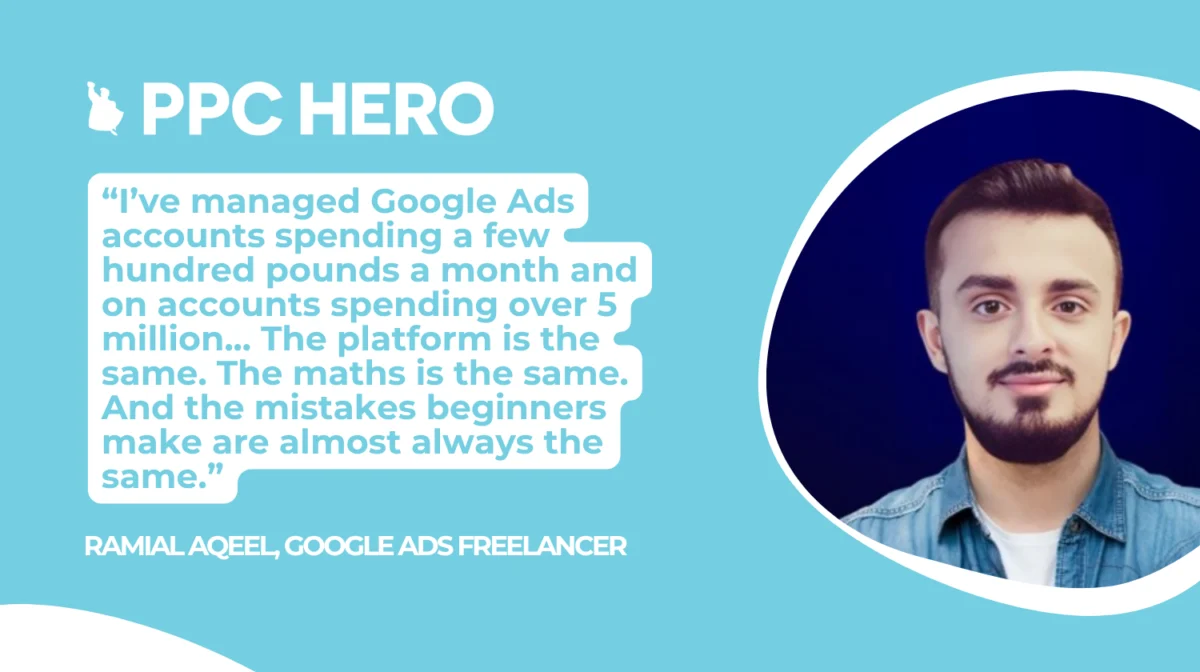
The digital advertising landscape has evolved into a global behemoth, with Google Ads standing at its epicenter. For many business owners, the platform represents a paradoxical challenge: it is both the most powerful tool for customer acquisition and a potential "money pit" for the uninitiated. According to industry veterans who have managed budgets ranging from a few hundred pounds to over five million pounds per month, the fundamental mechanics of the platform remain remarkably consistent regardless of the scale.
The following analysis synthesizes expert methodologies into a strategic framework, designed to help new advertisers navigate the complexities of Google’s auction system without exhausting their capital prematurely.
1. Main Facts: The Reality of the Google Ads Ecosystem
Google Ads operates on a sophisticated Vickrey-style auction where the highest bidder does not always win the top spot. Instead, Google balances bid amounts against "Quality Score"—a metric encompassing ad relevance, expected click-through rate (CTR), and landing page experience.
For the beginner, the "Main Fact" of the platform is that Google is no longer just a search engine; it is a machine-learning ecosystem. The platform’s profitability for a business is dictated by the quality of the data fed into this machine. Experts agree that the most common reason for failure in the first 30 days is not a lack of budget, but a lack of "Conversion Tracking." Without a feedback loop that tells Google which clicks resulted in a sale or an inquiry, the platform’s algorithm optimizes for "busy-ness" (clicks) rather than "business" (revenue).
Furthermore, the barrier to entry has never been lower, but the cost of inefficiency has never been higher. With average Cost-Per-Clicks (CPCs) in industries like legal services or insurance often exceeding £50, a single day of untargeted traffic can devastate a small business’s monthly marketing budget.
2. Chronology: A Step-by-Step Blueprint for Account Launch
To avoid the common pitfalls of a "blind launch," advertisers should follow a strict chronological order of operations.
Phase I: Establishing the Digital Paper Trail (Days 1–3)
Before a single keyword is selected, the infrastructure for measurement must be built. This involves:
- Defining Conversion Actions: Identifying what a "win" looks like (e.g., a completed "Contact Us" form, a 60-second phone call, or a checkout).
- Tag Implementation: Placing the Google Tag (formerly Global Site Tag) and specific event snippets on the website.
- The "Fire Test": Manually triggering these conversions to ensure they register in the Google Ads dashboard. If the data is not flowing before the spend begins, the campaign is effectively gambling.
Phase II: Campaign Selection and Narrowing the Scope (Days 4–5)
Google’s interface often nudges beginners toward "Performance Max" or "Display" campaigns, which utilize high levels of automation across YouTube, Gmail, and third-party websites. However, experts recommend a "Search First" chronology.
- Search Campaigns: These target users based on "intent"—someone actively typing a problem into a search bar. This is the cleanest environment for a beginner to learn which specific words lead to revenue.
- Goal Setting: Selecting a singular goal (e.g., Leads) to allow the algorithm to focus its optimization efforts.
Phase III: The Architectural Build (Days 6–7)
A sensible account structure follows a logical hierarchy.
- Ad Groups: Keywords should be grouped by tight themes. For example, a law firm should have separate ad groups for "Conveyancing" and "Divorce Law," rather than one general "Lawyer" group.
- Keyword Match Types: Beginners are advised to avoid "Broad Match" initially. Instead, they should start with "Exact Match" (showing only for the specific term) and "Phrase Match" (showing for the term and close variations). This provides a "guardrail" against irrelevant traffic.
Phase IV: The Defensive Perimeter (Ongoing)
Once the ads are live, the focus shifts to "Negative Keywords." This is the list of terms the advertiser refuses to bid on. Common examples include "free," "jobs," "DIY," or "cheap" for premium service providers.
3. Supporting Data: The Cost of Inefficiency
To understand the necessity of these steps, one must look at industry benchmarks and data trends.

- The Waste Gap: Research from digital marketing audits suggests that the average small business Google Ads account wastes approximately 25% of its budget on "junk" search terms—queries that have no intent to purchase.
- Landing Page Impact: Data from Google indicates that a one-second delay in mobile load time can impact conversion rates by up to 20%. This highlights that the "Ad" is only 50% of the journey; the destination is equally critical.
- The Learning Phase: Google’s "Smart Bidding" algorithms typically require 30 to 50 conversions within a 30-day window to reach peak efficiency. This underscores the need for a "learning budget"—a sum of money an advertiser must be willing to spend to gather data rather than immediate profit.
- Relevance and CTR: Ads that achieve a "High" Quality Score can see a discount of up to 50% on their CPC compared to average competitors. Conversely, low-quality ads can face a "penalty," paying up to 400% more for the same position.
4. Official Responses and Industry Perspectives
While Google’s official documentation heavily promotes "Automation" and "AI-driven" campaigns, the veteran community often offers a more nuanced, "safety-first" perspective.
The Google Perspective:
Google’s representatives frequently advocate for "Broad Match" combined with "Smart Bidding." Their stance is that the AI can interpret user intent better than a human can. By giving the machine more "room to breathe," it can find customers the advertiser might have missed.
The Veteran Response:
Experienced account managers argue that while Google’s AI is powerful, it is also "hungry." Without strict constraints (Negatives and Match Types) in the early stages, the AI will spend the budget as quickly as possible to find those data points. For a small business with a limited budget, this "discovery phase" can be bankrupted before the AI finds the right audience.
The Consensus:
The industry middle ground is to "Start Manual, End Automatic." Beginners should maintain high control to protect their capital, and only once they have established a baseline of profitable conversions should they "loosen the reins" and allow Google’s automation to take over.
5. Implications: The Future of Small Business Advertising
The shift toward a more complex, AI-driven Google Ads platform has significant implications for the competitive landscape.
The Democratization of Expertise
In the past, managing a £5 million account required a massive team of analysts. Today, AI handles much of the heavy lifting regarding bidding and placement. This means a small business owner, if they set up their "boring" foundations (conversion tracking and negatives) correctly, can compete with much larger corporations on a "per-click" efficiency basis.
The Rise of the "Landing Page" Economy
As the Google Ads interface becomes more automated, the primary "levers" for success are moving off-platform. The competition is no longer just about who has the best keywords, but who has the best website. The implication is that businesses must invest as much in their User Experience (UX) and site speed as they do in their advertising spend.
The Data Privacy Constraint
With the phase-out of third-party cookies and increasing privacy regulations (GDPR, CCPA), the "First-Party Data" collected through conversion tracking becomes a business’s most valuable asset. Those who start tracking conversions now are building a "data moat" that will make their advertising more resilient to future privacy changes.
Conclusion: The "Boring" Path to Success
The allure of "secret hacks" or "magic settings" in Google Ads is a myth. Success on the platform is built on the disciplined execution of unglamorous tasks: testing tracking codes, reading search term reports, and refining landing pages.
For the beginner, the mandate is clear: do not focus on "winning" the auction in week one. Focus on "learning" the auction. By setting a manageable budget, prioritizing search intent, and ruthlessly filtering out irrelevant traffic through negative keywords, an advertiser can transform Google Ads from a volatile expense into a predictable engine for growth. As the data shows, the platform is the same whether you spend hundreds or millions; the only difference is the speed at which you learn from your mistakes.