In the high-stakes arena of digital advertising, where billions of dollars in e-commerce revenue are won or lost on the back of Google’s algorithms, a critical oversight is quietly eroding the ROI of thousands of merchants. Despite the evolution of sophisticated bidding strategies and the rise of artificial intelligence in campaign management, a fundamental problem persists: the product feed is often the weakest link in the chain.
According to industry veterans with decades of experience managing Google Ads, the industry’s obsession with campaign structure and budget allocation has created a "show work" culture that prioritizes immediate activity over long-term profitability. The result is a landscape of "leaky" accounts where high-performance bidding strategies are applied to low-quality data.
Main Facts: The Feed as the Algorithmic Foundation
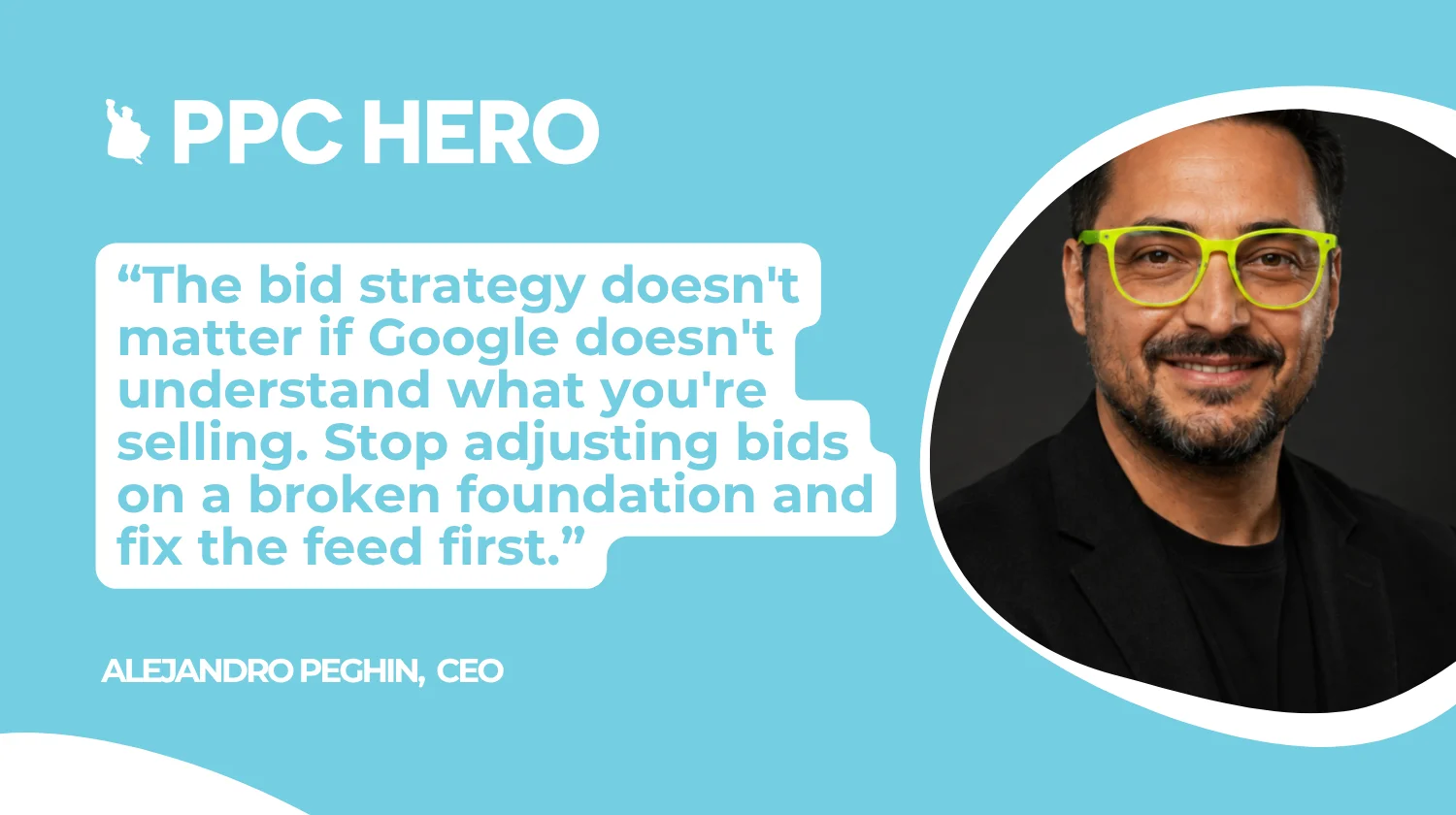
At its core, Google Shopping is not a keyword-based platform in the traditional sense; it is a data-driven matching engine. Unlike Search ads, where advertisers bid on specific keywords, Shopping ads rely on the Google Merchant Center (GMC) feed to determine relevance. This feed acts as the primary source of information that Google uses to understand a product’s essence and match it to a user’s search intent.
The Anatomy of a Weak Feed
A weak feed is characterized by several recurring deficits:
- Vague Titles: Product names that lack brand, size, color, or material.
- Missing GTINs: The absence of Global Trade Item Numbers prevents Google from grouping products with similar offerings, often leading to lower visibility.
- Generic Categorization: Using broad Google Product Categories (GPC) rather than specific sub-categories.
- Low-Resolution Imagery: Images that fail to meet modern aesthetic standards or lack contextual "lifestyle" elements.
The Cost of Data Corruption
When a feed is poorly optimized, two systemic failures occur. First, Google’s matching engine enters the merchant into auctions for irrelevant search queries, leading to wasted spend and a depressed Click-Through Rate (CTR). Second, and more damagingly, Google’s machine-learning algorithms begin to build a flawed "buyer persona" model. By analyzing the wrong signals from unqualified traffic, the algorithm optimizes for the wrong users, creating a compounding cycle of inefficiency.
Chronology: The Lifecycle of a Failed Shopping Strategy
The path to poor performance is often paved with good intentions. By examining the typical timeline of an agency-client relationship, we can see where the "feed-first" philosophy is abandoned in favor of optics.
Phase 1: The "Invisible Clock" (Month 1)
Upon signing a new client, agency managers feel immense pressure to demonstrate value. This pressure often manifests as a rush to launch new campaigns. Because a thorough feed audit and optimization for a catalog of over 1,000 products can take weeks, managers skip this step. They believe they can "fix the feed later" while focusing on "winning" the account through campaign architecture today.
Phase 2: The Compromise (Months 2–3)
Campaigns are launched with the existing, unoptimized feed. Managers spend their time adjusting bids, experimenting with Target ROAS (Return on Ad Spend) settings, and restructuring Performance Max (PMax) asset groups. While there may be a temporary "honeymoon period" of performance, the CTR remains flat, and the cost-per-acquisition (CPA) begins to climb as the algorithm struggles with poor data signals.
Phase 3: The Stagnation Point (Months 4–6)
The client begins to question why performance has plateaued. The agency responds by further tweaking the budget or campaign structure, but because the foundational data—the feed—is broken, these adjustments have diminishing returns. This is the stage where most accounts are either churned or resigned to mediocrity.
The Alternative: The "Feed-First" Roadmap
In contrast, a successful chronology involves a month-long "data hygiene" phase. This includes:
- Comprehensive Audit: Identifying gaps in attributes and title quality.
- The 80/20 Prioritization: Focusing optimization on the 20% of products that drive 80% of revenue.
- Title and Attribute Injection: Using supplemental feeds to enhance data without disrupting the store’s backend.
- Stabilization: Allowing the algorithm to relearn the buyer persona based on clean data before scaling budget.
Supporting Data: The Metrics of Optimization
Evidence from thousands of audited accounts suggests that feed optimization provides a more significant performance lift than any other variable in the Google Shopping ecosystem.
The Title Optimization Paradox
One of the most counterintuitive findings in feed management is the relationship between impressions and CTR. When product titles are properly optimized—incorporating brand, category, and key attributes—initial impressions often decrease.

Data indicates that as titles become more specific, the product stops appearing for broad, low-intent queries. However, because the remaining impressions are highly qualified, the CTR and conversion rates rise significantly. Over time, as Google gains confidence in the product’s relevance, qualified impressions begin to climb, leading to a higher total volume of profitable sales than the original "broad" approach.
The Power of Visual Context
While titles drive the "match," images drive the "click." Industry benchmarks show a stark difference between standard and lifestyle imagery:
- White-Background Images: The industry standard, required for compliance, but often perceived as sterile.
- Lifestyle Images: Showing the product in a real-world setting or in use.
- The Result: Merchants who prioritize lifestyle images for their top-performing products consistently see conversion rate lifts of 25% or more. This shift appeals to the shopper’s psychological need to visualize ownership.
The Revenue Concentration Factor
Audits consistently reveal that e-commerce revenue is highly concentrated. In a typical catalog, a small fraction of the inventory generates the vast majority of the profit. This "Pareto Principle" allows for a strategic shortcut: agencies do not need to optimize 10,000 products on day one. By focusing on the "Power 20%," they can secure early wins and prove the value of feed optimization to the client within the first 30 days.
Official Responses and Expert Perspectives
While Google does not officially comment on individual agency strategies, their documentation for the Google Merchant Center increasingly emphasizes "data richness." The shift toward Performance Max—a campaign type that relies almost entirely on automated signals—has made feed quality more critical than ever.
The "Black Box" Reality
Industry experts argue that as Google hides more data from advertisers (such as specific search term reports in PMax), the feed becomes the only lever left for human intervention. "You can’t tell the AI what to do anymore," says one senior strategist. "You can only tell it what the product is. If you lie to the AI with a bad feed, it will spend your money finding people who don’t want your product."
The Tooling Revolution
The rise of specialized tools like Magnify and other feed management platforms (Feedonomics, Channable) reflects an industry-wide recognition of this problem. These tools allow agencies to run cross-account reporting, identifying "health scores" and "attribute completeness" across an entire portfolio. This technological shift is moving feed optimization from a manual, spreadsheet-based chore to a sophisticated branch of data engineering.
Implications: The Future of E-Commerce Advertising
The shift toward a "feed-first" methodology has profound implications for the future of the digital marketing industry.
From Media Buying to Data Engineering
The role of the "Account Manager" is evolving. Success in 2024 and beyond requires less focus on manual bidding—which is increasingly handled by Google’s AI—and more focus on data architecture. The modern advertiser must be part-marketer, part-data scientist, ensuring that every piece of information fed into the machine is accurate, descriptive, and persuasive.
The Competitive Moat
As bidding becomes automated and accessible to everyone, the quality of a merchant’s data becomes their primary competitive advantage. A store with a superior feed can win auctions at a lower cost than a competitor with a larger budget but a weaker feed. Data quality is becoming the new "moat" in e-commerce.
Strategic Recommendations for Merchants
For brand owners and marketing directors, the message is clear: demand a feed audit before authorizing a budget increase. If an agency or in-house team cannot show a structured plan for title optimization, attribute enrichment, and image testing, any increase in ad spend is likely to be inefficient.
In conclusion, the fundamental problem in Google Shopping is not a lack of sophisticated bidding; it is a foundational deficit in data quality. By resisting the pressure to "show work" through immediate campaign launches and instead focusing on the invisible work of feed optimization, merchants can build a sustainable, profitable, and scalable advertising engine. The feed is the foundation—and if the foundation is weak, the entire structure is at risk.