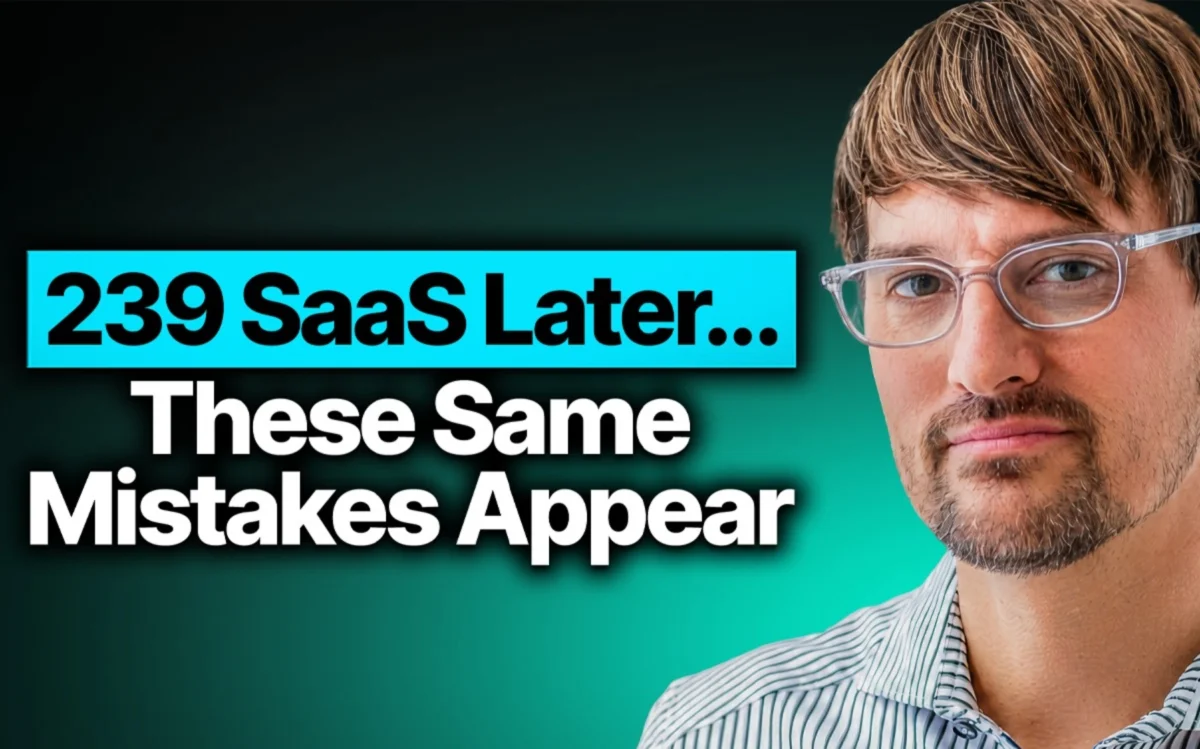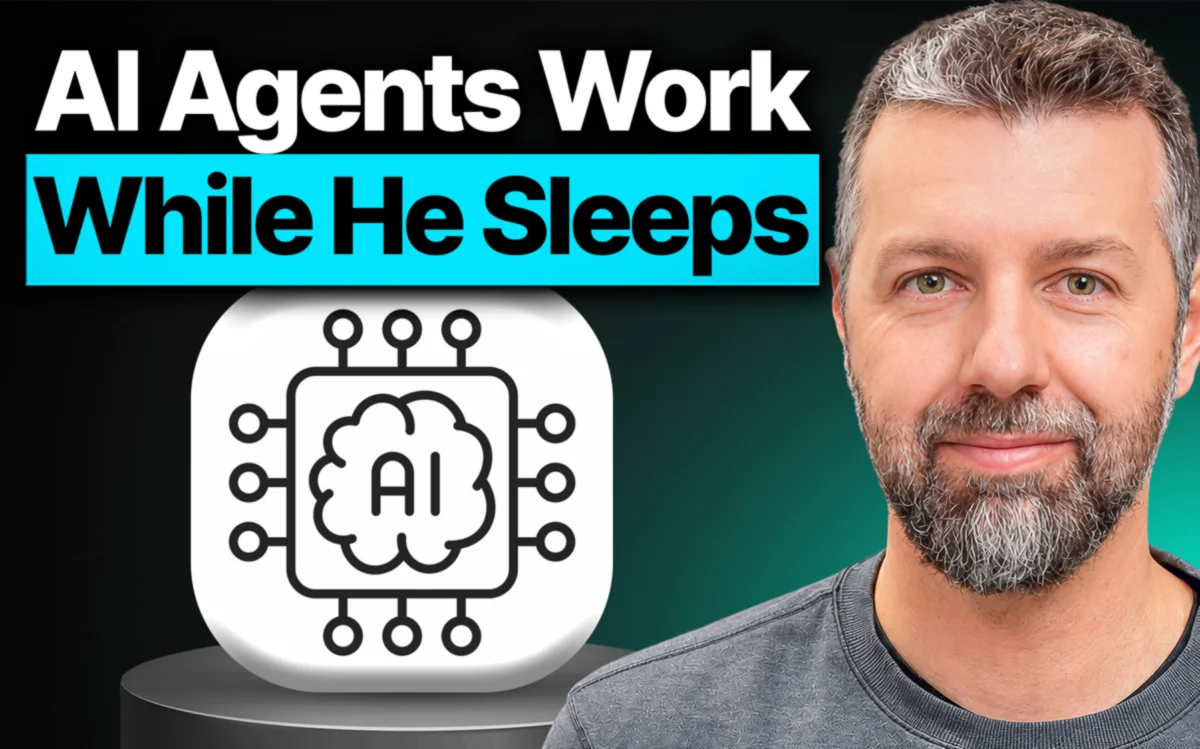
In the rapidly evolving landscape of artificial intelligence, many entrepreneurs are scrambling to chase the latest viral trend. However, for veteran founder Brian Casel, the shift toward an "AI-first" business model wasn’t a reactionary pivot—it was a strategic evolution. As discussed in this week’s episode of the Niche Pursuits podcast, Casel is currently scaling his latest venture, Builder Methods, by leveraging a potent combination of long-form YouTube content, email marketing, community building, and AI-driven automation.
Casel’s journey offers a masterclass in how to synthesize 20 years of technical and entrepreneurial experience into a modern, lean business model. By moving away from the traditional, slow-growth SaaS trajectory, he has positioned himself at the forefront of the "AI agent" movement—a shift that promises to make complex software development accessible to non-technical business owners and operators.
A Legacy of Founding: From Productized Services to SaaS
To understand the current success of Builder Methods, one must look at the foundation Casel built over two decades. His career is marked by a diverse set of professional iterations: designer, developer, founder, and operator.
His background includes the creation of Audience Ops, a pioneering productized content marketing service that he successfully scaled and eventually sold in 2020. Simultaneously, he continues to operate Clarityflow, a SaaS platform launched in 2021 designed specifically for coaches to facilitate asynchronous video, audio, and text messaging.
This deep, multi-faceted background has provided Casel with a "broad lens" through which he views business problems. Unlike founders who have only ever known one niche, Casel’s history of selling services, building software, and teaching online allows him to see the intersection of human workflows and technological efficiency.
The Strategic Pivot: Why Growth Stalled and Innovation Began
Around 2024, Casel hit a familiar roadblock for many bootstrapped SaaS founders: the "slow growth" plateau. Despite running a functional and profitable business in Clarityflow, the company’s growth trajectory was steady but lacked the explosive, breakout potential he craved.
Rather than forcing the SaaS business into a model that didn’t fit its current market position, Casel decided to align his business with his evolving interests. He recognized that the landscape of software development was being fundamentally altered by large language models (LLMs) and coding agents like Claude Code. This was not a move to abandon his previous projects, but rather a strategic expansion into an area where he could document his learning in real-time while providing value to a rapidly growing audience.
The YouTube Engine: Content as a Growth Catalyst
YouTube has become the primary acquisition funnel for Builder Methods. However, Casel’s approach to the platform is far from superficial. Having spent two years refining his channel—moving from niche coding tutorials like Ruby on Rails to broader AI-building content—he has successfully tapped into the surging demand for practical, "spec-driven" development knowledge.
The production value and effort behind his channel are significant. A single 15-to-20-minute video can consume multiple days of work, involving:
- Deep research and ideation: Staying ahead of the breakneck pace of AI updates.
- High-fidelity scripting: Ensuring that the content remains educational rather than just "hype-driven."
- Internal system integration: Using AI tools to streamline his own production workflow.
Data-Driven Insights on Reach vs. Engagement
Casel’s analytics reveal an interesting dichotomy in modern content marketing. While a video regarding "OpenClaw" achieved nearly one million views—a massive win for a specialized topic—some of his more tactical "Claude Code" tutorials hover in the 50,000 to 60,000 range.
Crucially, Casel noted that lower-view videos are often just as valuable as the "viral" hits. A video with only 2,000 views might attract a highly qualified, technically inclined viewer who is ready to invest in a paid membership or join his email list. This reinforces the idea that for B2B and educational creators, audience depth is vastly more important than total reach.
The Conversion Architecture: From Viewers to Members
Casel utilizes a classic, yet highly refined, funnel strategy to convert casual viewers into long-term community members.
- The Hook: YouTube serves as the top-of-funnel discovery engine.
- The Nurture: Viewers are encouraged to join an email newsletter, which Casel has transitioned from an aggressive "early-mention" strategy to a more value-oriented, mid-video placement.
- The Conversion: New subscribers enter a short, automated sequence that provides immediate value (free tools and resources) before presenting the "Builder Methods Pro" annual membership as the logical next step.
This membership acts as the core revenue pillar of the business. Inside, members gain access to over 100 specialized videos, courses on building without code, and a vibrant community where they can share notes and troubleshoot their own AI-driven projects.
The "Agent" Mindset: Bridging the Gap for Non-Coders
Perhaps the most significant implication of Casel’s work is his focus on AI Agents. He argues that the industry has been too focused on the "coding" aspect of AI, when the real value for business owners lies in the "process" aspect.
Casel is currently reframing his messaging to target business owners and operators rather than just developers. He posits that if an individual has ever written a Standard Operating Procedure (SOP), managed a team, or trained a virtual assistant, they already possess the fundamental "logic" required to build AI agents.
Why Business Owners Are Already Qualified
Business owners often feel intimidated by the "AI" label, fearing they need a Computer Science degree to participate. Casel demystifies this by highlighting that building an agent is essentially just "defining a process." Key skills that translate directly include:
- Decomposition: Breaking a complex task into smaller, repeatable steps.
- Logic Mapping: Creating clear "if-then" scenarios for staff (or agents) to follow.
- Feedback Loops: Reviewing output and refining instructions over time.
Implications: The Future of Service-Based Work
The practical application of this mindset extends far beyond software companies. Casel points to a member of his community—a California-based dental practice owner—who is using these same principles to automate case management, accounting, and bookkeeping.
This signals a massive shift in how small-to-medium enterprises (SMEs) will function over the next decade. When a dental office or a local agency can build custom, agent-supported workflows for a fraction of the cost of traditional software development, the barrier to entry for innovation collapses.
Key Lessons for Founders
For those looking to replicate or learn from Casel’s model, the takeaways are clear:
- Documentation is a Business Asset: By building in public and documenting his own learning process, Casel creates a "trust moat" that competitors simply cannot replicate.
- Process Over Hype: Focus on the mundane tasks that can be automated, rather than the "magic" of AI. The value is found in reliability, not novelty.
- Sustainability of the Model: By separating his free, high-retention YouTube content from his deep-dive, step-by-step paid training, Casel ensures that he serves two different types of customers simultaneously: the learner and the practitioner.
Final Thoughts
Brian Casel’s trajectory with Builder Methods represents a departure from the "move fast and break things" era of tech startups. Instead, he represents the "move thoughtfully and build processes" era. By combining 20 years of seasoned experience with the cutting-edge capabilities of AI, he is providing a blueprint for founders who want to build sustainable, scalable, and genuinely helpful companies in an age where information is abundant but wisdom is scarce.
Whether you are a developer looking to integrate agentic workflows or a business owner tired of manual, repetitive tasks, the lesson from Builder Methods is universal: the technology is ready, the processes are defined, and the only thing missing is the willingness to start building.