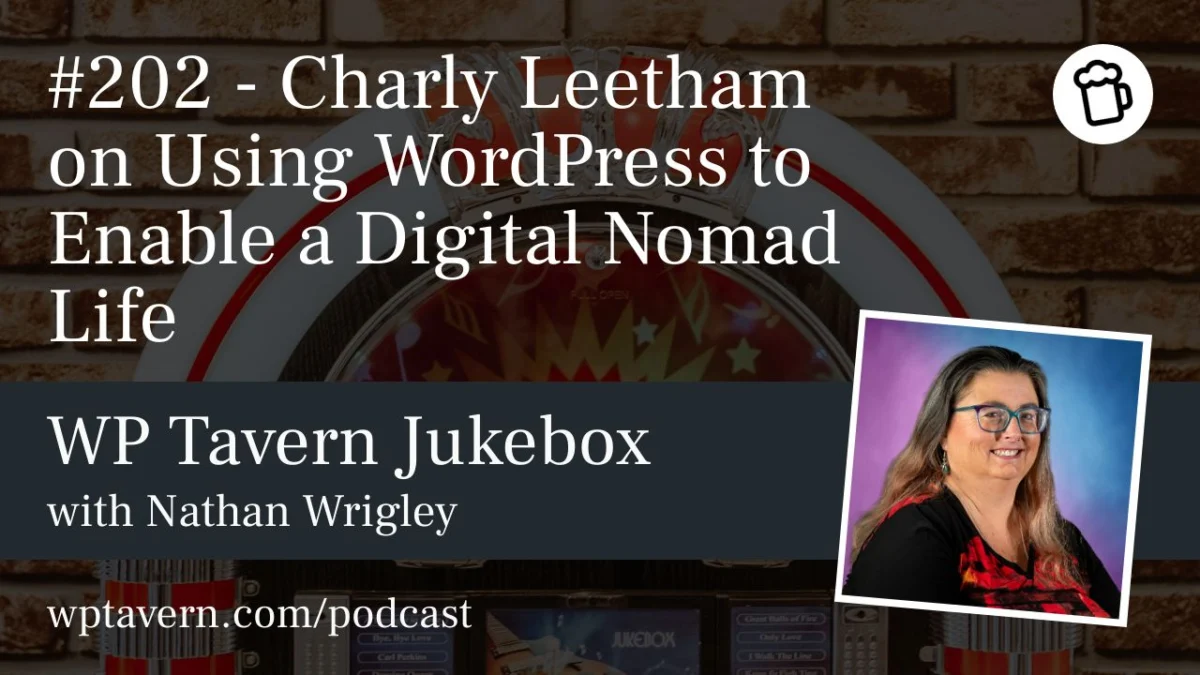
In an era where the traditional nine-to-five office model has been dismantled by global connectivity, few have taken the concept of "remote work" as literally as Charly Leetham. A veteran of the technology sector with four decades of experience, Leetham has successfully traded the constraints of a fixed residential address for the boundless horizon of the Australian outback. Operating out of a customized camper van equipped with cutting-edge satellite technology, she serves as a premier example of how technical proficiency can be leveraged to achieve radical personal and professional autonomy.
For the WordPress community—a group often tethered to desks by the demands of server management, client calls, and high-speed fiber—Leetham’s lifestyle offers a provocative blueprint. It is not merely a story of travel; it is a case study in how to architect a business that prioritizes flexibility, values, and the human element in an increasingly digitized world.
A Career Forged in Hardware and Code
Charly Leetham’s professional evolution mirrors the rapid expansion of the modern tech landscape. Her journey began in her teenage years, tinkering with amateur radio in Australia—a foundational experience that instilled a deep curiosity for how signals traverse the globe. By age 16, she had earned an associate diploma in electronic engineering, working full-time as a laboratory technician.
Her path was far from linear. Over the next twenty years, Leetham navigated the complexities of field service, pre-sales, contract management, and retail business ownership. This diverse background proved critical when she pivoted to WordPress in 2007. As she recalls, her entry into the ecosystem was born of necessity. Following the failure of a retail franchise, Leetham needed a reliable income stream to support her family. When clients began asking for help with their broken WordPress sites, she applied her background in C++, Pascal, and Basic to the world of PHP, themes, and plugins.
"I learned PHP, I learned themes, I learned plugins, I learned how to troubleshoot things," Leetham says. Nearly two decades later, she has established herself as a vital translator, demystifying complex digital infrastructure for business owners who find themselves overwhelmed by the jargon of the modern web.
The Digital Nomad Paradigm: Life on the Road
The "digital nomad" label is often associated with beachside coworking spaces in Bali or bustling cafes in Lisbon. However, Leetham’s version of nomadism is rugged and self-sufficient. Driven by the dual realities of a housing crisis and a long-held desire for freedom, she converted a commercial vehicle into a mobile office.
Her lifestyle is defined by mobility. She follows the climate, migrating north during the Australian winter to avoid the cold, and utilizes the country’s vast geography as her backyard. This is not a vacation; it is a full-time, high-stakes professional operation. Her workspace is compact—approximately one meter by one meter—requiring a high degree of organizational discipline. "When I finish up for the day, I’ve got to pack everything up so I’ve got room for relaxation," she explains. "I can’t just walk out of a room and shut the door."
Essential Technology: The Starlink Revolution
The linchpin of Leetham’s mobile career is her Starlink satellite internet system. In the vast, sparsely populated regions of Australia, traditional mobile network coverage is often non-existent. Without reliable connectivity, her business—which relies on remote access, video conferencing, and troubleshooting—would be impossible.
The setup is a masterclass in modern portable infrastructure:
- Satellite Connectivity: Starlink provides high-speed, stable internet that Leetham reports is often superior to the terrestrial landlines found in regional Australian towns.
- Hardware: She uses a powerful MSI gaming laptop, chosen for its superior thermal management and processor capabilities, allowing her to handle resource-heavy tasks like graphic design and plugin troubleshooting on the go.
- Ergonomics: To maintain productivity, she employs an external monitor mounted to the wall of her van, along with a dedicated mouse and keyboard, creating a functional "desk" environment within a confined footprint.
Professional Implications: Trust and Asynchronicity
The most significant takeaway from Leetham’s transition is the shift in how she manages client expectations. In traditional IT support, the expectation is often "instant availability." Leetham has successfully pivoted her business model to prioritize asynchronicity.
"I’ve trained my clients," Leetham notes. By setting clear boundaries regarding how and when she communicates, she has built a reputation based on trust rather than proximity. She explains to her clients that she is available, but that she is not "on call" in the traditional sense. This trust is the foundation that allows her to drive through remote areas without fear that her business will collapse if she isn’t at a desk at 9:00 AM sharp.
The Art of Saying ‘No’
A key component of her business philosophy is the willingness to walk away from incompatible clients. Leetham believes that for a nomad, time and energy are the most precious commodities. If a client-provider relationship is not mutually beneficial, she is quick to recommend that they find a different partner. This "cutthroat" commercial approach is, in reality, a protective measure that ensures her business remains sustainable and aligned with her personal values.
A Reflection on Personal Values
While the professional setup is impressive, the personal benefits are what drive Leetham. She speaks passionately about the ability to spend quality time with her father, who is in his late seventies and also enjoys traveling. The ability to pause, take a morning off to hike in a national park, or visit a local community center is a luxury that her previous office-bound life never permitted.
However, she is candid about the trade-offs. The "stuff" that most people take for granted—a full kitchen, a walk-in closet, a bulk-buying pantry—does not exist for her. She adheres to a strict rule: "I have to have needed it four times before I go and buy it." This minimalist approach forces a constant re-evaluation of what is truly necessary for happiness.
Future Outlook and Lessons for the Ecosystem
Leetham’s journey serves as a powerful testament to the capabilities of modern remote workers. For the WordPress professional, she proves that the tools of the trade—PHP, server management, and web development—are location-agnostic.
As more workers seek to escape the rigidity of the post-pandemic return-to-office mandates, Leetham’s example provides a clear, albeit challenging, roadmap. It requires not just the right technology, but a complete restructuring of one’s relationship with material possessions, social interaction, and professional availability.
When asked if she would recommend this lifestyle to others, she is measured. She acknowledges the "blessings" of her life but is quick to point out the hard work required to maintain it. For those willing to embrace the discomfort of a small space and the unpredictability of the road, the rewards are immense. Charly Leetham has not just built a business; she has built a life that moves as fast—and as far—as she chooses.
For those interested in learning more about Charly Leetham’s technical translations, podcast appearances, or her approach to small business tech support, she can be found at askcharlyleetham.com.