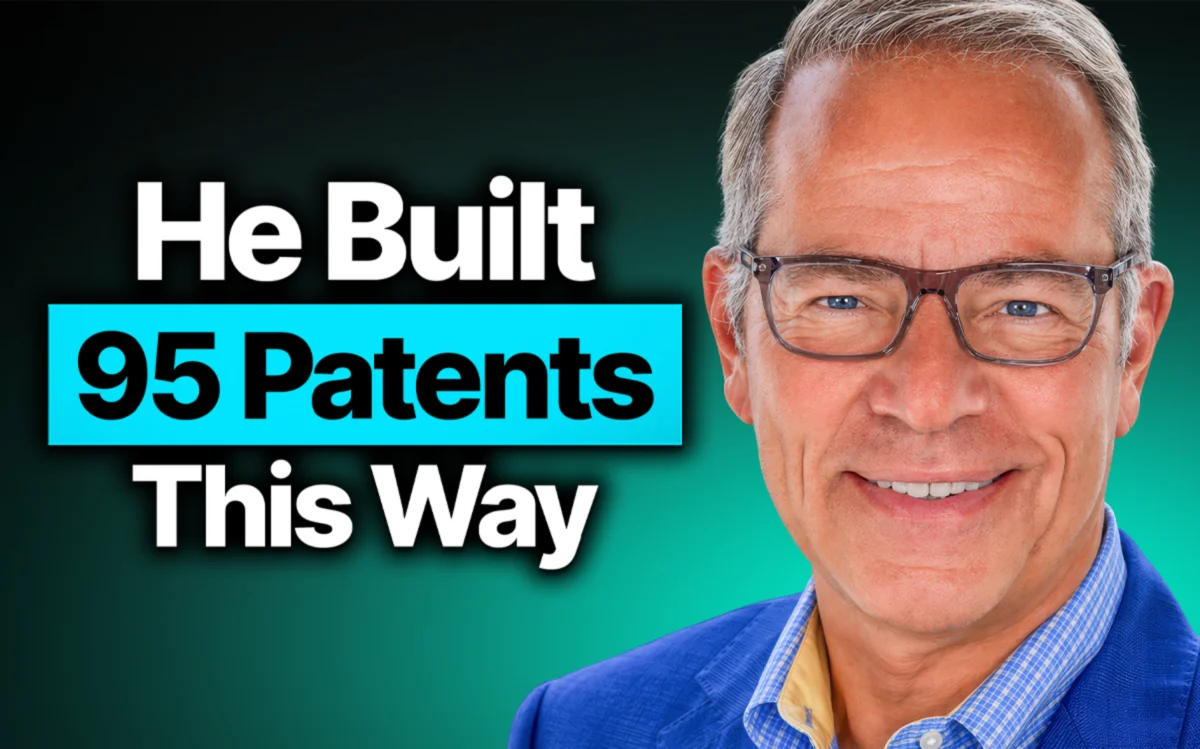
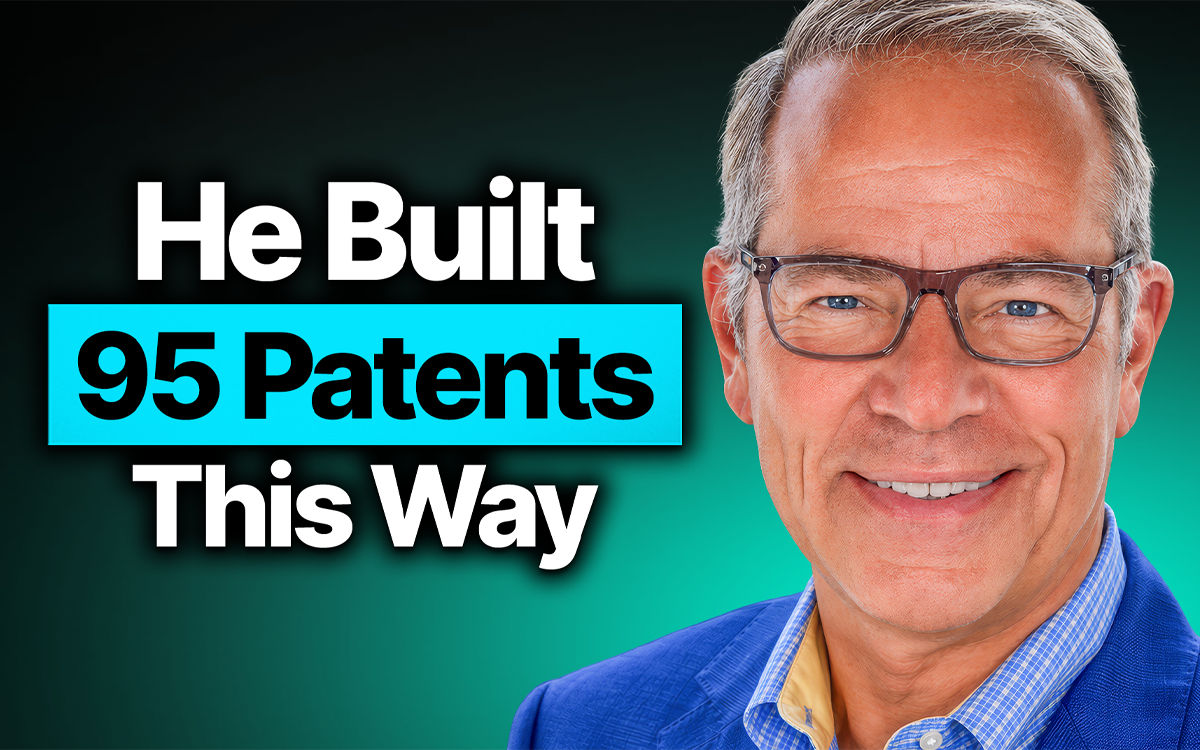
In the high-stakes world of entrepreneurship, the difference between a venture that scales to a billion dollars and one that quietly fades into obscurity often comes down to a few critical, often overlooked variables. In the latest episode of the Niche Pursuits podcast, host Spencer Haws sits down with Kevin Surace—a veteran inventor with 95 worldwide patents and the CEO of Appvance—to deconstruct the mechanics of building resilient, high-value companies in an increasingly volatile digital landscape.
Surace, a seasoned builder who has been at the forefront of AI innovation since the 1990s, offers a masterclass in separating "clever ideas" from "viable businesses." The conversation provides a blueprint for founders, shifting the focus from the glamor of startup culture to the hard realities of market timing, customer psychology, and the relentless pursuit of solving genuine human friction.
The Core Philosophy: Pain Over Prestige
At the heart of Surace’s thesis is a sobering reality check for modern founders: most companies are solving problems that don’t actually exist.
"A founder can be deeply convinced that an idea is brilliant," Surace notes, "yet still miss the fundamental question of whether the intended customer feels enough pain to reach into their pocket and pay for a solution."
In the current AI boom, this disconnect is reaching a fever pitch. Surace estimates that while over 5,000 AI companies have secured funding in recent years, fewer than 100 will likely achieve long-term success. The failure of the majority, he argues, stems from a lack of a "moat"—a sustainable competitive advantage—and an inability to provide a service that customers find indispensable.
To combat this, Surace suggests a rigorous filter:
- Identify the "Hair-on-Fire" Problem: Is the customer actively searching for a fix, or are they content with the status quo?
- Validate via Budget: Does the customer have the financial capacity and the explicit intent to pay to eliminate this pain?
- The "Take-Away" Test: If you removed your product from the market today, would your customers feel a sense of loss, or would they simply move on?
The Science of Market Timing: The Silent Executioner
Perhaps the most striking takeaway from the interview is Surace’s assertion that market timing is the single most significant predictor of success.
Drawing from extensive data on incubator startups, Surace highlights that factors often cited as "keys to success"—such as team talent, capital raised, and product elegance—are secondary to whether the market is ready for the solution.
"Founders often think they are late when, in reality, they are years too early," Surace explains. He points to his own experiences, including his 1990s-era AI assistant, "Mary," which could perform tasks like booking calendars and searching the web. The technology was revolutionary, but the market infrastructure—mobile connectivity, consumer trust in AI, and cloud integration—was not yet present.
Signs That Your Timing Might Be Off:
- High Education Cost: If you have to spend more time explaining why a problem matters than selling the solution, the market isn’t ready.
- Infrastructure Friction: If your product requires the customer to overhaul their entire workflow just to use your tool, the barrier to entry is likely too high.
- Low Conversion Despite High Value: If the product clearly works but prospects still resist, they may not yet feel the "pain" acutely enough to prioritize your solution.
Curiosity: The Entrepreneurial Engine
Surace argues that business creation is not merely a technical skill but an extension of one’s daily curiosity. He posits that people who stop being curious stop noticing the small, persistent frictions that lead to million-dollar ideas.
In his upcoming book, The Joy Success Cycle, Surace emphasizes that a mindset focused on complaints is a closed loop, while a mind operating from a place of joy is open to spotting patterns. For founders, this translates into a practical daily habit: The One-Complaint Rule.
Surace suggests that since the average person complains over 100 times a day, those complaints are often "noise" that drains mental bandwidth. By consciously limiting complaints to one per day, entrepreneurs force themselves to pivot from a negative, reactive state to a problem-solving, proactive one. This shift in energy is not "soft advice"; it is a strategic business decision that preserves creative range and focus.
Going Deep: The QuietRock Case Study
To illustrate the power of specialization, Surace recounts the story of QuietRock, his venture into soundproof drywall.
Instead of trying to revolutionize the entire construction industry, Surace identified a specific, painful problem: noise pollution in residential and commercial buildings. Rather than spreading his resources thin across a dozen construction materials, he focused exclusively on creating a superior sound-dampening wallboard.
The economics were transformative. Standard drywall might sell for $10 a sheet, but QuietRock—which solved the expensive, high-stakes problem of lawsuits and unhappy homeowners—could command $30 to $50 per sheet. The lesson for founders is clear: Don’t compete on commodity prices; compete on the cost of the pain you are removing.
The AI-First Mandate
Surace defines "AI-first" not as a marketing buzzword, but as an operational standard. To him, an AI-first founder is someone who turns to AI tools before opening Word, Excel, or a search engine.
He maintains subscriptions to roughly 20 different AI tools, constantly experimenting with how they can accelerate his workflow. For the online entrepreneur, this means:
- Integrating AI into the Research Phase: Using tools to synthesize market data, analyze competitor weaknesses, and identify gaps in customer sentiment.
- Outpacing the Competition: If your competitors are still drafting content manually while you are using AI to iterate, refine, and scale, you have an insurmountable speed advantage.
However, Surace warns against blindly handing over creative control. "Taste, judgment, and selection matter more than ever," he says. The role of the founder is no longer just the "creator"—it is the "editor" and the "architect" who guides the AI toward a high-quality outcome.
Implications: The Future of the Founder’s Journey
As the interview draws to a close, the implications for the future of business are profound. We are moving toward an era where the barrier to production is lower than ever, which means the barrier to standing out is higher.
Key Takeaways for Today’s Founders:
- Focus on Outcomes, Not Processes: Clients do not pay for your effort or your "process"; they pay for the specific, measurable outcome your product delivers.
- Positioning is Everything: You must speak the language of the buyer. Architects didn’t care about viscoelastic polymers; they cared about creating quieter buildings. Find the "language of value" for your specific customer.
- Embrace the "Pivot" Mindset: A great product is only half the battle. The other half is ensuring the market is ready to adopt it. If they aren’t, have the humility to adjust your timing rather than forcing a square peg into a round hole.
In summary, the conversation between Kevin Surace and Spencer Haws serves as a vital reminder that while technology evolves, the fundamentals of commerce remain anchored in human nature. By spotting pain early, maintaining a deep sense of curiosity, and timing the market with precision, entrepreneurs can build businesses that do not just survive the shift—they define it.
For those looking to build online today, the path is no longer about finding the most complex solution. It is about finding the most painful problem, solving it with relentless focus, and ensuring that your value is as clear as it is indispensable.