Summary: In the fast-paced world of digital marketing, identifying why a specific web page underperforms can consume hours of analysis. Traditional comprehensive site crawls are often unnecessary when dealing with localized ranking drops, competitive outranking, or plummeting conversion rates. By leveraging specialized browser-based extensions, SEO professionals can pivot from initial triage to tactical diagnosis in under 180 seconds. This guide explores a structured, step-by-step workflow for auditing web pages efficiently using SEOquake.
Main Facts: The Anatomy of Rapid SEO Triage
When a core product page slips in search engine results pages (SERPs), or a client’s landing page fails to convert, digital marketers need immediate, actionable insights. Waiting for a full site audit report can delay critical interventions.
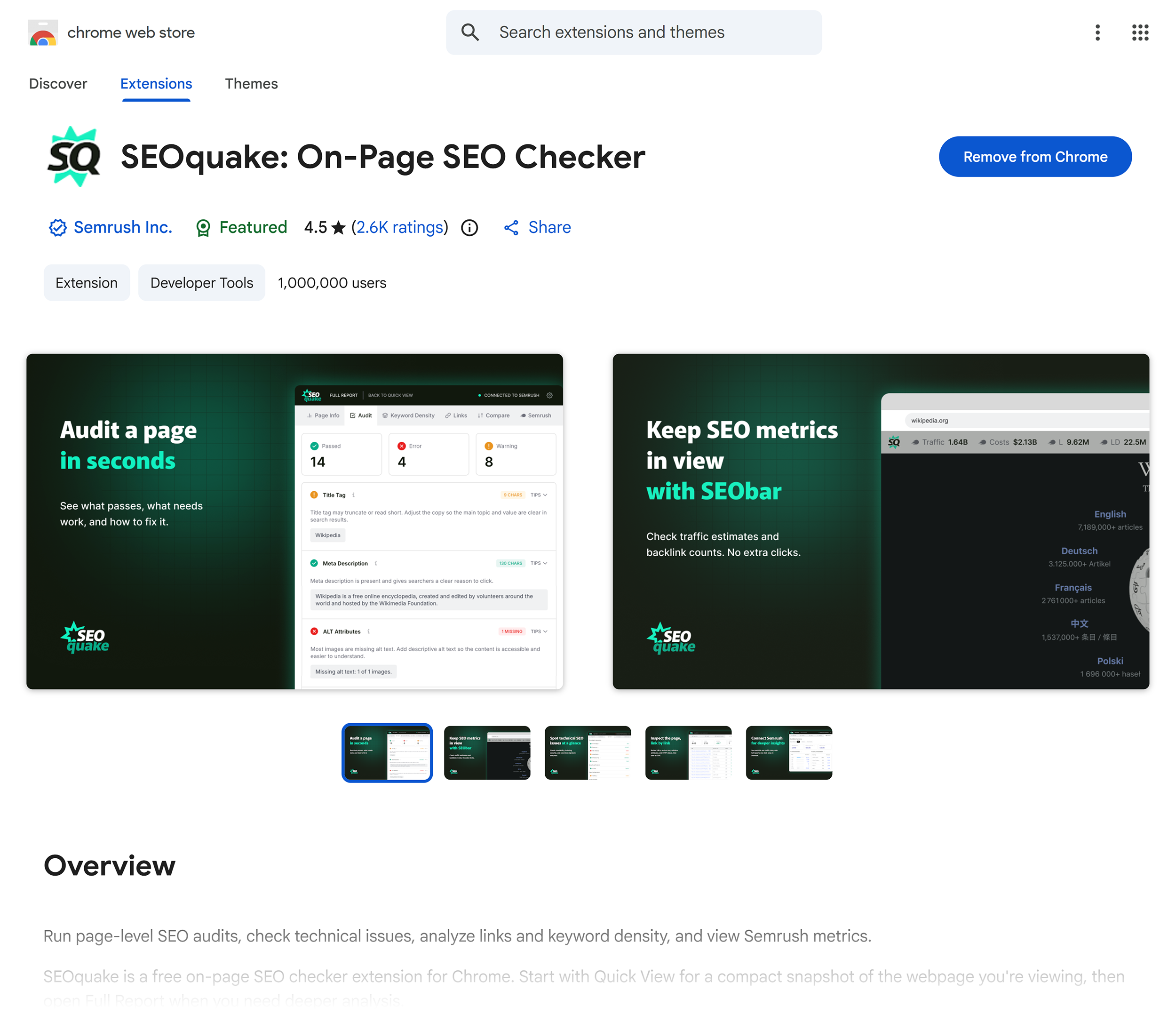
The SEOquake Chrome extension—a free diagnostic tool developed by Semrush—allows users to evaluate any live webpage instantly. Without leaving the browser window, professionals can analyze:
- Technical underlying signals
- On-page SEO health parameters
- Internal and external linking structures
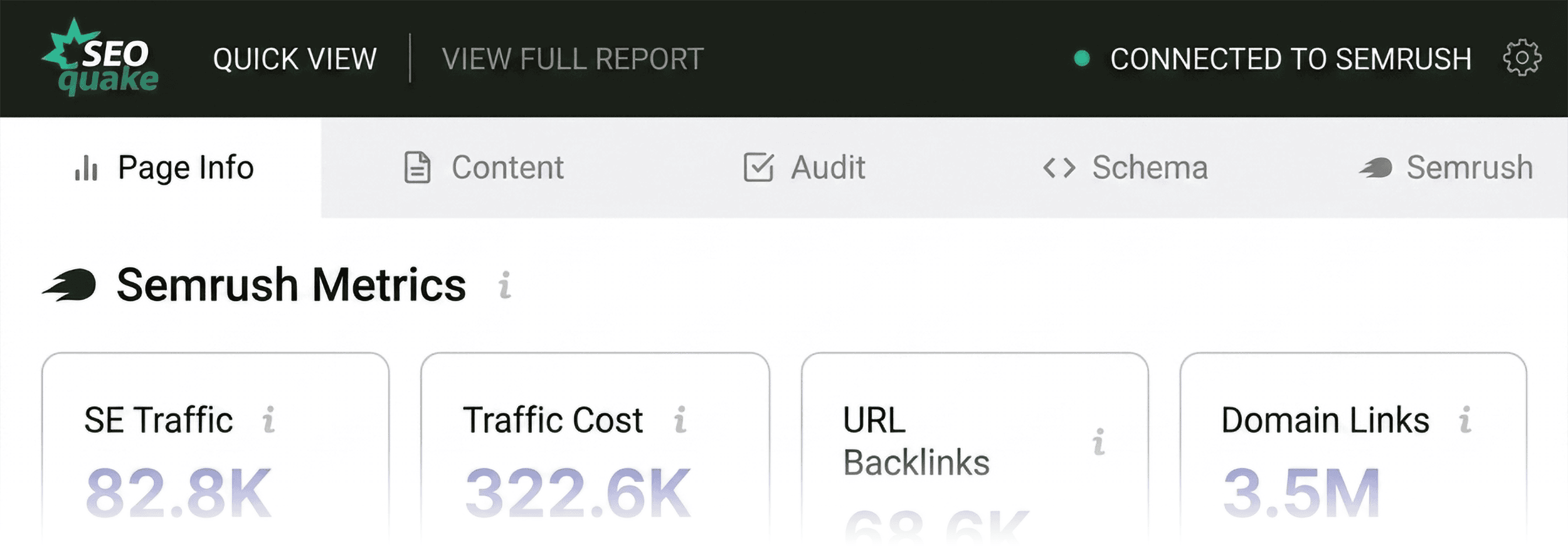
- High-level domain authority and visibility metrics via integrated Semrush databases
The tool features an intuitive, color-coded reporting interface. Green indicators signal optimal implementation, orange highlights potential warnings requiring contextual evaluation, and red flags designate critical issues that demand immediate remediation. By keeping these visual cues front-and-center, auditors can quickly isolate abnormalities and prioritize structural fixes.
Chronology of an Audit: From Triage to Full Diagnosis
Executing a rapid page-level health check follows a strict chronological progression designed to maximize efficiency. The three-minute diagnostic framework is divided into two distinct phases: triage (Minute 1) and deep-dive diagnosis (Minutes 2 through 3).
Minute 1: Triage via the Quick View Pop-Up
The primary objective of the first minute is simple: determine if anything is fundamentally broken on the target page.
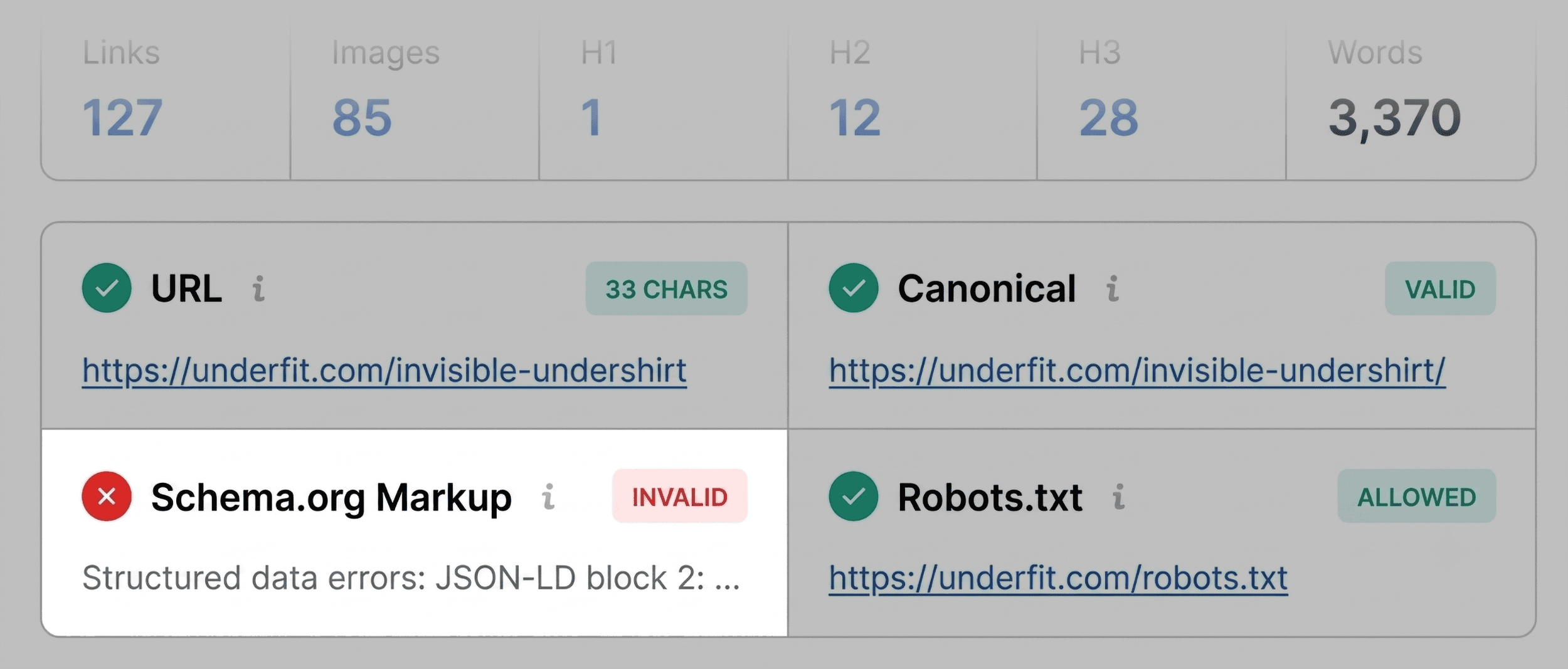
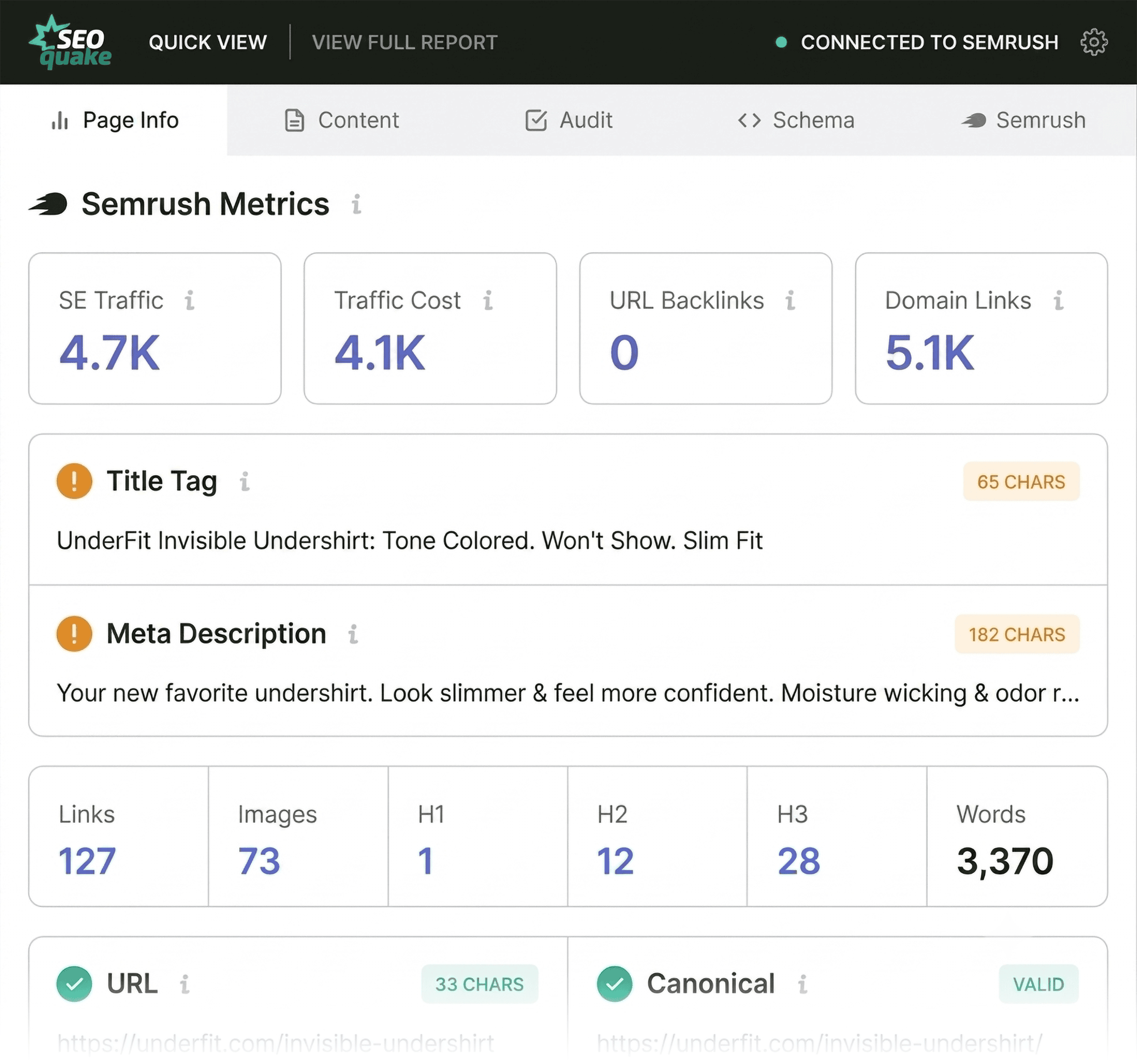
Upon navigating to the target URL (such as an e-commerce product page for apparel brand UnderFit) and clicking the extension icon, the Quick View pop-up appears. This interface organizes metrics across five distinct tabs, with three holding primary importance for rapid triage: Page Info, Audit, and Content. Allocating roughly 20 seconds to each tab yields an immediate operational overview.
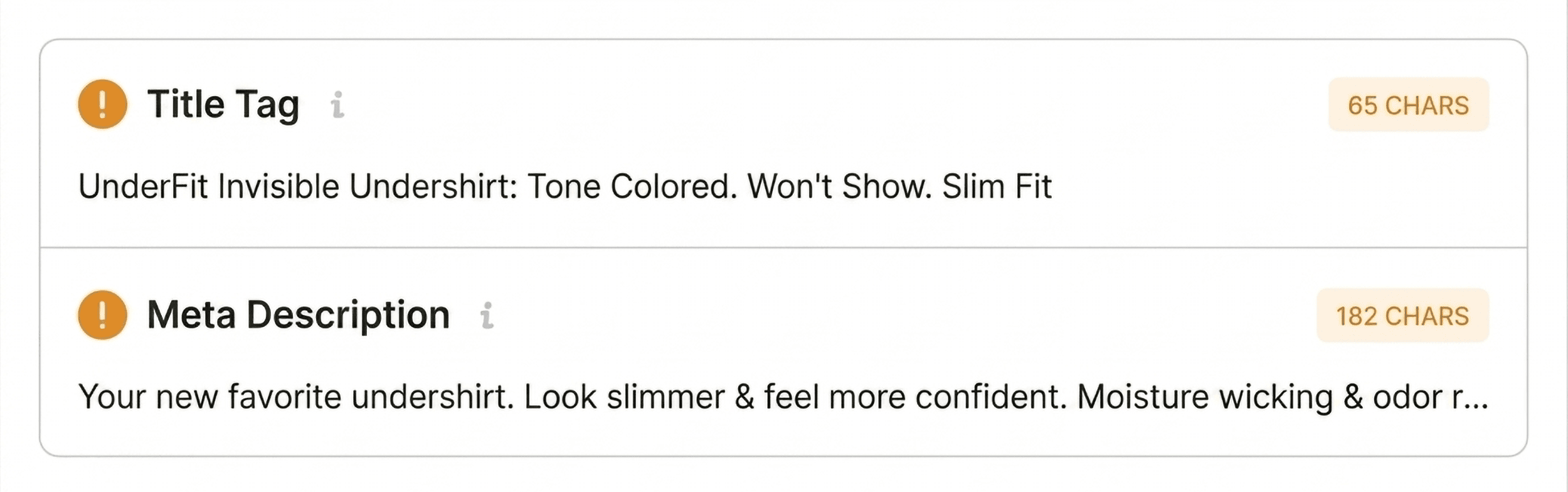
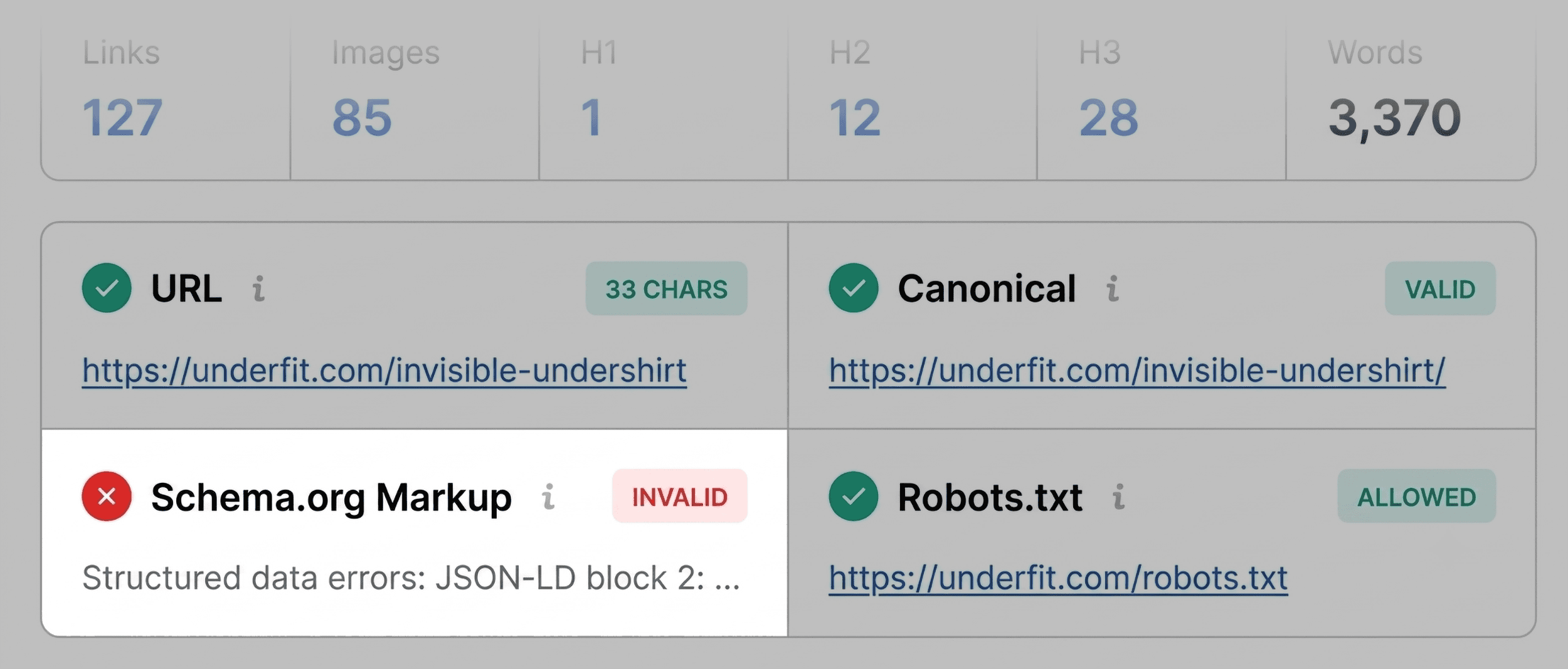
- Page Info Analysis: The auditor prioritizes core elements including the Title tag length, Meta Description validity, Canonical tags, Robots meta directives, and URL structures. In the case of the UnderFit product page, the tool flags Schema.org markup in red. Further inspection reveals JSON-LD implementation errors, rendering the page potentially ineligible for rich product snippets (such as dynamic pricing, availability statuses, and review ratings). Title tags and meta descriptions appear largely compliant, though minor optimizations are noted for subsequent review.
- Technical Compliance Scan: Transitioning to the Audit tab reveals broader technical checks covering mobile responsiveness, frame usage, and doctype declarations. While most indicators appear green or orange—signifying the absence of a catastrophic site-down emergency—orange warnings (such as missing optional localized tags or hreflang attributes) require contextual judgment based on the site’s target audience.
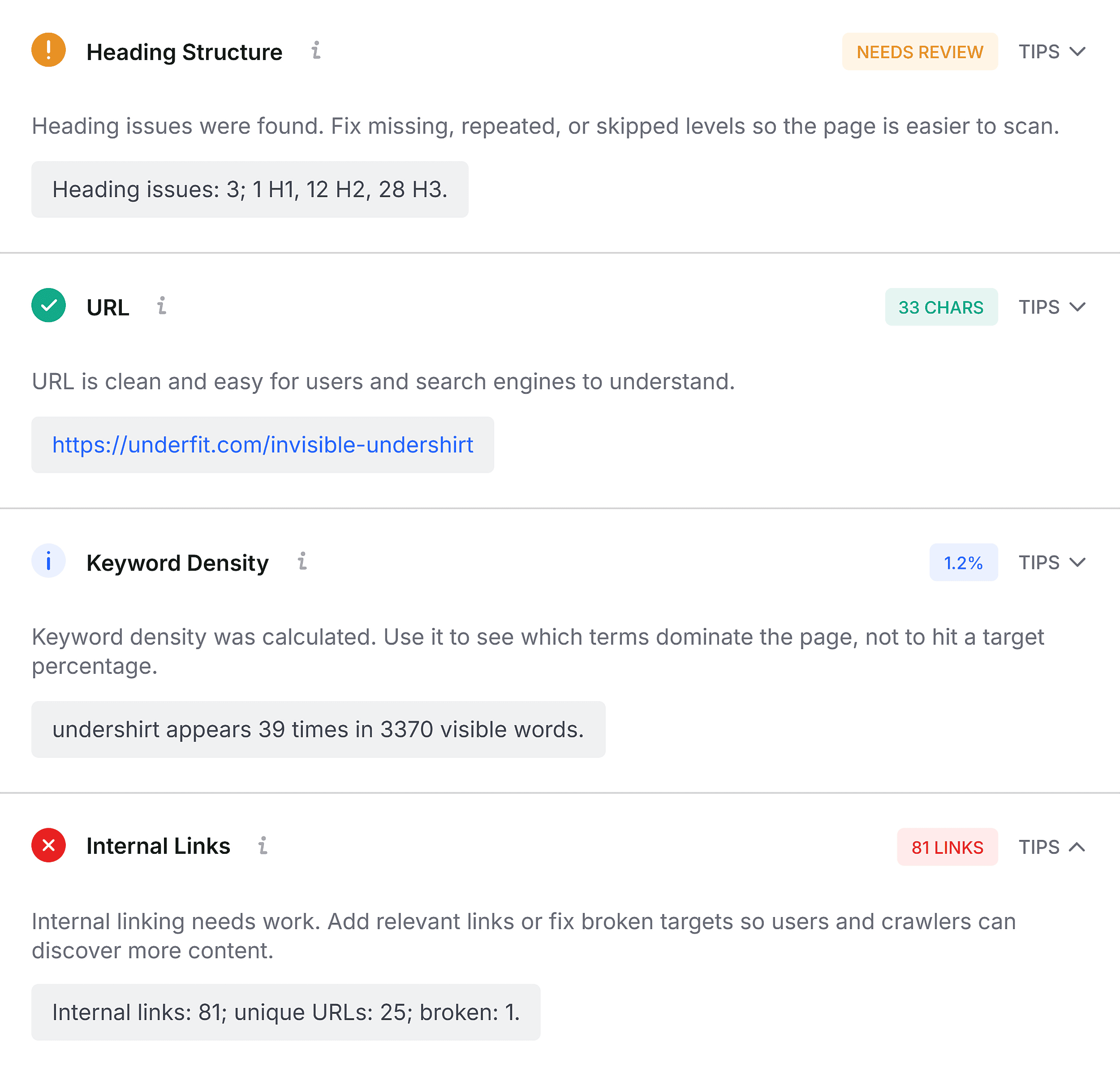
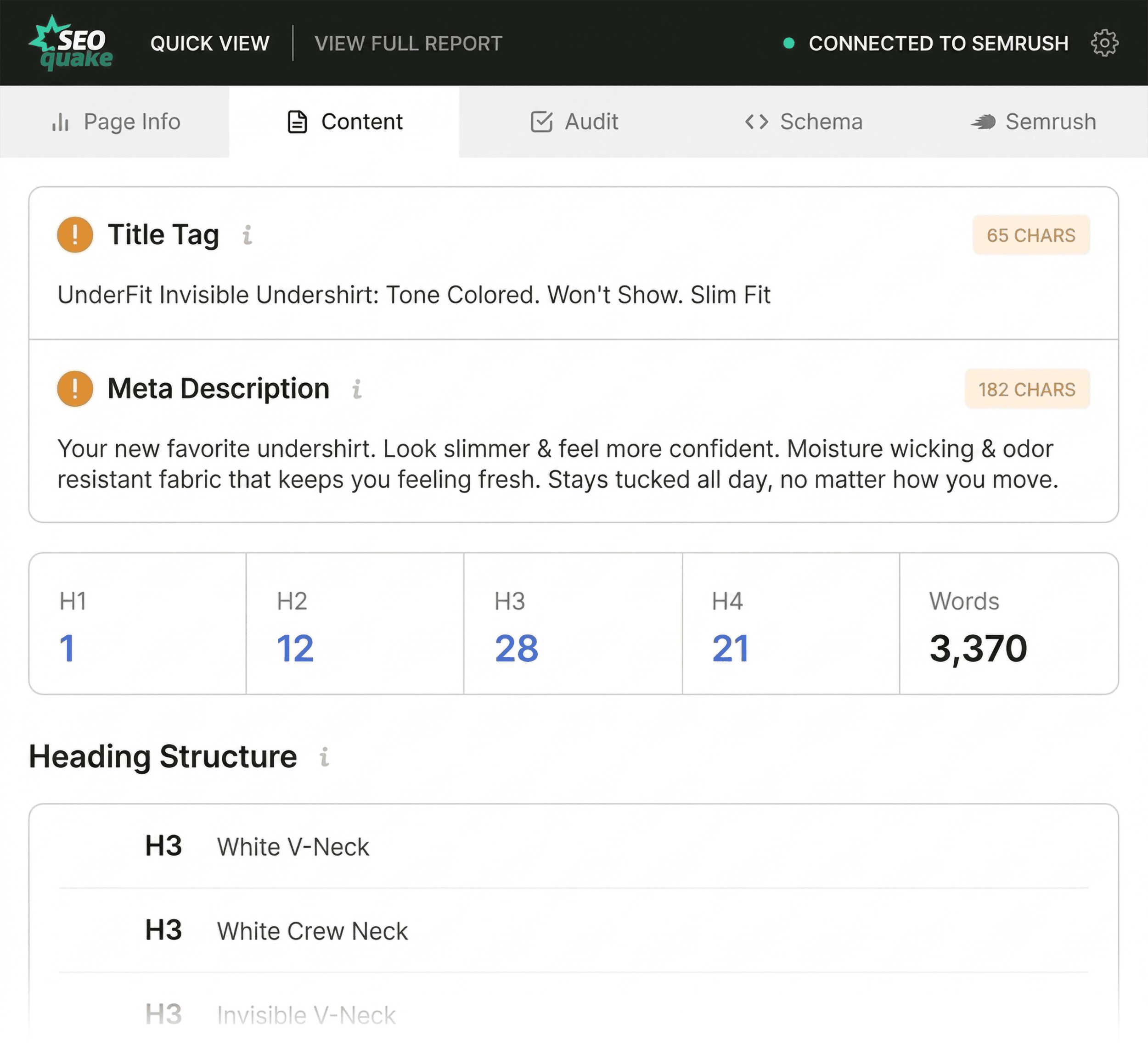
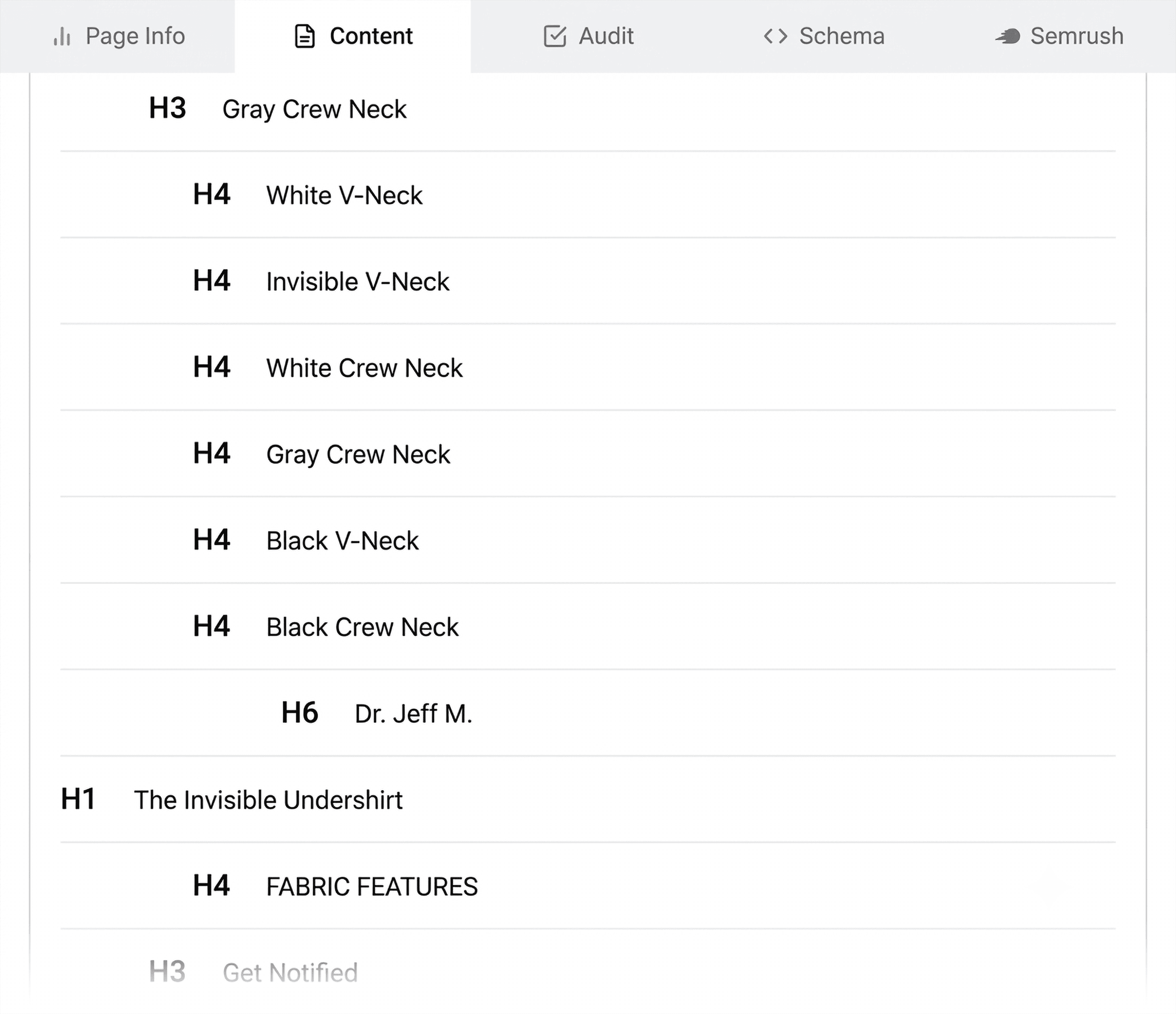
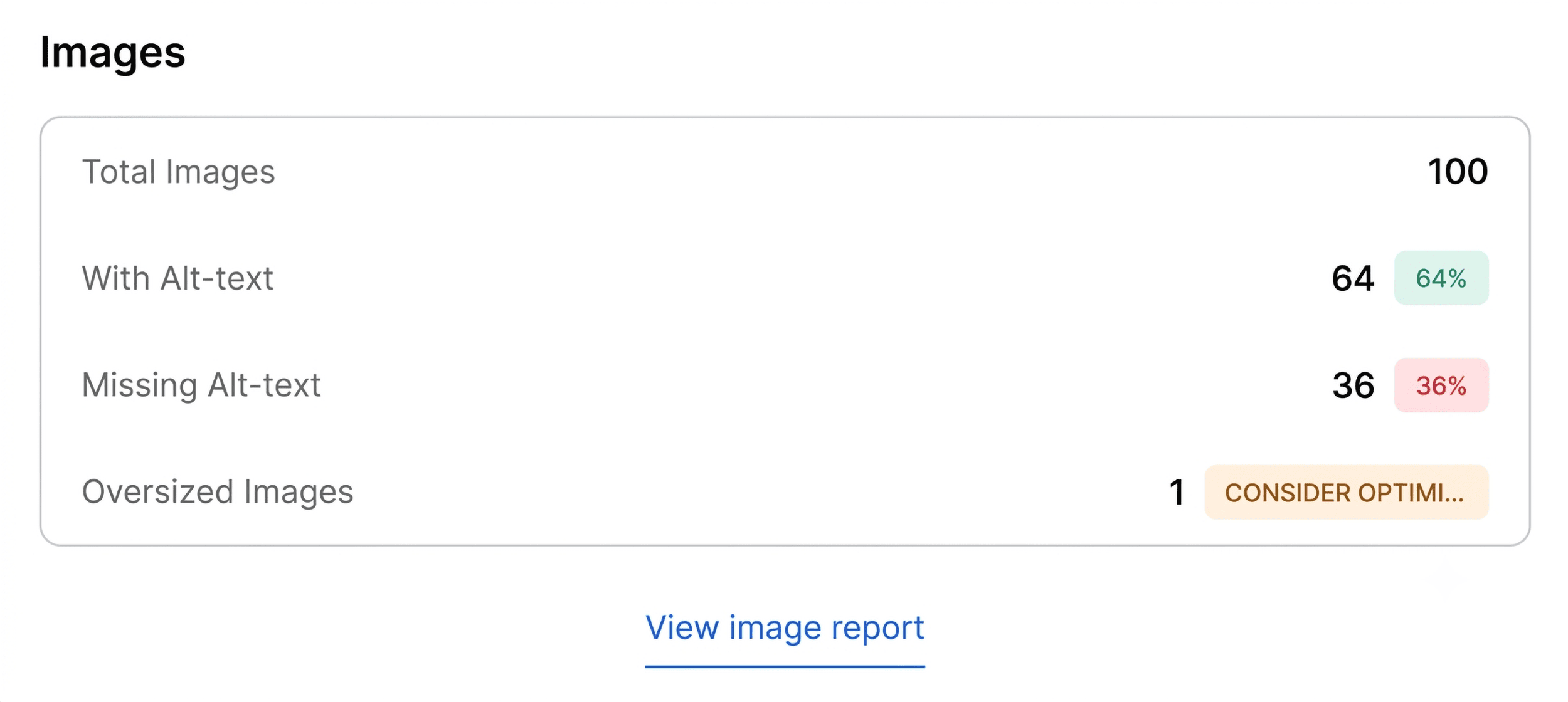
- Content and Structural Evaluation: The Content tab maps out heading hierarchies (H1 through H6) and provides an inventory of image alternative text. The UnderFit audit uncovers a disjointed heading architecture: the primary H1 tag appears deep within the page layout, and the hierarchy skips directly from an H1 to an H4. Additionally, the asset summary indicates that 36 images lack descriptive alt attributes. While not immediate blockers, these factors hinder accessibility and limit search engine comprehension.
Minutes 2 and 3: Deep-Dive Diagnosis Using the Full Report
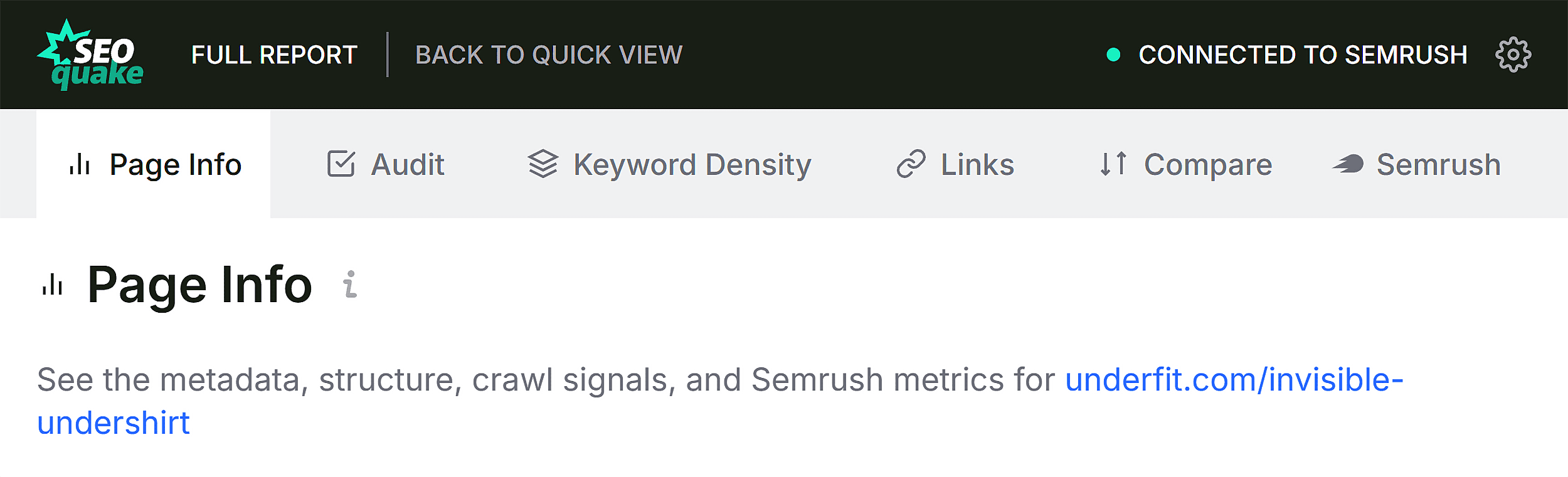
Having identified anomalies during the initial triage, the auditor clicks "View Full Report" to access the comprehensive diagnostic panel. This phase focuses on isolating the root causes of flagged items and determining whether fixes require localized edits or broader technical interventions.
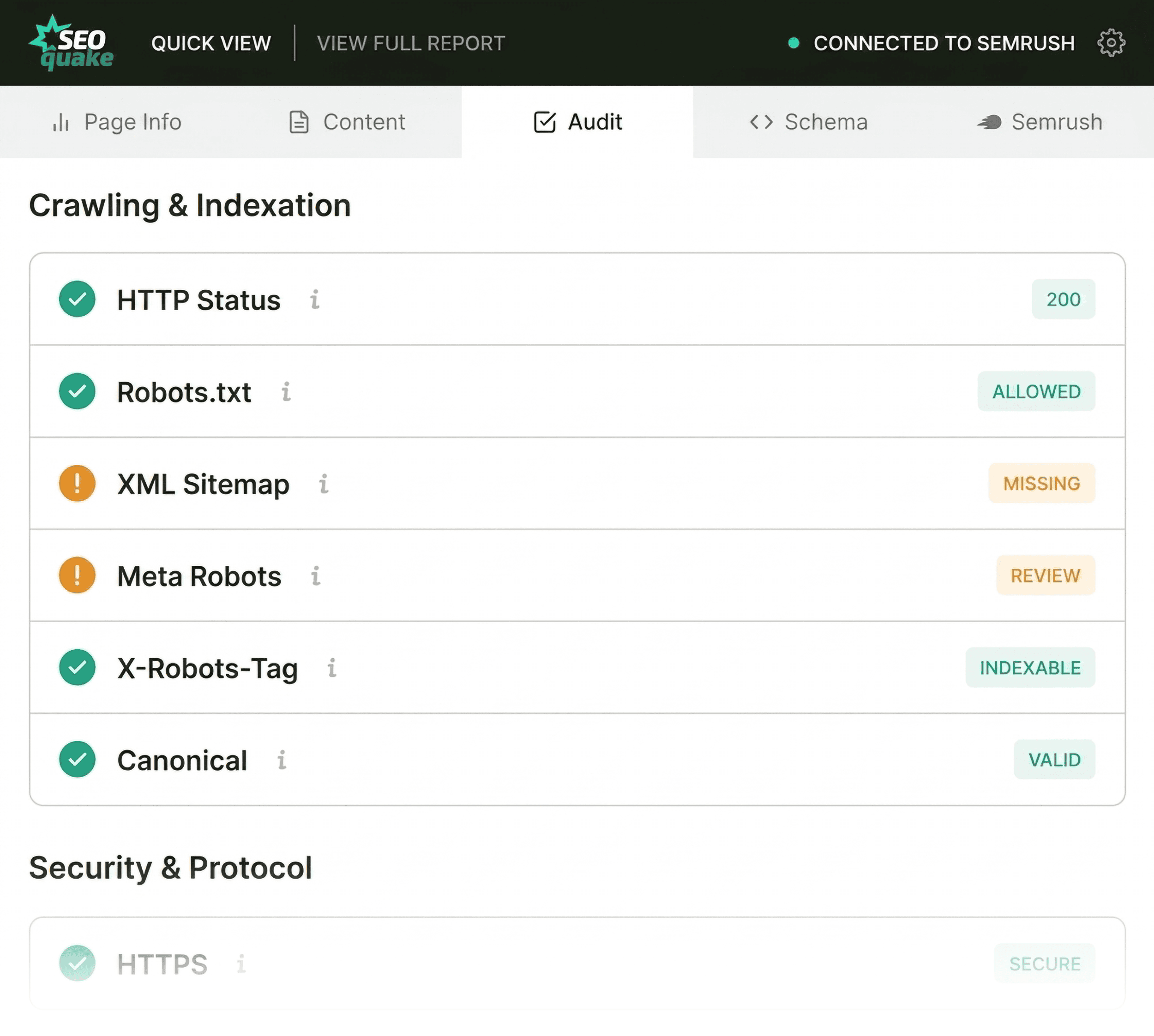
- The Full Audit Panel: Utilizing the navigation menu to isolate specific warnings, the auditor cross-references the XML sitemap status. SEOquake confirms the existence of
https://underfit.com/sitemap.xml, but highlights that it lacks prominent internal linking signals. To verify the schema errors flagged earlier, the auditor launches Google’s Rich Results Test directly from the extension interface. The test confirms three distinct invalid items within the structured data, moving schema repair to the top of the action list. - Keyword Density and Topic Coverage: Assessing visible text distribution helps identify thematic gaps. The Keyword Cloud confirms that core commercial terms—such as "undershirt," "fit," "fabric," and "v-neck"—dominate the copy, aligning perfectly with the intended product category. Detailed keyword tables verify that these terms appear in high-priority locations, including title tags and H1 elements. Minor anomalies, such as programmatic UI terms (e.g., "zoom"), are recognized as artifacts of interactive button labels and widget code.
- Link Health Diagnostics: The Links panel provides a comprehensive breakdown of internal and external connectivity. For the UnderFit page, the report highlights a localized count of broken external links, largely tied to dynamic JavaScript elements. Rather than posing an immediate ranking threat, these links are cataloged for developer verification.
Supporting Data: Leveraging Domain-Level Metrics
An isolated page audit cannot be performed within a vacuum. To establish whether structural issues are page-specific or systemic, marketers must evaluate broader domain authority.

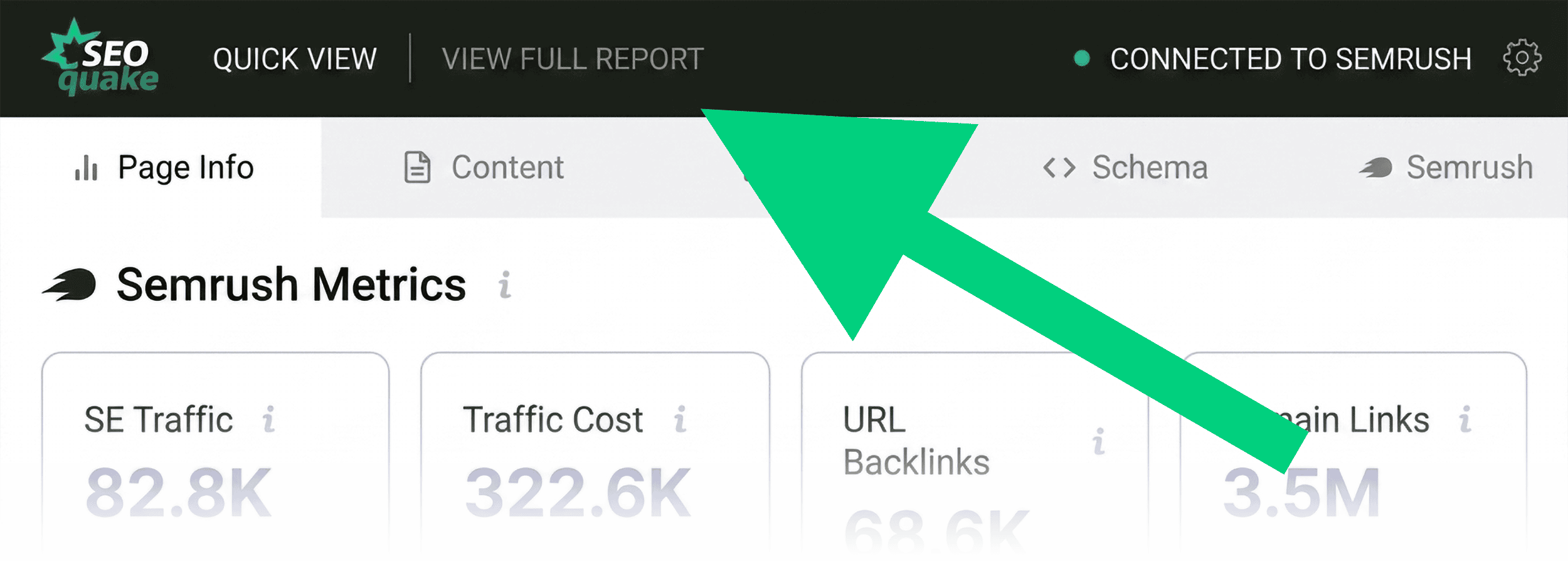
The Semrush panel within SEOquake supplies high-level baseline metrics:
- Organic search visibility trends
- Estimated monthly search traffic volumes
- Referring domain counts and overall backlink profile strength
By connecting SEOquake to a registered Semrush account, users unlock granular Traffic Analytics—including user engagement indicators like average visit duration, bounce rates, and channel-specific acquisition metrics.
The Diagnostic Rule of Thumb: A weak, unoptimized page residing on a high-authority domain with robust overall traffic (such as UnderFit) typically indicates a localized, page-level content or technical issue. Conversely, systemic site-wide errors—such as universal XML sitemap misconfigurations or sitewide JSON-LD template failures—cannot be solved at the single-page level. These require comprehensive site-wide evaluations using enterprise crawlers like the Semrush Site Audit tool.
Official Responses and Industry Standards
Search engine optimization guidelines heavily emphasize the integrity of technical signals, structured data, and accessibility. According to web standards set by major search engines:
- Structured Data: Valid JSON-LD schema is a prerequisite for generating rich snippets. Errors in syntax or missing required properties directly disqualify product pages from enhanced SERP real estate, which heavily influences click-through rates.
- Accessibility and Alt Text: Web Content Accessibility Guidelines (WCAG) mandate descriptive alternative text for non-text content. Search engines increasingly rely on these attributes to interpret visual media context, particularly in competitive visual search ecosystems.
- Heading Hierarchy: Logical document outlining (H1 through H6) aids assistive technologies and crawler bots in mapping semantic relevance across a document, ensuring that primary topics receive appropriate conceptual weight.
Implications for Digital Marketers
The implementation of rapid diagnostic frameworks like the SEOquake workflow shifts how marketing teams approach web optimization.
- Operational Efficiency: By reducing initial triage from hours of manual code inspection to a structured 60-second scan, agencies and in-house teams can scale their auditing capacity across hundreds of URLs.
- Prioritized Resource Allocation: Distinguishing between page-level fixes (such as rewriting meta descriptions or adding missing alt tags) and systemic infrastructure errors (such as broken XML sitemaps or faulty site-wide schema templates) prevents wasted developer hours.
- Conversion Protection: For e-commerce and lead-generation properties, resolving technical barriers—such as invalid product schema or broken JavaScript links—directly safeguards revenue streams by ensuring search engines accurately index and display commercial attributes.
Ultimately, mastering rapid diagnostic tools empowers digital marketers to diagnose complex performance dips swiftly, ensuring that technical debt and on-page friction are addressed before they cause prolonged organic visibility loss.